Restore Your Juicy Couture Necklace Gold: Expert Cleaning Tips
Learn how to safely clean and maintain your Juicy Couture necklace gold pieces. Expert tips on removing tarnish without damaging plating or rhinestones.

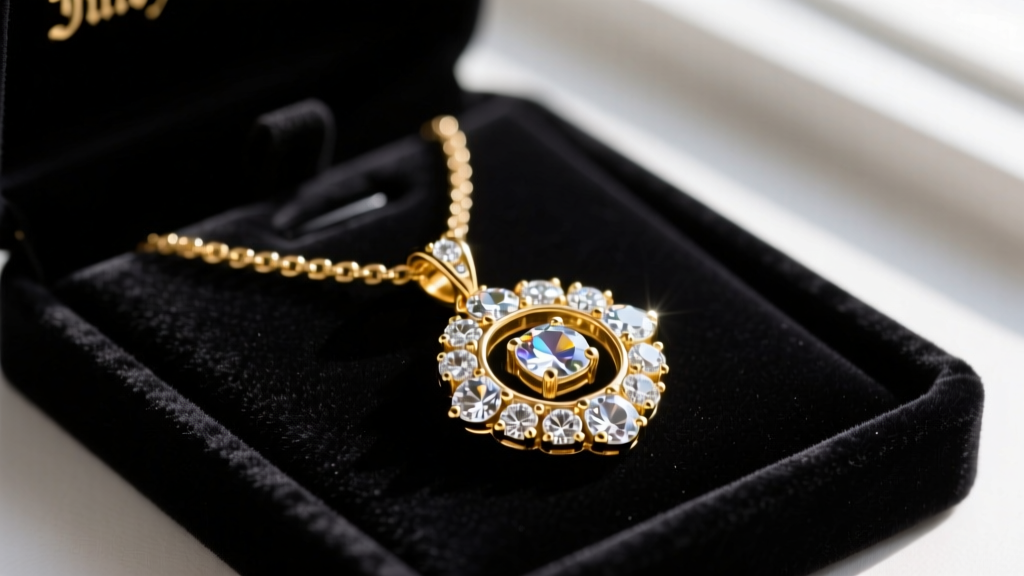
The resurgence of Y2K fashion has brought iconic accessories back into the spotlight, and the Juicy Couture necklace gold collection remains a highly sought-after staple for vintage and contemporary wardrobes alike. Known for their signature crown pendants, heart lockets, and charm-laden chains, these pieces are quintessential statement makers. However, as fashion jewelry, they require a highly specific approach to care and maintenance. Unlike solid 14k or 18k gold, fashion jewelry relies on delicate electroplating and adhesive-set stones that can be easily destroyed by conventional jewelry cleaning methods.
If you have noticed your favorite pieces losing their luster, developing a brassy tint, or accumulating grime in the crevices of their charms, you are not alone. According to the Jewelers of America, the leading cause of damage to costume jewelry is the use of improper cleaning agents. This comprehensive guide will walk you through the exact chemistry of your jewelry, what to avoid, and the precise protocols to safely restore your Juicy Couture necklace gold pieces to their original glory.
The Anatomy of Your Juicy Couture Necklace
To clean your jewelry effectively, you must first understand how it is constructed. Most vintage and modern Juicy Couture gold necklaces are not solid gold. They are typically crafted from a base metal—often a zinc alloy (sometimes referred to as pot metal), brass, or pewter. This base is then polished and coated with a microscopically thin layer of gold through an electroplating process.
Understanding Plating Thickness
Fashion jewelry usually features 'flash plating,' which ranges from 0.1 to 0.5 microns in thickness. Some premium vintage pieces may have up to 1.5 microns. To put this in perspective, a human hair is roughly 70 microns thick. This ultra-thin gold barrier is highly susceptible to friction, acidic sweat, and harsh chemicals. Once this barrier is breached, the underlying brass or zinc alloy is exposed to oxygen and moisture, leading to rapid oxidation and the dreaded 'green skin' effect caused by copper chloride formation.
The Cardinal Sins of Cleaning Gold-Plated Costume Jewelry
Before reaching for a cleaning solution, you must know what will instantly ruin your necklace. Many well-intentioned jewelry owners destroy their pieces by treating them like solid gold.
- Ultrasonic Cleaners: Never put fashion jewelry in an ultrasonic cleaner. The high-frequency cavitation bubbles will violently shake loose any glue holding rhinestones in place and can literally strip 0.5-micron gold plating right off the base metal.
- Toothpaste and Baking Soda: These are highly abrasive. Toothpaste contains hydrated silica, which has a Mohs hardness that will scratch the soft gold plating, leaving it dull and cloudy permanently.
- Commercial Silver/Gold Dips: Liquid dips contain harsh acids (like thiourea) designed to strip heavy tarnish from solid metals. On plated jewelry, these chemicals will eat through the gold layer and cause the underlying brass to blacken instantly.
- Alcohol and Acetone: Many Juicy Couture pendants feature 'cold enamel' (a colored epoxy resin) and glued-in acrylic or glass stones. Solvents like rubbing alcohol or nail polish remover will dissolve the adhesive and melt the resin enamel.
The Foil-Backed Rhinestone Warning
A hallmark of the Juicy Couture aesthetic is the liberal use of sparkling pave rhinestones. In fashion jewelry, these stones are often 'foil-backed.' This means a thin layer of metallic foil is painted or glued to the back of the glass or acrylic stone to reflect light and create brilliance.
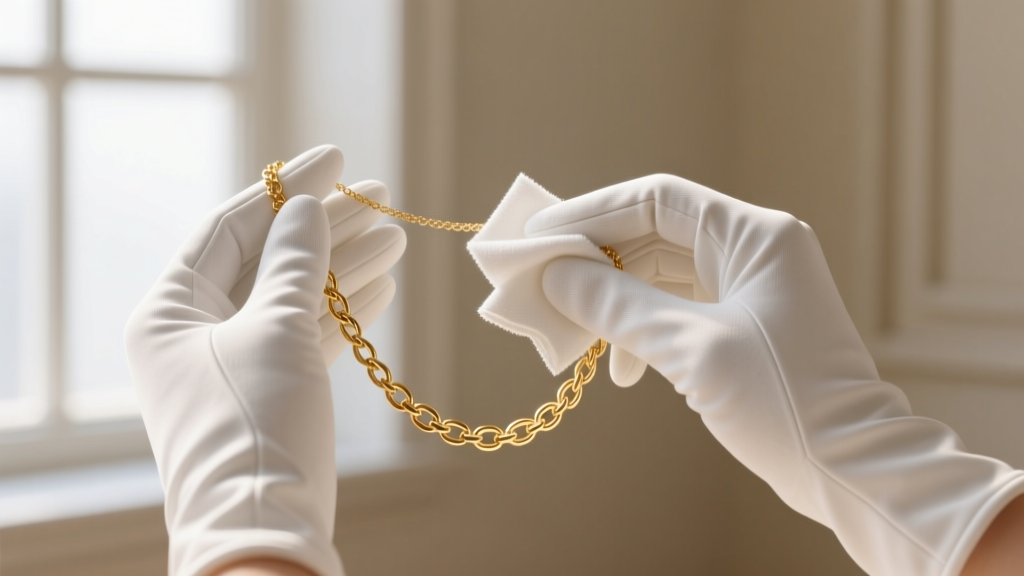
Critical Rule: Never submerge a rhinestone-studded Juicy Couture necklace in water. If water seeps behind the stone, it will trap moisture against the foil. Over time, this causes the foil to oxidize, blacken, or flake off—a phenomenon known in jewelry conservation as 'foxing.' Once a stone foxes, it cannot be cleaned; it must be replaced. Always use a damp, not wet, approach for these pieces.
Step-by-Step Dry and Damp Cleaning Protocols
Follow this exact protocol to safely remove body oils, lotion residue, and environmental dust without compromising the gold plating or stone adhesives.
Step 1: The Dry Dusting
Before introducing any moisture, use a clean, dry, ultra-soft microfiber cloth or a dedicated jewelry polishing cloth (ensure it is untreated and free of chemical impregnates). Gently wipe the chain and the flat surfaces of the pendants. Use a soft-bristled makeup brush (like a clean eyeshadow blending brush) to gently sweep dust out of the intricate crevices of crown or heart charms.
Step 2: The Targeted Damp Clean
For stubborn grime or lotion buildup, prepare a solution of lukewarm distilled water and a single drop of pH-neutral dish soap (like original blue Dawn). Do not use hot water, as heat softens jewelry adhesives.
- Dip a cotton swab (Q-tip) into the soapy solution and squeeze out the excess moisture so it is only slightly damp.
- Gently roll the swab over the metal surfaces and around the base of the rhinestones. Avoid rubbing the tops of the stones aggressively.
- Use a dry cotton swab immediately to absorb any soapy residue and moisture.
- Allow the necklace to air dry completely on a paper towel in a low-humidity room before storing.
Cleaning Agent Safety Matrix
Use this quick-reference table to ensure you are using safe materials on your gold-plated fashion jewelry.
| Cleaning Agent | Safety Level | Effect on Gold-Plated Fashion Jewelry |
|---|---|---|
| Mild Dish Soap & Distilled Water | Safe | Gently lifts oils without stripping plating if dabbed dry. |
| Microfiber Cloth (Dry) | Safe | Removes surface dust and light fingerprints. |
| Isopropyl Alcohol | Dangerous | Dissolves cyanoacrylate adhesives; ruins cold enamel. |
| Baking Soda Paste | Dangerous | Highly abrasive; scratches gold flash-plating instantly. |
| Ultrasonic Cleaner | Dangerous | Vibrations loosen stones; cavitation strips gold plating. |
| Ammonia-based Cleaners | Dangerous | Causes rapid oxidation of exposed brass base metals. |
Combating Base Metal Oxidation and Tarnish
If your Juicy Couture necklace gold piece has already begun to tarnish, showing dark patches or a brassy copper hue, the gold plating has likely worn away in those specific high-friction areas (like the clasp or the back of the pendant). The Gemological Institute of America (GIA) notes that once the base metal is exposed, it reacts with sulfur in the air and the natural acidity of human sweat.
For minor surface tarnish on the base metal, you can use a specialized, non-abrasive brass polish applied with a microfiber swab, being incredibly careful not to let it touch any rhinestones or enamel. However, if the tarnish is severe or the piece is turning your skin green, the only true remedy is professional re-plating. Many local jewelers offer electroplating services where they can strip the remaining degraded finish and apply a fresh layer of 18k gold, often adding a protective e-coating (electrophoretic lacquer) to seal the metal and prevent future tarnish.
Archival Storage for Long-Term Preservation
How you store your Juicy Couture necklaces is just as critical as how you clean them. Leaving them out on a vanity exposes them to humidity, UV light, and airborne sulfur compounds.
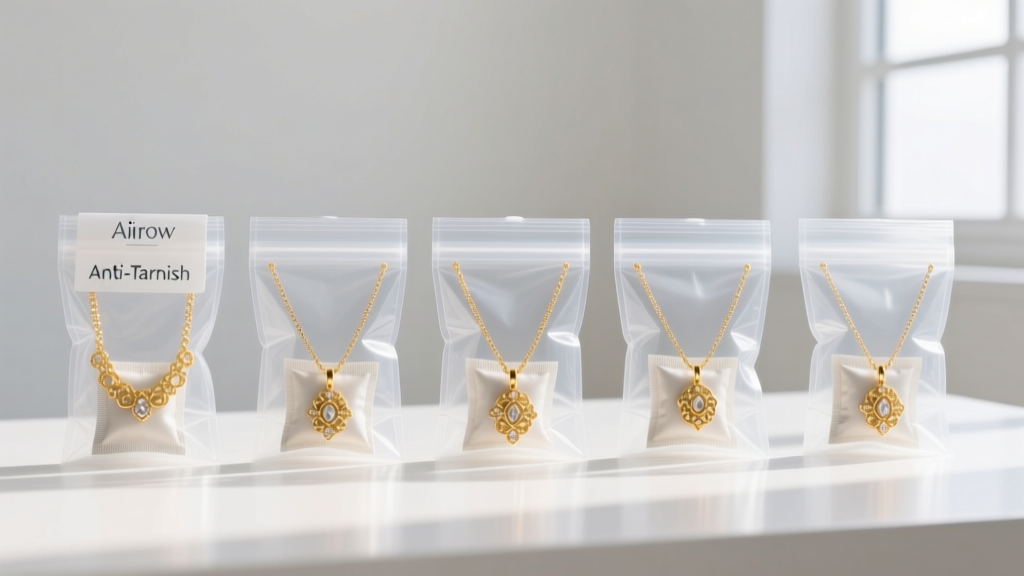
- Individual Isolation: Store each necklace in its own airtight polyethylene ziplock bag. This prevents the chains from tangling and stops harder pieces from scratching softer gold plating.
- Anti-Tarnish Strips: Place a 3M anti-tarnish strip inside each bag. These strips absorb airborne sulfur and hydrogen sulfide before they can react with the copper in the brass base metal.
- Moisture Control: Include a small silica gel desiccant packet in the storage bag to maintain a dry micro-environment, which drastically slows down the oxidation process.
- The 'Last On, First Off' Rule: Always put your jewelry on after applying perfumes, hairsprays, and lotions, and take it off immediately upon returning home to minimize chemical exposure.
By treating your Juicy Couture necklace gold pieces with the respect and specialized care that fashion jewelry demands, you can preserve their iconic Y2K charm and brilliant gold finish for decades to come. Ditch the harsh chemicals, embrace the microfiber, and store them smartly to keep your collection turning heads.


