Beginner's Guide to Choosing a Garnet Station Necklace
Discover everything you need to know before buying a garnet station necklace. Learn about gem grades, chain metals, spacing, and styling tips.

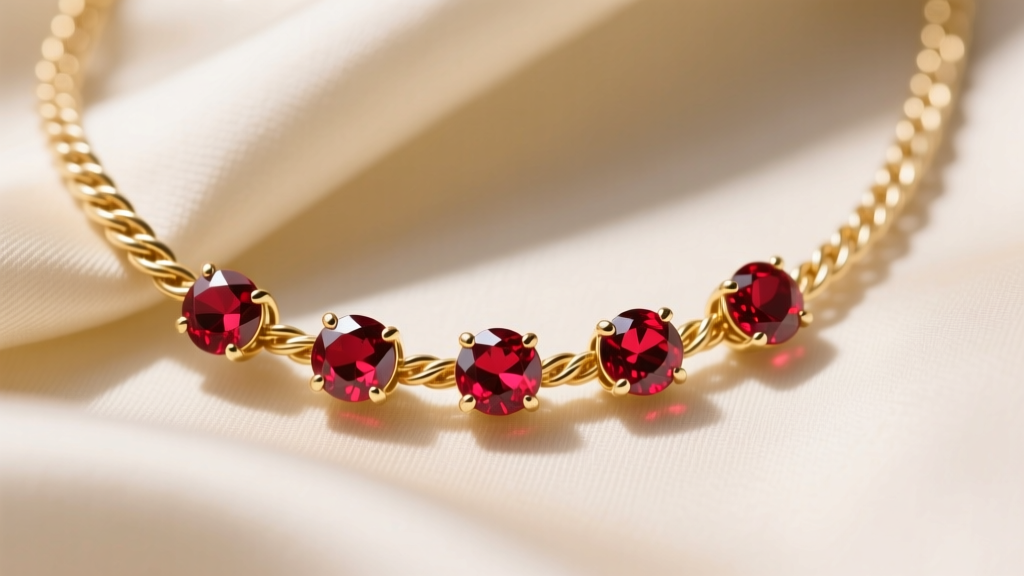
What Defines a Garnet Station Necklace?
A station necklace is a sophisticated jewelry design characterized by a continuous chain interrupted at regular intervals by gemstones, beads, or metallic motifs. When these stations feature garnets, the result is a versatile, deeply colorful piece that bridges the gap between minimalist daily wear and bold evening elegance. For beginners entering the world of fine jewelry, a garnet station necklace offers an exceptional entry point. It provides the visual impact of multiple gemstones without the overwhelming weight or cost of a full tennis necklace.
However, not all garnet station necklaces are created equal. The market is flooded with options ranging from $50 fashion pieces to $5,000 fine jewelry investments. To make an informed purchase, you must understand the gemological nuances of garnets, the structural integrity of chain metals, and the mathematical precision required for proper stone spacing. This guide breaks down the exact specifications you need to evaluate before adding this timeless piece to your collection.
Decoding Garnet Varieties: Beyond Basic Red
The most common mistake beginners make is assuming all garnets are the same dark, opaque red. In reality, 'garnet' is a complex group of silicate minerals with vastly different chemical compositions, colors, and price points. According to the Gemological Institute of America (GIA), understanding these varieties is crucial for assessing value and durability.
The Big Four in Station Jewelry
- Pyrope & Almandine: The classic 'red' garnets. Pyrope offers a vibrant, ruby-like red, while Almandine leans darker, often with brownish undertones. These are the most affordable and commonly used in entry-level station necklaces.
- Rhodolite: A highly prized mix of Pyrope and Almandine, yielding a stunning purplish-red or raspberry hue. Rhodolite is generally more brilliant and commands a higher price per carat.
- Tsavorite: A rare, vivid green grossular garnet. Tsavorite stations are exceptionally expensive and usually reserved for high-end, luxury designer pieces.
- Hessonite: Known for its warm, honey-orange to cinnamon-brown tones. It offers a unique, earthy aesthetic that pairs beautifully with yellow gold chains.
| Garnet Type | Typical Color | Mohs Hardness | Avg. Price Range (Per Carat) | Best Metal Pairing |
|---|---|---|---|---|
| Pyrope/Almandine | Deep Red to Brownish-Red | 7.0 - 7.5 | $20 - $100 | Sterling Silver, 14k Rose Gold |
| Rhodolite | Purplish-Red, Raspberry | 7.0 - 7.5 | $100 - $350 | 14k/18k White or Yellow Gold |
| Tsavorite | Vivid, Electric Green | 7.0 - 7.5 | $500 - $2,000+ | 18k Yellow Gold, Platinum |
| Hessonite | Orange, Cinnamon, Honey | 6.5 - 7.0 | $50 - $200 | 14k Yellow Gold, Bronze |
When shopping, always ask the jeweler for the specific garnet variety. A 'red garnet' description is insufficient for fine jewelry investments. Rhodolite should exhibit a distinct purple secondary hue under natural daylight, whereas Pyrope will appear strictly red.
Chain Metals, Gauges, and Structural Integrity
The chain is the literal backbone of your necklace. Because station necklaces distribute weight across multiple points, the chain must possess high tensile strength to prevent stretching or snapping. The Federal Trade Commission (FTC) provides strict guidelines on gold purity and metal stamping, which you should always verify via hallmarks (e.g., '14k', '925').
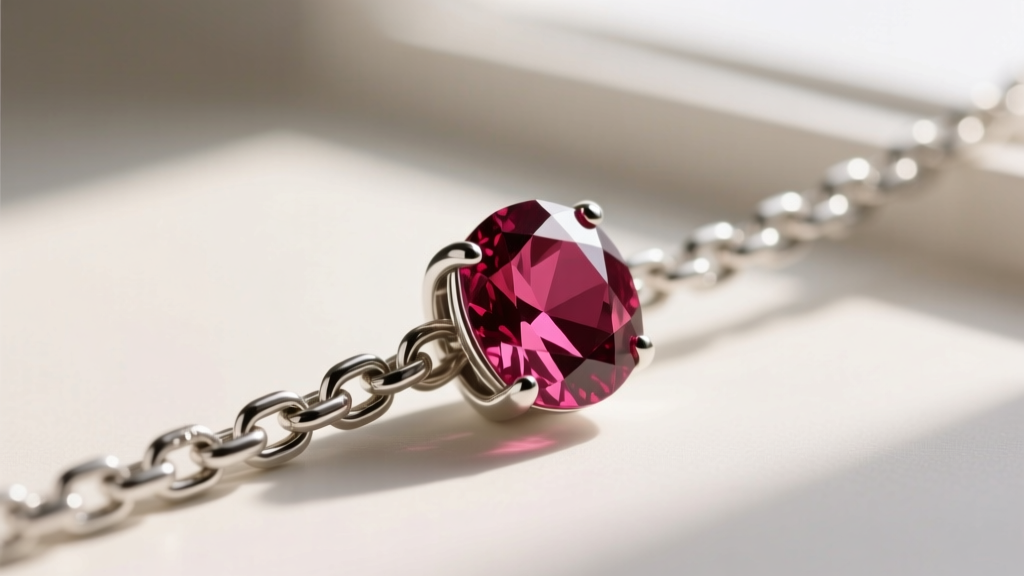
Selecting the Right Chain Style and Gauge
For station necklaces, the chain style dictates how the garnets lay against the collarbone. Avoid fragile chains like serpentine or ultra-fine box chains. Instead, opt for styles that offer structural rigidity:
- Cable Chain: The classic choice. Uniform oval links provide excellent flexibility and a traditional look. Ideal for 3mm to 5mm garnet stations.
- Rolo Chain: Featuring thick, round links, rolo chains offer superior durability and a slightly heavier visual weight, perfect for larger 6mm+ bezel-set garnets.
- Wheat Chain: Woven links that resist kinking and tangling, providing a fluid, fabric-like drape that keeps stations perfectly oriented.
Gauge Thickness: The thickness of the wire used to make the chain is critical. For a delicate look with small (2-4mm) garnets, a 0.8mm to 1.0mm gauge is sufficient. For medium to large stations (5-8mm) or heavy bezel settings, you must upgrade to a 1.2mm to 1.5mm gauge to prevent the chain from bowing under the weight of the stones.
The Mathematics of Station Spacing
The visual success of a garnet station necklace relies entirely on proportion and spacing. Poorly spaced stations can look cluttered or, conversely, lost on the chain. Jewelers use specific frameworks to determine placement based on the total length of the necklace and the size of the gemstones.
The Rule of Proportional Intervals
A standard 16-inch to 18-inch necklace typically features 5, 7, or 9 stations. The spacing between the stones should generally be between 1.5 and 3 inches. If the stones are large (e.g., 6mm rounds), wider spacing (2.5 to 3 inches) prevents the necklace from looking like a heavy, rigid collar. If the stones are petite (e.g., 2mm rounds), tighter spacing (1 to 1.5 inches) ensures the design reads as a cohesive piece rather than scattered accents.
Pro-Tip for Custom Orders: If you are having a station necklace custom-made, request a 'graduated' station layout. This involves placing slightly larger garnets (e.g., 5mm) at the center bottom of the chain and progressively smaller stones (e.g., 3mm) as they move up toward the clasp. This mimics the natural focal point of the human eye and provides a highly customized, bespoke appearance.
Styling Frameworks and Neckline Pairings
A garnet station necklace is a masterclass in versatility, but its impact changes dramatically depending on the garment it rests upon. Mastering these pairings will elevate your daily styling routine.

Strategic Neckline Matching
- The Crisp Button-Down: Unbutton the top two buttons of a white or light-blue Oxford shirt. A 16-inch chain with 5 rhodolite stations resting against the skin creates a striking contrast between structured menswear-inspired tailoring and delicate, colorful fine jewelry.
- The Deep V-Neck: Opt for an 18-inch necklace with 7 to 9 stations. The V-shape of the garment naturally frames the cascading stones, drawing the eye downward and elongating the neck.
- The Crew Neck / Boat Neck: Avoid wearing a standard station necklace directly against a high crew neck, as it will compete with the fabric line. Instead, layer the garnet necklace (18-inch) over a solid, thicker gold choker (14-inch) to create a tiered, dimensional look.
Essential Care and Maintenance
Garnets rank between 6.5 and 7.5 on the Mohs scale of hardness. While durable enough for regular wear, they are softer than diamonds and sapphires, making them susceptible to scratching if stored improperly. Furthermore, the chain links require specific maintenance to retain their luster.
Cleaning Protocols
Never use ultrasonic cleaners on garnet jewelry, especially if the stones are fracture-filled or heavily included, as the high-frequency vibrations can cause internal shattering. Instead, use a lukewarm solution of distilled water and a few drops of pH-neutral dish soap. Gently scrub the stations with a soft-bristled baby toothbrush, paying special attention to the back of the settings where skin oils and lotions accumulate. Rinse thoroughly and pat dry with a lint-free microfiber cloth.
Storage Best Practices
Always store your garnet station necklace flat or hung on a dedicated jewelry stand to prevent the chain from tangling. Keep it in a separate fabric-lined compartment away from harder gemstones like diamonds or topaz, which can easily scratch the garnet's polished surface during transit. With proper care, a high-quality garnet station necklace will remain a vibrant, structural staple in your wardrobe for decades.


