Troubleshooting a 14kt Gold Necklace Italy: Tarnish, Breaks & Fakes
Learn how to authenticate, clean, and repair your 14kt gold necklace Italy. Expert troubleshooting for tarnish, hollow-chain breaks, and hallmarks.

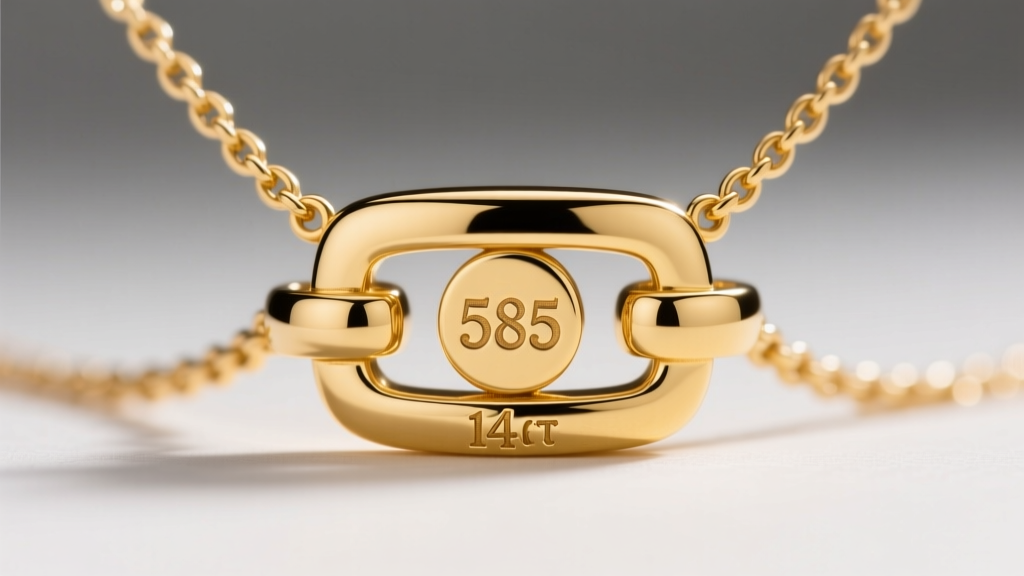
Italian gold jewelry is globally revered for its masterful craftsmanship, intricate designs, and rich heritage from manufacturing hubs like Arezzo and Vicenza. However, owning or purchasing these pieces comes with unique challenges. When buyers search for a '14kt gold necklace Italy' online, they are often met with forum posts detailing unexpected tarnishing, fragile chains, or confusion over European hallmarking laws.
As a 14kt gold alloy contains 58.5% pure gold and 41.5% mixed metals, it behaves differently than higher-karat alternatives. Furthermore, advanced Italian manufacturing techniques—such as electroforming and hollow-core drawing—create stunning, lightweight pieces that require highly specific repair methods. This comprehensive troubleshooting guide addresses the most common issues associated with Italian 14k gold necklaces, providing actionable frameworks for authentication, maintenance, and repair.
Decoding Hallmarks: Is Your Italian 14k Gold Authentic?
The first step in troubleshooting any suspect piece is verifying its origin and purity. Unlike the United States, where '14K' is the standard stamp, Italian gold jewelry is governed by strict national laws (Decreto Legislativo 251/1999). According to the World Gold Council, authentic Italian gold must bear two distinct marks:
- The Millesimal Fineness Mark: For 14kt gold, this will be stamped as 585 (representing 585 parts per 1000 of pure gold). If your necklace is stamped '14K' but lacks a 585 stamp or a maker's mark, it may have been manufactured elsewhere or stamped post-import.
- The Maker's Mark (Punzone): This is a unique polygonal stamp containing a number and a two-letter province code. For example, '1234 AR' indicates the 1,234th registered goldsmith in Arezzo. 'VI' stands for Vicenza, another premier hub.
Pro-Tip: Use a 10x jeweler's loupe to inspect the clasp or the jump ring. Counterfeiters often cast fake hallmarks that look soft or blurred under magnification. A genuine Italian laser-stamped or die-struck 585 mark will have sharp, crisp edges.
Troubleshooting Tarnish and Discoloration
A common complaint is that a 14kt gold necklace from Italy has turned black, green, or developed a reddish hue. Pure gold does not tarnish, but the 41.5% alloy mix does. The Gemological Institute of America (GIA) notes that copper and silver are the primary alloys used to strengthen 14k gold. Copper causes reddish/pinkish tarnish, while silver reacts with sulfur in the air to create black silver sulfide.
The Diamond-Cut Tarnish Trap
Many Italian chains (like the Figaro or Rope) feature 'diamond-cut' facets. These microscopic grooves trap lotions, dead skin cells, and sulfur-rich sweat, accelerating localized tarnishing.
Actionable Cleaning Protocol:
- Soak: Mix 3 drops of mild, phosphate-free dish soap (like Dawn) into a bowl of lukewarm distilled water. Avoid tap water, as chlorine can react with the copper alloy.
- Agitate: Submerge the necklace for 15 minutes. Gently agitate the water to force the solution into the diamond-cut grooves.
- Brush: Use an extra-soft baby toothbrush to lightly sweep the facets. Never use hard bristles, which will scratch the 585 alloy.
- Dry: Pat dry with a microfiber cloth. Do not air dry, as water spots will cling to the polished facets.
Warning: Never use commercial silver dips or ammonia-based cleaners on Italian 14k gold. Ammonia can cause stress corrosion cracking in copper-heavy 14k alloys, leading to catastrophic chain failure.
Fixing Clasp and Chain Failures (The Hollow-Core Problem)
If your necklace has snapped, the repair method depends entirely on the manufacturing technique. To keep costs down while providing a thick, luxurious appearance, many Italian manufacturers use electroforming or hollow-tube drawing. These chains are up to 70% lighter than their solid counterparts but are notoriously difficult to repair.

Why Traditional Soldering Fails
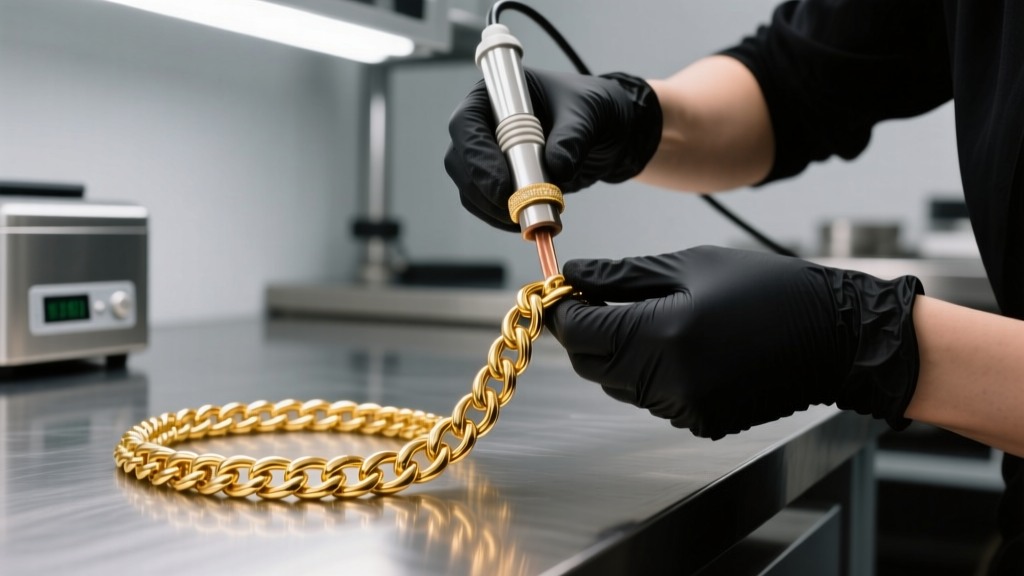
Standard torch soldering applies broad heat. When applied to a hollow-core Italian chain, the thin outer gold shell acts like a heat sink, rapidly absorbing the flame and melting the surrounding links into a solid, deformed lump.
To fix a hollow Italian chain, a jeweler must use a laser welder. Laser welding uses highly focused light pulses to fuse metal in a fraction of a second, leaving the adjacent hollow links completely unaffected. Expect to pay between $60 and $120 for a laser weld on a hollow chain, compared to $25-$40 for a solid chain torch solder.
Chain Style Breakage & Repair Matrix
| Chain Style | Manufacturing Method | Breakage Risk | Required Repair Technique |
|---|---|---|---|
| Italian Rope (Hollow) | Electroformed / Hollow Tube | High (Snagging) | Laser Welding only |
| Italian Figaro (Solid) | Wire-drawn, Soldered Links | Low | Torch Soldering or Laser |
| Italian Franco (Hollow) | Woven Hollow Tube | Medium (Kinking) | Laser Welding + Link Reshaping |
| Italian Box (Solid) | Die-struck, Soldered | Low | Torch Soldering |
| Italian Snake (Solid) | Continuous Tight Mesh | High (Kinking) | Often Unrepairable; Requires Splicing |
Untangling and Preventing Snags on Diamond-Cut Chains
Italian diamond-cut chains are prized for their brilliance, but those sharp, polished facets act like microscopic hooks. They easily catch on wool sweaters, silk blouses, and even natural hair. When a diamond-cut chain snags, it can pull a link out of its soldered joint, creating a weak point.
Troubleshooting a Snagged Link:
If you feel a catch, do not pull. Stop immediately and use a pair of smooth-jawed nylon pliers (or your fingers) to gently compress the snagged link back into its original shape. If the link has pulled apart, it must be re-closed and laser-soldered. To prevent future snags, store your diamond-cut Italian necklaces individually in soft flannel pouches, never loosely in a shared jewelry box where they can abrade against other pieces.
Expert Maintenance Framework for Italian 14k Gold
To preserve the structural integrity and luster of your 14kt gold necklace Italy origin pieces, implement this bi-annual maintenance checklist:
- Clasp Tension Check: Italian lobster claws and spring rings rely on a tiny internal steel spring. Test the tension monthly. If the lever feels spongy, the internal spring is failing, and the clasp must be replaced before the necklace is lost.
- Jump Ring Inspection: Check the jump ring connecting the clasp to the chain. Ensure it is fully closed and, ideally, soldered shut. Many lightweight Italian chains use unsoldered jump rings to save manufacturing time.
- Chemical Avoidance: Remove the necklace before swimming in chlorinated pools. Chlorine reacts violently with the copper and zinc in 14k gold, causing 'metal fatigue' that can cause the chain to crumble to dust over time.
- Professional Ultrasonic Cleaning: Once a year, have a professional jeweler run the piece through an ultrasonic cleaner to dislodge deep-seated debris from the diamond-cut facets, followed by a light steam polish.
By understanding the unique metallurgical and manufacturing traits of Italian 14k gold, you can confidently troubleshoot issues, demand the correct repair methods, and ensure your necklace remains a lasting staple in your collection.


