How to Clean and Care for a Necklace with Colored Stones
Learn expert cleaning and maintenance tips for your necklace with colored stones. Discover safe solutions, Mohs hardness guides, and ultrasonic warnings.

The Hidden Dangers of Commercial Jewelry Cleaners
Owning a beautiful necklace with colored stones is an investment in both artistry and natural history. However, the very characteristics that make colored gemstones so captivating—their unique inclusions, trace elements, and crystalline structures—also make them highly susceptible to damage from improper cleaning. Many jewelry owners unknowingly ruin their pieces by using commercial liquid jewelry dips. These off-the-shelf solutions often contain harsh chemicals like thiourea and ammonia. While ammonia is excellent for cutting through grease on a diamond, it can strip the natural cedar oils used to treat emeralds, leaving them cloudy and fractured. Similarly, porous stones like turquoise, lapis lazuli, and opals can absorb these chemicals, leading to irreversible discoloration and structural degradation.
To maintain the brilliance of your jewelry, you must abandon the 'one-size-fits-all' cleaning mentality. According to the Gemological Institute of America (GIA), understanding the specific mineral composition and treatment history of your gemstones is the critical first step in establishing a safe maintenance routine. In this comprehensive guide, we will break down the exact protocols for cleaning, storing, and protecting your colored gemstone necklaces.
Understanding Gemstone Hardness and Vulnerability
The Mohs scale of mineral hardness is a standard tool used by gemologists to determine a stone's resistance to scratching. However, hardness is only one part of the equation. 'Toughness' (resistance to breaking) and 'Stability' (resistance to heat, light, and chemicals) are equally vital when caring for a necklace with colored stones. Below is a diagnostic table detailing the specific vulnerabilities of popular colored gems.
| Gemstone | Mohs Hardness | Primary Vulnerability | Safe Cleaning Method |
|---|---|---|---|
| Emerald | 7.5 - 8.0 | Fractures, Oil Treatments, Heat | Lukewarm damp cloth only |
| Sapphire | 9.0 | Thermal Shock, Fracture Fillings | Mild soap, soft brush |
| Opal | 5.5 - 6.5 | Dehydration, Scratching, Chemicals | Damp cloth, no soaking |
| Tourmaline | 7.0 - 7.5 | Internal Stress, Sudden Temp Changes | Mild soap, no ultrasonic |
| Tanzanite | 6.5 - 7.0 | Hard Knocks, Cleavage Planes | Mild soap, gentle wiping |
Step-by-Step Cleaning Guide for Colored Gemstones
For the vast majority of colored stones (excluding highly porous or heavily treated gems like emeralds and opals), a gentle, manual cleaning process is the safest and most effective method. Here is the exact protocol used by professional jewelers for routine maintenance.
1. The Safe Soap-and-Water Method
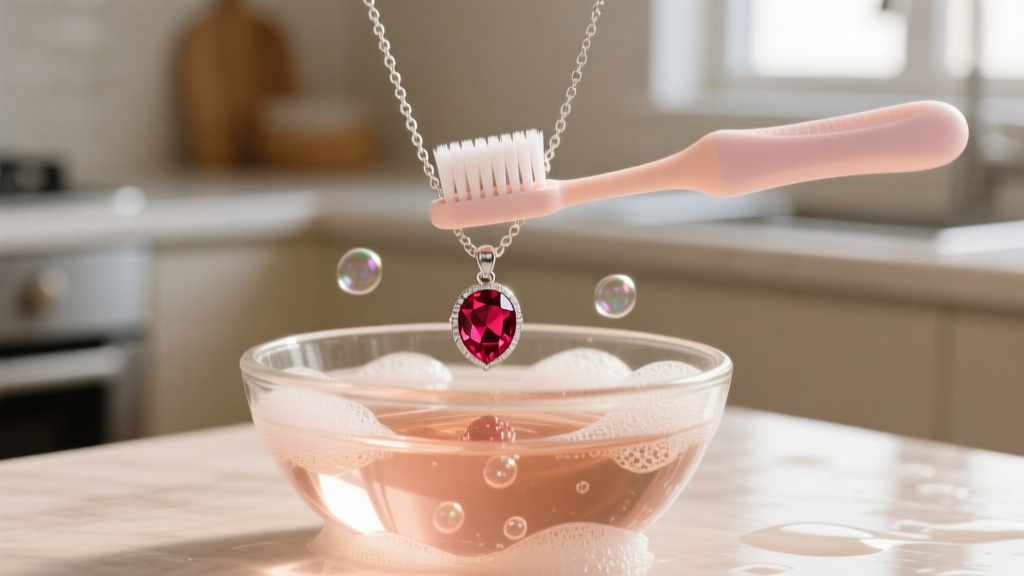
Begin by filling a small glass bowl with distilled or filtered lukewarm water. Avoid tap water, as the chlorine and heavy minerals can leave a microscopic film on the stones. Add two drops of a mild, phosphate-free dish soap (such as original blue Dawn). Do not use hot water; thermal shock can cause stones like tourmaline and tanzanite to fracture along their internal stress lines.
2. Gentle Agitation and Brushing
Submerge the necklace and let it soak for no more than three to five minutes. Using an extra-soft baby toothbrush or a dedicated, clean makeup brush, gently sweep the bristles behind the gemstones where skin oils, lotions, and dead skin cells accumulate. Always brush from the top of the setting downward to avoid pushing debris deeper into the prongs. Never use a hard-bristled toothbrush, as it can scratch the precious metal settings and, in the case of softer stones like opals or lapis, scratch the gem itself.
3. Rinsing and Drying
Rinse the necklace under a gentle stream of lukewarm distilled water. Ensure the drain is securely plugged or use a mesh strainer to prevent accidental loss. Pat the piece dry with a clean, lint-free microfiber cloth. Avoid paper towels or tissues, as the wood fibers can cause micro-scratches on both the metal and softer gems. Allow the necklace to air-dry completely on a towel before storing it to prevent moisture from becoming trapped in the clasps or links.
The Ultrasonic Trap: Why Sound Waves Destroy Stones
One of the most common mistakes jewelry owners make is placing a necklace with colored stones into an ultrasonic cleaner. These machines use high-frequency sound waves to create microscopic bubbles in a liquid solution—a process called cavitation. When these bubbles collapse against the jewelry, they generate intense localized heat and pressure.
'Ultrasonic cleaners can easily shatter stones with internal inclusions or strip away the fracture-filling resins used to enhance the clarity of gems like rubies and emeralds.' - GIA Emerald Care and Cleaning Guide
While an ultrasonic cleaner might be safe for a flawless, untreated sapphire, it is an absolute hazard for emeralds, opals, pearls, turquoise, and any stone that has been fracture-filled or dyed. The vibrations can shake loose the stones from their prongs or cause existing microscopic fissures to spiderweb and split the gem entirely. For colored gemstone necklaces, manual cleaning is always the superior and safer choice.
Chain Maintenance: Matching the Metal to the Method
The chain of your necklace requires its own specific care regimen, dictated by the metal's composition. Sterling silver (925) is highly prone to tarnishing due to its copper content reacting with hydrogen sulfide in the air. To clean a silver chain attached to delicate stones, use a specialized silver polishing cloth. Carefully thread the cloth through the links, ensuring you do not rub the polishing compound onto the gemstones, as mild abrasives in the cloth can dull softer stones.
If your necklace features a 14k or 18k gold chain, it is far more resistant to tarnish but can still accumulate a dulling film of daily wear. The soapy water method outlined above is perfectly safe for gold chains. However, if your gold chain has become kinked or stretched, do not attempt to pull it straight yourself, as this can weaken the soldered jump rings and lead to a catastrophic break.
Strategic Storage and Environmental Protection
Proper storage is just as critical as proper cleaning. When tossing a necklace into a communal jewelry box, harder stones like sapphires (Mohs 9) will easily scratch softer stones like tourmaline or garnet, as well as the metal chains of neighboring pieces.
- Individual Pouches: Store every necklace in its own soft, untreated flannel pouch or a dedicated compartment lined with anti-tarnish fabric.
- Humidity Control for Opals: Opals contain up to 20% water. Storing them in a dry environment (like a safety deposit box or a room with central heating) can cause them to 'craze' or crack. Store opal necklaces with a small, damp cotton ball inside a sealed plastic bag to maintain ambient humidity.
- Light Sensitivity: Gems like kunzite, amethyst, and certain topazes can fade when exposed to prolonged, direct sunlight. Always store these necklaces in dark, opaque drawers or boxes.
- The 'Last On, First Off' Rule: Always put your necklace on after applying perfume, hairspray, and lotions, and take it off immediately upon returning home to minimize chemical exposure.
When to Seek Professional Jeweler Services
While at-home maintenance is excellent for surface dirt, it cannot replace professional servicing. You should take your necklace with colored stones to a certified bench jeweler at least once a year. A professional will use a microscope to inspect the prongs and bezels for wear, ensuring the stones are secure. Furthermore, if you own an emerald necklace, a jeweler can perform a 're-oiling' treatment, gently warming the stone and applying pure cedar oil to restore its clarity and mask surface-reaching fractures that have dried out over the year. By combining gentle at-home care with annual professional inspections, your colored gemstone jewelry will remain vibrant and structurally sound for generations.


