The Complete Care Guide for Necklaces Made With Beads
Learn expert cleaning, storage, and restringing tips for necklaces made with beads. Protect porous stones, silk threads, and organic gems.

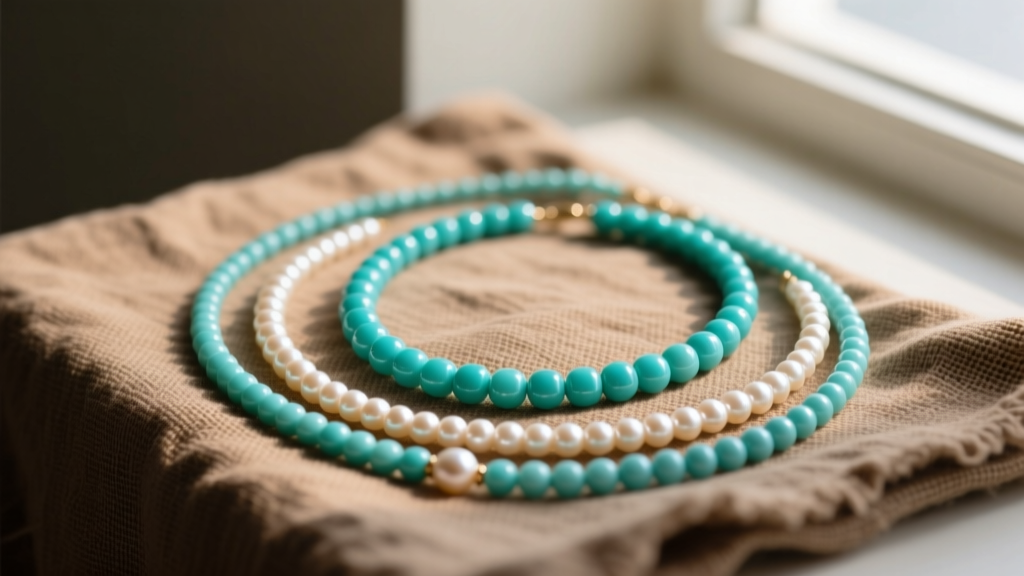
When investing in necklaces made with beads, understanding the intersection of gemology and material science is crucial for preserving your jewelry's longevity. Unlike solid metal chains, beaded necklaces are complex assemblies of varying mineral hardness, porosity, and organic stringing mediums. A cleaning method that restores a glass bead to pristine clarity might permanently cloud a natural turquoise stone or dissolve the silk thread holding it together.
This comprehensive maintenance guide breaks down the exact chemical and physical vulnerabilities of beaded jewelry, providing actionable, expert-level protocols for cleaning, storing, and knowing when to restring your most treasured pieces.
Identifying Your Bead Material: The Porosity Factor
The most common mistake jewelry owners make is treating all beads as uniform, non-reactive objects. In reality, beads fall into three distinct categories based on their chemical composition and porosity. Understanding these categories dictates your entire care regimen.
1. Organic and Highly Porous Beads
Materials like freshwater pearls, coral, amber, and jet are organic or highly porous. Pearls and coral are primarily composed of calcium carbonate, which is exceptionally sensitive to acids. Human sweat has a pH ranging from 4.5 to 7.0; prolonged exposure to this acidity will literally dissolve the nacreous polish off a pearl, leaving it dull and chalky. According to the Gemological Institute of America (GIA), organic gems must never be exposed to harsh chemicals, ultrasonic cleaners, or even prolonged contact with tap water, which often contains chlorine that degrades their surface structure.
2. Porous Semi-Precious Stones
Beads crafted from turquoise, lapis lazuli, malachite, and opal are mineral-based but feature microscopic porous networks. Turquoise, a hydrated phosphate of copper and aluminum, can absorb oils, lotions, and even colored liquids, leading to irreversible discoloration. Malachite is highly sensitive to heat and acids. As noted in the GIA's guidelines on porous stones, these materials should only ever be wiped with a dry or very slightly damp, untreated cloth.
3. Non-Porous Hard Stones and Synthetics
Quartz (amethyst, citrine), agate, jade, glass, and ceramic beads boast a Mohs hardness of 6.5 or higher and lack the microscopic pores of their softer counterparts. These are the most forgiving beads to clean and can withstand mild detergents and gentle scrubbing without risking structural or cosmetic damage.
The Hidden Vulnerability: Stringing Materials
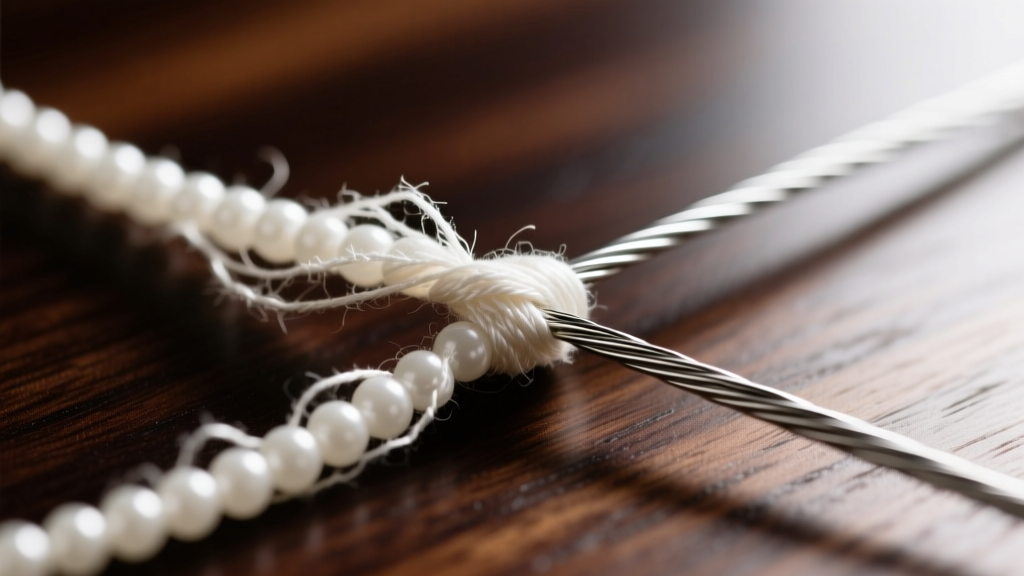
The beads are only half the equation; the medium stringing them together is often the first point of catastrophic failure. The care you apply to the necklace must account for the tensile strength and chemical resistance of the stringing material.
- Traditional Silk Thread: Brands like Griffin produce 100% silk threads that are traditionally used for knotting pearls. Silk is a natural protein fiber that degrades when exposed to moisture, sweat, and UV light. It stretches over time and can rot from the inside out if submerged in water. Rule: Never submerge silk-knotted necklaces.
- Nylon Threads (Nymo, Silamide): These synthetic polyamide threads are highly water-resistant and possess excellent tensile strength. However, they are prone to stretching under heavy bead loads and can degrade under prolonged UV exposure.
- Stainless Steel Beading Wire (e.g., Soft Flex, Beadalon): Composed of multiple micro-strands of stainless steel coated in nylon, these wires are waterproof and incredibly strong. A 49-strand wire offers superior drape and resists kinking compared to a 7-strand wire. However, if the wire is bent past a 90-degree angle, it will suffer metal fatigue and eventually snap.
Step-by-Step Cleaning Protocols by Bead Type
Abandon the idea of a "universal jewelry cleaner." Commercial liquid dips often contain thiourea or mild acids that will strip the polish from soft stones and tarnish the metal findings on your beaded necklace. Instead, use the following targeted protocols.
| Bead Category | Cleaning Agent | Tool | Ultrasonic Safe? |
|---|---|---|---|
| Organic (Pearl, Coral) | Distilled water only | Damp microfiber cloth | NEVER |
| Porous (Turquoise, Lapis) | Dry or barely damp cloth | Untreated cotton swab | NEVER |
| Hard Stone (Quartz, Jade) | pH-neutral dish soap + distilled water | Soft baby toothbrush | No (risk of fracture) |
| Glass / Ceramic | Mild dish soap + warm tap water | Soft bristle brush | Yes (if no foil backing) |
The Safe Cleaning Method for Hard Stone Beads
For non-porous beads strung on nylon-coated steel wire, mix three drops of pH-neutral dish soap (like Dawn) into a bowl of distilled water. Dip a soft-bristled baby toothbrush into the solution and gently agitate the surface of the beads. Rinse quickly under a low stream of distilled water to avoid mineral deposits from tap water, and immediately pat dry with a lint-free microfiber towel. Allow the necklace to lay flat on a dry towel for 24 hours to ensure the crimp covers and clasps are completely dry before storage.
Proper Storage to Prevent Micro-Scratches
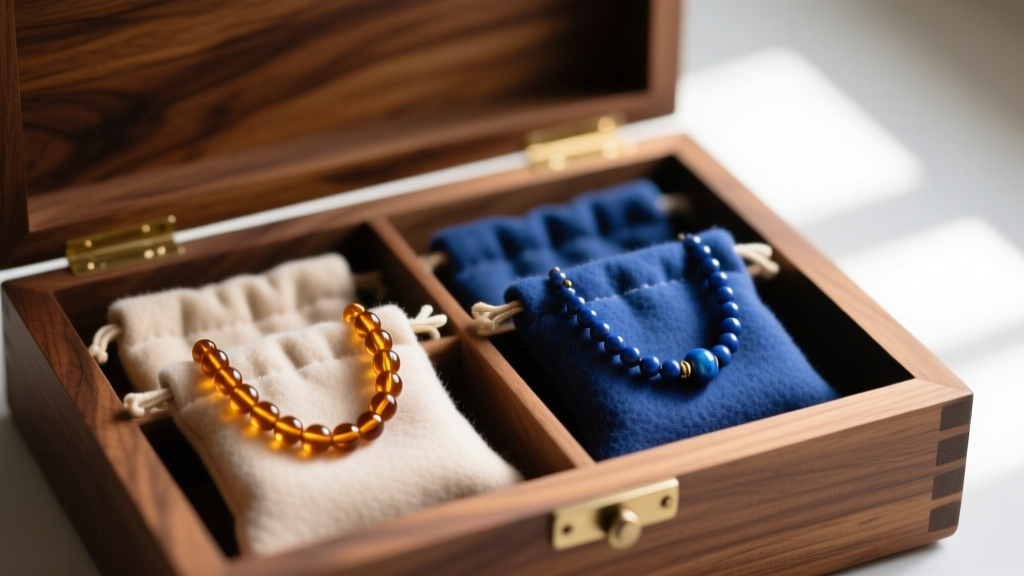
Storing necklaces made with beads improperly is a guaranteed way to ruin their finish through micro-scratching. The Mohs scale of mineral hardness dictates that any material can be scratched by a material with a higher number. If you toss a lapis lazuli necklace (Mohs 5-6) into a box with a quartz or agate necklace (Mohs 7), the harder quartz will permanently gouge the softer lapis over time.
Expert Storage Rules:
- Individual Isolation: Store every beaded necklace in its own soft flannel or microfiber pouch. Avoid plastic polyvinyl chloride (PVC) bags, as PVC off-gasses chemicals that can react with porous stones and metal clasps. Use polyethylene (PE) zip bags if plastic is necessary.
- Lay Flat or Hang Wide: Heavy stone beads on silk or nylon thread will stretch the material if hung on a standard hook over long periods. Lay heavy beaded necklaces flat in a drawer. If you must hang them, use a wide, padded velvet hanger to distribute the weight.
- Climate Control: Opal beads contain up to 20% water. Storing them in a dry environment (like a safety deposit box or near a heating vent) can cause them to "craze" or crack. Store opals with a damp cotton ball inside a sealed polyethylene bag to maintain ambient humidity.
When to Restring: Recognizing Failure Modes
Even with meticulous care, the structural integrity of stringing materials degrades. Wearing a necklace with compromised thread is a recipe for a catastrophic break and lost beads. Perform these diagnostic checks every six months:
- The Pull Test (Silk/Nylon): Gently pull the thread between two beads. If you see more than a millimeter of exposed thread, or if the thread looks fuzzy or discolored, it is experiencing enzymatic breakdown and must be restrung immediately.
- The Kink Check (Wire): Run the beading wire through your fingers. If you feel any sharp bends, rigid kinks, or notice the nylon coating peeling back near the crimp beads, the internal steel strands are fatigued.
- Clasp Wear: Inspect the jump rings and lobster clasps. Beads act as an abrasive file against metal findings. If the wire loop at the clasp is thinning, have a jeweler replace the finding before it snaps.
"A general rule of thumb for high-quality silk-knotted pearl or soft-stone bead necklaces is to have them professionally restrung every 1 to 2 years if worn weekly. The cost of restringing is a fraction of the cost of replacing lost or damaged heritage beads."
By respecting the unique material properties of your beads and their stringing mediums, you ensure that your necklaces made with beads remain vibrant, structurally sound, and ready to be worn for generations.


