Wolf Pendant Necklace Guide: Metals, Casting & Chains
Explore the technical anatomy of a premium wolf pendant necklace. Expert guide on lost-wax casting, metal grades, chain gauges, and patina techniques.

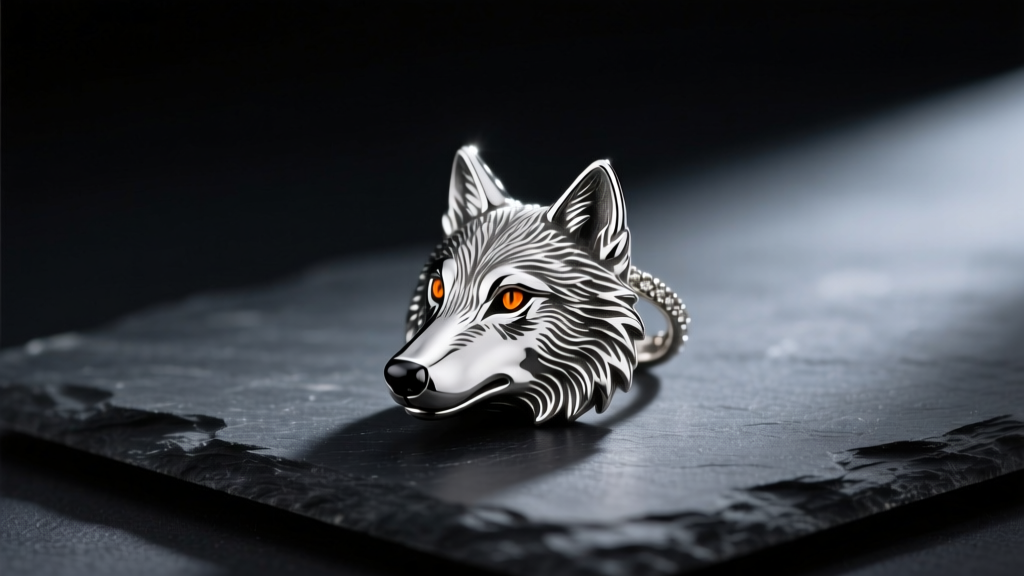
The wolf pendant necklace is far more than a simple stylistic motif; it represents a rigorous stress test for a jeweler's technical prowess. Capturing the micro-textures of a wolf's fur, the piercing intensity of its gaze, and the structural integrity of its snout requires advanced metallurgical knowledge and precision casting techniques. Whether you are a collector of artisan jewelry or a metalworker looking to refine your craft, understanding the engineering behind a high-quality wolf pendant necklace is essential for making informed purchasing and design decisions.
The Anatomy of a High-Quality Wolf Pendant
Mass-market animal pendants are often die-struck, a process that compresses metal sheets between two steel dies. While cost-effective, die-striking flattens micro-details and struggles with deep undercuts. A premium wolf pendant necklace demands lost-wax casting, a method that allows for infinite geometric complexity.
The process begins with a master model, either hand-carved from jeweler's wax or 3D-printed using high-resolution castable resin (typically achieving 25-micron layer thickness). This model is encased in a silicone mold to create a negative cavity, into which molten wax is injected to create a wax tree. The tree is then invested in a gypsum-based powder and placed in a kiln for a burnout cycle.
Expert Insight: The burnout temperature must be carefully controlled, usually peaking around 1350°F (732°C). If the temperature ramps up too quickly, the wax expands and fractures the investment mold, leading to 'finning'—thin, unwanted metal ridges on the wolf's fur that require hours of manual filing to remove.
Sprue placement is equally critical. On a detailed wolf head, the sprue (the channel through which molten metal flows) should be attached at the base of the neck or the top of the skull. Attaching it to the snout risks leaving a visible scar that disrupts the anatomical flow of the muzzle.
Metallurgy and Material Grades
The choice of metal dictates not only the price but the pendant's weight, skin reactivity, and aging characteristics. Below is a technical breakdown of the most common metals used in artisan wolf pendants.
| Metal Alloy | Composition | Hardness (Vickers) | Patina Profile | Avg. Price (30g) |
|---|---|---|---|---|
| Sterling Silver | 92.5% Ag, 7.5% Cu | 60-70 HV | High (Black sulfide) | $120 - $250 |
| Architectural Bronze | 88% Cu, 12% Sn | 70-90 HV | Extreme (Verdigris) | $80 - $150 |
| Grade 5 Titanium | Ti-6Al-4V | 350 HV | None (Anodized only) | $180 - $350 |
| Damascus Steel | 1084 / 15N20 layers | 58-62 HRC | Moderate (Etch contrast) | $150 - $300 |
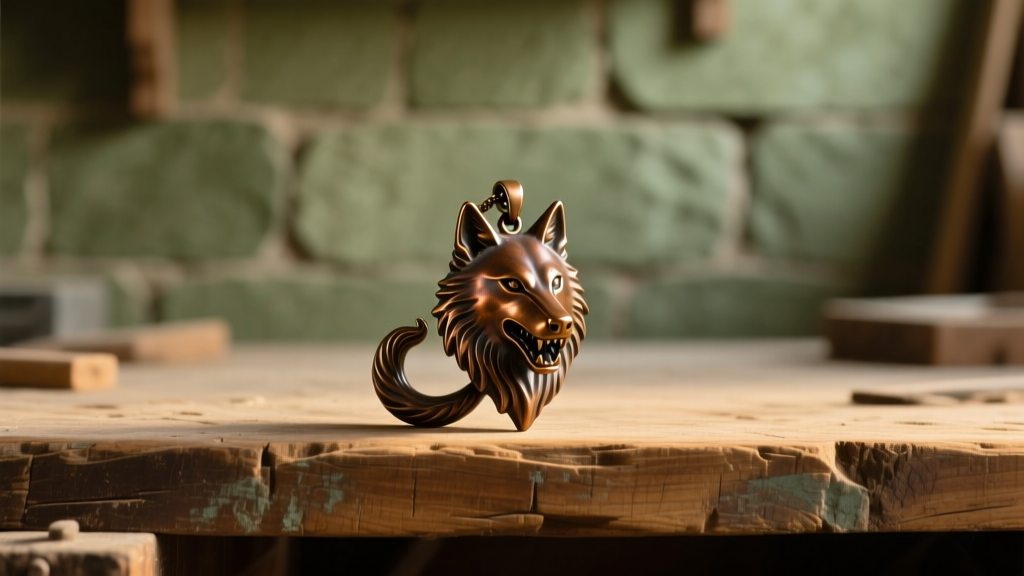
The Bronze Verdigris Challenge
Bronze offers a beautiful, earthy weight and exceptional casting detail, but it is highly reactive to human sweat. The 12% tin and 88% copper composition will oxidize into copper chloride and copper carbonate (verdigris) when exposed to the acidic pH of skin, often leaving a green stain on the wearer's chest. To mitigate this without sacrificing the metal's raw aesthetic, artisan jewelers often seal the backplate of the bronze wolf pendant with a micro-crystalline polymer, such as Renaissance Wax, which must be reapplied every 3 to 6 months.
Chain Pairing: Gauge, Length, and Bail Mechanics
A common failure point in heavy thematic jewelry is the chain-to-pendant connection. A solid cast silver or bronze wolf head pendant weighing between 30 and 50 grams exerts immense kinetic force on the bail (the loop that connects the pendant to the chain) during daily movement.
Bail Engineering
Standard soldered loop bails are insufficient for pendants exceeding 25 grams. The solder joint will eventually fatigue and snap. For a heavy wolf pendant necklace, you must look for two specific bail types:
- Hidden Bails: Drilled horizontally through the skull or neck of the wolf. This completely eliminates the bail as a failure point and lowers the pendant's center of gravity, preventing it from flipping over.
- Heavy-Duty Triangle Bails: Cast as a single piece with the pendant (integral bail) or laser-welded using a high-melting-point filler rod, distributing tensile stress across a wider surface area.
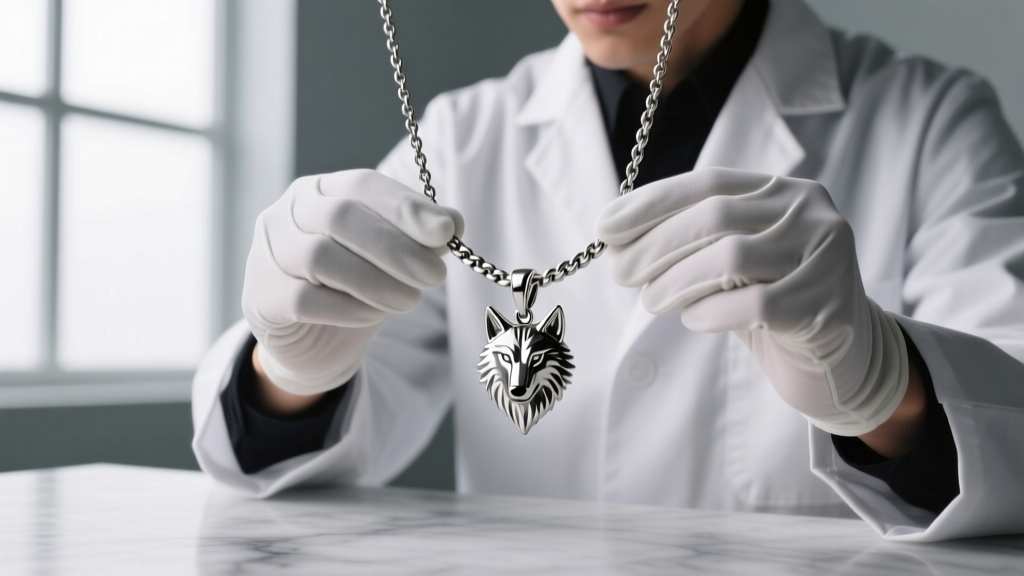
Chain Gauge and Link Structure
Do not pair a 40-gram wolf pendant with a standard 1.5mm cable chain; the links will elongate and snap. The inner diameter of the bail must exceed the chain thickness by at least 1.5mm to prevent friction wear. For heavy pendants, opt for a 2.5mm to 4.0mm Wheat or Franco chain. These chains feature interlocking V-links that distribute tensile stress evenly across multiple planes, offering a breaking strength exceeding 15kg. Always ensure the clasp is a heavy-duty lobster claw or a custom machined box clasp, as spring-ring clasps will fail under dynamic loads.
Patina Development and Oxidation Techniques
The visual impact of a wolf pendant relies heavily on contrast. A highly polished silver wolf looks flat and artificial because the light reflects uniformly across the fur textures. To create depth, jewelers use chemical oxidation.
The industry standard is Liver of Sulfur (LOS), a mixture of potassium sulfide and potassium polysulfide. The pendant is submerged in a warm solution (typically 1 part LOS to 20 parts distilled water at 140°F). The sulfides react with the copper in the sterling silver or bronze, rapidly building a black or dark brown patina in the recessed areas of the fur, eyes, and snout wrinkles.
Once the desired darkness is achieved, the chemical reaction is neutralized in a baking soda and water bath. The jeweler then uses radial bristle discs or a specialized polishing cloth to selectively remove the oxidation from the high points (the tip of the nose, the brow ridge, and the outer ears). This 'antiquing' process artificially ages the piece and dramatically enhances the three-dimensional topography of the wolf's face.
Sourcing, Hallmarks, and Authenticity
When investing in a premium wolf pendant necklace, verifying the metallurgical claims is paramount. According to The Silver Institute, genuine sterling silver must bear a '925' stamp, indicating 92.5% pure silver content. However, a number stamp alone is easily faked.
Look for a registered Maker's Mark alongside the purity stamp. As outlined by The London Assay Office, a maker's mark is a unique, legally registered symbol or set of initials that traces the piece back to the specific workshop or artisan responsible for its creation. This ensures accountability for the metal's purity and the structural integrity of the casting.
Furthermore, if the wolf pendant features gemstone eyes (such as amber, onyx, or cubic zirconia), ensure they are bezel-set or flush-set rather than glued. Adhesives degrade over time when exposed to skin oils and UV light, leading to lost stones. A properly engineered bezel uses a burnishing tool to physically push a lip of metal over the gemstone's girdle, securing it permanently without the use of chemical adhesives.
By prioritizing lost-wax construction, appropriate chain gauges, and masterful patina work, you ensure your wolf pendant necklace is not just a striking piece of symbolism, but a durable heirloom engineered to withstand decades of daily wear.


