Why Are Men Wearing Pearl Necklaces? The Ultimate Care Guide
Discover why are men wearing pearl necklaces in 2026 and learn expert care, cleaning, and maintenance tips to protect porous nacre from sweat and cologne.

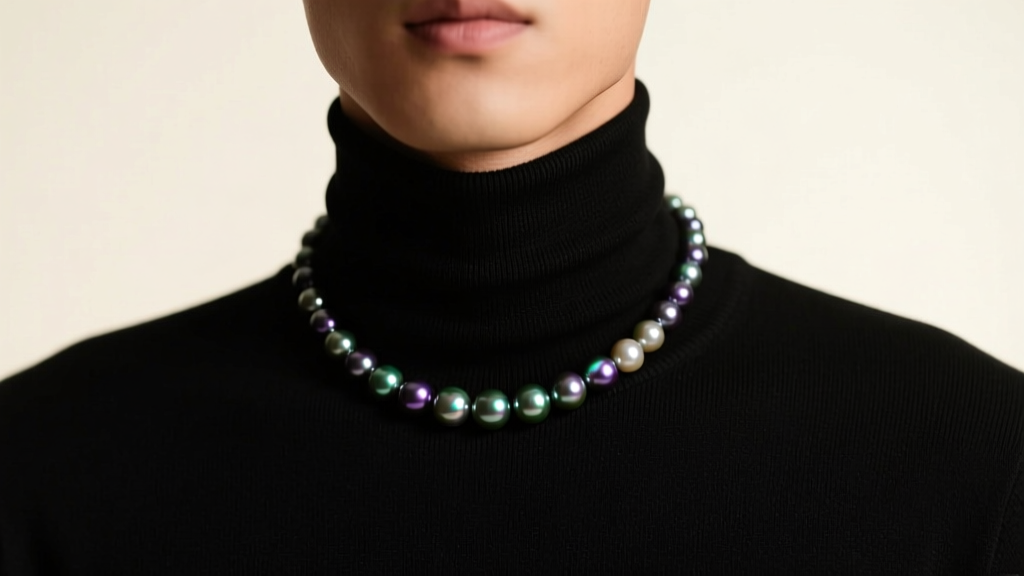
The Cultural Shift: Why Are Men Wearing Pearl Necklaces?
If you have browsed menswear editorials or street style photography recently, you have likely asked yourself: why are men wearing pearl necklaces? What began as a subversive style choice by musicians like A$AP Rocky and Harry Styles has fully matured into a mainstream 2026 menswear staple. The modern man is drawn to pearls because they offer a striking juxtaposition. The organic, luminescent softness of nacre contrasts beautifully with rugged streetwear, tailored suiting, and minimalist aesthetics. Whether it is a strand of asymmetrical freshwater baroque pearls for an edgy look or a dark, moody Tahitian pearl strand for formal wear, pearls have shattered traditional gender binaries in jewelry.
However, as more men invest in these organic gems—spending anywhere from $300 for high-grade freshwater strands to over $4,000 for premium Tahitian or South Sea varieties—a critical knowledge gap has emerged. Men's grooming habits, skin chemistry, and daily environments pose unique threats to pearls. Unlike diamonds or sapphires, pearls are organic, porous, and remarkably delicate. Understanding how to care for them is just as important as knowing how to style them.
The Vulnerability of Nacre: What Men Need to Know
To properly maintain a pearl necklace, you must understand its physical limitations. Pearls are composed of nacre, a crystalline substance made of calcium carbonate and conchiolin (an organic protein). On the Mohs scale of mineral hardness, pearls rank between 2.5 and 4.5. For context, a copper penny is a 3.5, meaning everyday objects can easily scratch them.
Furthermore, calcium carbonate is highly susceptible to acidic degradation. The average pH of human sweat ranges from 4.5 to 7.0, but can skew more acidic depending on diet and hydration. When acidic sweat rests against a pearl strand, it slowly eats away at the calcium carbonate, leading to a loss of luster, dulling, and eventually, permanent etching. Men typically have larger sebaceous glands and higher sweat production rates than women, making daily maintenance a non-negotiable aspect of pearl ownership.
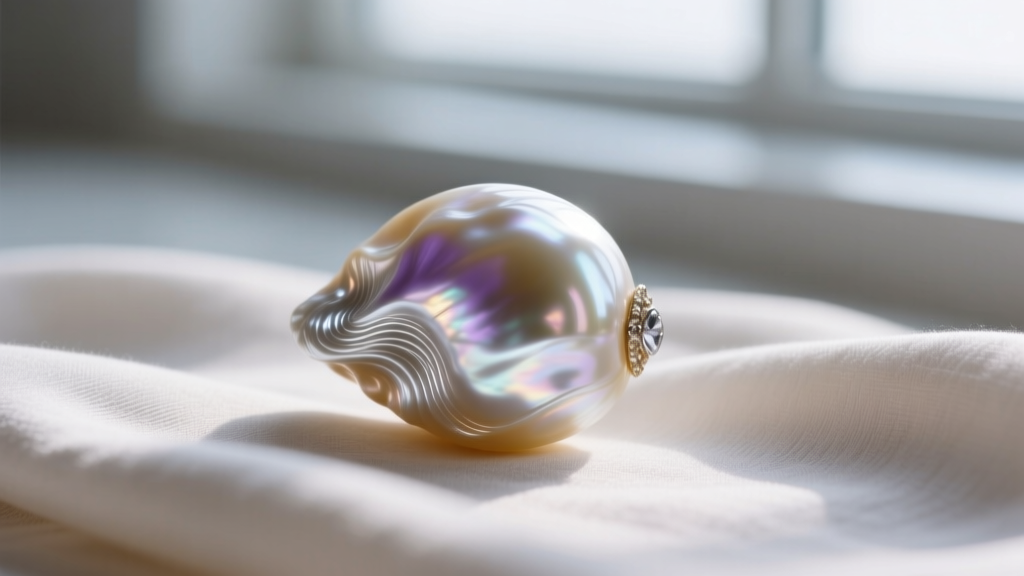
Daily Maintenance: The 'Last On, First Off' Protocol
The golden rule of pearl care is 'last on, first off.' This is especially critical for men who use grooming products containing harsh chemicals.
The Cologne and Aftershave Threat
Most men's colognes, aftershaves, and hair styling products contain high concentrations of ethanol (often 70% to 90%). Alcohol is a desiccant; it strips the natural moisture from the nacre and the conchiolin binder. Repeated exposure to aerosolized cologne or direct splashes of aftershave will cause 'crazing'—a network of microscopic cracks on the pearl's surface that eventually leads to the nacre peeling off in flakes. Always apply your fragrance and grooming products at least 15 minutes before putting on your pearl necklace.
Dealing with Sweat and Gym Environments
Never wear pearls to the gym. The combination of heavy perspiration, elevated body heat, and the friction of a cotton t-shirt will degrade the silk thread holding the necklace together and dull the pearls. If you wear your pearls out for an evening and work up a sweat, wipe them down immediately upon returning home.
Deep Cleaning Techniques for Men's Pearl Strands
Forget everything you know about cleaning diamond or gold jewelry. Ultrasonic cleaners, steamers, and commercial jewelry dips will destroy a pearl necklace in seconds. The high-frequency vibrations of an ultrasonic cleaner will shatter the delicate nacre layers, while the ammonia found in most commercial dips will dissolve the pearl's surface.
The Safe Cleaning Method
- Prepare a mild solution: Mix a bowl of distilled water (tap water can contain chlorine or heavy metals) with a single drop of pH-neutral baby shampoo or pure castile soap.
- Dampen, do not soak: Dip a clean, lint-free microfiber cloth into the solution and wring it out until it is barely damp. Submerging a pearl strand in water will cause the silk thread to stretch, rot, and eventually snap.
- Wipe each pearl individually: Gently rub each pearl with the damp cloth, paying special attention to the drill holes where dirt, dead skin cells, and sebum accumulate.
- Air dry flat: Lay the necklace flat on a dry towel in a well-ventilated area. Hanging a wet pearl necklace will cause the wet silk thread to stretch under the weight of the pearls, ruining the drape of the necklace.
Cleaning Agents & Their Effects on Nacre
| Agent / Method | Effect on Pearls | Verdict |
|---|---|---|
| Ultrasonic Cleaners | Causes severe micro-fractures and nacre peeling due to high-frequency vibrations. | NEVER USE |
| Ammonia / Bleach | Dissolves calcium carbonate; permanently destroys luster and structural integrity. | NEVER USE |
| Toothbrushes | Nylon bristles (even 'soft' ones) scratch the surface, creating dull, matte patches. | NEVER USE |
| pH-Neutral Castile Soap | Safe for lifting oils and sebum without stripping the pearl's natural moisture. | SAFE |
| Damp Microfiber Cloth | Gently removes surface acidity and sweat without abrasive friction. | SAFE |
For authoritative guidelines on organic gemstone maintenance, the Gemological Institute of America (GIA) strongly advises against any chemical-based cleaning solutions, emphasizing that a simple damp cloth is the safest tool for preserving nacre.
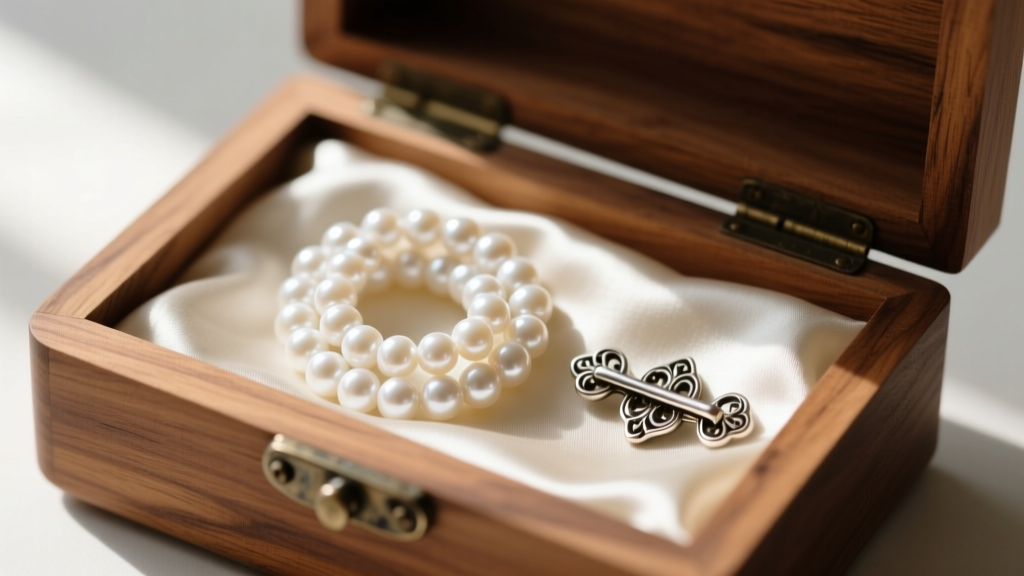
Proper Storage to Prevent Dehydration
One of the most common failure modes for men's pearl jewelry is improper storage. Pearls contain about 2% to 4% water by weight. If they are exposed to excessively dry environments, they will dehydrate, leading to shrinking, cracking, and a chalky appearance.
Many men store their high-value jewelry in a home safe or a bank safety deposit box. These environments are heavily dehumidified to protect paper documents and electronics, making them terrible for pearls. Instead, store your pearl necklace in a soft silk or cotton pouch that allows for slight airflow. Keep the pouch in a room with normal ambient humidity (ideally between 45% and 55%). Never store pearls in airtight plastic bags, as the plastic can emit trace chemicals that trap moisture and promote fungal growth on the conchiolin.
Additionally, always store pearls separately from other jewelry. Because they rank so low on the Mohs scale, a careless bump against a steel watch, a titanium ring, or even a gold chain will result in deep, irreparable scratches on the pearl's surface.
Restringing and Hardware Maintenance
The physical string holding the pearls together requires just as much attention as the gems themselves. High-quality pearl necklaces are strung on pure silk thread with individual knots between each pearl. These knots serve two purposes: they prevent the pearls from rubbing against each other, and they ensure that if the strand breaks, you only lose one pearl.
Over time, the silk thread absorbs body oils, stretches, and degrades. If you wear your pearl necklace frequently, it should be professionally restrung every 12 to 18 months. If you notice the thread looking frayed, discolored, or if there is visible 'gapping' (space between the pearl and the knot when the necklace is pulled taut), take it to a jeweler immediately.
When selecting hardware, opt for 14k or 18k solid gold clasps. Sterling silver is prone to tarnishing, and the sulfur compounds released during the tarnishing process can stain the adjacent pearls. The American Gem Trade Association (AGTA) recommends having a professional jeweler inspect the clasp mechanism and silk integrity annually to prevent catastrophic strand failures.
Final Thoughts on the Modern Pearl
The answer to why are men wearing pearl necklaces is rooted in a desire for sophisticated, boundary-pushing style. But true style requires stewardship. By respecting the organic nature of nacre, avoiding the destructive effects of modern grooming chemicals, and adhering to a strict cleaning and storage protocol, you can ensure your pearl strand remains a luminous, enduring centerpiece of your wardrobe for decades to come.


