Expert Care Guide for Your Solid Gold Necklace Band
Learn expert techniques to clean, polish, and protect your gold necklace band. Discover karat-specific care, storage hacks, and repair tips.

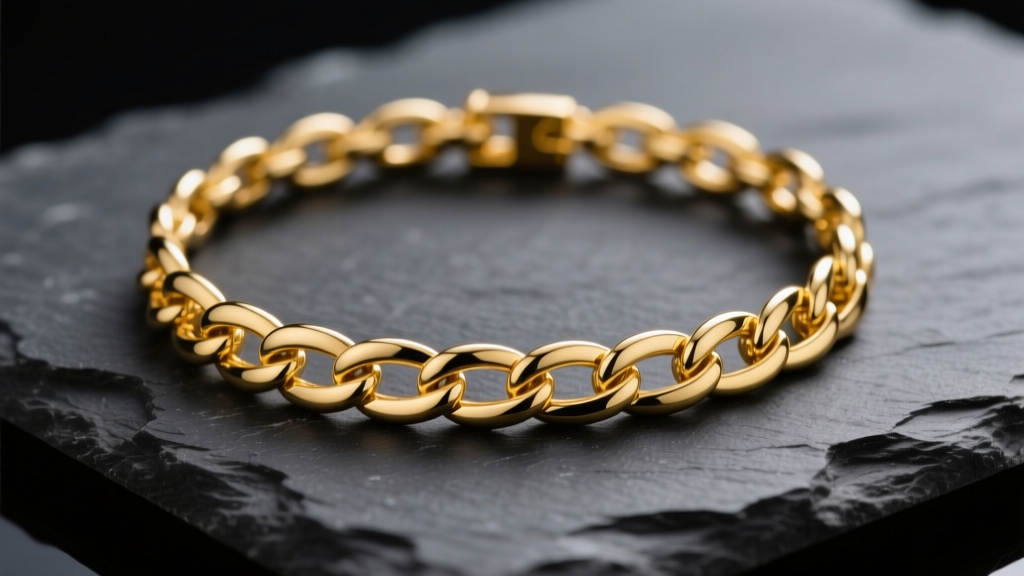
A solid gold necklace band is more than a mere accessory; it is a wearable asset and a testament to timeless metallurgy. Whether you wear a minimalist 14k gold collar daily or reserve a heavy 22k gold choker band for special occasions, environmental exposure, skin chemistry, and mechanical stress will inevitably degrade its luster if left unchecked. As of 2026, while advancements in eco-friendly jewelry care products have made home maintenance safer, the fundamental rules of gold metallurgy remain unchanged. This comprehensive guide bypasses generic advice to provide actionable, metallurgically sound protocols for cleaning, storing, and preserving the structural integrity of your gold necklace band.
The Metallurgy of Maintenance: Understanding Your Gold Karat
To properly care for a gold necklace band, you must first understand its exact alloy composition. Pure 24k gold is virtually immune to tarnish and oxidation, but it is far too malleable for daily wear. Therefore, jewelers alloy gold with metals like copper, zinc, silver, and palladium to increase tensile strength. According to the Gemological Institute of America (GIA), these alloy metals are the primary culprits behind tarnish and discoloration.
- 14K Gold (58.3% Pure): The most durable option for daily wear. However, the high copper and zinc content makes it susceptible to copper sulfide formation (tarnish) when exposed to sulfur compounds in the air, sweat, and certain cosmetics.
- 18K Gold (75.0% Pure): Offers a richer, deeper yellow hue and is highly resistant to tarnish. It is softer than 14k, meaning the band is more prone to micro-scratches and surface marring from abrasive cleaning methods.
- 22K Gold (91.6% Pure): Extremely soft and typically reserved for intricate, heavy bands worn occasionally. It requires the gentlest cleaning approach, as aggressive brushing will permanently alter its polished finish.
Anatomy of the Band: How Link Styles Dictate Cleaning
The physical architecture of your gold necklace band dictates where oils, dead skin cells, and environmental pollutants will accumulate. A smooth, solid gold collar band requires a simple wipe-down, whereas complex link structures demand targeted agitation.
Herringbone and Snake Chains: These bands feature tightly packed, flat links that lay flush against the skin. While elegant, they act as magnets for body oils and lotions, which seep into the microscopic horizontal seams. Over time, this buildup causes the band to look dull and feel stiff. Rope and Box Chains: The deep crevices and right-angle interiors of box links trap particulate matter. Standard soaking is rarely enough; these require bristle agitation to dislodge compacted debris from the inner corners of the links.
The Professional Step-by-Step Cleaning Protocol
Forget harsh commercial dips and abrasive polishing cloths, which strip away microscopic layers of gold and alloy. The safest, most effective method for cleaning a gold necklace band utilizes a controlled, pH-neutral approach.
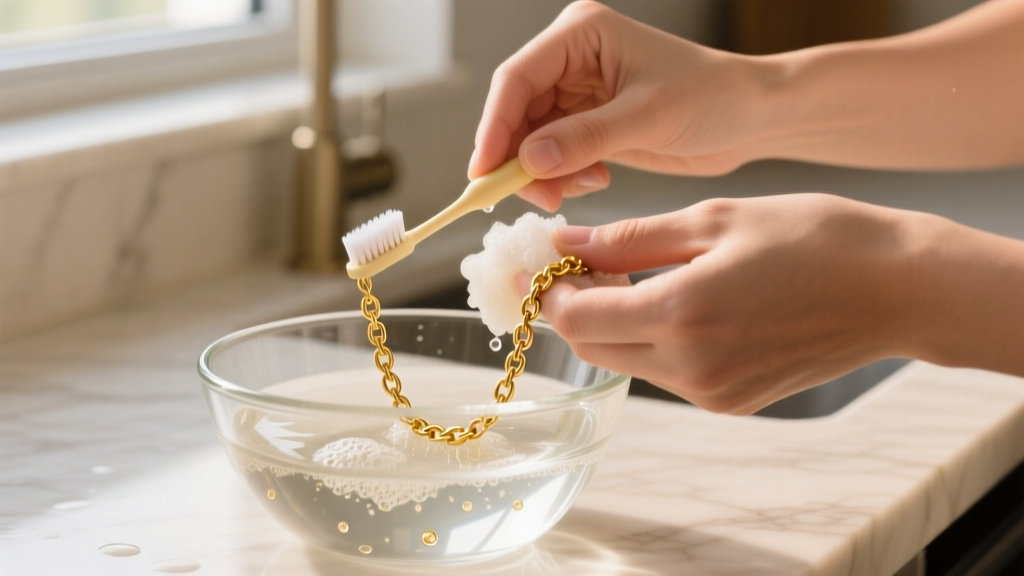
Step 1: Prepare the Solution
Fill a glass bowl with one cup of distilled water. Never use tap water, as the chlorine, chloramines, and hard minerals can cause micro-pitting and leave calcium deposits in the chain links. Add exactly three drops of a phosphate-free, mild dish soap (such as Dawn Ultra). Avoid soaps containing moisturizing agents or heavy fragrances, which leave a filmy residue on the gold.
Step 2: The Thermal Soak
Warm the solution slightly (around 95°F or 35°C) to help emulsify body oils. Submerge your gold necklace band completely and let it soak for 15 to 20 minutes. Do not exceed 30 minutes, especially if the band features any soldered joints or porous gemstone accents.
Step 3: Targeted Agitation
Remove the band from the solution and use a soft-bristled infant toothbrush. Infant brushes have a bristle diameter of approximately 0.15mm, compared to the 0.30mm bristles of standard adult brushes, preventing micro-scratching on 18k and 22k gold. Gently brush along the grain of the links, paying special attention to the clasp mechanism and the underside of the band where it contacts the skin.
Step 4: The Rinse and Dry
Rinse the band thoroughly under a gentle stream of lukewarm distilled water. Shake off excess water and lay the band flat on a clean, lint-free microfiber cloth. Never use paper towels or tissues, as their wood-pulp fibers are abrasive enough to scratch high-karat gold. Pat dry, and allow it to air-dry completely before storage.
Critical Failure Modes: What Destroys a Gold Necklace Band?
Proper cleaning preserves the surface, but avoiding mechanical and chemical failure modes preserves the structure. According to guidelines from Jewelers of America, the following hazards cause the most irreversible damage to gold bands:
1. Mercury Amalgamation
Gold has a high affinity for mercury. If your gold necklace band comes into contact with mercury (found in older thermometers, certain fluorescent bulbs, and trace amounts in some industrial cosmetics), it will undergo amalgamation, turning the gold a dull, silvery-white color. This is not a surface stain; it is a metallurgical bond. Do not attempt to scrub it off. A professional jeweler must use a specialized torch to heat the band to 356°C, vaporizing the mercury and restoring the gold's color.
2. Hollow-Link Crushing
Many modern gold necklace bands are manufactured using electroforming, creating hollow links that are 70% lighter than solid gold. While visually identical, these bands have paper-thin walls. Sleeping in a hollow band, or pressing it against a hard surface, will cause the links to dent or crush permanently. Never place a hollow gold band in an ultrasonic cleaner; the 40kHz high-frequency vibrations can fracture the microscopic solder joints holding the hollow links together.
3. Clasp Spring Corrosion
While the body of a lobster or spring-ring clasp is gold, the internal spring mechanism must be made of steel to maintain tension. When exposed to saltwater, heavy perspiration, or chlorine, this steel spring can rust. If your clasp becomes stiff, do not use WD-40, which attracts dirt and degrades gold alloys. Instead, apply a microscopic drop of synthetic sewing machine oil to the hinge using a sewing pin, then work the clasp open and closed to distribute the lubricant.
Advanced Storage and Daily Wear Rules
How you store your gold necklace band when it is not on your neck is just as critical as how you clean it. Improper storage leads to tangling, scratching, and accelerated tarnishing.
| Gold Karat | Durability Profile | Recommended Cleaning Frequency | Ultrasonic Safe? (Solid Links Only) |
|---|---|---|---|
| 14K | High (Ideal for Daily Wear) | Monthly | Yes (Max 3 minutes) |
| 18K | Medium (Frequent Wear) | Bi-Monthly | Yes (Max 2 minutes) |
| 22K | Low (Occasional / Ceremonial) | Quarterly or As Needed | No (Risk of Link Warping) |
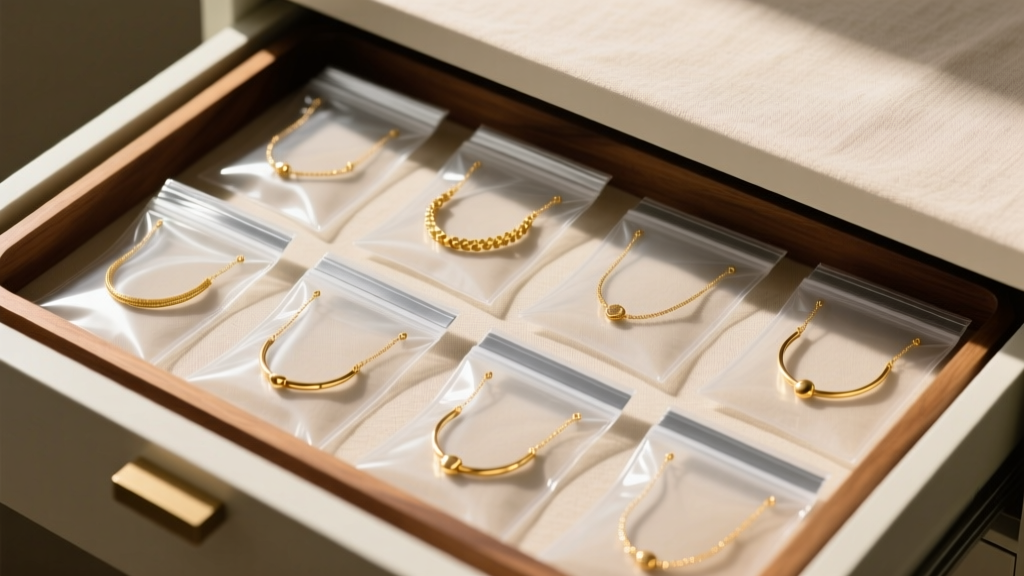
Always store your gold necklace band in an individual polyethylene zip bag. Avoid PVC plastics, which emit sulfur gases over time and actively accelerate tarnishing. For added protection, drop a 3M Anti-Tarnish strip into the pouch. These strips absorb airborne sulfur and hydrogen sulfide before they can react with the copper alloys in your 14k or 18k band. If you own a herringbone or snake chain band, never hang it on a hook; the weight of the chain will pull the flat links apart, causing permanent kinking. Always store these specific bands perfectly flat.
When to Seek Professional Jeweler Intervention
Home cleaning is excellent for removing organic buildup, oils, and light tarnish, but it cannot reverse deep scratching or structural wear. If your gold necklace band has lost its high-polish mirror finish due to years of micro-abrasions, it requires professional polishing. Be aware that polishing is an abrasive process; a jeweler uses a buffing wheel coated with jeweler's rouge to remove a microscopic layer of gold to reveal the fresh metal beneath. Over-polishing a band over decades will eventually thin the links and compromise the structural integrity of the piece. Limit professional polishing to once every two to three years, and rely on the gentle home-cleaning protocol outlined above for your routine maintenance.


