Expert Care & Cleaning Guide for a To My Son Necklace
Learn how to properly clean, store, and maintain a to my son necklace. Expert tips for preserving engravings, plating, and metal finishes.


The Sentimental Value Demands Proper Care
A 'to my son necklace' is far more than a simple accessory; it is a tangible representation of a parent's love, often given during major life milestones like graduations, deployments, or weddings. Because these pieces carry immense emotional weight, preserving their physical condition is paramount. Over time, daily wear exposes the pendant and chain to sweat, environmental pollutants, and friction, which can degrade the metal and obscure the heartfelt engraved message.
Unlike generic fashion jewelry, sentimental pendants require a targeted maintenance approach. The cleaning method you choose must account for the specific base metal, the type of plating (if any), and the depth of the laser or rotary engraving. In this comprehensive guide, we break down the exact metallurgical properties of common necklace materials and provide actionable, step-by-step protocols to ensure your son's necklace remains a pristine heirloom for decades to come.
Identify Your Metal: The Foundation of Necklace Care
Before applying any cleaning solution, you must accurately identify the metal composition of the necklace. Using an abrasive polish on a gold-plated brass piece, for instance, will strip the plating entirely, ruining the pendant. According to the Gemological Institute of America (GIA), understanding your metal's hardness and reactivity is the first rule of jewelry conservation.
| Metal Type | Common Markings | Tarnish Risk | Water Resistance | Cleaning Difficulty |
|---|---|---|---|---|
| 316L Stainless Steel | 316L, Surgical Steel | Very Low | Excellent | Easy |
| 925 Sterling Silver | 925, STERLING | High (Oxidizes) | Poor (Accelerates tarnish) | Moderate |
| Gold Vermeil | 925 + Gold Plating | Moderate (If plating wears) | Poor | High (Requires gentle care) |
| Brass / Base Metal | None or 'Brass' | Very High | Poor (Causes green skin) | Moderate |
Step-by-Step Cleaning Protocols by Material
Protocol A: 316L Stainless Steel (The Durable Choice)
Most modern 'to my son' compass and dog tag pendants are crafted from 316L surgical stainless steel. This alloy contains molybdenum, which drastically increases its resistance to chloride corrosion (found in sweat and seawater) compared to standard 304 stainless steel.
- Prepare a Cleaning Bath: Mix two cups of warm distilled water with three drops of a pH-neutral dish soap (avoid soaps with added moisturizers or citrus extracts).
- Soak and Agitate: Submerge the necklace for 5 to 10 minutes. Gently agitate the water to force the soapy solution through the chain links.
- Detail the Chain: Use an extra-soft baby toothbrush to gently scrub the clasp and the jump ring connecting the pendant to the chain, as these areas trap the most dead skin and sebum.
- Rinse and Dry: Rinse thoroughly under lukewarm running water. Pat dry with a lint-free microfiber cloth. Never air-dry, as hard water minerals will leave white spots on the steel.
Protocol B: Sterling Silver and Gold Vermeil (The Delicate Heirlooms)
If the necklace is crafted from 925 sterling silver or features gold vermeil (which legally requires a minimum of 2.5 microns of gold plating over sterling silver), you must avoid harsh chemicals and ultrasonic cleaners. The Silver Institute emphasizes that silver sulfide tarnish must be removed via chemical reduction or extremely gentle mechanical action to prevent scratching the soft metal.
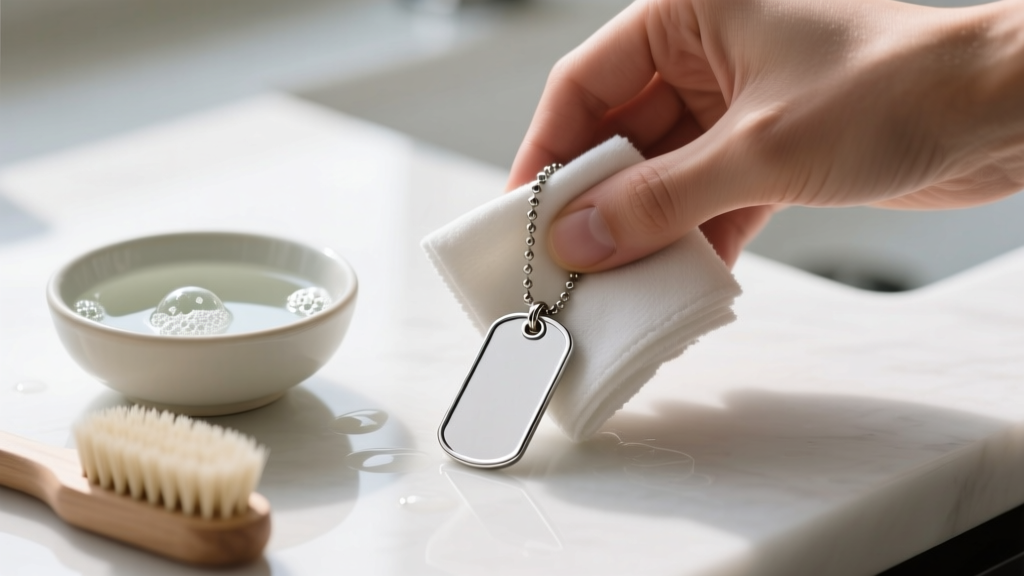
- Surface Wipe: For light tarnish, use a dedicated, untreated silver polishing cloth. Wipe in straight lines, never in circles, to avoid creating micro-swirl scratches.
- Deep Clean (Silver Only):strong> For heavy tarnish on un-plated silver, use an aluminum foil and baking soda bath. Line a glass bowl with aluminum foil (shiny side up), place the necklace inside, and add one tablespoon of baking soda. Pour boiling water over the top. The electrochemical reaction will transfer the silver sulfide tarnish to the foil within 3 minutes.
- Vermeil Warning: Never use the foil bath on gold vermeil. Simply use a damp microfiber cloth with a drop of mild soap, and buff gently.
Protecting the Engraved Message
The defining feature of a 'to my son necklace' is the personalized message. These messages are typically applied via laser engraving (which vaporizes the metal to a depth of roughly 0.05mm) or rotary diamond-drag engraving (which physically carves grooves up to 0.15mm deep).
Crucial Rule: Never apply abrasive polishing pastes, jeweler's rouge, or baking soda pastes directly over the engraved text. These compounds will become permanently lodged in the microscopic grooves of the lettering, turning the text white or cloudy and rendering it illegible. If polish accidentally gets into the engraving, use a wooden toothpick or a soft-bristled interdental brush dipped in isopropyl alcohol to carefully pick the residue out of the grooves.
Chain Link Maintenance: Cuban vs. Cable vs. Rope
The chain requires just as much attention as the pendant, and its architecture dictates how it should be cleaned:
- Cable and Box Chains: These feature simple, open links that are easy to wipe down but prone to kinking. Always store them flat or hanging to prevent permanent structural deformation.
- Cuban and Curb Links: The flat, interlocking surfaces of Cuban links accumulate grime on the underside. Use a soft brush specifically along the flat edges where the links meet.
- Rope Chains: The twisted, spiral nature of rope chains makes them notorious for trapping lotion, dead skin, and soap scum. They require longer soaking times (up to 15 minutes) and careful brushing along the spiral grooves to dislodge embedded debris.
Environmental Hazards: When to Take It Off
Preventative care is vastly superior to restorative cleaning. To protect the structural integrity and finish of the necklace, establish a strict removal protocol for the following environments:
- The Gym: The high chloride content in human sweat can pit stainless steel over time and will rapidly corrode base metals. Furthermore, heavy lifting can bend the delicate jump rings.
- Swimming Pools and Hot Tubs: Chlorine and bromine are highly reactive halogens that will permanently bleach gold plating and weaken the crystalline structure of sterling silver solder joints, leading to chain breakage.
- Applying Grooming Products: Cologne, hairspray, and body lotions create a microscopic film over the metal, dulling its shine and accelerating the oxidation of silver.
Smart Storage Solutions to Prevent Tarnish and Tangles
How you store the necklace when it is not being worn dictates how often it needs to be cleaned. Exposure to ambient humidity and sulfur compounds in the air (often off-gassed by drywall, wool, and rubber) is the primary catalyst for tarnish.
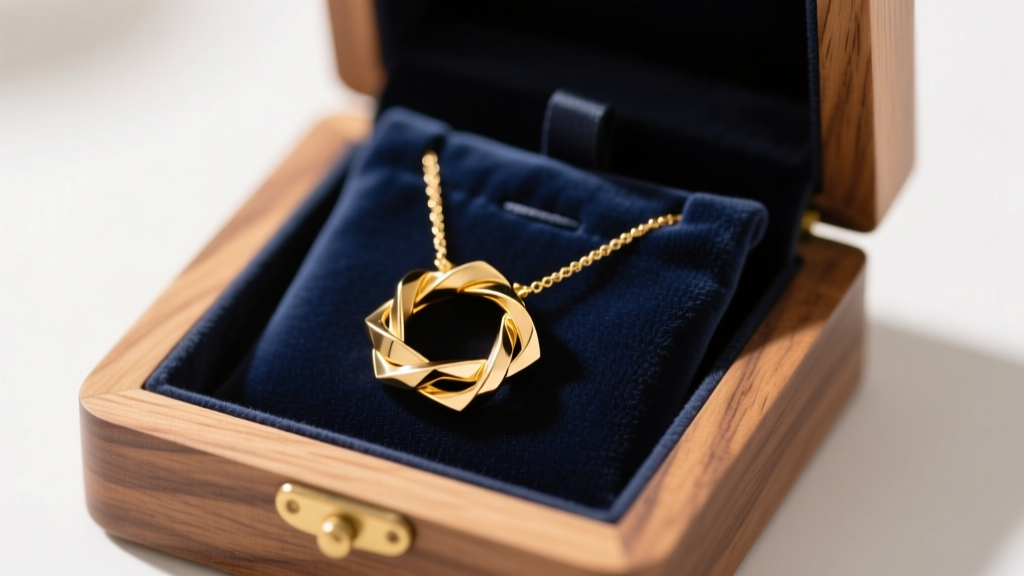
For optimal preservation, place the necklace inside an anti-tarnish flannel pouch treated with silver sulfide-absorbing compounds. If the necklace is a keepsake that will not be worn for extended periods, add a 3M anti-tarnish strip to the storage box and seal the pouch inside a ziplock bag with the air pressed out. Never store multiple necklaces in the same compartment; the friction between them will cause micro-scratches, and the clasps will inevitably tangle in the chain links, risking deformation.
Troubleshooting Common Wear Issues
Issue 1: Faded or Hard-to-Read Engraving
If the black contrast in a laser-engraved message begins to fade, it is usually due to the accumulation of skin oils and soap scum filling the grooves, or the oxidized contrast layer wearing away. You can restore the contrast by gently rubbing a tiny amount of graphite powder or a specialized jewelry antiquing wax into the letters, then wiping the flat surface of the pendant clean with a microfiber cloth. This leaves the dark pigment only inside the engraved lines.
Issue 2: Chain Tarnish and Skin Discoloration
If the wearer experiences a green or black discoloration on their chest, it indicates the necklace is likely made of a copper-heavy base metal (like brass) where the protective plating has worn through. The copper is reacting with the acid in the wearer's sweat. While this is harmless to the skin, it signifies the piece requires replating. A temporary fix is to coat the back of the pendant and the interior of the chain links with a thin layer of clear jewelry sealant or clear nail polish to create a barrier between the metal and the skin.
Issue 3: Stiff or Sticky Clasp
The lobster clasp or spring ring can become stiff due to soap buildup inside the tiny internal spring mechanism. Apply a microscopic drop of synthetic watch oil or sewing machine oil to the hinge and lever of the clasp. Work the lever back and forth several times to distribute the lubricant, then wipe away any excess oil with a cotton swab to prevent it from attracting dust.
Final Thoughts on Preserving the Memory
A 'to my son necklace' is a physical anchor for a deeply emotional message. By understanding the specific metallurgical needs of the pendant and chain, avoiding harsh chemical cleaners, and implementing a consistent, gentle cleaning routine, you ensure that the piece remains as vibrant and legible as the day it was gifted. Proper care transforms a simple piece of jewelry into a multi-generational heirloom, allowing the sentiment to outlast the metal itself.


