Expert Care Guide for Your Gold Double Cross Necklace
Learn expert cleaning, storage, and maintenance tips to keep your gold double cross necklace shining. Avoid common damage and preserve your piece.


A gold double cross necklace is a striking statement piece, blending spiritual symbolism with bold, layered geometry. However, the intricate design of overlapping crosses, combined with the metallurgical realities of gold alloys, creates unique maintenance challenges. Skin oils, cosmetic residues, and environmental pollutants easily become trapped in the narrow crevices between the two crosses, leading to dullness and potential long-term degradation of the solder joints.
Whether your piece is crafted from buttery 18K gold or highly durable 14K gold, preserving its structural integrity and brilliant luster requires a specialized approach. This comprehensive care guide dives deep into the metallurgy, cleaning protocols, and storage techniques necessary to maintain your gold double cross necklace for decades to come.
Understanding the Vulnerabilities of a Double Cross Design
Before applying any cleaning solution, it is critical to understand the physical and chemical vulnerabilities inherent to this specific pendant style. A standard single cross pendant offers a relatively flat surface area that is easy to wipe down. A double cross necklace, particularly those featuring a layered or overlapping 3D design, introduces several high-risk zones:
- The Intersection Gap: If the two crosses are layered with a 1mm to 2mm gap between them, this space acts as a magnet for dead skin cells, lotion buildup, and perfume residue. Over time, this organic matter hardens, creating a stubborn, dark patina that mimics tarnish.
- Solder Joints at the Bail: The bail (the loop connecting the chain to the top cross) bears the entire kinetic load of the double-layered pendant. Because a double cross is heavier than a standard pendant, the solder joint connecting the bail to the gold crosses experiences higher micro-stress during daily wear.
- Alloy Sensitivity: Pure 24K gold is too soft for jewelry. Most gold double cross necklaces are made from 14K (58.5% gold, alloyed with copper, silver, and zinc) or 18K (75% gold). The copper and zinc alloys are highly susceptible to stress corrosion cracking when exposed to chlorine or harsh halogens, which can cause the bail to snap unexpectedly.
The Cleaning Debate: Manual vs. Ultrasonic Methods
Many jewelry owners default to ultrasonic cleaners for convenience. However, when dealing with the complex geometry and solder points of a double cross pendant, you must choose your cleaning method carefully. According to the Gemological Institute of America (GIA), while ultrasonic cleaners are excellent for removing dirt from hard gemstones, they can be hazardous for certain jewelry constructions.
| Cleaning Method | Efficacy for Double Cross | Risk Level | Expert Verdict |
|---|---|---|---|
| Manual Soap & Water | High (with proper brush) | Very Low | The gold standard for routine weekly maintenance. |
| Ultrasonic Cleaner | Very High | Moderate to High | Avoid if the cross layers are glued or if solder joints are older than 5 years. Vibrations can shake loose micro-solders. |
| Steam Cleaning | Moderate | Low | Safe for solid gold, but cannot penetrate the deep, overlapping crevices of a double cross effectively. |
| Chemical Dip Cleaners | Low | Extremely High | Never use. Ammonia or thiourea-based dips will strip the alloyed metals, leaving the gold porous and brittle. |
The Safe Manual Cleaning Protocol
For a deeply soiled gold double cross necklace, manual cleaning provides the safest and most thorough result without risking structural damage. Follow this precise protocol:
- Prepare the Solution: Mix 3 drops of phosphate-free, mild dish soap (such as original Dawn) into one cup of distilled water. Do not use tap water, as the dissolved minerals and chlorine will leave micro-spots on the gold surface.
- Soak: Submerge the pendant and chain in the solution for exactly 15 minutes. This softens the hardened sebum and cosmetic buildup trapped between the overlapping crosses.
- Agitate with Precision: Using a clean, unused baby toothbrush (which features ultra-soft bristles that will not scratch 18K gold) or a #000 grade artist's brush, gently sweep the bristles into the gap between the crosses. Use a back-and-forth motion parallel to the gap, not perpendicular, to avoid bending delicate edges.
- Rinse and Dry: Rinse thoroughly under a gentle stream of lukewarm distilled water. Pat dry with a lint-free microfiber cloth. Never use paper towels, as the wood pulp fibers will leave microscopic scratches on the gold finish.

Tackling Tarnish, Lotion Buildup, and Chain Snags
While pure gold does not tarnish, the alloy metals in 14K and 18K gold can oxidize, creating a dull, dark film. Furthermore, the heavy nature of a double cross pendant often causes the chain to snag or pull through the bail.
Removing Stubborn Oxidation
If your gold double cross necklace has developed a dark film in the recessed angles of the crosses, avoid abrasive polishing cloths. Instead, create a gentle paste using baking soda and distilled water. Apply it strictly to the recessed areas using a cotton swab, let it sit for two minutes, and gently wipe away. The mild alkalinity of the baking soda neutralizes acidic skin oils that accelerate alloy oxidation.
Preventing Bail Wear and Chain Snags
The friction between the chain and the inside of the bail is a major point of failure. Over years of wear, the chain can act like a saw, slowly cutting through the gold bail of the double cross pendant. To mitigate this:
- Apply a microscopic drop of synthetic watch oil to the inside of the bail once a year to reduce friction.
- Ensure your chain's gauge is appropriately matched to the bail. A heavy double cross requires a sturdy chain (like a 2.5mm to 3mm Cuban or Figaro chain). If the chain is too thin, it will bunch up inside the bail, creating uneven wear patterns.
Proper Storage Techniques to Prevent Warping
How you store your gold double cross necklace is just as important as how you clean it. Because of the protruding geometry of the overlapping crosses, tossing this piece into a communal jewelry box guarantees scratches, tangles, and potential warping of the softer 18K gold elements.
Expert Insight: 'Gold is a malleable metal. If a heavy double cross pendant is stored under the weight of other jewelry, or if the chain is pulled taut while snagged on the cross, the pendant can permanently warp, ruining the symmetrical alignment of the overlapping layers.' - Master Jeweler Bench Notes.
To preserve the structural geometry of your necklace:
- Use a Dedicated Compartment: Store the necklace in a fabric-lined compartment where it can lay completely flat. The overlapping crosses should not be resting on top of the chain, which can cause indentation marks.
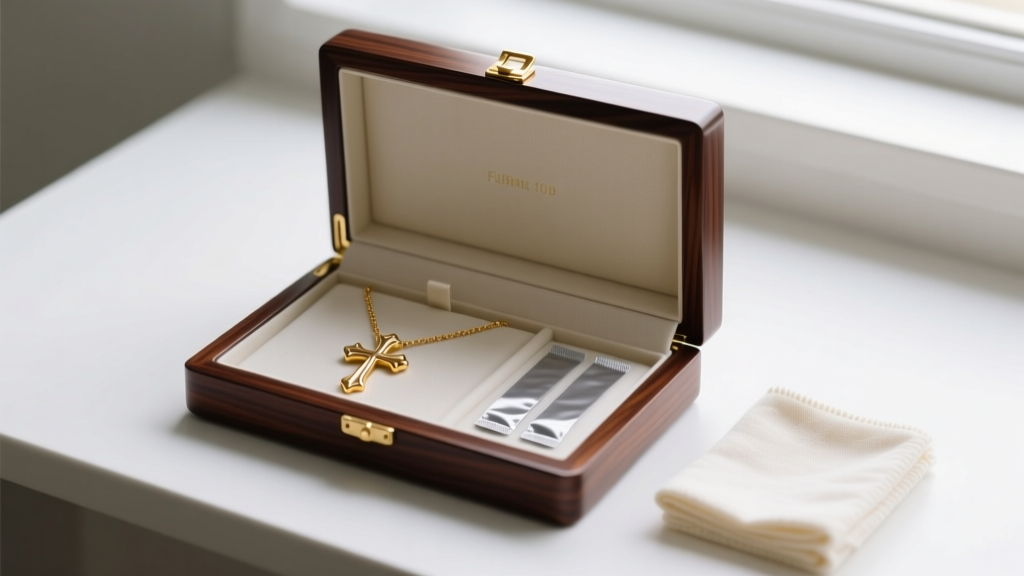
- Anti-Tarnish Strips: Place a 3M anti-tarnish strip in the storage compartment. These strips absorb airborne sulfur compounds that cause the copper alloys in 14K gold to oxidize.
- The Straw Trick for Chains: To prevent the chain from tangling around the intricate points of the double cross, thread the chain through a clean plastic straw before clasping it. This keeps the chain rigid and entirely separated from the pendant during storage or travel.
Environmental Hazards: What to Strictly Avoid
The Federal Trade Commission (FTC) Jewelry Guides outline strict standards for gold purity and durability, but even high-quality gold alloys are no match for certain everyday chemicals. To protect the solder joints and the polished finish of your gold double cross necklace, you must remove it before encountering the following hazards:
- Chlorinated Pools and Hot Tubs: Chlorine causes stress corrosion cracking in gold alloys. The micro-fractures begin at the highest stress points—specifically the bail and the solder joints connecting the two crosses. This damage is invisible until the pendant suddenly snaps.
- Household Bleach (Sodium Hypochlorite): Even brief exposure to cleaning products containing bleach will permanently discolor the alloy metals, leaving white or gray porous spots on the surface of the gold.
- Hairsprays and Aerosol Perfumes: The alcohol and propellants in aerosol cosmetics can dry out the natural luster of the gold and leave a sticky film that traps dust in the crevices of the double cross.
When to Seek Professional Jeweler Services
While routine maintenance can be handled at home, certain issues require the precision of a professional jeweler's bench. You should take your gold double cross necklace to a certified bench jeweler if you notice any of the following warning signs:
- Visible Light Through the Bail: If you hold the pendant up to a light source and can see a thin line of light shining through the top of the bail loop, the metal has worn dangerously thin and requires immediate laser welding or re-tipping.
- Rattling or Movement Between Crosses: If your double cross design features a movable or hinged overlapping layer, any rattling indicates that the internal rivets or micro-solders are failing.
- Deep Scratches on the High-Polish Edges: While a jeweler can perform a professional polish to remove scratches, be aware that polishing removes a microscopic layer of gold. For a heavily layered 3D double cross, excessive polishing can soften the sharp, defining edges of the design. Limit professional polishing to once every two to three years.
By adhering to these meticulous care, cleaning, and storage protocols, your gold double cross necklace will retain its profound symbolism and brilliant luster, remaining a flawless centerpiece in your jewelry collection for a lifetime.


