Jade Pendant Necklace Gold: The 2026 Buyer's Guide
Discover how to authenticate and buy a genuine jade pendant necklace gold setting in 2026. Learn about Type A jadeite, gold karats, and pricing tiers.

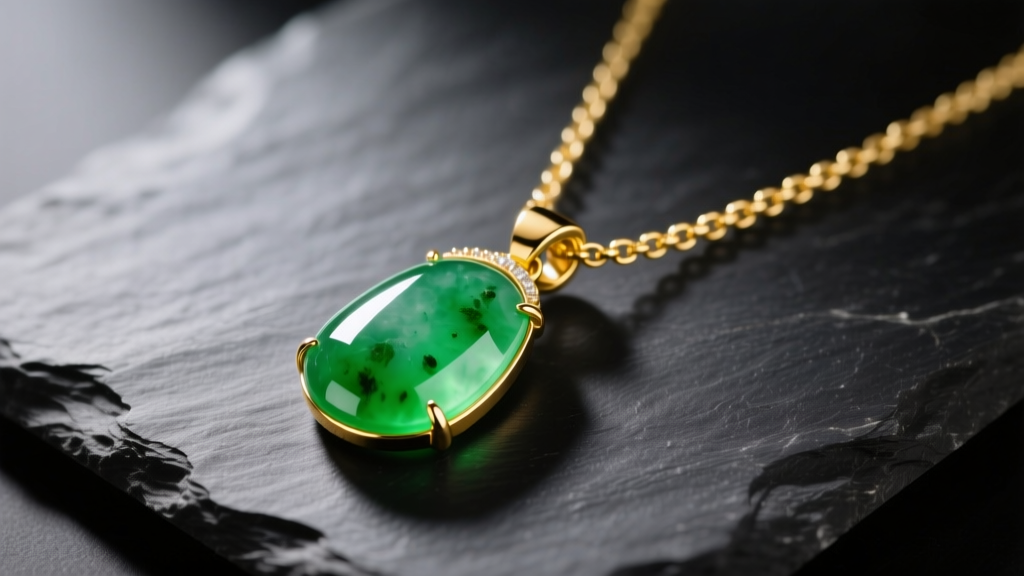
The Synergy of Jade and Gold: A Gemological Perspective
When shopping for a jade pendant necklace gold setting, you are navigating the intersection of ancient lapidary traditions and modern metallurgical precision. In 2026, the market for high-end jadeite and nephrite jewelry has become increasingly sophisticated, driven by a surge in demand for investment-grade gemstones and ethically sourced precious metals. However, this popularity has also led to a proliferation of treated stones and misleading karat claims. As a buyer, understanding the gemological properties of jade and the structural limitations of gold is non-negotiable. This guide strips away the marketing fluff to provide a rigorous, data-driven framework for evaluating, authenticating, and purchasing a jade and gold necklace that will retain both its structural integrity and its financial value.
Understanding Jadeite vs. Nephrite
Before evaluating the gold setting, you must identify the species of jade. The term 'jade' is a commercial umbrella covering two distinct minerals: jadeite (a pyroxene) and nephrite (an amphibole). According to the Gemological Institute of America (GIA), jadeite is the rarer, more valuable variety, prized for its vitreous luster and vivid color spectrum. Nephrite, while historically significant and exceptionally tough due to its fibrous interlocking structure, generally commands lower prices and exhibits a more subdued, oily luster. When pairing with gold, high-end jewelers almost exclusively use Burmese jadeite, while nephrite (such as Chinese Hetian jade) is typically reserved for intricate carvings or cultural artifacts.
Decoding Treatments: The Type A, B, and C Framework
The single most critical factor in determining the value of your jade pendant is its treatment status. The gemological industry universally categorizes jadeite into three distinct tiers. Buying a Type B or Type C stone disguised as natural is the most common financial pitfall in the jade market.
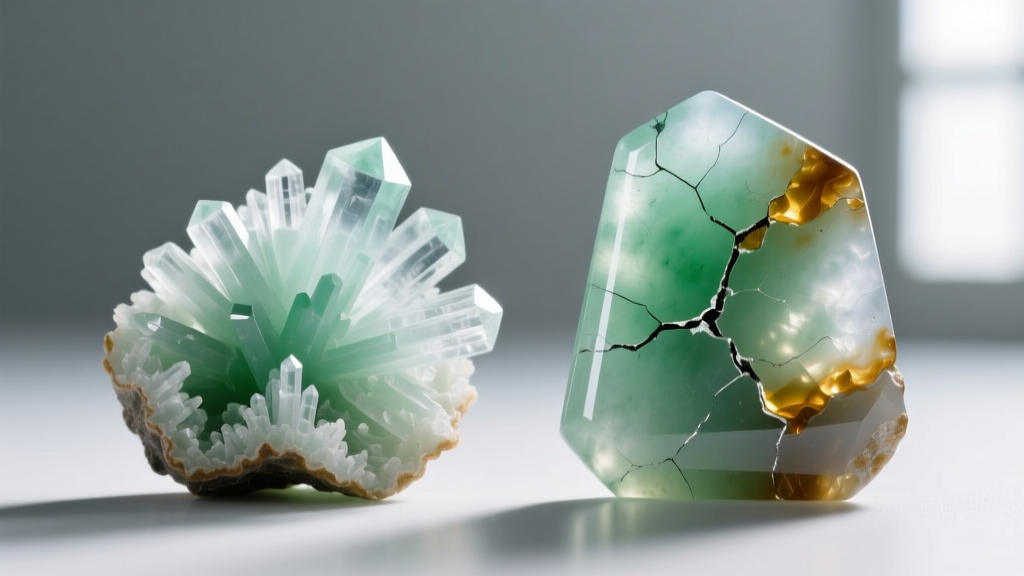
| Treatment Grade | Process | Long-Term Stability | Market Value Impact |
|---|---|---|---|
| Type A | Completely natural; only traditional plum wax polishing. | Exceptional. Will last centuries without degradation. | Investment grade. Retains and appreciates in value. |
| Type B | Acid-bleached to remove impurities, then polymer-impregnated. | Poor. Polymer yellows and degrades under UV light and heat. | Low. Considered 'treated' and lacks resale value. |
| Type C | Chemically dyed to enhance or alter color (often green/lavender). | Poor. Dyes fade rapidly when exposed to sunlight and sweat. | Negligible. Strictly decorative costume jewelry. |
| Type B+C | Both acid-bleached, polymer-filled, and artificially dyed. | Very Poor. Prone to structural crumbling over time. | Negligible. Frequently sold as 'authentic' to tourists. |
Always demand a laboratory report from a reputable institution, such as the GIA or the Swiss Gemmological Institute (SSEF), explicitly stating 'No indications of treatment' or 'Natural Jadeite.' For deep dives into identification, Mason-Kay's jade grading resources offer excellent visual comparisons of polymer degradation over time.
Metallurgy Matters: Selecting the Right Gold Karat
The gold setting and chain must be engineered to support the pendant without compromising the stone. Jade is tough, but it possesses distinct cleavage planes and can chip if subjected to high-impact pressure from a rigid metal bezel.
The 24k Gold Myth
In many Asian markets, 24k (99.9% pure) gold is highly prized for its rich, buttery yellow hue and cultural significance. However, from a structural engineering standpoint, 24k gold is entirely unsuitable for securing a jade pendant. Pure gold has a very low yield strength; prongs or bezels made from 24k gold will easily bend, warp, or release the stone upon minor impact. If you are buying a jade pendant necklace gold setting featuring 24k gold, it should be strictly decorative (e.g., a wire-wrapped cage or a loose, non-structural bezel).
18k vs. 14k Gold for Settings and Chains
- 18k Gold (75% Pure): The global standard for fine jewelry. It offers the ideal compromise between the rich color of pure gold and the tensile strength provided by alloying metals (usually copper and silver). 18k gold is rigid enough to hold a secure pinch bail or prong setting while maintaining the luxurious aesthetic expected of high-end jadeite.
- 14k Gold (58.3% Pure): More common in Western markets, 14k gold is highly durable and resistant to scratching. It is the preferred choice for the necklace chain itself, particularly for heavier jade pendants (over 20 grams), as the higher alloy content provides superior tensile strength, preventing the chain from stretching or snapping at the clasp.
Chain Mechanics and Bail Architecture
The bail—the component connecting the pendant to the chain—is a frequent failure point. Avoid 'glued' bails at all costs. The epoxy used to attach a gold cap to the top of a jade cabochon degrades when exposed to skin oils, perfumes, and temperature fluctuations. Instead, look for:
- Direct Drilling: A hole drilled directly through the jade, allowing the chain or a hidden gold loop to pass through. This is the most secure method but requires a master lapidary to avoid micro-fractures.
- Wire-Wrapped Bails: Using 18k or 22k gold wire to physically bind the pendant. This avoids adhesives and allows for slight adjustments.
- Box Chains vs. Wheat Chains: For pendants weighing 10g to 30g, a 1.5mm to 2.0mm 14k gold wheat chain offers the best ratio of flexibility to tensile strength. Box chains, while attractive, are prone to kinking and can snap under the pendulum stress of a heavy jade drop.
Color, Translucency, and the 'Water' Concept
Novice buyers obsess over color; experts obsess over 'water' (translucency and texture). In the jadeite market, a highly translucent, colorless 'Ice Jade' or 'Glassy Jade' pendant will routinely outprice an opaque, vivid green stone of the same size.
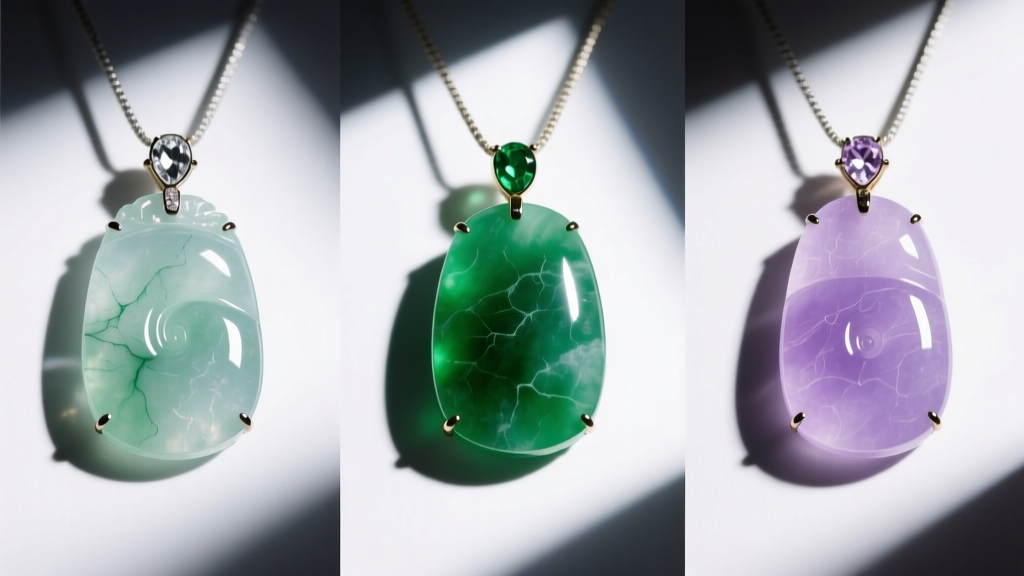
When evaluating a jade pendant necklace gold setting, examine the stone under a 10x triplet loupe and a dedicated gemological LED light. You are looking for a tightly interlocking crystalline structure. If the stone appears granular, cloudy, or has visible 'veins' that do not align with natural color banding, it is likely a lower-grade 'bean' jade or a heavily treated composite. Imperial Green—the most valuable color grade—must be highly saturated, evenly distributed, and possess a vitreous, glass-like luster that seems to glow from within rather than reflecting light off the surface.
2026 Market Pricing: What You Should Actually Pay
Pricing a jade pendant necklace gold setting requires decoupling the value of the gold from the value of the stone. The gold weight can be easily calculated based on the daily spot price and the karat purity. The jade, however, requires a nuanced understanding of current market tiers.
Expert Pricing Note: Never negotiate on a 'per carat' basis for carved jade pendants. Unlike diamonds, jade is priced based on the overall piece, the artistry of the carving, the translucency, and the color distribution. Carat weight is largely irrelevant to high-end jade valuation.
Current Pricing Tiers (USD)
- Commercial Type A (Opaque, uneven color, standard carving): $200 – $800. The gold setting often accounts for 50% or more of the total retail price.
- Fine Type A (Good translucency, vibrant color, precision carving): $2,500 – $15,000. Typically set in 18k gold with diamond accents.
- Investment Grade (Imperial Green, Glassy Ice, flawless): $50,000 – $500,000+. These pieces are usually sold at auction or through private dealers, often featuring bespoke 22k or 24k gold wire-wrapping to preserve the stone's integrity.
- Type B / C (Treated): $50 – $250. If a vendor is asking $5,000 for a highly translucent, vivid green pendant without a GIA or SSEF certificate, it is almost certainly a Type B+C polymer-injected stone.
Authentication and Red Flags in the Retail Environment
When purchasing a jade pendant necklace gold setting, whether from a high-end boutique or an estate auction, rely on empirical testing rather than vendor assurances. Carry a Chelsea filter or a portable spectroscope. Natural green jadeite exhibits a specific absorption spectrum (a strong line in the red and a broad band in the violet), whereas dyed jade will show an anomalous, broad absorption band in the red region due to the organic dyes used.
Furthermore, be highly skeptical of 'sonic testing' or the 'glass clinking' test often demonstrated by street vendors. While natural jade does produce a resonant, bell-like chime when struck, modern polymer resins used in Type B treatments can be engineered to mimic this acoustic profile. The only definitive authentication methods are measuring the specific gravity (natural jadeite is 3.33) and checking the refractive index (1.66) using professional gemological equipment. Always secure a verifiable, independent laboratory report before finalizing a transaction exceeding $1,000.


