How to Clean and Care for Your Lapis Lazuli and Pearl Necklace
Discover expert cleaning, storage, and maintenance tips to protect the delicate nacre and porous pyrite of your lapis lazuli and pearl necklace.

The Science of Sensitivity: Why Standard Cleaning Fails
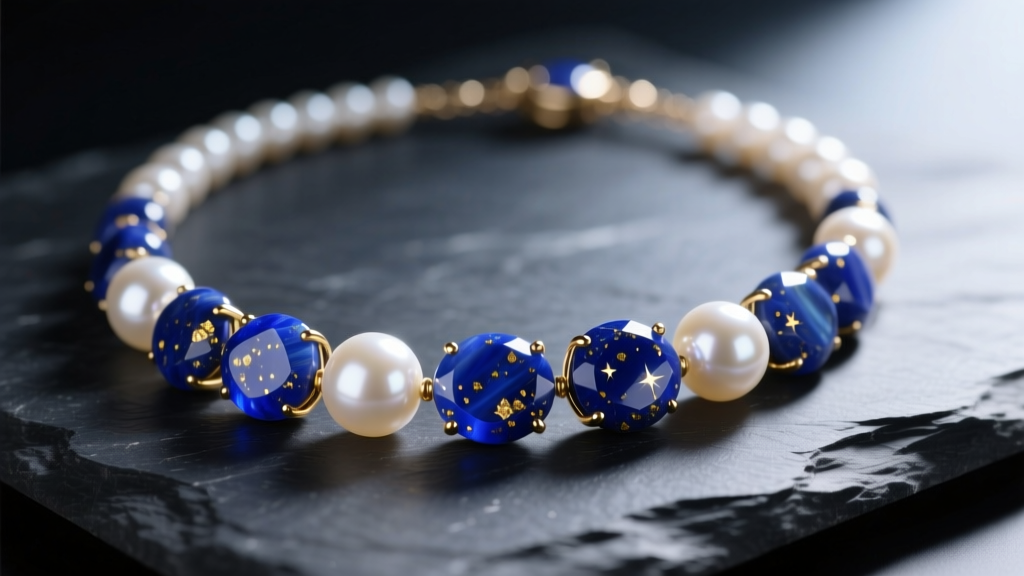
Owning a lapis lazuli and pearl necklace is an exercise in balancing two of the most notoriously delicate materials in the gemological world. When designing a care regimen for this specific combination, you must cater to the vulnerabilities of both stones. Lapis lazuli is not a single mineral but a complex rock composed primarily of lazurite, calcite, and pyrite. Pearls, conversely, are organic gems formed from concentric layers of nacre (calcium carbonate and conchiolin). Both materials share a critical weakness: they are highly porous and exceptionally reactive to acids, chemicals, and prolonged moisture.
Standard jewelry cleaning methods are not just ineffective for this pairing; they are actively destructive. Ultrasonic cleaners, which rely on high-frequency cavitation bubbles, will strip the delicate polish from lapis lazuli and cause microscopic fracturing in a pearl's nacre. Similarly, steam cleaning introduces intense heat and moisture that can cause the pyrite inclusions in lapis to oxidize and rust, while simultaneously dehydrating the pearl, leading to irreversible cracking. According to the Gemological Institute of America (GIA), lapis lazuli requires strict avoidance of harsh chemicals and mechanical cleaning systems, a rule that is doubly true when pearls are introduced into the same setting.
Step-by-Step Dry Cleaning Routine (Weekly Maintenance)
Because water exposure must be minimized, your primary defense against environmental buildup is a rigorous dry-cleaning protocol. Human skin naturally secretes sebum and sweat, which has a pH ranging from 4.5 to 7.0. This mild acidity is enough to slowly dissolve the calcite bands in lapis and etch the surface of a pearl over time.
The Microfiber and Brush Technique
- Immediate Post-Wear Wipe: Keep a dedicated, untreated microfiber cloth in your jewelry box. Immediately upon removing the necklace, gently wipe each pearl and lapis bead to remove surface oils and cosmetic residue.
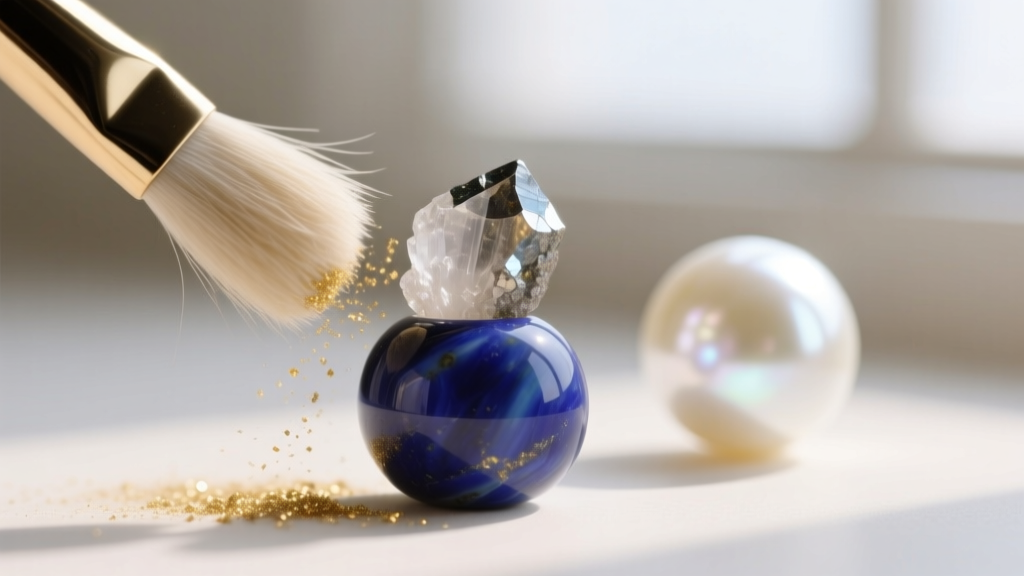
- Targeted Pyrite Dusting: The metallic gold flecks in lapis lazuli are pyrite (iron sulfide). These inclusions often sit slightly recessed or raised, creating micro-crevices where dust and skin cells accumulate. Use a soft, dry goat-hair makeup brush to gently sweep these crevices. Avoid stiff bristles, which can scratch the softer lazurite matrix (Mohs 5-6) and the pearl (Mohs 2.5-4.5).
- Clasp Isolation: When wiping the metal clasp (often 14k or 18k gold, or sterling silver), ensure your polishing cloth does not drag across the adjacent pearl or lapis bead, as metal polishes contain mild abrasives that will permanently dull the nacre.
Deep Cleaning Protocol: When Dry Methods Are Not Enough
If your necklace has accumulated stubborn grime or has been worn during high-humidity events, a carefully controlled damp-cleaning method is required. Never submerge a lapis lazuli and pearl necklace in water. Submersion allows water to seep into the drill holes, which can degrade the internal stringing material and cause internal pyrite oxidation.
The Distilled Water Damp-Cloth Method
Always use distilled water rather than tap water. Tap water contains chlorine, fluorides, and dissolved minerals that can leave microscopic deposits on the pearl's surface and trigger chemical reactions with the calcite in the lapis. Lightly dampen a lint-free cotton swab or a corner of a microfiber cloth with distilled water. Gently roll the damp swab over the surface of the soiled bead, immediately followed by a dry swab to absorb the moisture. Work one bead at a time, ensuring no water migrates down the stringing hole. Allow the necklace to lay completely flat on a dry towel in a climate-controlled room for at least four hours before storing.
Material Compatibility Chart: What to Avoid
Understanding exactly what chemicals will destroy your necklace is vital for long-term preservation. Below is a breakdown of common household substances and their specific failure modes on this gemstone combination.
| Substance / Tool | Effect on Lapis Lazuli | Effect on Pearl |
|---|---|---|
| Ammonia / Bleach | Strips wax polish, causes calcite to pit and chalk. | Dissolves conchiolin, resulting in permanent dullness. |
| Vinegar / Citrus | Acidic reaction dissolves the white calcite veining. | Etches the calcium carbonate nacre layers. |
| Commercial Silver Dip | Causes severe discoloration and chemical staining. | Instantly destroys the pearl's orient and luster. |
| Ultrasonic Cleaner | Vibrations shatter brittle pyrite inclusions. | Cavitation causes nacre peeling and micro-fractures. |
| Baking Soda Paste | Abrasive particles scratch the lazurite matrix. | Acts as sandpaper, permanently scuffing the nacre. |
Storage, Humidity, and Environmental Hazards
Proper storage is just as critical as the cleaning process. Lapis lazuli is susceptible to prolonged UV exposure, which can cause the vibrant blue lazurite to fade into a washed-out grayish-blue over several years. Pearls, being organic, require a specific level of ambient humidity to prevent the conchiolin core from drying out and cracking.
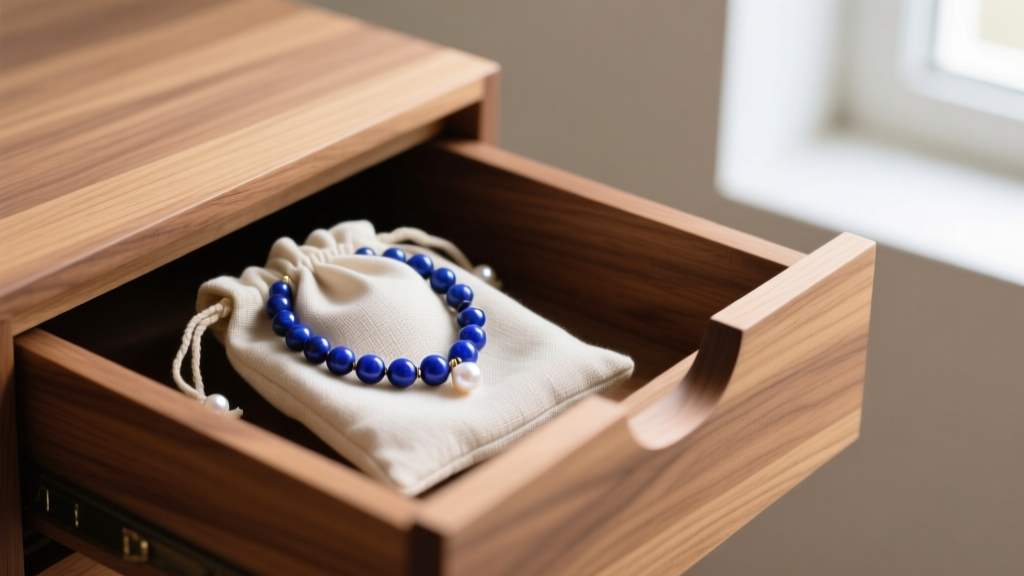
Store your lapis lazuli and pearl necklace in a breathable, unbleached cotton pouch. Avoid airtight plastic bags, as they can trap moisture and promote pyrite rusting, while also causing the pearls to suffocate and dehydrate. Furthermore, keep the necklace away from cedar-lined drawers or camphor wood boxes; the aromatic off-gassing from these woods can chemically react with the pearl's surface. For comprehensive environmental guidelines, the GIA Pearl Care Guide strongly recommends isolating pearls from other jewelry to prevent scratching, a rule that is especially relevant when paired with the harder, abrasive edges of drilled lapis beads.
Restringing and Hardware Maintenance
The structural integrity of a multi-gemstone necklace relies entirely on its stringing material. Traditional pearl necklaces are strung on knotted silk thread. However, silk is highly vulnerable to moisture and the abrasive interior edges of drilled lapis lazuli beads. If your necklace combines both materials on a single strand, the friction from the lapis will eventually fray the silk, leading to catastrophic strand failure.
When to Seek Professional Restringing
Inspect the thread between the beads by gently pulling the strand taut. If you see visible gaps between the knots and the beads, or if the thread appears gray and stretched, immediate restringing is required. For a hybrid lapis and pearl necklace, consult a master jeweler about using high-grade bonded nylon (such as Griffin Power) or a micro-wire core wrapped in silk. These modern materials resist the abrasion of the lapis while maintaining the traditional aesthetic of knotted pearls. Plan to have the necklace professionally restrung every 24 to 36 months if worn weekly.
Expert Insight: Never apply perfume, hairspray, or lotions while wearing your necklace. The alcohol and aerosolized chemicals will settle into the porous surface of the lapis and the microscopic layers of the pearl, creating a cloudy film that is nearly impossible to remove without professional repolishing.
By adhering to these meticulous, science-backed care protocols, your lapis lazuli and pearl necklace will retain its striking contrast and structural integrity for generations, serving as a pristine testament to the beauty of organic and earth-mined gems.