Necklace Multicolor Gemstone Care: Cleaning Mixed Stones
Learn expert care and cleaning tips for your multicolor gemstone necklace. Discover safe methods for mixed-stone jewelry and avoid damaging porous gems.

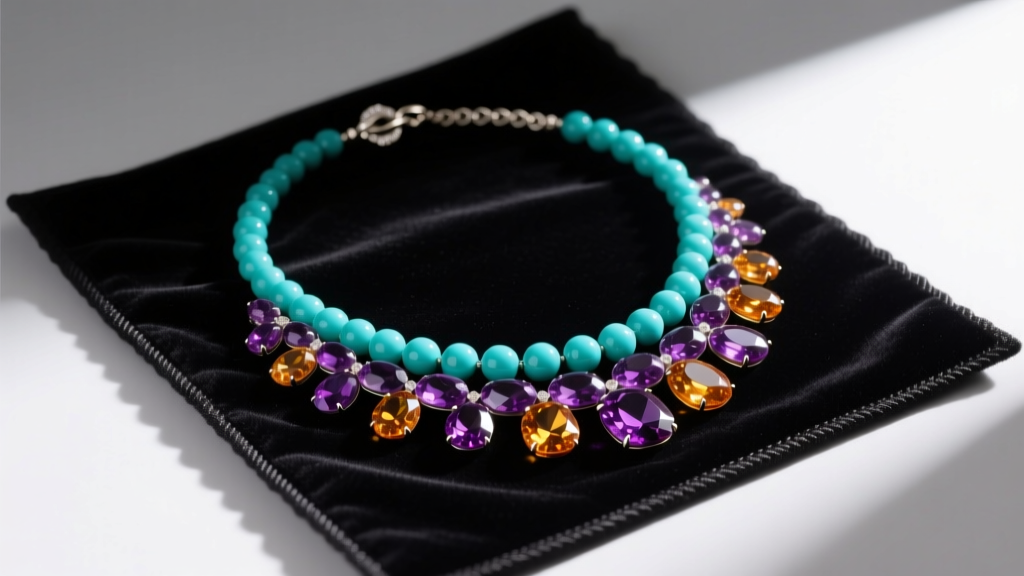
A vibrant, mixed-gemstone necklace is a masterpiece of color and light, but it also represents one of the most complex maintenance challenges in jewelry care. When evaluating a statement piece, the search term 'necklace multicolor' often brings to mind stunning combinations of sapphires, tourmalines, turquoise, and opals. However, combining these stones into a single strand means you are merging vastly different mineral structures, porosity levels, and chemical sensitivities. What safely removes body oils from a diamond will permanently cloud a piece of lapis lazuli. In 2026, with the rising popularity of bespoke, ethically sourced mixed-stone jewelry, understanding the segmented care required for these pieces is essential for preserving their value and brilliance.
The 'Necklace Multicolor' Cleaning Dilemma
The fundamental danger of cleaning a multicolor necklace lies in the temptation to use a one-size-fits-all approach. Commercial jewelry dips, ultrasonic machines, and steam cleaners are designed for single-material pieces or hard-stone diamond settings. When you introduce a mixed strand to these environments, catastrophic failure modes occur.
Ultrasonic cleaners operate by generating high-frequency sound waves (typically between 40 kHz and 45 kHz) that create microscopic cavitation bubbles in the liquid. When these bubbles collapse against the jewelry, they produce localized shockwaves. While this safely blasts debris from the prongs of a sapphire ring, those same shockwaves will shatter the internal water structure of an opal or fracture the natural inclusions in an emerald. According to the Gemological Institute of America (GIA), ultrasonic cleaners should never be used on porous or heavily included gemstones, effectively ruling them out for 90% of multicolor beaded or pendant necklaces.
Categorizing Your Gemstones by Porosity and Hardness
Before applying any moisture or cleaning agent to your necklace, you must audit the gemstones present and categorize them by their Mohs hardness and structural porosity. This dictates your entire cleaning protocol.
Category A: Hard and Non-Porous (Mohs 7.5 - 10)
Stones like sapphire, ruby, diamond, and certain types of tourmaline and topaz fall into this category. They are highly resistant to scratching and do not absorb liquids. These stones can tolerate mild surfactants, warm water, and gentle mechanical agitation.
Category B: Soft, Porous, and Treated (Mohs 3 - 7)
This is the danger zone for multicolor necklaces. Turquoise, lapis lazuli, malachite, opal, pearl, and coral are highly porous. Furthermore, many commercial turquoise and lapis beads are stabilized with resins or waxes to prevent crumbling. Submerging these stones in water or exposing them to harsh chemicals will strip these protective coatings, leading to irreversible discoloration and structural degradation.
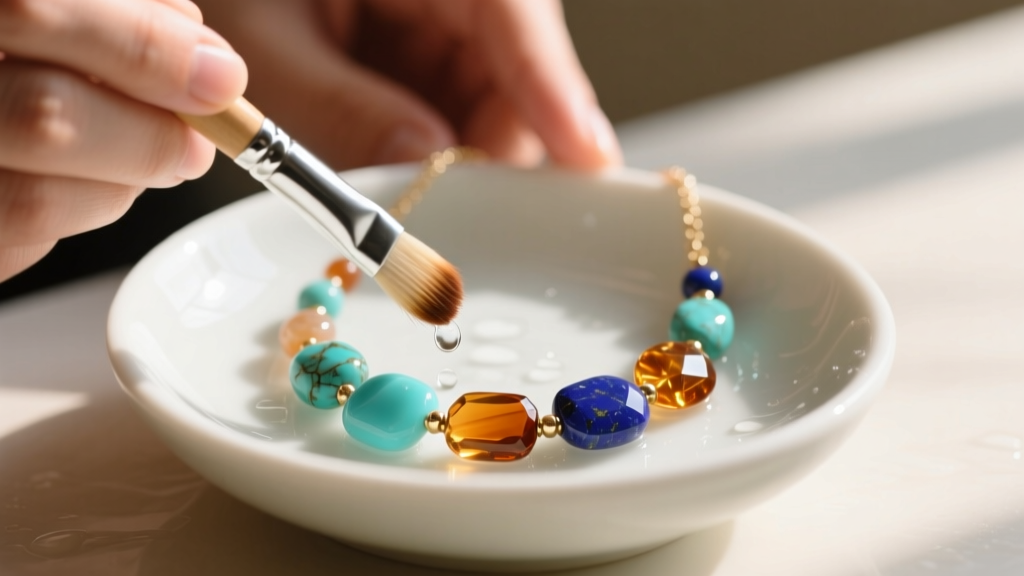
Step-by-Step Segmented Cleaning Protocol
To safely clean a multicolor necklace without damaging the most vulnerable stone in the strand, you must adopt a targeted, segmented approach. Follow this professional conservation method:
- Dry Mechanical Removal: Begin by using a clean, extra-soft baby toothbrush (bristle diameter of approximately 0.12mm) to gently sweep away dry dust, dead skin cells, and cosmetic powders from the crevices around the beads and clasps. Never use a standard toothbrush, as the stiff nylon bristles will leave micro-scratches on softer stones like fluorite or amber.
- Targeted Damp Wiping (For Porous Stones): For turquoise, opal, lapis, and pearls, do not submerge. Instead, lightly dampen a lint-free microfiber cloth with distilled water. Gently wipe the surface of each porous bead individually. Immediately dry them with a second, completely dry microfiber cloth to prevent water spotting or moisture absorption.
- Warm Surfactant Bath (For Hard Stones Only): If your necklace consists entirely of hard, non-porous stones (or if you are carefully cleaning only the hard-stone pendant while avoiding the porous bead chain), prepare a bowl of lukewarm distilled water with two drops of pH-neutral, phosphate-free dish soap. Dip only the hard stones into the solution and gently agitate with your soft brush.
- The Final Rinse and Dry: Rinse the soapy sections under a gentle stream of lukewarm distilled water. To dry the necklace without snagging the wire or silk thread, lay it flat on a dry microfiber towel and use a can of compressed air (held at least six inches away) to blow moisture out of the drill holes and clasp mechanisms.
Never submerge a mixed-gemstone strand in a single chemical bath. The solvent required to clean a sapphire will dissolve the stabilizing resin in a turquoise bead, ruining the necklace's structural integrity.
Gemstone Cleaning Matrix: What to Use and What to Avoid
Use the following reference table to quickly identify the safe cleaning parameters for the most common stones found in multicolor necklaces. When in doubt, default to the safest method (dry microfiber wiping).
| Gemstone | Mohs Hardness | Porosity | Safe Cleaning Method | Strictly Avoid |
|---|---|---|---|---|
| Sapphire / Ruby | 9.0 | None | Warm soapy water, soft brush | Thermal shock (steam) |
| Amethyst / Citrine | 7.0 | Low | Damp cloth, mild soap | Prolonged UV light, ultrasonic |
| Tourmaline | 7.0 - 7.5 | Low | Damp cloth, mild soap | Ultrasonic, harsh chemicals |
| Turquoise | 5.0 - 6.0 | High | Dry microfiber cloth only | Water, soap, ammonia, ultrasonic |
| Lapis Lazuli | 5.0 - 6.0 | High | Dry microfiber cloth only | Water, acids, ultrasonic |
| Opal | 5.5 - 6.5 | Medium | Damp cloth (no soaking) | Ultrasonic, extreme heat, dry air |
| Pearl | 2.5 - 4.5 | High | Damp cloth, immediate dry | Acids, ammonia, ultrasonic, steam |
Chemical Agents and Environmental Hazards
Beyond the mechanics of washing, the chemical environment of your cleaning agents poses a severe threat to multicolor jewelry. According to guidelines from Jewelers of America, household chemicals are the leading cause of preventable gemstone degradation.
- Ammonia and Bleach: Ammonia-based glass cleaners will strip the natural oils and waxes from turquoise and pearls, leaving them chalky and brittle. Bleach will rapidly oxidize any silver components in your necklace and degrade the nacre on pearls.
- Thermal Shock (Steam Cleaners): Steam cleaners expose jewelry to sudden, extreme temperature changes. Stones with natural cleavage planes or internal fluid inclusions, such as tanzanite, topaz, and emerald, can fracture instantly when hit with high-pressure steam.
- UV Degradation: While not a cleaning chemical, prolonged exposure to direct sunlight during the drying process can cause amethyst, kunzite, and certain topazes to fade permanently. Always dry your necklace in a shaded, climate-controlled room.
Storage and Maintenance to Prevent Scratching
The care of a multicolor necklace extends far beyond the cleaning process; proper storage is critical to prevent the stones from destroying one another. In a mixed strand, a sapphire bead (Mohs 9) resting against a turquoise bead (Mohs 5) will act like sandpaper, slowly carving micro-trenches into the softer stone every time the necklace shifts in a jewelry box.
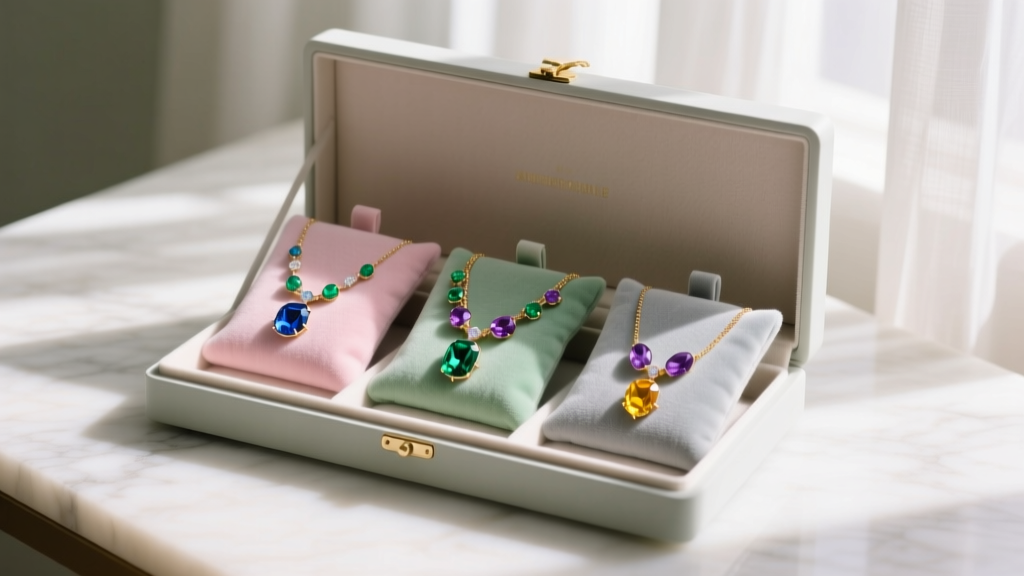
To prevent this cross-scratching, multicolor necklaces should never be tossed loosely into a communal jewelry tray. Instead, store the piece in an individual, soft microfiber or anti-tarnish flannel pouch. If the necklace features a heavy, hard-stone pendant on a delicate beaded chain, wrap the pendant in a small piece of acid-free tissue paper before placing it in the pouch to isolate it from the softer beads. Finally, maintain a stable humidity level in your storage area; extreme dryness will cause opals to craze and crack, while high humidity will accelerate the tarnishing of silver or copper wire wrappings often used in multicolor artisan pieces.


