Care Guide: Maintaining a Necklace for One Shoulder Dress
Learn expert cleaning and maintenance tips for your necklace for one shoulder dress outfits. Protect chains from snags, sweat, and sunscreen damage.

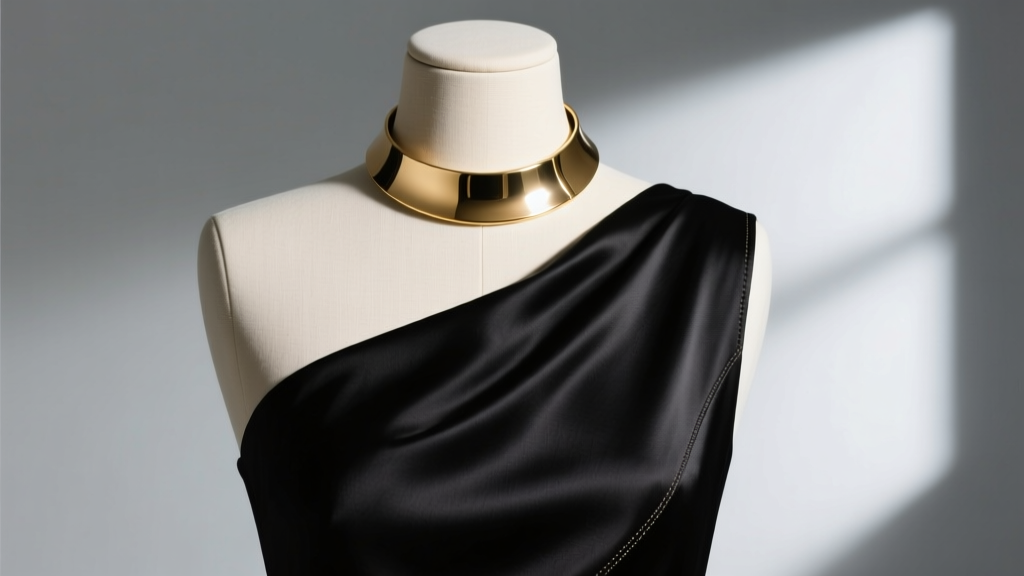
The Unique Wear Patterns of Asymmetric Necklines
When selecting the perfect necklace for one shoulder dress ensembles, most focus entirely on the visual balance of the asymmetric neckline. However, from a jewelry conservation perspective, one-shoulder garments introduce highly specific wear patterns that demand specialized care. Because the neckline is skewed, the jewelry often rests heavily against bare skin on the exposed clavicle while simultaneously experiencing uneven friction against the single shoulder strap.
This asymmetric environment accelerates metal degradation, increases the risk of mechanical kinking, and exposes gemstones to concentrated sebum and cosmetic chemicals. Whether you are wearing a structured gold collar, a delicate lariat, or a layered chain set, understanding how to clean and maintain these pieces will drastically extend their lifespan. This guide details the exact protocols for preserving your jewelry when styling it with one-shoulder silhouettes.
Mechanical Stress: Preventing and Fixing Chain Kinks
The single strap of a one-shoulder dress is often constructed from delicate materials like silk, chiffon, or satin, or it may feature heavy embellishments like sequins and beading. When a necklace rests against or slides under this strap, the friction is concentrated on one side of the chain.
High-Risk Chain Styles
Certain chain weaves are notoriously vulnerable to the friction caused by asymmetric garments. According to the Blue Nile Jewelry Care Guide, surface-level chains that lack interlocking structural depth are prone to permanent deformation.
- Herringbone Chains: Composed of flat, parallel links, these offer a beautiful liquid-metal drape but will instantly kink if caught on a beaded dress strap.
- Snake Chains: Tightly joined rings create a smooth tube, but lateral pressure from a tight one-shoulder strap can cause the internal links to separate and dent.
- Omega Chains: Rigid and structured, these can suffer from internal wire snapping if bent backward against the collarbone.
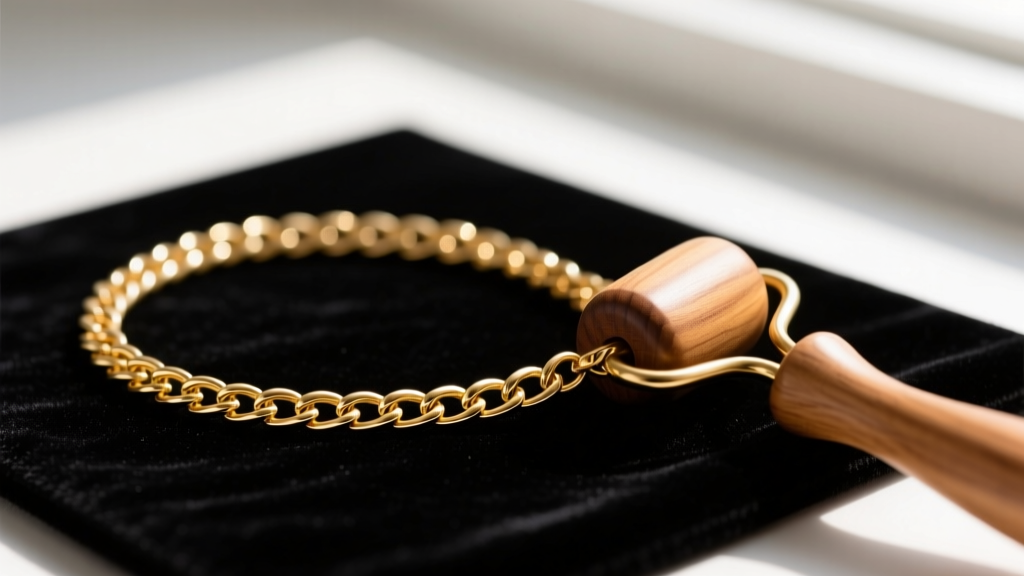
The Jewelry Roller Repair Technique
If your herringbone or snake chain develops a kink from catching on your dress strap, do not attempt to pull it apart with your fingers or tweezers, which will weaken the adjacent links. Instead, lay the chain perfectly flat on a hard, clean surface. Using a polished wooden jewelry roller (or a clean, smooth glass cylinder), apply gentle, even pressure and roll back and forth over the kinked section. This realigns the flat links without stretching the metal. For severe dents in a snake chain, professional jeweler bench-pressing is required.
Sebum and Acid: Cleaning Collars and Chokers
Collars and chokers are highly popular choices to pair with one-shoulder dresses because they fill the negative space without competing with the asymmetric strap. However, because these pieces sit flush against the jugular notch and clavicle, they are subjected to continuous contact with human sebum, sweat, and dead skin cells.
The pH Factor in Gold Alloys
Human sweat has an average pH of 4.5 to 7.0, but it can become highly acidic depending on diet and stress. While pure 24k gold is impervious to this acidity, the copper and zinc alloys used in 14k and 18k gold can oxidize when exposed to prolonged acidic sweat, leading to a dull, brassy patina. This is especially prevalent in the summer months when one-shoulder dresses are most common.
The Cleaning Protocol:
- Mix three drops of phosphate-free, mild dish soap (like Dawn) into a bowl of lukewarm distilled water. Avoid tap water, as chlorine and hard water minerals can leave micro-deposits on the metal.
- Submerge the collar for exactly 3 to 5 minutes. Do not exceed this, especially if the piece features porous gemstones like turquoise or malachite.
- Use an ultra-soft baby toothbrush (bristles rated 0.15mm or less) to gently agitate the clasp mechanism and the interior curve of the collar where skin contact is heaviest.
- Rinse with distilled water and pat dry with a lint-free microfiber cloth. Never air-dry, as water spots will form on the high-polish surfaces.
Chemical Degradation: Sunscreen and Perfume Risks
One-shoulder dresses expose a significant amount of the upper chest and shoulder, prompting the heavy application of sunscreen and body perfumes. These cosmetics are the leading cause of premature tarnishing and gemstone clouding in statement necklaces.
| Chemical Agent | Active Ingredient | Impact on Jewelry | Prevention Strategy |
|---|---|---|---|
| Chemical Sunscreen | Avobenzone, Oxybenzone | Reacts with copper alloys in 14k gold, causing rapid surface tarnishing and white gold rhodium degradation. | Apply sunscreen 20 minutes before dressing; allow to fully absorb before putting on the necklace. |
| Perfume / Body Mist | Ethanol, Essential Oils | Ethanol strips the protective oils from pearls; essential oils leave a sticky film that traps dirt in prong settings. | Spray perfume on the lower back or behind the knees, never directly on the chest or neck area. |
| Self-Tanner | Dihydroxyacetone (DHA) | DHA chemically reacts with amino acids but will permanently stain porous stones (opal, pearl, coral) and silver. | Avoid wearing any jewelry for at least 8 hours after self-tanner application. |
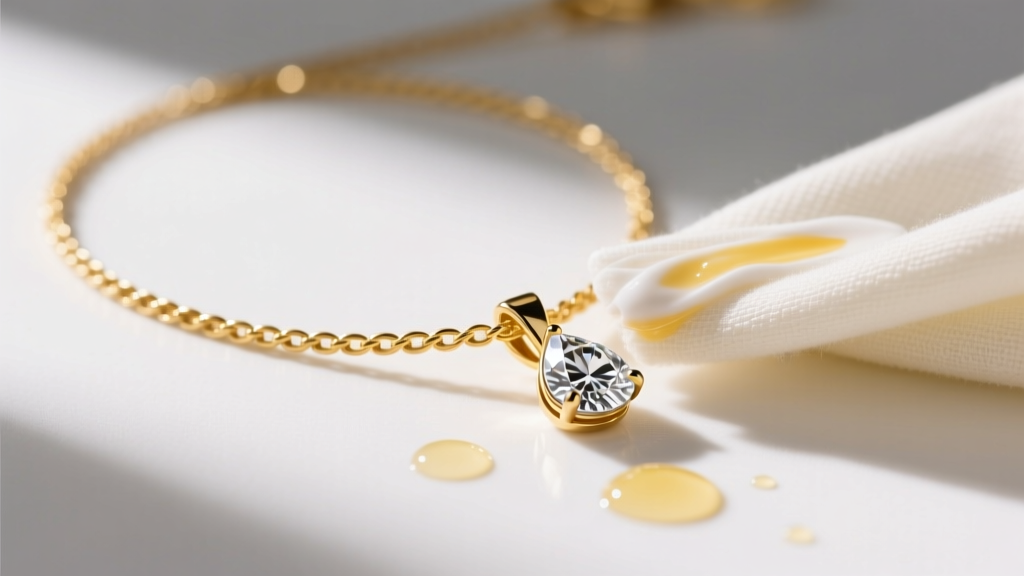
If your diamond or sapphire pendant becomes cloudy from sunscreen buildup, the Gemological Institute of America (GIA) recommends using a specialized, ammonia-based jewelry dip for hard stones only. However, for routine maintenance, the mild dish soap method outlined above remains the safest universal cleaner that will not damage secondary accent stones.
Storage Solutions for Lariats and Y-Chains
Lariat necklaces and Y-chains are exceptional styling choices for one-shoulder dresses because the vertical drop visually balances the horizontal line of the single strap. Unfortunately, the long, dangling drop of a lariat is a magnet for tangling, which can stretch the fine links and loosen the jump rings.
The Straw Threading Method
To store a lariat necklace without tangling, unclasp the main chain and thread the dangling drop entirely through a standard plastic drinking straw. Clasp the necklace closed around the straw. This keeps the vertical drop rigidly separated from the main loop. For added protection against sulfur-induced tarnishing (which turns silver and low-karat gold black), place the straw-threaded necklace inside an airtight ziplock bag along with a 3M anti-tarnish strip and a small silica gel desiccant packet to control humidity.
Your Seasonal Maintenance Schedule
To keep your jewelry pristine for every event, adhere to this strict maintenance schedule:
- Post-Wear (Daily): Always wipe the interior curve of collars and the clasps of chains with a dry microfiber cloth immediately after taking them off to remove acidic sweat and body oils.
- Deep Clean (Monthly): Perform the distilled water and mild soap soak for all metal-only pieces and hard-gemstone pendants.
- Professional Audit (Annually): Have a bench jeweler inspect the prongs of any statement pendants and check the structural integrity of the clasps, especially if the piece frequently catches on heavy or embellished dress straps.
By understanding the unique mechanical and chemical environment created by asymmetric fashion, you can ensure your favorite necklaces remain brilliant, structurally sound, and ready for your next evening out.


