Care Tips for a Womens Necklace Long Chain & Pendants
Discover expert cleaning and maintenance tips for your womens necklace long chains. Prevent tangling, polish metals, and protect delicate pendants.

The Unique Vulnerabilities of Long Necklaces
When styling a womens necklace long enough to drape past the sternum—typically ranging from 24 inches (matinee) to 36 inches or more (rope length)—you are dealing with a distinct set of mechanical and environmental vulnerabilities. Unlike shorter chokers or princess-length chains that sit safely against the collarbone, long chains are subjected to constant kinetic movement. They swing, catch on clothing, brush against zippers, and endure significant gravitational stress at the clasp and pendant bail.
As we move through 2026, the trend of oversized, heavy-link paperclip chains and layered opera-length necklaces has dominated runways and street style alike. However, this bold aesthetic requires a rigorous maintenance routine. The friction generated by a long chain rubbing against wool sweaters or silk blouses can cause micro-abrasions on gold plating, while the sheer weight of a 30-inch sterling silver rope chain can slowly warp delicate jump rings. Understanding the physics and chemistry behind your jewelry is the first step in preserving its lifespan and brilliance.
Material-Specific Cleaning Protocols
The approach to cleaning a long chain must be dictated by its metallurgical composition. What works for solid platinum will instantly ruin gold vermeil or oxidized silver. According to the Gemological Institute of America (GIA), improper cleaning is the leading cause of preventable gemstone and metal damage.
Sterling Silver and the Electrochemical Method
Sterling silver (92.5% silver, 7.5% copper) is highly prone to tarnishing due to the copper content reacting with sulfur compounds in the air and on human skin. For long silver chains, polishing each individual link with a cloth is tedious and risks pulling the chain. Instead, use an electrochemical reduction bath.
- Line a glass bowl with aluminum foil (shiny side up).
- Add 1 tablespoon of baking soda and 1 tablespoon of sea salt.
- Pour in boiling distilled water to dissolve the mixture.
- Submerge the silver chain, ensuring it touches the foil.
The chemical reaction transfers silver sulfide (tarnish) from the chain to the aluminum foil, restoring the silver without removing any base metal. Rinse with distilled water and dry completely with a microfiber cloth before storage.
Gold Vermeil and Plated Metals
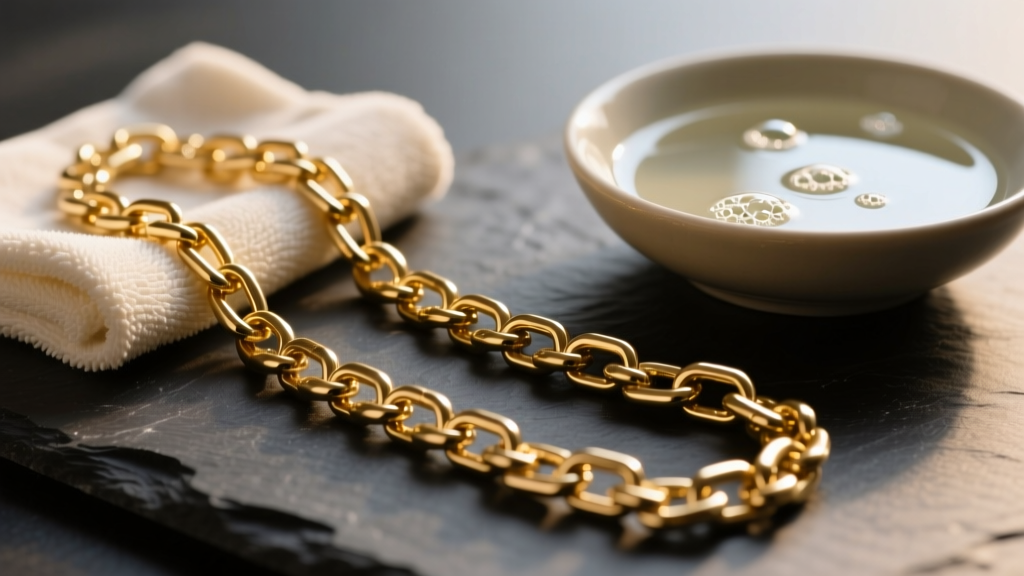
Gold vermeil requires a minimum of 2.5 microns of gold plated over sterling silver. Long chains made of vermeil experience high friction at the chest and abdomen. Never use ultrasonic cleaners or abrasive pastes on vermeil, as the high-frequency vibrations can cause the gold layer to flake off if microscopic air pockets exist between the plating and the base metal. Clean these chains using a few drops of pH-neutral dish soap (like Dawn) in lukewarm distilled water. Gently swish the chain, rinse, and lay flat on a lint-free towel to dry.
Solid Gold, Platinum, and Titanium
Solid 14k or 18k gold, platinum, and grade-23 titanium are highly resilient. These metals can withstand ultrasonic cleaning, which is particularly useful for long chains with intricate link patterns (like box or foxtail chains) where dirt and skin oils accumulate in the crevices. However, if your long chain features porous gemstones like turquoise, opal, or lapis lazuli, avoid ultrasonics entirely, as the vibrations can fracture the stones.
Chain Link Types and Snag Vulnerability
The structural design of your chain dictates how often it needs cleaning and how likely it is to snag. Below is a breakdown of popular long-chain link styles and their maintenance profiles.
| Chain Link Style | Snag Risk | Cleaning Difficulty | Maintenance Notes |
|---|---|---|---|
| Rope Chain | High | High | Twisted links trap oils and skin cells; requires regular ultrasonic or soak cleaning. |
| Paperclip Chain | Low | Low | Open, elongated links wipe clean easily; less surface area for friction. |
| Box Chain | Medium | Medium | Geometric edges catch on loose knits; hinges can loosen if pulled. |
| Cable Chain | Low | Medium | Classic oval links; dirt accumulates at the solder points of each ring. |
| Snake Chain | High | High | Tightly packed rings act like a magnet for fine dust and lotions; difficult to wipe. |
For chains with high snag and cleaning difficulty, the Jewelers of America recommends removing them before applying body lotions, perfumes, or getting dressed, as these substances act as adhesives for environmental dust.
The 2026 Guide to Untangling and Storing Long Necklaces
Storing a 30-inch or 36-inch chain presents a unique logistical challenge. The popular "straw trick" (threading a chain through a plastic straw to prevent tangling) is entirely useless for opera and rope lengths. When long chains are tossed into a jewelry box, they inevitably form complex slipknots that can permanently stretch the metal links if pulled forcefully.

Proper Storage Mechanics
To prevent tangling and minimize exposure to ambient humidity (which accelerates tarnish), invest in a multi-tier felt jewelry roll with individual snap-tie compartments. Roll the chain loosely rather than folding it, as sharp bends can weaken the structural integrity of soldered jump rings. Alternatively, hang long chains on a velvet-lined armoire hook, but ensure the hook is placed in a closet away from direct sunlight and bathroom humidity.
Safe Untangling Protocol
If your long chain has knotted, do not pull the ends. Lay the chain flat on a smooth, hard surface. Apply a single drop of mineral oil or baby oil directly to the center of the knot to reduce friction. Using two fine-point sewing needles or tweezers, gently work the center loop outward. The oil provides the necessary slip to undo the knot without stressing the metal links. Wipe the oil away with a microfiber cloth once finished.
Protecting Pendants, Bails, and Clasp Mechanisms
The hardware on a long chain bears the brunt of the jewelry's kinetic energy. A heavy pendant sliding up and down a 30-inch chain acts like a pendulum, slowly filing away the metal of the bail (the loop connecting the pendant to the chain). Over time, this friction can cause the pendant to detach and fall off unnoticed.
Bail Maintenance
Inspect the pendant bail every six months. If you notice thinning or a groove worn into the metal, take the piece to a jeweler to have a new bail soldered on, or use a temporary fix by applying a microscopic drop of clear, jewelry-safe UV resin inside the bail to reduce metal-on-metal friction.
Clasp Upgrades for Heavy Chains
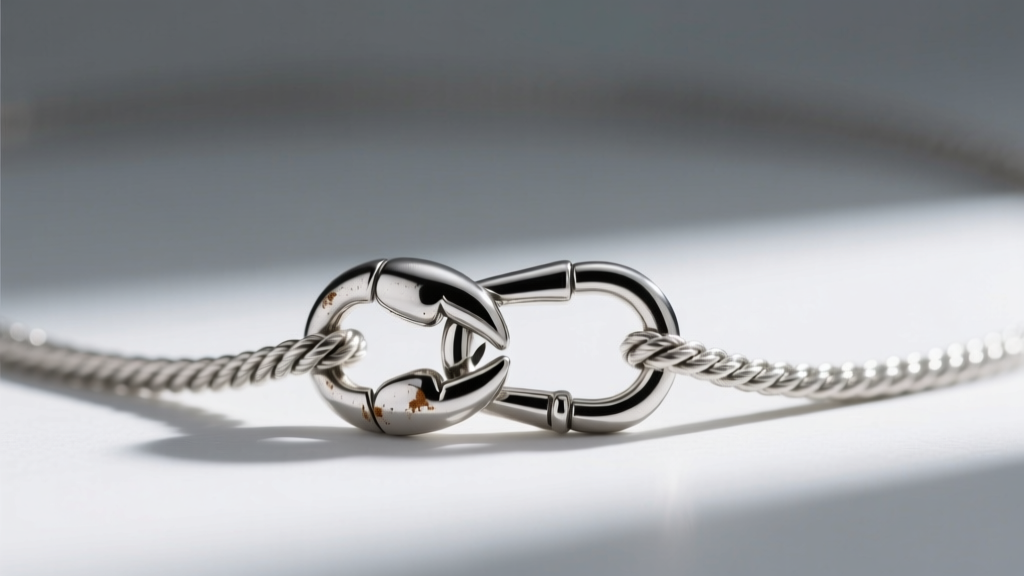
Many long chains are manufactured with standard spring-ring clasps. These are inadequate for chains exceeding 24 inches in length, especially if they feature heavy links or pendants. The constant downward pull and swinging motion can warp the tiny internal spring, causing the clasp to pop open unexpectedly. Upgrade your long chains to a lobster claw clasp or a neodymium magnetic clasp, which offer superior tensile strength and security. Always ensure the jump ring connecting the clasp to the chain is soldered shut; an unsoldered jump ring is a guaranteed failure point on a heavy, swinging chain.
When to Seek Professional Intervention
While routine cleaning and careful storage can be managed at home, certain issues require professional attention. If you notice any of the following, consult a certified bench jeweler:
- Stretched Links: If a section of the chain appears elongated or misshapen, the metal has suffered tensile stress and is at risk of snapping.
- Cracked Solder Points: Inspect the links under a jeweler's loupe. Hairline fractures at the solder joints indicate metal fatigue.
- Deep Scratches on Gold: Unlike surface dirt, deep abrasions require professional repolishing, which removes a microscopic layer of metal to restore a mirror finish.
"A long chain is an investment in movement and drama. Treat the hardware with the same respect you give the center gemstone, and it will last for generations." — Master Bench Jeweler, Smithsonian Jewelry Conservation Archives.
For more in-depth historical conservation techniques, the Smithsonian Institution offers excellent resources on how museum curators preserve antique metalwork without compromising its patina or structural integrity.
Conclusion
Maintaining a womens necklace long chain requires a shift in perspective from passive ownership to active care. By understanding the specific vulnerabilities of your chain's link style, utilizing chemistry-based cleaning methods that protect the metal, and upgrading weak hardware components, you ensure that your longest, most dramatic pieces remain as secure and brilliant as the day you acquired them. Implement these protocols into your seasonal jewelry routine, and your statement necklaces will continue to elevate your wardrobe for years to come.


