Carrie Name Necklace Repair: Fixing Snaps and Tarnish
Learn how to troubleshoot common carrie name necklace issues like snapped script letters, chain tangling, and plating loss with expert repair tips.

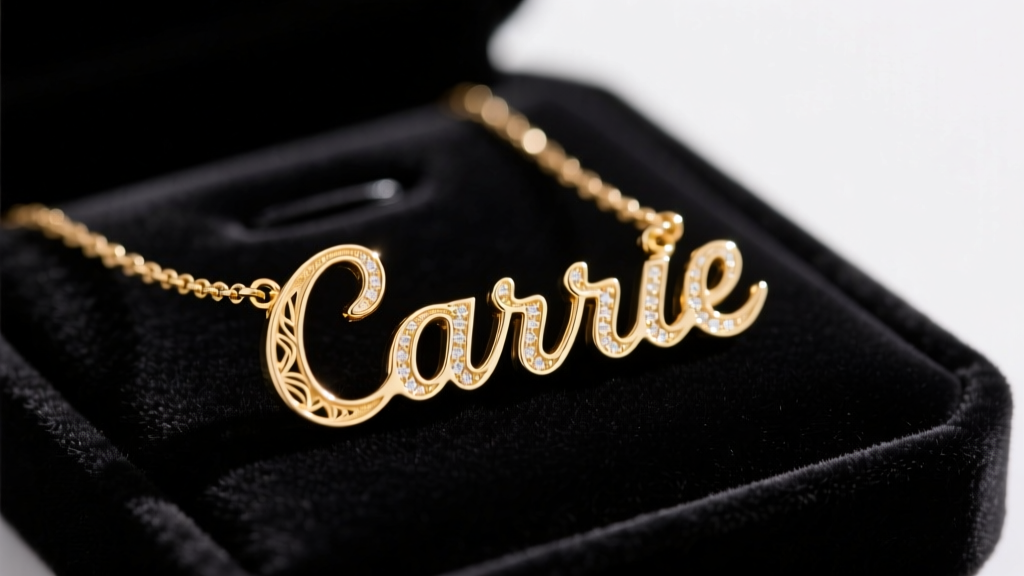
The iconic carrie name necklace remains a staple in personalized jewelry, but its structural design often leads to frustrating failures. Whether you are dealing with a snapped cursive loop, a severely tangled chain, or rapid gold plating loss, understanding the mechanics of nameplate jewelry is the first step toward a lasting repair. In this comprehensive troubleshooting guide, we break down the exact failure points of script nameplates and provide jeweler-grade solutions to restore and reinforce your piece.
The Anatomy of a Carrie Name Necklace Failure
The classic nameplate style, popularized in the early 2000s, relies on a continuous cursive script. While visually elegant, this interconnected font creates inherent structural vulnerabilities. Unlike block letter pendants where each character is anchored independently, a script nameplate distributes tension across the entire horizontal baseline and the delicate connecting ligatures between letters.
Why Cursive Script Letters Snap
The most frequent repair we see involves fractured loops on letters like 'e', 'a', and 'o', or snapped crossbars on 't' and 'f'. This occurs due to a combination of metal fatigue and inadequate thickness. Mass-market fashion brands typically stamp these nameplates from brass or silver sheets measuring just 0.5mm to 0.7mm thick. At this gauge, the metal lacks the tensile strength to withstand the micro-bends caused by daily wear, sleeping in the necklace, or accidental snags on clothing. High-quality, fine jewelry versions should be die-struck or cast in solid gold with a minimum thickness of 1.0mm to 1.2mm to resist work-hardening and subsequent snapping.
Material Diagnostics: Solid Gold vs. Vermeil vs. Plated
Before attempting any repair, you must accurately identify the base metal and plating. Applying heat to a plated brass piece will instantly melt the thin gold layer and scorch the zinc-rich brass underneath, ruining the pendant. According to the Federal Trade Commission Jewelry Guides, understanding the distinction between flash plating and true vermeil is critical for consumer protection and repair expectations.
| Material Type | Base Metal | Gold Layer Thickness | Expected Lifespan | Repairability |
|---|---|---|---|---|
| Flash Plated | Brass or Steel | Less than 0.5 microns | 6 - 12 Months | None (Cannot be soldered or polished) |
| Gold Vermeil | Sterling Silver | Minimum 2.5 microns | 2 - 5 Years | Limited (Laser welding only, high risk of plating loss) |
| Solid 14k/18k Gold | Gold Alloy | Solid throughout | Lifetime | Excellent (Can be laser welded, torch soldered, and polished) |
If your carrie name necklace is turning your skin green or revealing a silver or copper tone at the friction points (like the bail where the chain rubs), the plating has worn through. For vermeil pieces, a professional jeweler can strip the remaining plating and re-plate it, but this requires specialized electroplating equipment and can cost between $45 and $85.
Troubleshooting the Chain: Tangles and Clasp Failures
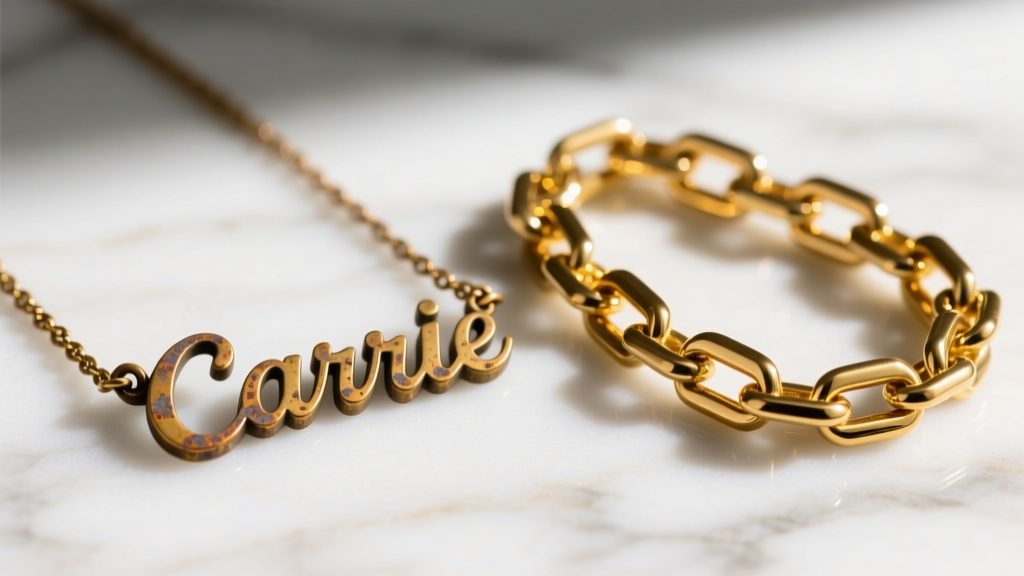
The chain is often the unsung hero—or the primary point of failure—of a nameplate necklace. The traditional pairing is a lightweight 0.8mm or 0.9mm cable chain. While delicate and aesthetically pleasing, standard cable chains are highly prone to kinking and tangling within the cursive loops of the nameplate.
Upgrading to a Box or Rope Chain
To solve chronic tangling and premature chain breakage, we recommend upgrading to a 1.0mm or 1.1mm box chain. Box chains feature a woven, geometric structure that naturally resists kinking and provides a smoother surface that glides through the nameplate's end loops without catching. Furthermore, inspect the jump rings connecting the chain to the pendant. If they are open (not soldered shut), the constant friction will eventually wear through the metal wire, causing the pendant to detach and be lost. Always have a jeweler use a laser to solder the jump rings closed; this adds less than $15 to a repair bill but guarantees the security of the piece.
Step-by-Step Repair Guide for Snapped Nameplates
When a script letter snaps, the repair method dictates the longevity and aesthetic outcome of the restoration. Traditional jewelry repair methods are often disastrous for thin script nameplates.
Why Traditional Torch Soldering Fails
Using a butane or oxygen-propane torch to solder a snapped 0.8mm script letter requires heating a broad area of the metal to flow the solder. Because gold is an excellent thermal conductor, the heat spreads rapidly across the cursive baseline. This widespread heat exposure causes the surrounding metal to warp, melt, or lose its high-polish finish, leaving a visible, pitted scar on the nameplate.
The Nd:YAG Laser Welding Solution
Modern jewelry repair relies on advanced metallurgical techniques and specifically the Nd:YAG (Neodymium-doped Yttrium Aluminum Garnet) laser welder. Laser welding focuses a highly concentrated beam of light onto a microscopic area, creating a localized weld in milliseconds. The surrounding metal remains completely cool to the touch.
The Laser Repair Process:
1. Preparation: The jeweler cleans the fracture point with an ultrasonic cleaner and secures the nameplate on a magnetic welding jig to ensure perfect alignment.
2. Filler Wire Selection: A filler wire matching the exact karat and color (e.g., 14k yellow gold) is selected. Using a lower-karat wire will result in a visible color mismatch after polishing.
3. Pulsed Welding: The laser pulses at high intensity, melting the filler wire directly into the fracture seam without warping the delicate cursive loops.
4. Finishing: The micro-weld is filed flush with a fine needle file and polished with a rouge wheel, rendering the break entirely invisible to the naked eye.
Expert Sizing: Avoiding the 'Sag' Effect
A common structural complaint with longer names (7+ letters) is the 'sag' effect, where the center of the nameplate bows downward, causing the pendant to fold in on itself and tangle with the chain. This happens when the horizontal baseline connecting the letters is too thin to support the weight of the outer characters.
The Troubleshooting Fix: If you are commissioning a custom carrie name necklace for a long name or word, request a 'double baseline' or a structural backing bar. This involves adding a secondary, thicker horizontal wire (usually 1.5mm) running behind the lower loops of the script. Alternatively, ensure the primary baseline is cast at a minimum of 1.4mm thick. For existing sagging nameplates, a jeweler can carefully laser-weld a discreet, flat structural bar across the back of the lower loops to restore rigidity.
Diamond and Birthstone Setting Failures
Many nameplates feature a small diamond or birthstone bezel-set or prong-set on the capital letter or as a dangling accent. Because these stones are subjected to the same kinetic movement and bending forces as the script letters, the settings frequently loosen.
If you notice your accent stone rattling or catching on fabrics, stop wearing the necklace immediately. In script nameplates, the metal surrounding the stone setting is often compromised by the cutting process used to create the cursive shape. A jeweler must use a microscope to inspect the prongs or bezel wall. For bezel settings, the jeweler will use a micro-burnisher to carefully push the gold rim back over the stone's girdle. Avoid ultrasonic cleaners if your nameplate features fracture-filled diamonds or soft birthstones like opals or emeralds, as the high-frequency vibrations can shatter the stones or dislodge them entirely from their delicate settings.
Preventative Care and Storage Framework
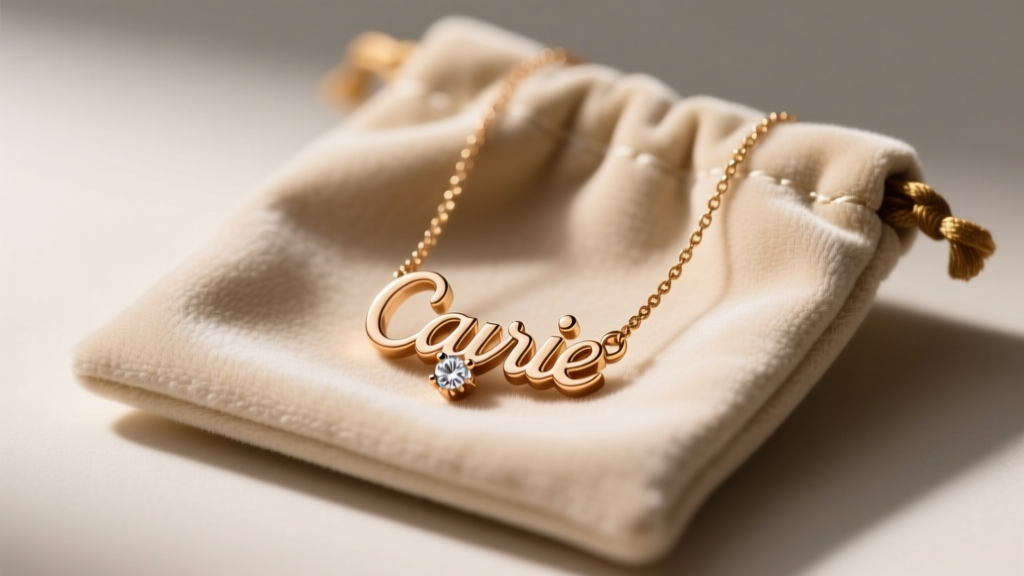
Preventing damage is vastly more cost-effective than laser welding and re-plating. Implement this strict care framework to maximize the lifespan of your nameplate jewelry:
- The 'Last On, First Off' Rule: Always put your necklace on after applying perfumes, lotions, and hairsprays. The alcohol and volatile organic compounds in cosmetics accelerate the degradation of gold plating and dull the polish of solid gold.
- Friction Point Monitoring: Once a month, inspect the bail (the loop that holds the chain). This is the highest friction point on the entire piece. If you see a deep groove forming, have a jeweler apply a micro-drop of solder to reinforce the bail before it snaps.
- Proper Storage: Never toss a nameplate necklace into a communal jewelry box. The sharp points of the cursive letters will scratch softer gold pieces and become tangled in other chains. Store the necklace laid completely flat in an anti-tarnish microfiber pouch, ensuring the clasp is fastened to prevent the chain from threading through the script loops.
By understanding the metallurgical limitations of the cursive script and upgrading to structurally sound chains and solid metals, your personalized piece can transition from a fragile fashion accessory to a durable, lifelong heirloom.


