How to Fix and Style a Heavy Brown Statement Necklace
Solve weight, clashing, and wear issues with your brown statement necklace. Expert tips on chain upgrades, material care, and perfect color pairing.

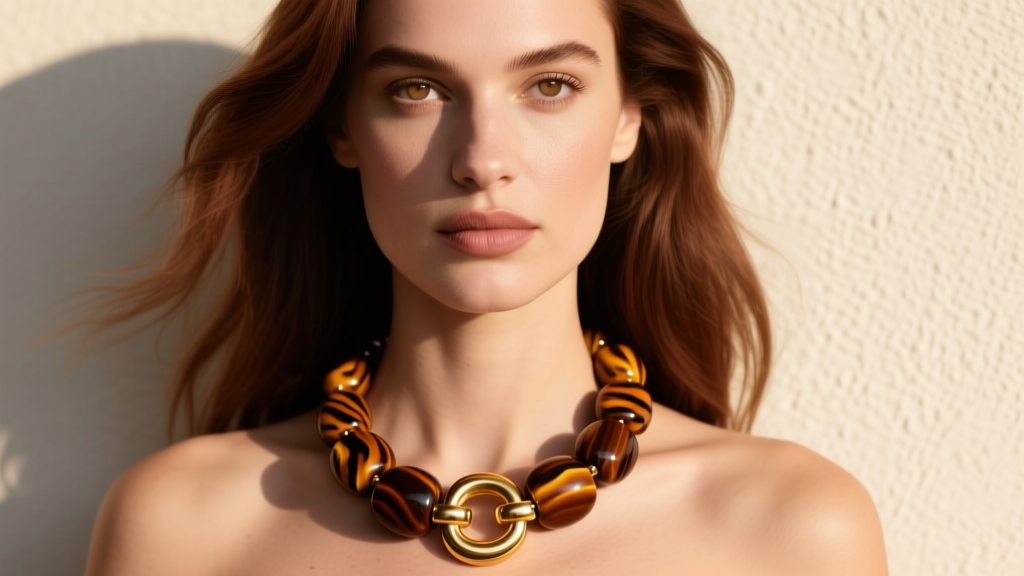
The brown statement necklace is a cornerstone of earthy, avant-garde, and boho-chic jewelry wardrobes. Whether crafted from polished tiger’s eye, carved walnut, or geometric acrylic resin, brown hues offer a grounding, sophisticated alternative to standard metallic or gemstone pieces. However, the very elements that make these necklaces striking—their substantial volume, dense natural materials, and complex color profiles—often lead to practical wearing issues. Neck strain, color muddiness, material degradation, and clasp migration are frequent complaints among jewelry enthusiasts.
In this comprehensive troubleshooting guide, we break down the physics, color theory, and material science required to fix, maintain, and perfectly style your heavy brown statement pieces.
The Weight Problem: Relieving Cervical Strain
Natural brown stones like tiger’s eye, jasper, and agate possess high specific gravities (tiger’s eye, for instance, sits at roughly 2.64, meaning it is 2.64 times heavier than water). When combined with large-scale statement designs, the total pendant weight can easily exceed 80 to 120 grams. This concentrated mass pulls the necklace downward, creating a fulcrum effect at the base of the cervical spine that leads to muscle fatigue and tension headaches.
Upgrading the Chain Architecture
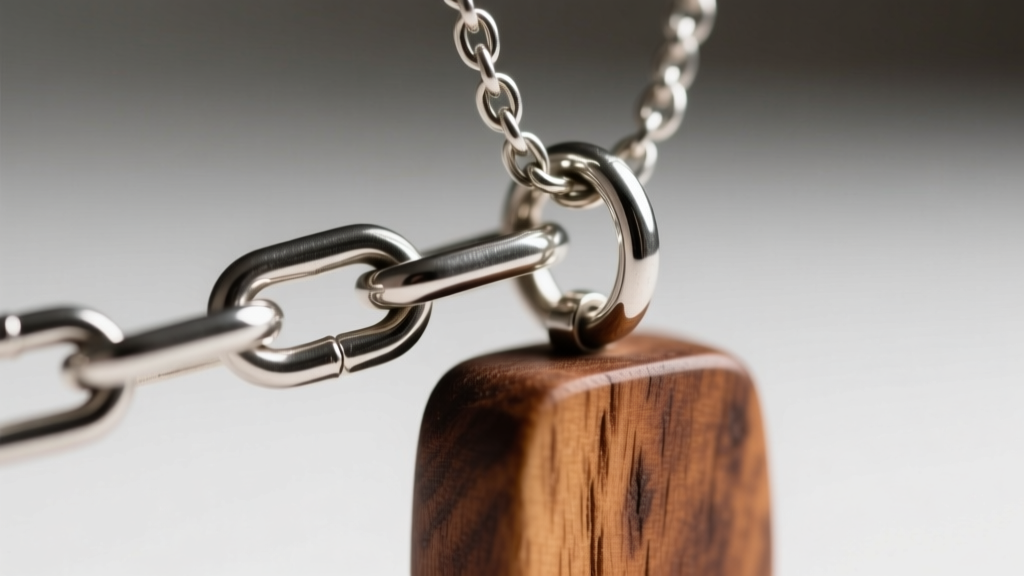
The most common failure point in a heavy brown statement necklace is the chain. Standard 2.0mm solid brass or steel cable chains are rigid and transfer the entire dead weight of the pendant directly to a localized 15-millimeter section of the neck. To troubleshoot this:
- Switch to Grade 23 Titanium (ASTM F136): Titanium offers the tensile strength of steel but weighs roughly 45% less. A 3.5mm titanium rolo chain can support a 150g wooden or stone pendant while drastically reducing overall neck load.
- Utilize Hollow-Link Aluminum: For oversized resin or lightweight wood pendants that still suffer from bulky chain syndrome, hollow-link aluminum chains provide visual volume (often 4.0mm to 6.0mm thick) with a fraction of the weight.
- Widen the Contact Surface: Swap thin cable chains for flat-link styles like a 4.0mm Figaro or herringbone chain. The flattened links distribute the pendant’s downward drag across a wider surface area of the collarbone, reducing localized pressure points.
Color Clashing: Preventing the 'Muddy' Aesthetic
Brown is an inherently complex color, composed of varying ratios of red, yellow, and black. When paired with the wrong wardrobe textiles or mismatched with the wearer's skin undertones, a brown statement necklace can look 'muddy' or wash out the complexion. The key to troubleshooting this lies in contrast mapping.
The Undertone and Contrast Matrix
Use the following framework to select or style the specific shade of your brown necklace. According to color theory principles widely adopted by the Jewelers of America, matching the underlying warmth of the stone or material to the wearer's skin undertone prevents the jewelry from looking disconnected.
| Skin Undertone | Ideal Brown Hue | Materials to Seek | Textile Pairings |
|---|---|---|---|
| Cool (Pink/Blue) | Ash Brown, Taupe, Mocha | Smoky quartz, dark oxidized wood, brown leather | Charcoal, icy blue, crisp white, plum |
| Warm (Peach/Gold) | Cognac, Copper-Brown, Amber | Tiger’s eye, amber, polished teak, tortoiseshell resin | Olive green, mustard, cream, rust |
| Neutral | Espresso, Chestnut, Walnut | Mahogany, jasper, mixed-metal brown PVD coatings | Navy, emerald, true red, black |
Pro-Tip: If you already own a brown necklace that clashes with your skin tone, troubleshoot the visual disconnect by adding a secondary layering chain in a bright, contrasting metal (like 14k yellow gold or polished silver) between the skin and the brown pendant. This creates a 'bridge' that reflects light onto the face and separates the brown hue from your neckline.
Material Degradation: Restoring Wood, Resin, and Horn
Brown statement necklaces frequently utilize organic and semi-organic materials to achieve their earthy aesthetic. Unlike gold or platinum, these materials are porous, reactive, and susceptible to environmental degradation.
Troubleshooting Organic Materials
1. Dull or Cracking Wood (Walnut, Teak, Mahogany)
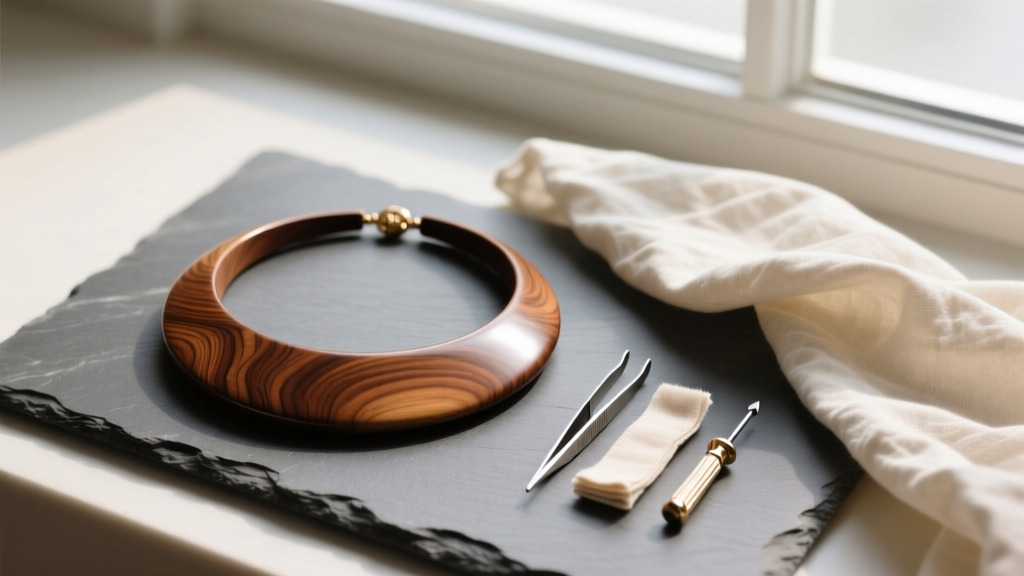
Wood loses its natural oils when exposed to low humidity (below 30% RH) and skin acids. Never use olive oil or vegetable oils to treat wooden jewelry; they will oxidize, turn rancid, and emit a foul odor. Instead, apply a micro-thin layer of pure jojoba oil or specialized beeswax-based wood polish. Allow it to penetrate for 15 minutes, then buff vigorously with a microfiber cloth to restore the deep brown chatoyancy.
2. Scratched or Cloudy Brown Resin/Acrylic
Statement pieces made of brown tortoiseshell or marbled acrylic resin easily accumulate micro-scratches from daily wear, leading to a cloudy, dull appearance. To fix this, use a two-step plastic polishing compound (such as Novus Plastic Polish #2 and #3). Apply the fine scratch remover with a soft cotton pad using tight, circular motions. This re-levels the acrylic surface and restores optical clarity.
3. Dehydrated Horn or Tortoiseshell
Natural horn and antique tortoiseshell can delaminate or flake if exposed to harsh chemicals or prolonged UV light. Maintain structural integrity by storing these pieces in a humidity-controlled environment (ideally 40-50% RH) and wiping them down with a slightly damp cloth followed by a light application of mineral oil.
The Forward-Slip Dilemma: Fixing Clasp Migration
One of the most persistent annoyances with any heavy pendant is the 'pendulum effect.' Because the front of the necklace bears the brunt of the weight, gravity constantly pulls the lighter back-chain upward, dragging the clasp around to the front of the neck or off-center.
Engineering a Counterweight Solution
To troubleshoot clasp migration on a heavy brown statement necklace, you must rebalance the physical distribution of the piece.
The 15% Rule: For optimal balance, the hardware at the nape of the neck (the clasp, jump rings, and any added charms) should weigh approximately 10% to 15% of the total weight of the front-facing pendant. This provides enough gravitational anchor to keep the clasp centered without adding unnecessary bulk to the chain.
Actionable Fixes:
- Add a Counterweight Charm: Attach a dense, small-profile charm (like a solid sterling silver or brass bead, roughly 5 to 8 grams) directly to the jump ring adjacent to the clasp.
- Switch to a Weighted Toggle Clasp: Toggle clasps inherently weigh more than standard lobster clasps due to the solid metal T-bar. Upgrading to a 4.0mm brass or bronze toggle clasp can provide the exact counterweight needed to anchor the back of the necklace.
- Check the Gemological Properties: According to the Gemological Institute of America (GIA), understanding the exact density of your stones helps in calculating the required counter-balance. If your tiger's eye pendant is exceptionally dense, a standard lobster clasp will never suffice; opt for a heavy-duty magnetic neodymium clasp encased in a thick metal shell to add necessary rear weight.
Expert Troubleshooting Checklist
Before wearing your brown statement necklace for a full day, run through this rapid diagnostic checklist to ensure comfort, longevity, and aesthetic perfection:
- The Collarbone Test: Put the necklace on and move your shoulders. Does the pendant strike your sternum painfully? If so, shorten the chain by 1.5 inches to raise the center of gravity above the hollow of the collarbone.
- The Fabric Snag Check: Run your thumb over the back of the pendant and the chain links. Organic materials like raw wood or unpolished horn can catch on delicate knits. Sand any rough edges with 1000-grit sandpaper and seal with a micro-crystalline wax.
- The Lighting Test: View the necklace in both natural daylight and warm indoor lighting. Brown stones like jasper can appear nearly black in low light. Ensure the facets or polished surfaces are angled to catch ambient light, preventing the piece from looking like a dark void against your clothing.
- The Jump Ring Audit: Inspect the jump ring connecting the heavy pendant to the chain. If it is a standard open jump ring, use two pairs of flat-nose pliers to ensure the gap is completely flush. For pendants over 50 grams, solder the jump ring shut or replace it with a split-ring to prevent catastrophic failure.
By addressing the structural physics, material vulnerabilities, and color dynamics of your jewelry, you can transform a cumbersome brown statement necklace into a comfortable, enduring, and flawlessly styled signature piece.


