Celtic Shield Knot Necklace: Expert Metallurgy & Chain Pairing Guide
Explore the technical metallurgy, casting methods, and chain pairing strategies for the perfect Celtic shield knot necklace in this expert guide.

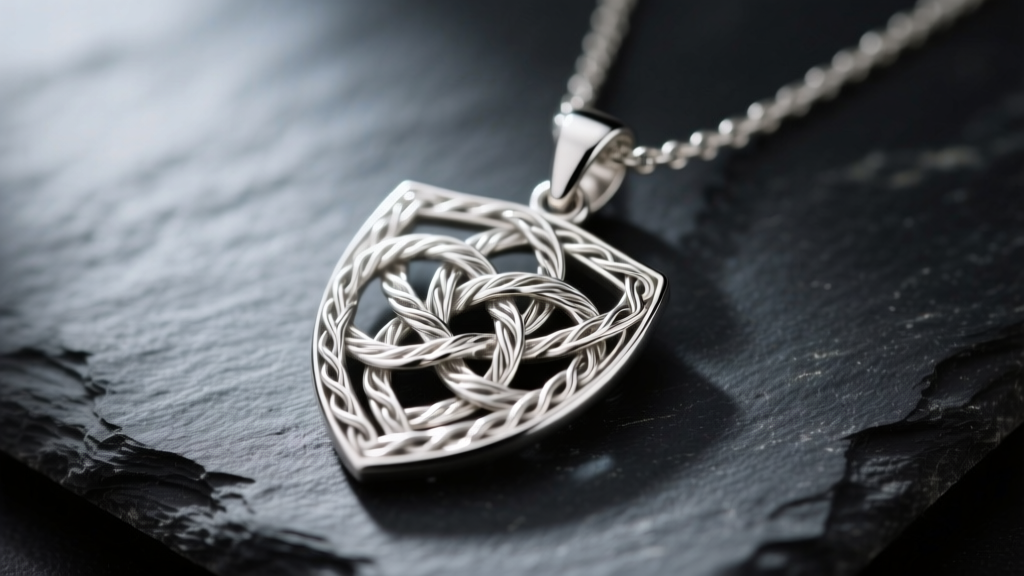
The Celtic shield knot necklace is far more than a simple decorative pendant; it is a masterclass in continuous-line geometry and historical metallurgy. Originating as a symbol of protection—often associated with the four corners of the earth or the four elements—the shield knot (or quaternary knot) presents unique engineering challenges for modern jewelers. Unlike simpler Celtic motifs, the interwoven over-and-under structure of the shield knot requires precise sprue placement during casting and meticulous structural planning to prevent weak points at the intersections. In this expert deep dive, we bypass generic styling advice to examine the metallurgical properties, casting tolerances, and load-bearing chain mechanics required to select, maintain, and wear a high-quality Celtic shield knot necklace.
Decoding the Geometry: Historical Accuracy vs. Modern Casting
Historically, Celtic knotwork was carved into stone or hammered into bronze using rudimentary tools. Today, a premium Celtic shield knot necklace begins its life in CAD (Computer-Aided Design) software or through hand-carved wax models. The primary technical challenge in producing a shield knot is maintaining the continuous line illusion while ensuring adequate metal thickness at the crossover points.
In mass-produced, die-struck pendants, the under-passes of the knot are often flattened, resulting in a weak structural profile that bends easily under tension. Conversely, high-end lost-wax centrifugal casting allows for fully rounded, three-dimensional wirework. According to the Victoria and Albert Museum's archives on Celtic art, the historical integrity of these knots relies on uniform ribbon widths. When evaluating a pendant, measure the ribbon width-to-thickness ratio. A superior casting will maintain a 3:1 or 4:1 ratio (e.g., a 2.4mm wide ribbon with a 0.6mm to 0.8mm thickness), ensuring the knot looks substantial without becoming excessively heavy or prone to porosity during the cooling phase.
Metallurgical Breakdown: Choosing the Right Alloy
The continuous loops of a shield knot mean that stress is distributed unevenly across the pendant, particularly at the bail (the loop that connects the pendant to the chain). The choice of alloy dictates the pendant's Vickers Hardness (HV), its resistance to work-hardening, and its long-term wearability. Below is a technical comparison of the most common alloys used for these specific pendants.
| Alloy Composition | Vickers Hardness (HV) | Tarnish / Corrosion Profile | Typical Price Range (15-20g) |
|---|---|---|---|
| 925 Sterling Silver | 65 - 80 | High (Reacts to sulfur/humidity) | $85 - $160 |
| 14k Yellow Gold (58.5%) | 120 - 140 | Excellent (Highly inert) | $450 - $850 |
| Silicon Bronze | 90 - 110 | Moderate (Develops verdigris patina) | $45 - $95 |
| Grade 5 Titanium (Ti-6Al-4V) | 350+ | Zero (Biocompatible, inert) | $120 - $280 (CNC Milled) |
For daily wear, 14k gold offers the optimal balance of tensile strength and corrosion resistance. Sterling silver remains the most popular choice for its historical aesthetic, but it requires an understanding of oxidation, which we will cover shortly. Titanium is gaining traction in 2026 for hypoallergenic wearers, though its extreme hardness means it cannot be traditionally cast; it must be CNC milled, which often results in sharper, less forgiving knot edges compared to cast precious metals.
Chain Engineering: Bail Dimensions and Load-Bearing Links
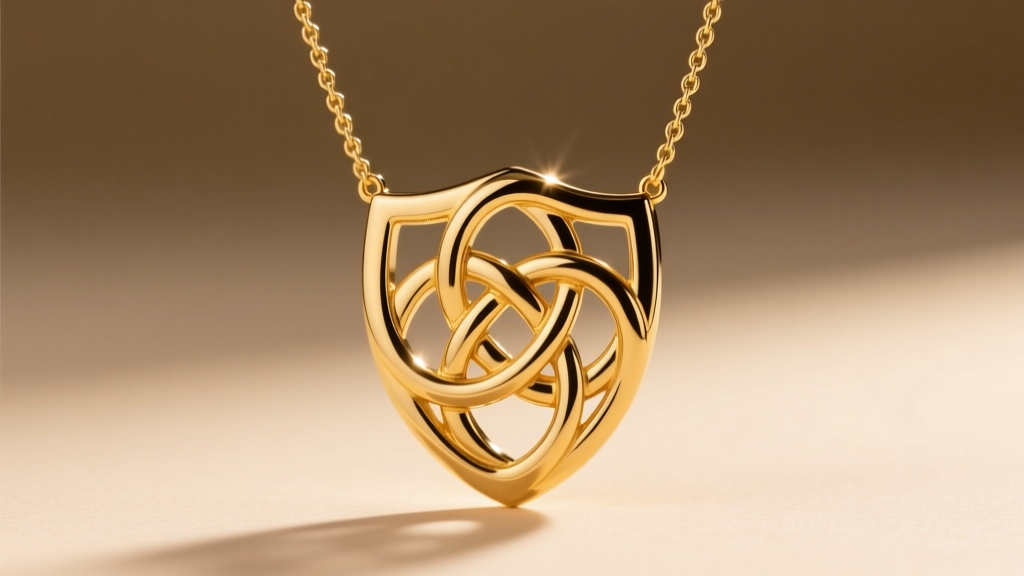
A common failure mode in Celtic jewelry is the mismatch between the pendant's mass and the chain's tensile strength. A solid cast sterling silver shield knot pendant typically weighs between 12 and 22 grams. This concentrated pendulum weight exerts significant shear force on the chain's links and the pendant's bail.
Bail Tolerances
Inspect the inner diameter of the pendant's bail. For a heavy shield knot, the bail must have a minimum inner clearance of 5mm x 4mm. Furthermore, the bail should be seamlessly soldered to the pendant body. Cast-in-place bails (where the bail is part of the original wax model) are prone to micro-fractures at the junction points due to uneven cooling rates. A separately cast, laser-welded bail is the hallmark of expert craftsmanship.
Chain Selection Matrix
- Rope Chain (2.5mm - 3.0mm): The optimal choice. The twisted links distribute the pendant's weight across multiple contact points, offering a breaking strength well over 8kg. The helical structure prevents the chain from kinking.
- Wheat Chain (2.0mm - 2.5mm): Excellent flexibility and high tensile strength. The woven links mimic the Celtic knotwork aesthetically while providing a smooth drape that won't pull chest hair.
- Box Chain (1.5mm - 2.0mm): Avoid for heavy pendants. The sharp 90-degree inner corners of box links act as stress concentrators. Over time, the pendulum motion of a heavy shield knot will cause the corners to wear through the adjacent links, leading to sudden catastrophic failure.
- Curb Chain (3.0mm+): While strong, the flat profile of curb links tends to catch on the intricate under-passes of the shield knot, potentially scratching the pendant's high-polish surfaces.
Patina, Oxidation, and Surface Finishing Techniques
The visual depth of a Celtic shield knot necklace relies heavily on contrast. Because the knot features complex overlapping weaves, a flat high-polish finish can make the geometry difficult to read from a distance. Expert jewelers utilize chemical oxidation to solve this.
The industry standard for oxidizing sterling silver is Liver of Sulfur (potassium sulfide). The pendant is submerged in a heated solution, turning the entire piece black. A master polisher then uses a magnetic tumbler or a specialized polishing cloth to remove the oxidation exclusively from the raised, high-friction surfaces of the knot, leaving the recessed under-passes pitch black. This technique, known as antiquing, increases the visual contrast by up to 40%, making the continuous line of the shield knot instantly legible.
"When evaluating an oxidized Celtic knot, run your fingernail gently over the recessed lines. If the black oxidation flakes off or appears powdery, the piece was likely sprayed with a cheap enamel paint rather than chemically oxidized. True liver of sulfur oxidation penetrates the top microns of the silver and will not flake." — Ganoksin Project Metallurgy Archives
Note that rhodium plating is frequently applied to sterling silver to prevent tarnish. However, rhodium plating a Celtic shield knot is generally discouraged by purists, as the plating process fills in the microscopic recesses of the knotwork, dulling the sharp, antiqued contrast that defines the piece's character.
Troubleshooting Common Failure Modes
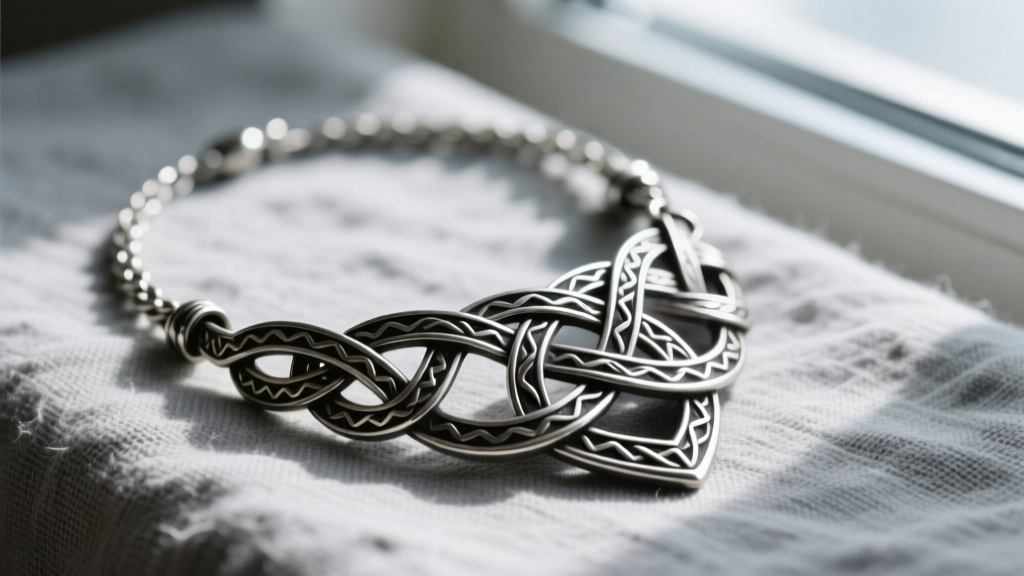
Even premium Celtic shield knot necklaces can suffer from structural fatigue if subjected to improper wear conditions. Understanding these failure modes allows you to inspect vintage or new pieces with a critical eye.
- Bail Work-Hardening and Snapping: If a pendant is worn on a chain that is too thick, the bail cannot move freely. Every time the wearer turns their head, the bail bends slightly against the rigid chain. Over months, this causes the silver or gold to work-harden and eventually snap. Solution: Ensure the chain passes through the bail with at least 1.5mm of lateral clearance.
- Porosity at Knot Intersections: In lost-wax casting, the thickest parts of the metal cool last. The intersections where the knot crosses over itself are naturally thicker. If the jeweler fails to place a casting sprue near these junctions, microscopic voids (porosity) can form inside the metal. Solution: Inspect the crossover points under a 10x jeweler's loupe. If you see tiny pits or a spongy texture on the surface, reject the piece, as it will eventually fracture at that exact point.
- Lobster Clasp Spring Fatigue: The heavy pendulum swing of a 20g shield knot places repetitive shock loads on the clasp spring. Standard stamped brass or hollow silver lobster clasps will fail within a year. Solution: Upgrade to a solid 14k gold spring ring or a heavy-duty solid stainless steel lobster clasp with a reinforced internal spring mechanism.
Ultimately, selecting the ideal Celtic shield knot necklace requires looking past the superficial shine and evaluating the structural integrity of the casting, the hardness of the alloy, and the physics of the chain pairing. By prioritizing these technical specifications, you ensure that this ancient symbol of protection remains physically resilient enough to be passed down through generations.


