Breakage & Tangles: Choosing the Right Types of Chains for Necklaces
Stop necklace breakage and tangling. We troubleshoot common chain failures and rank the strongest types of chains for necklaces by durability.

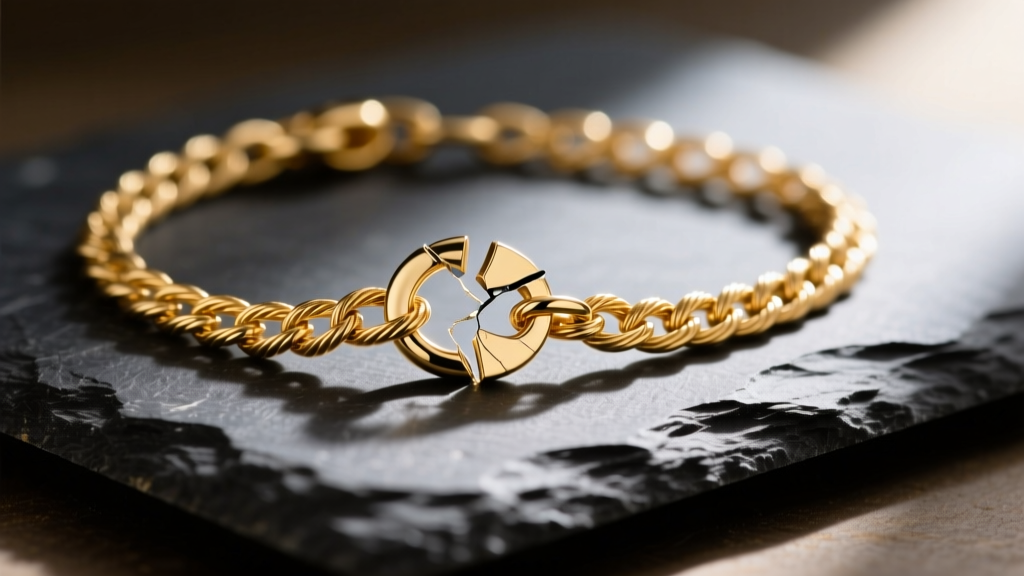
There are few things more frustrating in jewelry than hearing the sharp snap of a favorite necklace giving way, or spending ten minutes untangling a delicate chain that has mysteriously knotted itself in your jewelry box. While aesthetic appeal usually drives our initial purchases, the structural integrity of a chain dictates its actual lifespan. As a senior bench jeweler and style analyst, I see hundreds of snapped, kinked, and stretched chains every year. The root cause is almost always a mismatch between the chain's architecture and the wearer's lifestyle or pendant weight.
In this comprehensive troubleshooting guide, we will diagnose the most common necklace failures and break down the strongest types of chains for necklaces to ensure your jewelry survives daily wear.
The Anatomy of a Chain Failure: Why Necklaces Break
Before selecting a replacement, you must understand where and why chains fail. According to manufacturing data from Rio Grande, a leading jewelry supply authority, over 70% of chain breakages do not occur in the middle of the links. They occur at the stress points:
- The Jump Ring: The circular ring connecting the chain to the clasp is the weakest link. If it is not soldered shut, lateral tension will pull the gap open, allowing the chain to slip off.
- Clasp Spring Fatigue: Standard spring-ring clasps contain a tiny internal steel spring that degrades over time, eventually failing to close completely.
- Link Distortion: In softer metals like 18k or 22k gold, repeated friction and pulling cause the metal to 'work-harden' and eventually snap, or simply stretch until the links thin out and break.
Troubleshooting Common Chain Problems
If your current necklace is causing daily annoyances, the chain style is likely the culprit. Here is how to troubleshoot the three most frequent complaints.
Problem 1: Severe Tangling and Kinking
The Culprits: Herringbone, Snake, and Omega chains. These 'liquid metal' styles rely on tightly packed, flat links that lack structural memory. Once bent, they kink permanently.
The Fix: Switch to chains with distinct, individual links that pivot freely. Curb and Mariner (Anchor) chains lay flat against the skin but possess the 3D structural integrity to resist knotting.
Problem 2: Catching and Pulling Hair
The Culprits: Rope chains and hollow Box chains. The spiraling crevices of a rope chain act like tiny hooks for fine hair, while the sharp, machined edges of box chains can snag.
The Fix: Opt for a Wheat (Spiga) chain. Wheat chains feature interwoven, smooth oval links that mimic the look of a rope but have a completely flush surface that allows hair to slide right off.
Problem 3: The Clasp Keeps Slipping to the Front
The Culprits: Lightweight chains paired with heavy, unbalanced clasps, or chains lacking a counterweight.
The Fix: Upgrade to a Lobster clasp (which is heavier and more secure) and ensure the chain has a small metal 'tag' or counterweight soldered directly opposite the clasp to keep it anchored at the nape of your neck.
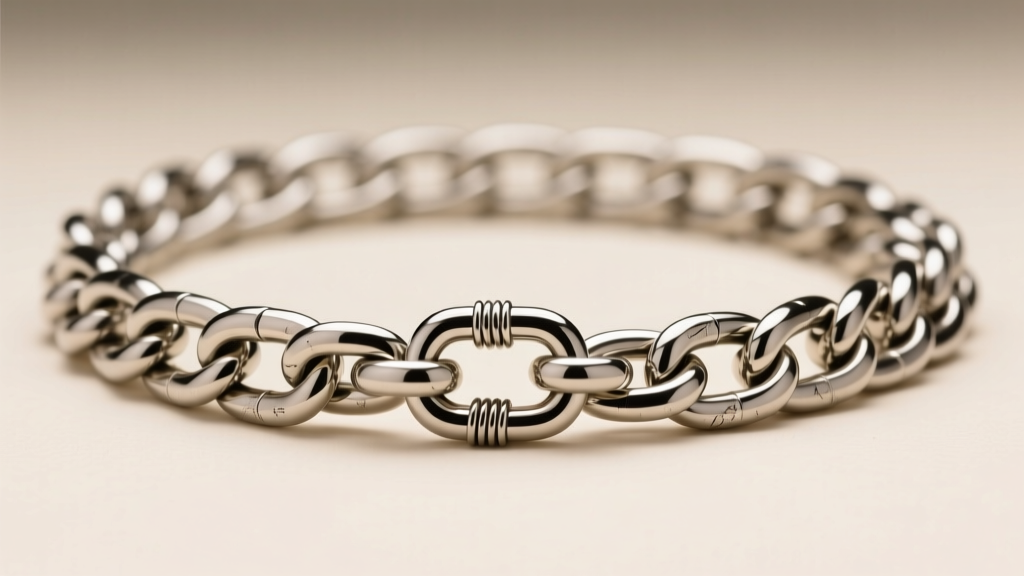
The Strongest Types of Chains for Necklaces: A Durability Ranking
When evaluating the strongest types of chains for necklaces, we look at link interlocking complexity and surface-area contact. The more links interlock, and the more surface area they share, the higher the tensile strength.
| Chain Style | Link Structure | Tensile Strength | Best Pendant Weight | Common Failure Mode |
|---|---|---|---|---|
| Wheat (Spiga) | 4-way interwoven ovals | Exceptional | Heavy (10g - 25g) | Link crushing under extreme blunt force |
| Mariner (Anchor) | Oval links with center bar | Very High | Medium-Heavy (5g - 20g) | Center bar bending if gauge is too thin |
| Curb | Flattened, interlocking ovals | High | Medium (5g - 15g) | Stretching over time if links are hollow |
| Box | Square, right-angle links | Medium | Light-Medium (2g - 10g) | Kinking and corner fracturing |
| Cable | Simple uniform ovals | Low-Medium | Light (Under 5g) | Link distortion and jump ring failure |
Pro-Tip: If you must wear a heavy pendant on a Cable chain, ensure the links are soldered (each link individually welded shut). Unsoldered cable chains will pull apart under the static weight of a heavy charm.
Matching Chain Gauge to Pendant Weight: The Load-Bearing Framework
A common mistake is choosing a chain based solely on its visual width, ignoring the actual metal gauge and density. To prevent catastrophic failure, follow this gauge-to-weight framework for standard 14k gold alloys:
Light Pendants (Under 5 Grams)
For delicate solitaire diamonds or small birthstones, a 1.0mm to 1.5mm gauge is sufficient. At this size, Wheat and Box chains offer the best protection, as their rigid structures prevent the delicate links from collapsing.
Medium Pendants (5 to 15 Grams)
For standard lockets, medium-sized gemstone pendants, or multiple charms, you need a 2.0mm to 3.0mm gauge. Curb and Mariner chains excel here. The center bar in a Mariner chain acts as a structural baffle, preventing the oval link from being pulled into a narrow slit under load.
Heavy Pendants (15+ Grams)
Large solid gold medallions, heavy gemstone geodes, or thick glass lockets require a minimum 4.0mm to 6.0mm gauge. At this weight, you must use solid (not hollow) Wheat or thick Curb chains. According to metallurgical guidelines from the Gemological Institute of America (GIA), the clasp must also be upgraded to a heavy-duty trigger clasp or a magnetic neodymium clasp with a secondary safety chain.
Material Matters: How Metal Grades Affect Chain Longevity
The physical design of the chain is only half the equation; the metallurgy dictates how it responds to stress.
- 14k Yellow Gold: The industry standard. It offers a good balance of durability and malleability, making it relatively easy for a jeweler to solder if a link snaps.
- 18k Gold: Contains 75% pure gold, making it noticeably softer than 14k. 18k chains are prone to stretching and require thicker gauges to support the same pendant weight as 14k.
- Platinum (950 Pt): The ultimate choice for longevity. Platinum is incredibly dense and possesses high tensile strength. A 1.5mm platinum cable chain can hold the same weight as a 2.5mm 14k gold chain. Furthermore, platinum does not lose metal when scratched; it merely displaces, meaning the chain will not thin out over decades of wear.
- 316L Stainless Steel: For budget-friendly, ultra-durable options, surgical-grade stainless steel offers immense tensile strength and will not tarnish, though it is notoriously difficult to resize or solder if broken.
Expert Fixes for Already-Damaged Chains
If your chain has already suffered damage, do not attempt to bend links back into place with pliers. This causes 'work-hardening,' making the metal brittle and guaranteeing a future break.
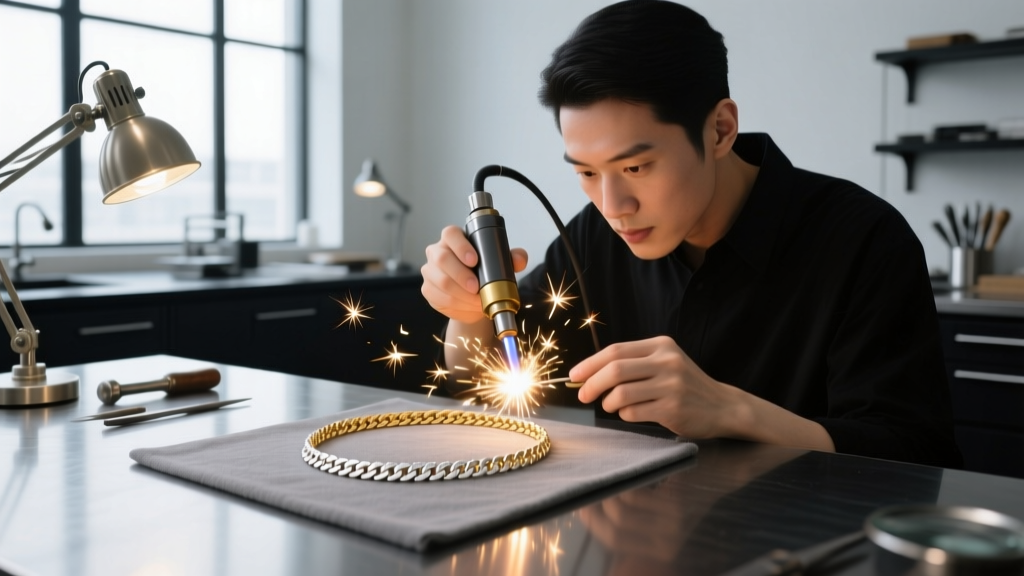
For modern repairs, seek out a jeweler who utilizes laser welding. Traditional torch soldering requires applying a lower-melting-point solder alloy to the break, which can leave a visible seam and a structurally weaker joint. Laser welding uses concentrated light to fuse the exact same karat gold back together at a microscopic level, restoring the link to nearly 100% of its original tensile strength without heating the surrounding links.
Final Verdict: Building a Break-Proof Necklace Stack
Troubleshooting necklace failures ultimately comes down to respecting the physics of jewelry. If you want a lifetime piece that can handle a heavy pendant and daily wear without tangling, a solid 2.5mm 14k Wheat chain with soldered jump rings and a lobster clasp is virtually indestructible under normal conditions. By understanding the specific strengths and failure modes of the various types of chains for necklaces, you can stop replacing broken jewelry and start investing in heirlooms that endure.


