Characters in the Story the Necklace: 2026 Diamond Value Guide
Learn from the characters in the story the necklace. Our 2026 guide breaks down diamond grading, lab-grown pricing, and simulant testing.

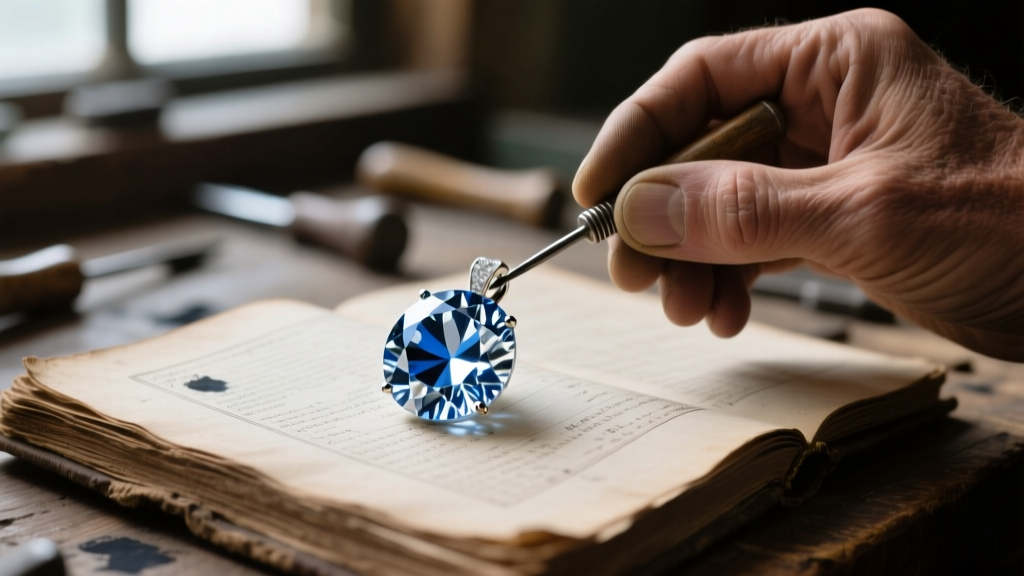
The Ultimate Cautionary Tale in Jewelry Valuation
When literature students analyze the characters in the story the necklace, they typically focus on themes of vanity, pride, and the cruel irony of fate. Guy de Maupassant’s 1884 masterpiece, La Parure (The Necklace), follows Mathilde Loisel, who borrows what she believes to be a diamond necklace, loses it, and spends a decade in grueling poverty to replace it—only to discover the original was a fake glass paste replica. While it is a classic work of fiction, for modern jewelry buyers, it serves as the ultimate cautionary tale about material misidentification and catastrophic financial loss.
In the 2026 jewelry market, the line between natural diamonds, lab-grown alternatives, and high-tech simulants is blurrier than ever. With lab-grown diamond prices experiencing massive market corrections and advanced moissanite passing basic thermal tests, assessing the true value of a necklace requires more than just a visual inspection. This guide deconstructs the financial lessons of Maupassant’s tale and provides a rigorous, gemological framework for evaluating necklace value today.
Decoding Simulants: Paste, CZ, and Moissanite
Mathilde’s downfall was rooted in her inability to distinguish between glass paste and natural diamond. Today’s buyers face a much more complex landscape of simulants. Understanding the optical and physical properties of these materials is the first step in budget protection.
- Glass Paste (The Original Fake): With a Mohs hardness of just 5.5 and a Refractive Index (RI) of roughly 1.5, glass scratches easily and lacks the 'fire' of a diamond. Under a 10x loupe, you will often see round air bubbles and molded facet edges, which never occur in natural stones.
- Cubic Zirconia (CZ): The dominant simulant of the late 20th century. CZ has a Mohs hardness of 8.0-8.5 and an RI of 2.15. While it looks brilliant, it is completely colorless (equivalent to a 'D' grade) and lacks the natural inclusions found in earth-mined diamonds. Over time, CZ absorbs oils and becomes cloudy.
- Moissanite (Silicon Carbide): The ultimate diamond challenger in 2026. Moissanite boasts a Mohs hardness of 9.25 and an RI of 2.65, giving it more 'fire' (dispersion) than a diamond. Crucially, moissanite is doubly refractive. When viewed through the crown facets with a loupe, the pavilion facet lines will appear doubled, an optical property diamonds do not possess.
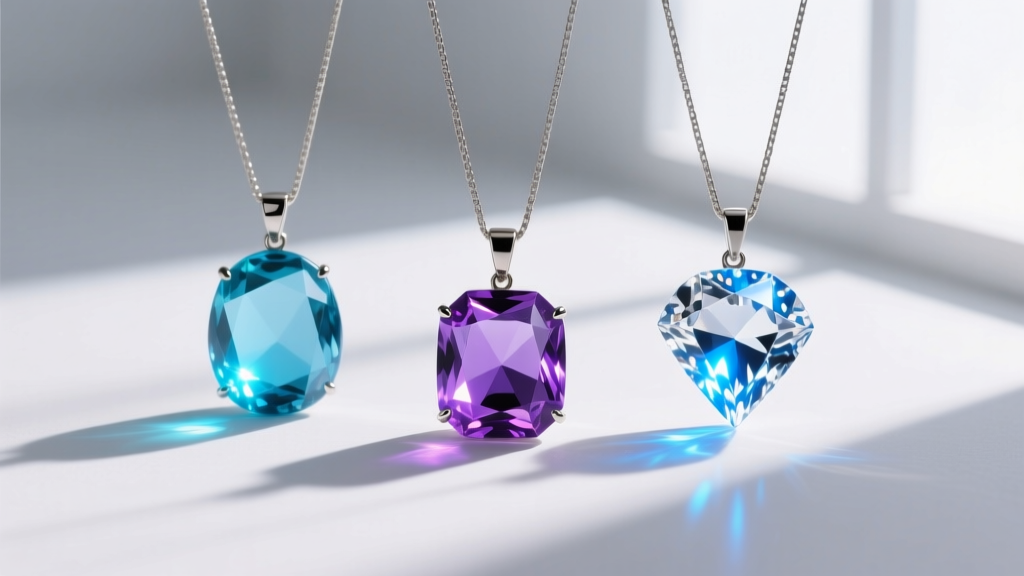
The 2026 Diamond Pricing Matrix: Natural vs. Lab-Grown
If Mathilde were shopping in 2026, she wouldn't just be worried about glass; she would be navigating the complex pricing tiers of lab-grown diamonds. The production of Chemical Vapor Deposition (CVD) and High Pressure High Temperature (HPHT) diamonds has scaled massively, fundamentally altering the value proposition of diamond pendants.
According to gemological authorities like the Gemological Institute of America (GIA), lab-grown diamonds possess the exact same chemical, physical, and optical properties as natural diamonds. However, their resale value and retail pricing are vastly different.
Comparative Pricing for a 1.00 Carat, G Color, VS2 Clarity Round Brilliant Pendant (2026 Estimates)
| Material Type | Estimated Retail Price | Resale Value Retention | Identification Requirement |
|---|---|---|---|
| Natural Earth-Mined | $4,200 - $4,800 | 20% - 35% | GIA Natural Report |
| Lab-Grown (CVD/HPHT) | $450 - $650 | Negligible (<5%) | IGI/GIA Lab-Grown Report |
| Moissanite (DEF Color) | $250 - $350 | Negligible | Electrical Conductivity Test |
| High-Grade CZ | $20 - $50 | None | Specific Gravity Test |
Note: Natural diamond prices have stabilized after historical fluctuations, but the secondary market remains highly illiquid. Never buy a diamond pendant as a short-term financial investment.
Metal Hallmarks: The Hidden Value in the Chain
A common mistake buyers make is hyper-focusing on the pendant's center stone while ignoring the chain and setting. In Maupassant's story, the necklace was a unified piece; today, pendants and chains are often sold separately, creating opportunities for material deception.
The Federal Trade Commission (FTC) Jewelry Guides strictly regulate how precious metals are marked and advertised. Understanding these hallmarks is critical for budget assessment:
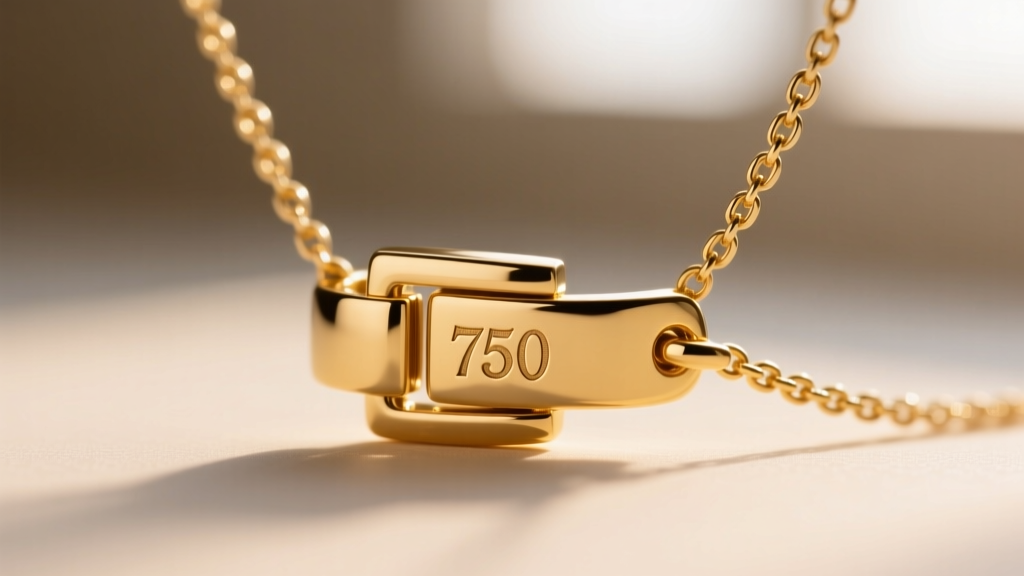
- Solid Gold (14k / 18k): Look for '585' (14k) or '750' (18k). Solid gold holds intrinsic melt value and is highly durable. An 18k solid gold chain of standard thickness (1.5mm - 2.0mm) can account for $400 to $800 of the necklace's total value based on daily gold spot prices.
- Gold Vermeil: To legally be called vermeil in the US, the piece must have a sterling silver (.925) base and be plated with at least 10k gold to a minimum thickness of 2.5 microns. Vermeil offers a luxury look at a fraction of the cost but will eventually wear down to the silver base.
- Gold Plated / Gold Filled: 'Gold plated' has no strict minimum thickness requirement and can wear off in months. 'Gold filled' (e.g., 1/20 14k GF) features a much thicker mechanical bond of gold and is significantly more durable than standard plating, making it the superior budget choice for everyday chain necklaces.
The Appraisal vs. Insurance Valuation Trap
One of the most dangerous financial traps in modern jewelry buying is the inflated insurance appraisal. Many retail jewelers provide 'appraisal documents' that state a replacement value 100% to 300% higher than the actual purchase price.
If you buy a lab-grown diamond pendant for $600 and the jeweler hands you an appraisal claiming a 'Replacement Value' of $3,500, do not be fooled into thinking you secured a massive bargain. This inflated number is designed to justify the retail markup and calculate higher insurance premiums. True Fair Market Value (FMV) is what a willing buyer would pay a willing seller in the current secondary market—which for lab-grown diamonds and simulants, is near zero. Always assess value based on the actual material replacement cost, not inflated retail insurance documents.
A Modern Buyer’s Framework for Assessing Necklace Value
To ensure you never repeat the tragic financial mistake of the characters in the story the necklace, implement this strict three-step verification framework before finalizing any high-value pendant purchase:
- Demand Independent Certification: Never rely solely on a jeweler's in-house grading. For natural diamonds, require a GIA report. For lab-grown diamonds, accept IGI or GCAL reports, which provide detailed mapping of CVD/HPHT growth patterns and post-growth treatments.
- Test for Moissanite and Simulants: Standard thermal diamond testers will incorrectly identify moissanite as a diamond because both conduct heat similarly. You must use a multi-tester that checks electrical conductivity. Moissanite is electrically conductive; diamond is not.
- Verify the Metal Weight: Ask the jeweler to weigh the chain and setting separately from the stone on a calibrated digital scale. Multiply the gold weight by the current daily scrap gold price to establish the absolute baseline intrinsic value of the mounting.
Conclusion: Protecting Your Investment
Mathilde Loisel’s tragedy was born of assumption and a lack of gemological literacy. In 2026, with the market flooded with visually identical lab-grown stones and advanced simulants, the burden of verification falls squarely on the buyer. By understanding refractive indices, demanding independent grading reports, and recognizing the strict FTC guidelines on metal hallmarks, you can confidently assess the true value of any necklace. True luxury is not about the illusion of wealth; it is about the integrity of the materials and the transparency of the transaction.


