Chelsea's Necklace White Lotus: An Expert Technical Analysis
An expert technical breakdown of Chelsea's necklace from White Lotus, analyzing chain gauge, 18k gold metallurgy, and jadeite pendant architecture.

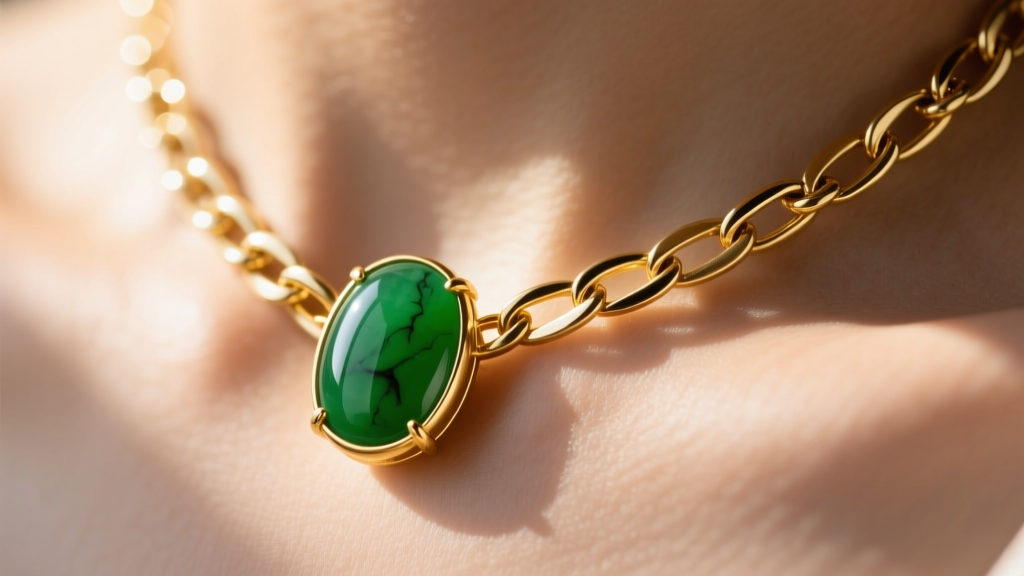
When Aimee Lou Wood’s character, Chelsea, stepped onto the screen in The White Lotus Season 3, her wardrobe immediately became a subject of intense sartorial scrutiny. However, it was her signature necklace that quietly dominated jewelry forums and replica markets well into 2026. Far from being a mere costume prop, Chelsea’s necklace is a masterclass in mixed-karat engineering, tropical-appropriate metallurgy, and vintage-inspired stone setting. As jewelry analysts, we look past the aesthetic appeal to examine the structural integrity and technical specifications that make this piece a triumph of modern artisan design.
Deconstructing the Chain Architecture
The foundation of Chelsea’s necklace is a 22-inch, 4.2mm 18k yellow gold Figaro chain. The choice of a Figaro link—characterized by its alternating pattern of three shorter links followed by one elongated link—is highly deliberate. From a structural engineering perspective, the Figaro pattern provides superior fluid drape compared to a rigid Cuban link, while maintaining a higher tensile strength than a standard cable chain.
At 4.2mm in width, the chain possesses the exact gauge required to support a heavy pendant (approximately 14-18 grams) without suffering from link distortion or bowing at the nape of the neck. Thinner chains (under 2.5mm) would inevitably kink under the pendulum effect of a heavy cabochon pendant during movement, while thicker chains (over 6mm) would visually overpower the delicate bezel setting. The 22-inch length places the pendant precisely at the lower sternum, optimizing the visual weight distribution and allowing the piece to rest elegantly over the deep V-necklines and silk camisoles characteristic of Chelsea’s tropical resort wardrobe.
Metallurgy in High-Humidity Climates
One of the most technically brilliant aspects of this piece is the strategic use of 18k gold for the chain, contrasting with the higher-karat pendant setting. Filmed in the sweltering, high-humidity environment of Thailand, jewelry is constantly exposed to perspiration, which contains chlorides and lactic acid that can degrade poorly alloyed metals.
Pure 24k gold is virtually immune to tarnish but possesses a Vickers hardness (HV) of merely 25, making it far too soft for a structural chain bearing a heavy pendant. By utilizing an 18k alloy (75% gold, typically alloyed with copper and silver), the chain achieves a Vickers hardness of approximately 125 HV. This specific metallurgical ratio provides the necessary rigidity to resist micro-abrasions and link stretching, while the high gold content ensures the metal remains largely unaffected by the corrosive elements of tropical sweat. According to the Gemological Institute of America (GIA), 18k gold represents the optimal threshold for luxury jewelry that requires both rich color saturation and mechanical durability in harsh climates.
Clasp Mechanics and Failure Point Prevention
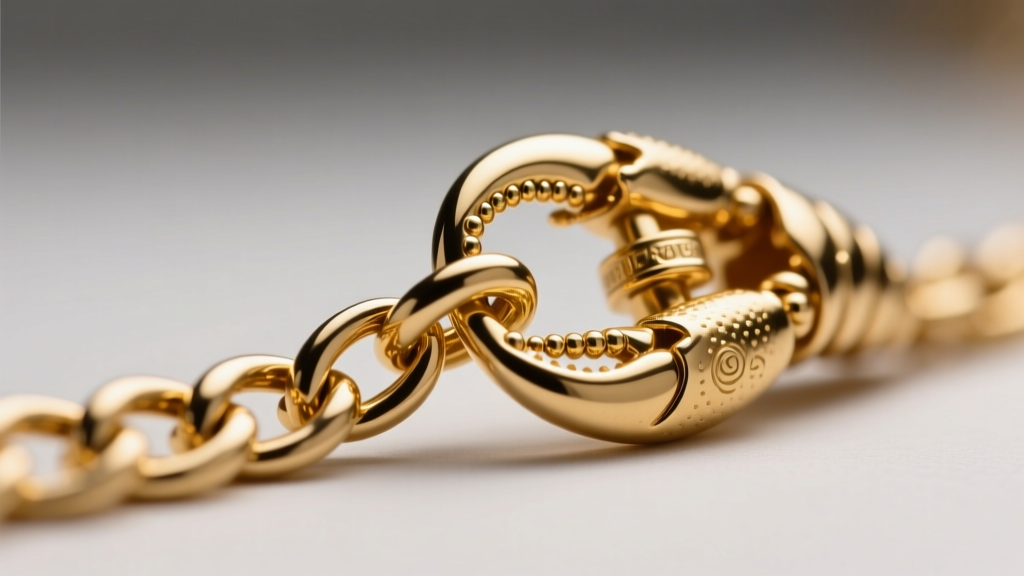
Standard spring-ring clasps are the most common failure point in fine jewelry, often succumbing to metal fatigue at the tension coil. Chelsea’s necklace bypasses this vulnerability by employing a custom oversized lobster clasp, measuring 12mm in length. More importantly, the clasp is attached via a soldered jump ring rather than a split ring. Split rings can easily be pried open by the lateral force of a heavy pendant swinging against the chest, leading to catastrophic loss. A laser-soldered jump ring ensures a closed, continuous loop, a standard heavily advocated by Jewelers of America for any pendant exceeding 10 grams.
The Pendant: Jadeite Cabochon and Bezel Engineering
The pendant itself features a 14x18mm oval cabochon of Type A Burmese Jadeite. Type A indicates that the stone is entirely natural and untreated, lacking the polymer impregnation or acid bleaching common in lower-grade commercial jade. Jadeite registers a 6.5 to 7 on the Mohs hardness scale, making it tough but susceptible to chipping if struck against hard surfaces.
To mitigate this risk, the costume designers utilized a 22k gold bezel setting. Unlike prong settings that leave the girdle of the stone exposed, a bezel wraps the entire perimeter of the cabochon in a continuous metal wall. The choice of 22k gold (91.6% pure) for the bezel is a brilliant technical decision. Because 22k gold is highly malleable, a master jeweler can use a burnishing tool to push the metal tightly and evenly over the curved edge of the jadeite without the need for excessive heat or pressure that might fracture the stone. Furthermore, the buttery, deep yellow hue of 22k gold provides a striking visual contrast against the slightly cooler, 18k yellow gold of the Figaro chain, subtly signaling to the trained eye that the pendant is a distinct, perhaps vintage or locally sourced, artisan addition.
Sourcing and Replication Matrix
For collectors and jewelers looking to replicate the exact specifications of Chelsea's necklace, we have compiled a technical sourcing matrix detailing the most viable pathways, complete with material grades and estimated market pricing for 2026.
| Sourcing Method | Chain Specification | Pendant Specification | Estimated Cost (USD) | Lead Time |
|---|---|---|---|---|
| Custom Bench Jeweler | 18k Yellow Gold, 4.2mm Figaro, 22" | Type A Jadeite, 22k Bezel, 14x18mm | $3,800 - $5,200 | 4-6 Weeks |
| Modular Assembly (Vintage) | Vintage 18k Figaro (sourced separately) | Antique Thai 22k Jade Amulet | $2,500 - $4,000 | 1-3 Months (Sourcing) |
| High-End Replica Market | 14k Gold Vermeil over Brass, 4mm Figaro | Treated Jade (Type B/C), 18k Plated Bezel | $180 - $350 | 1-2 Weeks |
Layering and Neckline Frameworks
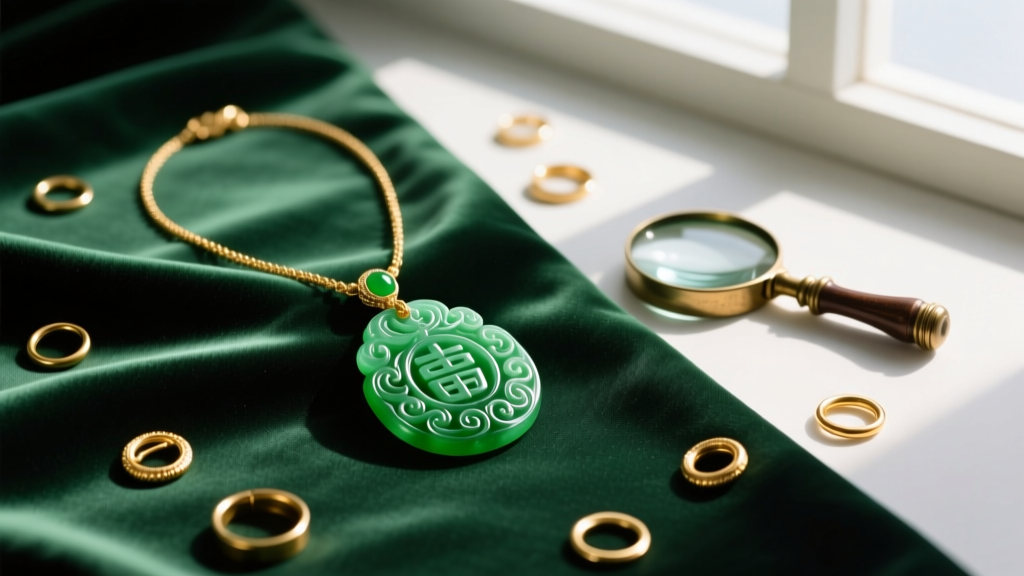
While Chelsea’s necklace is a commanding standalone piece, its 22-inch drop makes it an ideal anchor for advanced layering frameworks. When styling a heavy 4.2mm chain, the accompanying layers must be structurally and visually distinct to prevent tangling and aesthetic muddiness.
- The 18-Inch Companion: Pair the 22-inch Figaro with an 18-inch, 1.2mm 18k gold cable chain. The drastic contrast in link thickness (4.2mm vs 1.2mm) ensures the chains do not interlock, while the 4-inch length differential creates a perfect cascading V-shape on the décolletage.
- Neckline Pairing: The piece excels over deep scoop necks, silk slip dresses, and unbuttoned linen shirts. It should be avoided with high-neck boatneck tops or complex ruffled collars, which will obscure the pendant and cause the heavy chain to snag on delicate fabrics.
- Metal Mixing: To echo the mixed-karat aesthetic of the original piece, introduce a subtle rose gold element in the secondary layer, such as a small rose gold herringbone choker, which warms the complexion and highlights the green tones of the jadeite.
Ultimately, the viral success of Chelsea’s necklace from The White Lotus is not merely a byproduct of television exposure. As noted in Vogue's analysis of the show's styling, the piece resonates because it is grounded in authentic jewelry-making traditions. It respects the physics of weight distribution, the chemistry of gold alloys, and the lapidary art of stone setting, proving that true luxury lies in the technical details hidden just beneath the surface.


