Decoding the Chicos Coin Necklace: Alloys, Plating & Weight
Discover the technical construction of a Chicos coin necklace. We analyze base metal alloys, gold plating thickness, weight distribution, and care.
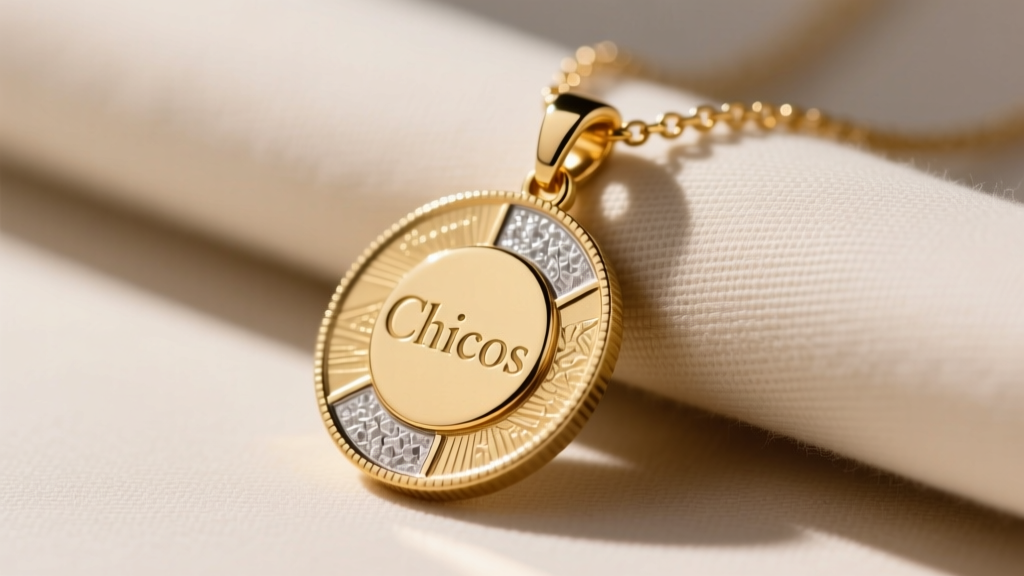
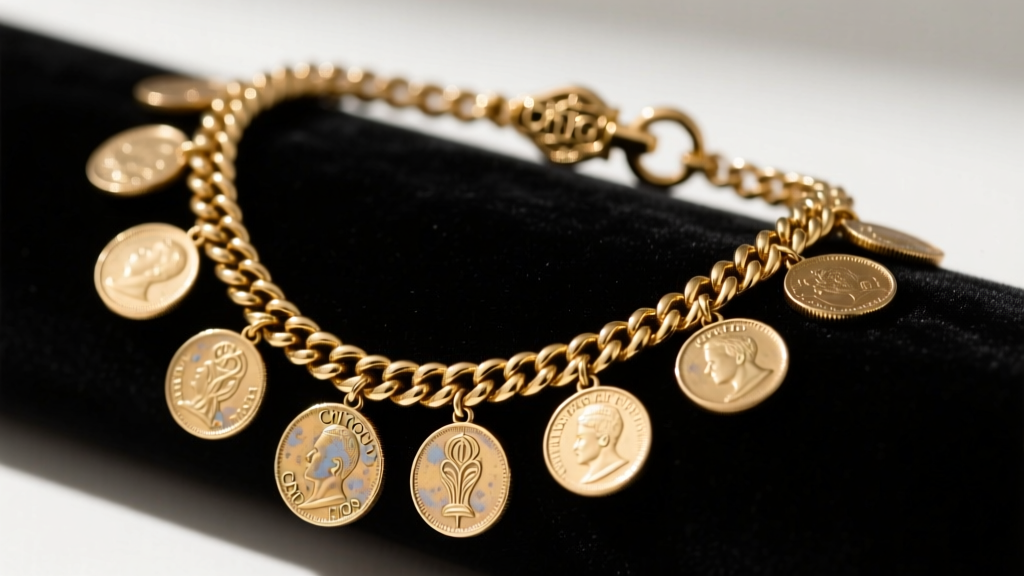
When evaluating statement fashion jewelry, the Chicos coin necklace stands out as a masterclass in bold, maximalist design. Known for their layered medallions, mixed-metal aesthetics, and substantial weight, these pieces are staples in the fashion jewelry market. However, beneath the striking visual appeal lies a complex matrix of metallurgical choices, electrochemical plating processes, and structural engineering. For collectors, resellers, and dedicated enthusiasts, understanding the technical anatomy of a Chicos coin necklace is essential for authentication, preservation, and long-term wearability.
This expert deep dive bypasses the superficial styling advice to examine the exact base metal alloys, plating micron thicknesses, and tensile stress points that define these iconic necklaces. Whether you are restoring a vintage piece from the early 2000s or evaluating a contemporary release, this technical breakdown provides the actionable data you need.
The Metallurgical Foundation: Brass vs. Zamak Alloys
Fashion jewelry relies heavily on base metals that offer an optimal balance of malleability, durability, and cost-efficiency. In the construction of a Chicos coin necklace, the brand primarily utilizes two distinct alloys, each chosen for a specific manufacturing process.
Cartridge Brass for Stamped Medallions
The flat, intricately embossed coin medallions that define this necklace style are rarely cast. Instead, they are stamped from sheet metal. To achieve deep relief patterns without the metal cracking or tearing at the edges, manufacturers use Cartridge Brass (CuZn30). This specific copper-zinc alloy contains roughly 70% copper and 30% zinc, offering exceptional ductility and a Vickers hardness that allows for high-pressure die stamping. The high copper content also provides a naturally warm, yellow undertone, which serves as an ideal base for subsequent gold-tone plating.
Zamak 3 for Cast Hardware
While the coins are stamped, the heavier, three-dimensional decorative elements and ornate clasps often found on multi-strand Chicos necklaces are typically cast using Zamak 3. Zamak is a zinc alloy containing aluminum, magnesium, and copper. It melts at a lower temperature than brass, making it perfect for die-casting complex, sculptural shapes. However, Zamak is more brittle and highly susceptible to galvanic corrosion if the outer plating layer is compromised and exposed to moisture.
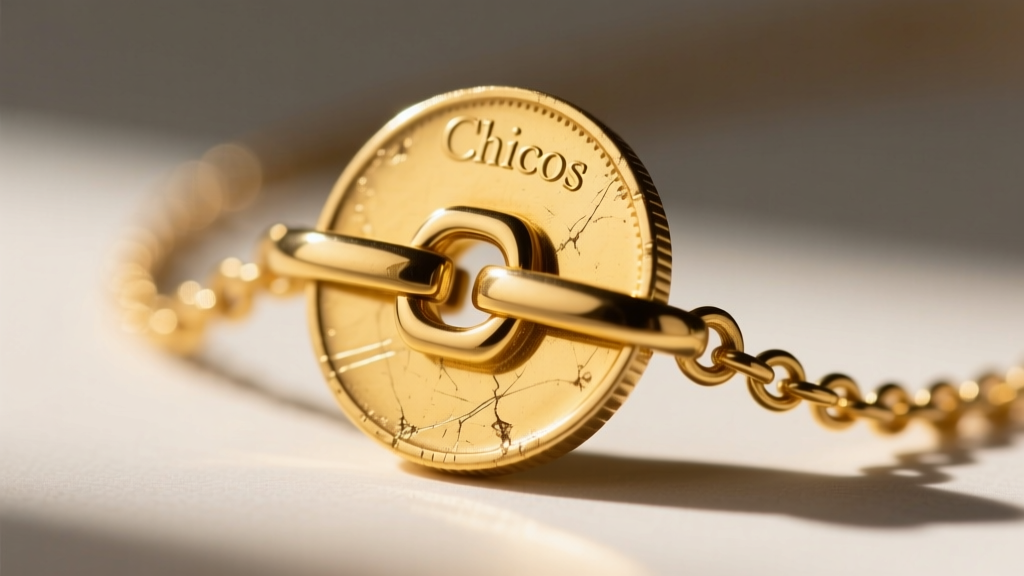
Decoding 'Gold-Tone': Plating Microns and FTC Standards
A critical point of confusion for consumers and appraisers is the terminology used to describe the finish of a Chicos coin necklace. The brand frequently uses the term 'gold-tone.' According to the Federal Trade Commission's Jewelry Guides, the distinction between 'gold plated,' 'gold electroplated,' and 'gold-tone' is strictly regulated based on the thickness of the gold layer.
'If the gold layer is less than 0.175 microns (approximately 7 millionths of an inch), the item cannot be legally marked as 'gold plated.' It must be described as 'gold-tone,' 'gold-washed,' or 'gold-colored.' FTC Guidelines on Jewelry Metal Marking.
Most standard Chicos coin necklaces utilize a flash plating or thin electroplating process over a nickel or palladium barrier layer. This barrier prevents the copper in the brass base from migrating to the surface and tarnishing the gold finish—a phenomenon known as 'copper bloom.'
Plating Thickness and Durability Matrix
| Plating Classification | Thickness (Microns) | Expected Lifespan | Application in Chicos Necklaces |
|---|---|---|---|
| Flash / Gold-Washed | < 0.175 µm | 6 - 12 Months | Seasonal trend pieces, lightweight single-strand coins |
| Gold Electroplate | 0.175 - 0.5 µm | 1 - 3 Years | Standard multi-strand coin medallions and chains |
| Heavy Gold Electroplate (HGE) | 2.5+ µm | 5+ Years | Rare vintage premium hardware and reinforced clasps |
| PVD (Physical Vapor Deposition) | 0.5 - 2.0 µm | 5 - 10 Years | Modern titanium-nitride based gold-tone finishes |
Understanding this matrix is crucial when cleaning or polishing. Aggressive polishing compounds will easily strip a 0.175 µm electroplate layer, exposing the raw brass or zinc alloy beneath and accelerating oxidation.
Structural Engineering of Multi-Strand Coin Designs
A defining characteristic of the Chicos coin necklace is its substantial weight. A fully loaded, three-strand coin medallion necklace can easily weigh between 150 and 250 grams. This mass introduces significant tensile stress on the chain links and jump rings, requiring specific structural engineering to prevent catastrophic failure.
Soldered vs. Split Jump Rings
In high-quality iterations of these necklaces, the jump rings connecting the heavy coin pendants to the primary cable chain are soldered closed. A split (unsoldered) jump ring relies on the tensile memory of the wire to stay shut. When subjected to the 200-gram pendulum effect of a multi-strand coin necklace, unsoldered rings will gradually pull apart, leading to lost medallions. When inspecting a vintage Chicos piece, look for a microscopic solder seam on the jump rings; its presence is a hallmark of superior structural integrity.
Chain Tensile Limits
The chains used to suspend these coins are typically stainless steel or brass-alloy cable chains. For a necklace weighing over 150 grams, the wire gauge of the chain links must be at least 1.2mm to 1.5mm. Thinner chains (0.8mm or below) will suffer from metal fatigue at the clasp connection points, eventually snapping under the dynamic load of daily movement.
Chemical Vulnerabilities and Advanced Preservation
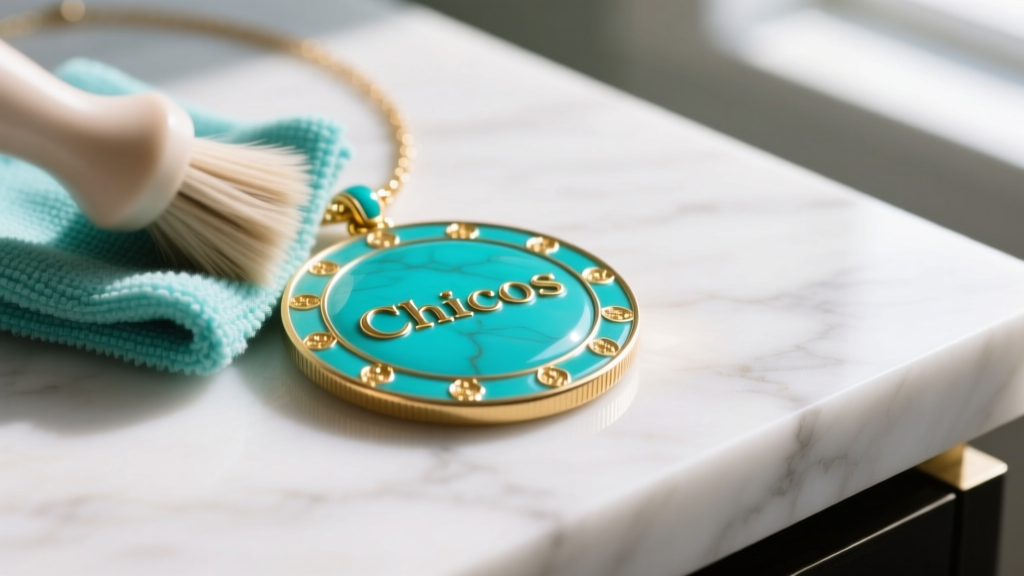
Preserving a Chicos coin necklace requires a strict adherence to chemical boundaries. Because these pieces often combine plated brass, cast Zamak, and epoxy-set synthetic stones (like faux-turquoise or resin lapis), standard jewelry cleaning methods can be highly destructive.
The Dangers of Ultrasonic Cleaners
Never place a Chicos coin necklace in an ultrasonic cleaner. The high-frequency acoustic cavitation creates microscopic shockwaves that will shatter the brittle epoxy adhesives securing the faux-gemstones to the coin bezels. Furthermore, if the gold-tone plating has micro-fissures, the ultrasonic waves will drive moisture into the Zamak base metal, triggering rapid subsurface oxidation that causes the metal to blister and flake.
The pH-Neutral Cleaning Protocol
According to material care standards supported by institutions like Jewelers of America, fashion jewelry requires gentle, non-abrasive surfactants. Follow this exact protocol for safe maintenance:
- Solution Preparation: Mix 5 drops of pH-neutral dish soap (like Dawn) into 250ml of distilled water. Avoid tap water, as dissolved chlorides and sulfur compounds can accelerate brass tarnishing.
- Application: Dip a high-density microfiber swab into the solution. Do not submerge the necklace.
- Mechanical Action: Gently trace the embossed ridges of the coin medallions. Avoid applying pressure to the bezel edges where synthetic stones are set.
- Drying: Immediately dry the piece using compressed air or a low-heat hair dryer. Air-drying leaves water spots that can etch into compromised plating layers over time.
For long-term storage, keep the necklace in an anti-tarnish cloth bag containing activated charcoal or silver-strip paper to absorb ambient sulfur dioxide, which is the primary catalyst for the darkening of the underlying copper alloys. By respecting the metallurgical and structural realities of the Chicos coin necklace, collectors can ensure these striking statement pieces remain intact and visually striking for decades.


