Children's Necklace Size Chart & Fit Troubleshooting Guide
Use our children's necklace size chart to find the perfect fit. Troubleshoot common sizing issues, choose safe clasps, and avoid choking hazards.


Why Guessing Your Child's Necklace Size is a Safety Hazard
When it comes to children's jewelry, aesthetics must always take a backseat to safety and comfort. Unlike adult necklaces, where a slightly loose or tight fit is merely a stylistic choice, an improperly sized child's necklace poses genuine physical risks. A chain that is too tight can quickly become a strangulation hazard as the child grows or if it snags on playground equipment. Conversely, a necklace that is too long can easily slip over the child's head, becoming a choking hazard if placed in the mouth, or it can be lost entirely during active play.
According to the U.S. Food and Drug Administration (FDA), necklaces and other wearable jewelry present significant choking and strangulation risks for young children, particularly those under the age of three. To mitigate these risks, parents must rely on precise measurements rather than age-based guesswork. This comprehensive troubleshooting guide and children's necklace size chart will help you navigate the complexities of fitting, hardware selection, and material safety to ensure your child's jewelry is both beautiful and secure.
The Definitive Children's Necklace Size Chart
The following chart provides a baseline for necklace lengths based on average age and neck circumference. However, because children grow at vastly different rates, always treat these numbers as a starting point rather than an absolute rule. The "Fit Type" describes how the necklace will rest on the child's body.
| Age Range | Average Neck Size | Recommended Chain Length | Fit Type | Best Occasion |
|---|---|---|---|---|
| 1-3 Years | 9" - 10" | 12 Inches | Collar | Supervised photos, brief wear |
| 4-6 Years | 10" - 11" | 14 Inches | Standard | Everyday wear, school |
| 7-9 Years | 11" - 12" | 16 Inches | Princess | Everyday wear, special events |
| 10-12 Years | 12" - 13" | 18 Inches | Matinee | Older kids, layering |
Expert Tip: For children under the age of 3, the American Academy of Pediatrics generally advises against any neck jewelry during sleep or unsupervised play due to the high risk of accidental asphyxiation. If a necklace is used for a toddler, it must be removed immediately after the photo or event.
Troubleshooting Common Fit and Wear Problems
Even when you use the correct children's necklace size chart, you may encounter practical issues during daily wear. Here is how to troubleshoot the most common complaints from parents and children.
Problem: The Chain Keeps Flipping Upside Down
The Cause: This happens when the pendant is too light relative to the chain, or the chain is too thick and rigid, causing the clasp (which is the heaviest part) to slide to the front of the neck.
The Solution: Follow the 3-to-1 weight rule. The pendant should weigh at least three times as much as the chain to anchor it at the base of the throat. Alternatively, switch to a lighter, more flexible chain style, such as a 0.9mm cable or box chain, which drapes better and allows the clasp to remain hidden at the nape of the neck.
Problem: The Necklace Keeps Breaking
The Cause: Active children put unexpected tensile stress on their jewelry. If a chain is snapping frequently, the gauge (thickness) is likely too thin for the child's activity level, or the jump rings connecting the clasp are not soldered.
The Solution: Upgrade to a chain with a minimum gauge of 1.0mm to 1.2mm. Ensure that all jump rings are soldered shut rather than simply pushed together. For high-activity kids, consider a solid rope chain or a wheat chain, which offer superior tensile strength compared to delicate curb or cable chains.
Safety First: Breakaway Clasps and Chain Gauges
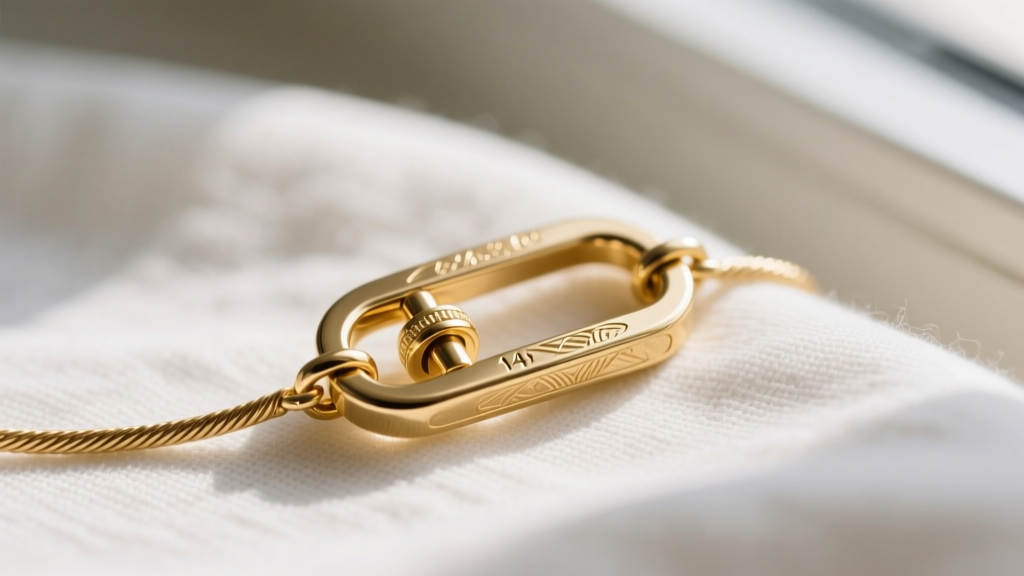
The most critical component of any child's necklace is the clasp. Standard lobster or spring-ring clasps will hold firm if the chain is snagged, transferring the full force of the pull to the child's neck. To prevent injury, you must utilize specialized safety hardware.
- Tension Breakaway Clasps: These clasps are engineered to pop open when subjected to a specific amount of pull force (usually between 5 to 8 pounds of pressure). They are the gold standard for children's everyday jewelry.
- Magnetic Safety Clasps: These use strong neodymium magnets that hold securely during normal movement but will separate instantly if yanked. Ensure the magnets are fully encased in metal to prevent them from dislodging and becoming a choking hazard.
- Chain Gauge Recommendations: For toddlers (ages 1-3), a 0.8mm gauge is lightweight and comfortable but requires strict supervision. For ages 4-8, a 1.0mm gauge provides a balance of durability and comfort. For ages 9+, a 1.2mm to 1.5mm gauge is appropriate for heavier pendants.
How to Measure Accurately When Your Child Won't Sit Still
Getting a toddler or young child to stand still with a measuring tape around their neck is nearly impossible. Instead of fighting a losing battle, use the "String and Ruler" method for a stress-free measurement.
- Wait until your child is relaxed, perhaps while watching a favorite show or reading a book.
- Take a piece of soft, non-stretchy string or a spare shoelace and gently drape it around their neck where the necklace will sit.
- Adjust the string so it rests comfortably, ensuring you can slide two fingers easily between the string and their skin (the "Two-Finger Rule" for breathing clearance).
- Pinch the string where the ends meet, remove it, and lay it flat against a standard ruler or metal measuring tape.
- Add 1 to 2 inches to this exact measurement to account for growth and clothing bulk (like winter sweaters).
Material Troubleshooting: Avoiding Contact Dermatitis
Children's skin is significantly more sensitive than adult skin, making them highly susceptible to contact dermatitis caused by cheap metal alloys. The most common culprit is nickel, which is frequently used as a hardening agent in lower-grade jewelry. The American Academy of Dermatology notes that nickel allergy is one of the most common causes of allergic contact dermatitis, often presenting as an itchy, red rash exactly where the jewelry touches the skin.
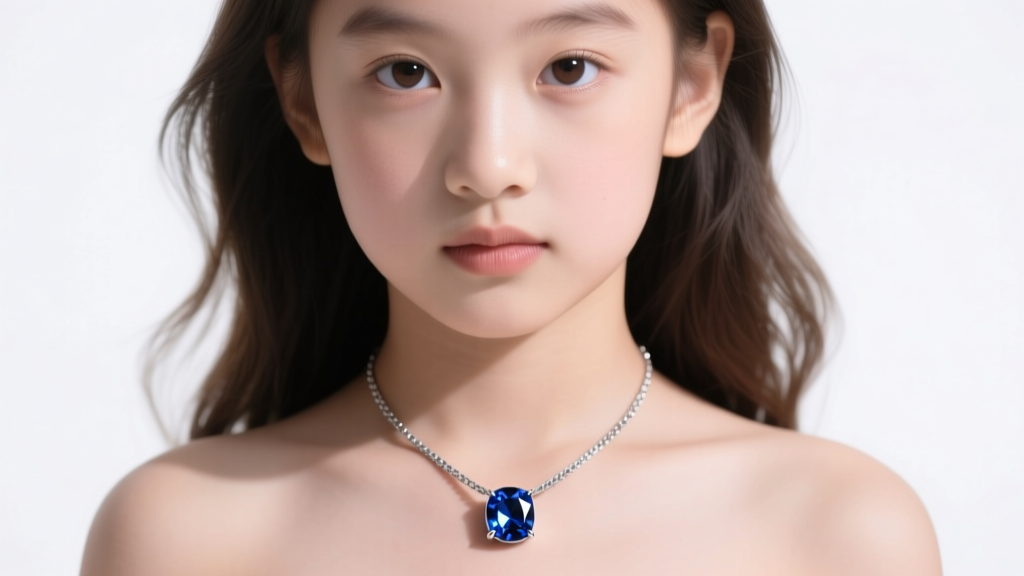
To avoid this, ignore marketing terms like "surgical steel" or "hypoallergenic plated," as these are unregulated and often contain hidden nickel. Instead, look for specific, verifiable material grades:
- ASTM F136 Titanium: This is the exact grade of titanium used in medical implants. It is 100% nickel-free, lightweight, and impervious to water and sweat. It is the absolute best choice for children with sensitive skin.
- Niobium: A highly reactive metal that is anodized to create vibrant colors without the use of toxic dyes or nickel alloys. Excellent for fun, colorful kids' pendants.
- Solid 14k or 18k Gold: While expensive, solid gold (not gold-filled or gold-plated) is generally safe, provided it is alloyed with silver or copper rather than nickel. Always verify the alloy composition with the jeweler.
For comprehensive safety standards, always check if the manufacturer complies with ASTM F2923-20, the Standard Specification for Consumer Product Safety for Children’s Jewelry, which strictly regulates heavy metals and cadmium in kids' accessories.
Adjustability Hacks for Growing Kids
Because children grow in unpredictable spurts, buying a new necklace every six months is not financially practical. To maximize the lifespan of the jewelry, prioritize adjustability.
Look for chains that feature a 2-inch extender chain at the clasp. This allows a 14-inch necklace to be adjusted to 16 inches as the child's neck thickens. If your chosen necklace does not have an extender, you can purchase separate "necklace adjuster beads" or silicone safety sliders. These small, discreet beads can be threaded onto the back of the chain, allowing you to cinch a longer chain to a shorter length safely without needing a jeweler to cut and re-solder the links. By combining the data from our children's necklace size chart with these practical troubleshooting techniques, you can ensure your child's jewelry remains safe, comfortable, and cherished for years to come.


