Troubleshooting the Length of Child's Necklace for Safety and Fit
Discover how to choose the correct length of child's necklace. Our troubleshooting guide covers safety clasps, choking hazards, and sizing.

The Core Problem: Why Necklace Length Matters for Kids
Choosing the correct length of child's necklace is not merely an aesthetic decision; it is a critical safety intervention. Unlike adult jewelry, children's necklaces must navigate a minefield of active play, rapid growth spurts, and developing skin sensitivities. A chain that is too short poses a severe choking hazard, while one that is too long risks catching on playground equipment or door handles. According to the U.S. Consumer Product Safety Commission (CPSC), jewelry-related incidents in children frequently involve entanglement and choking, making precise sizing and hardware selection non-negotiable.
Furthermore, the ASTM F2923 standard for children's jewelry safety dictates strict guidelines regarding heavy metals and mechanical hazards. While the standard heavily regulates lead and cadmium content, the physical dimensions and breakaway mechanisms of the necklace fall squarely on the shoulders of parents and jewelers to troubleshoot. This guide provides a comprehensive, problem-solving framework to ensure your child's necklace is safe, comfortable, and built to last.
Age-by-Age Sizing Chart: Finding the Baseline Length
The most common mistake parents make is guessing the chain size based on age alone. Children grow at vastly different rates, meaning a standard 'toddler' length might strangle a large three-year-old or slip right off a petite four-year-old. However, baseline averages provide a necessary starting point before measuring. Below is a troubleshooting matrix to help you identify the ideal starting length and chain gauge.
| Age Group | Avg. Neck Circumference | Recommended Chain Length | Ideal Chain Gauge |
|---|---|---|---|
| Toddlers (1-3 Years) | 8 - 10 inches | 10 - 12 inches | 1.0mm - 1.2mm Box Chain |
| Young Kids (4-7 Years) | 10 - 12 inches | 12 - 14 inches | 1.2mm - 1.4mm Cable Chain |
| Tweens (8-12 Years) | 12 - 14 inches | 14 - 16 inches | 1.2mm - 1.5mm Box/Cable |
| Teens (13+ Years) | 14+ inches | 16 - 18 inches | 1.5mm+ (Standard Adult) |
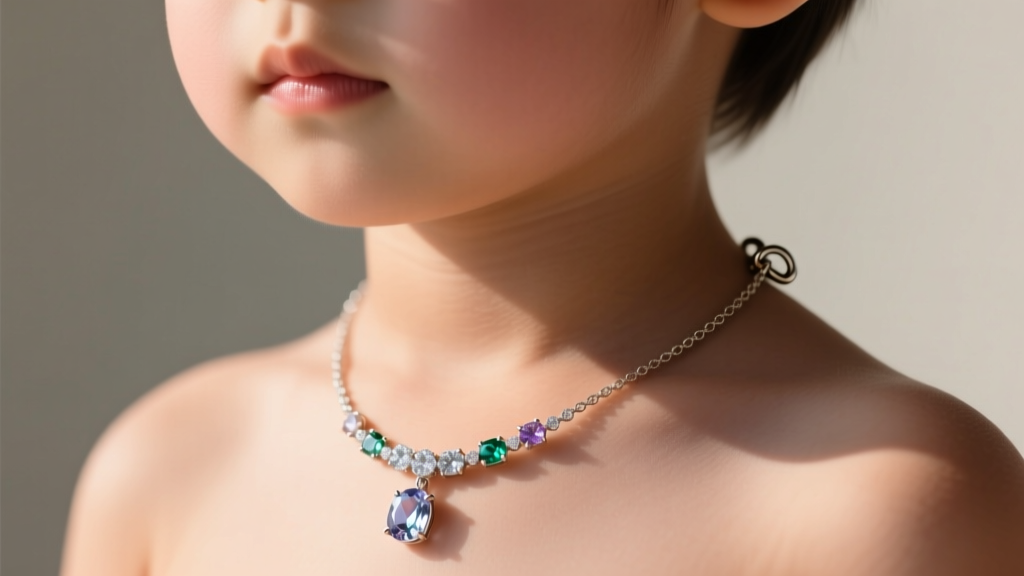
Expert Troubleshooting Tip: Always add a minimum of 1.5 to 2 inches to the child's actual neck circumference. This 'safety gap' ensures the necklace rests comfortably on the collarbone without applying pressure to the trachea when the child looks down or lies flat.
Troubleshooting Common Fit Issues
Even when you follow the sizing chart, real-world wear can introduce unexpected problems. Here is how to diagnose and fix the three most frequent complaints regarding the length of child's necklace.
Problem 1: The Necklace Keeps Slipping Off (Too Loose)
If a 14-inch chain keeps sliding over a 7-year-old's head, the issue is rarely just the length; it is often the weight of the pendant. A heavy charm on a thin chain creates a pendulum effect, swinging forward and slipping off. The Fix: Switch to a lighter pendant (under 2 grams) or upgrade to a slightly thicker chain gauge (e.g., 1.5mm) that sits heavier on the back of the neck, counterbalancing the front. Alternatively, utilize a 12-to-14-inch adjustable extension chain.
Problem 2: Red Marks and Skin Irritation (Too Tight or Friction)
Red rings around the neck are often misdiagnosed as metal allergies when they are actually friction burns caused by a chain that is too short or features sharp link edges. The Fix: First, verify the length allows for two fingers to slide easily between the chain and the skin. Second, inspect the chain style. Rope chains and curb chains can pinch fine body hair and scrape delicate skin. Transition to a smooth, laser-cut box chain or a seamless snake chain to eliminate friction points.
Problem 3: The 'Growth Spurt' Dilemma
Children can outgrow a perfectly fitted 12-inch necklace in a matter of months. Buying a new solid gold chain every six months is financially impractical. The Fix: Invest in necklaces with built-in 2-inch extender chains. Ensure the extender links are soldered shut so they do not catch on clothing. For high-end pieces, many jewelers offer 'sizing additions,' where they can solder an extra inch of matching chain into the existing piece for a fraction of the replacement cost.
Safety Hardware: Beyond Just the Chain Length
The length of child's necklace is irrelevant if the clasp fails to release under pressure. Entanglement is a leading cause of jewelry-related trauma in active children. You must troubleshoot the hardware based on the child's age and activity level.
- Breakaway Clasps (Ages 1-7): Mandatory for toddlers and young children. These specialized clasps are engineered to pop open when subjected to 3 to 5 pounds of lateral tension. If a child catches their necklace on a playground slide, the clasp yields, preventing choking.
- Spring Ring Clasps (Ages 8-12): Standard spring rings are acceptable for older, more responsible children, provided they are paired with a chain thin enough (under 1.2mm) to snap under extreme, life-threatening duress.
- Avoid Lobster Claws: While secure, lobster claws require two hands and fine motor skills to operate. More importantly, the small lever and sharp edges are notorious for catching and tearing fine childhood hair.
Material Troubleshooting: Preventing Allergic Reactions
Sometimes, parents adjust the length of child's necklace repeatedly, thinking a fit issue is causing a rash, when the true culprit is contact dermatitis from cheap alloys. Children's skin is highly reactive to nickel and copper, which are commonly used as base metals in plated jewelry.
Gold-plated brass or silver-plated copper chains will inevitably wear through their microscopic top layers within 3 to 6 months of daily wear, exposing the allergenic base metals below. To permanently troubleshoot skin rashes, bypass plated jewelry entirely. Opt for 14k solid gold (ensure it is nickel-free, as some white gold alloys contain nickel), Grade 23 Titanium (100% hypoallergenic and incredibly lightweight), or 316L Surgical Stainless Steel. These materials are inert, will not tarnish in chlorinated pools, and eliminate the variable of metal reactivity when diagnosing neck irritation.
According to the American Academy of Pediatrics (AAP), any item worn around a child's neck poses an inherent entanglement risk. Jewelry should always be removed before sleeping, bathing, or engaging in active sports, regardless of the safety clasp used.
Step-by-Step Measurement Guide for Parents
To definitively solve the sizing puzzle, do not rely on guesswork. Follow this precise measurement protocol to determine the exact length of child's necklace required for your specific child.
- Use a Soft Tailor's Tape: Wrap a flexible, soft measuring tape around the child's neck where the necklace will naturally sit (usually just below the Adam's apple or resting on the collarbones).
- The Two-Finger Rule: Slide two fingers under the tape measure to ensure breathing room and account for natural movement.
- Record the Base Measurement: Note the exact circumference in inches.
- Add the Safety Drop: Add 2 inches to the base measurement for toddlers, and 2.5 to 3 inches for older children who prefer a lower drape.
- Test with String: Before purchasing, cut a piece of non-stretch string to your calculated length, tie it in a loop, and have the child wear it for 15 minutes while playing. Observe if it rides up, catches on their chin, or slips over their head.
By treating the length of child's necklace as a precise, safety-critical metric rather than a generic accessory size, you ensure the piece remains a cherished, comfortable, and above all, safe keepsake for years to come.