Material Guide: Choosing The Perfect Chise Necklace
Discover the metallurgy behind the artisan chise necklace. Compare 925 silver, 14k gold, and brass properties, hardness, and daily care tips.

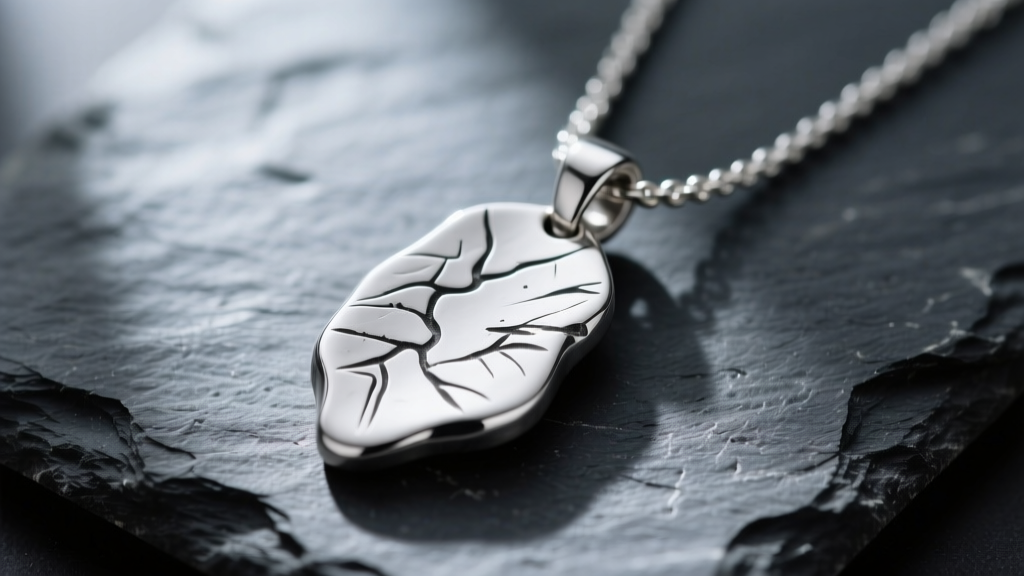
In the contemporary jewelry landscape of 2026, the demand for raw, unrefined aesthetics has pushed artisan metalwork to the forefront. Among the most coveted pieces in this space is the chise necklace—a term embraced by collectors and makers to describe necklaces featuring deep, hand-chiseled, and hammered textures. Unlike mass-produced cast jewelry, a true chise necklace is a masterclass in metallurgical manipulation. However, the rugged beauty of these pieces comes with specific structural and chemical properties that buyers must understand. This comprehensive guide breaks down the material science, failure modes, and maintenance protocols of hand-chiseled necklaces.
The Metallurgy Behind the Chise Necklace
When an artisan creates a chise necklace, they are engaging in a displacive sculpting process. Hand-chiseling requires the metal to be in a highly malleable state. Jewelers must repeatedly anneal the piece—heating it to a specific critical temperature (e.g., 1100°F for sterling silver) and quenching it in water—to relieve internal stresses and lower the metal's Vickers hardness (HV). According to educational resources from Rio Grande, if a chise necklace is worked without proper intermediate annealing, the metal undergoes work hardening. This makes the crystalline structure brittle and highly prone to micro-fractures along the deepest chisel grooves.
The depth and sharpness of the chisel marks are directly tied to the alloy's ductility. Pure metals like 24k gold or fine silver are too soft to hold a crisp chisel edge; they will deform and smooth out under the friction of daily wear. Therefore, artisans rely on specific alloy blends that balance malleability during the carving process with tensile strength for long-term wear.
Material Comparison: Silver, Gold, and Base Metals
Choosing the right metal for a chise necklace dictates not only the price point but also how the texture will age over time. Below is a breakdown of the most common materials used in artisan chiseled jewelry.
925 Sterling Silver
Composed of 92.5% silver and 7.5% copper, sterling silver is the industry standard for chiseled textures. The copper provides necessary structural integrity but introduces a challenge during annealing: firescale. When heated, the copper reacts with oxygen to form cupric oxide, creating a purple-grey stain that must be removed via pickling in an acid bath before the final chisel texture is burnished. Sterling silver offers a brilliant contrast when the high points are polished while the deep grooves are left oxidized.
Solid 14k and 18k Gold
Gold alloys behave differently under the chisel. 14k gold (58.3% pure gold mixed with copper, zinc, and silver) is actually preferred over 18k gold for heavy chiseled textures. The higher alloy content in 14k gold increases the tensile strength, allowing the chisel marks to retain their sharp, crisp edges without deforming. 18k gold, being softer, will gradually lose its sharpest textural peaks due to friction against clothing and skin.
Raw Brass and Silicon Bronze
Brass (copper and zinc) and Bronze (copper and tin) are favored for their warm, earthy tones and aggressive patina development. However, brass is susceptible to dezincification if exposed to high-chlorine environments, which can cause the chiseled grooves to become porous and brittle over time. Silicon bronze is a superior alternative for base-metal chise necklaces, offering exceptional corrosion resistance and a beautiful golden-brown patina.
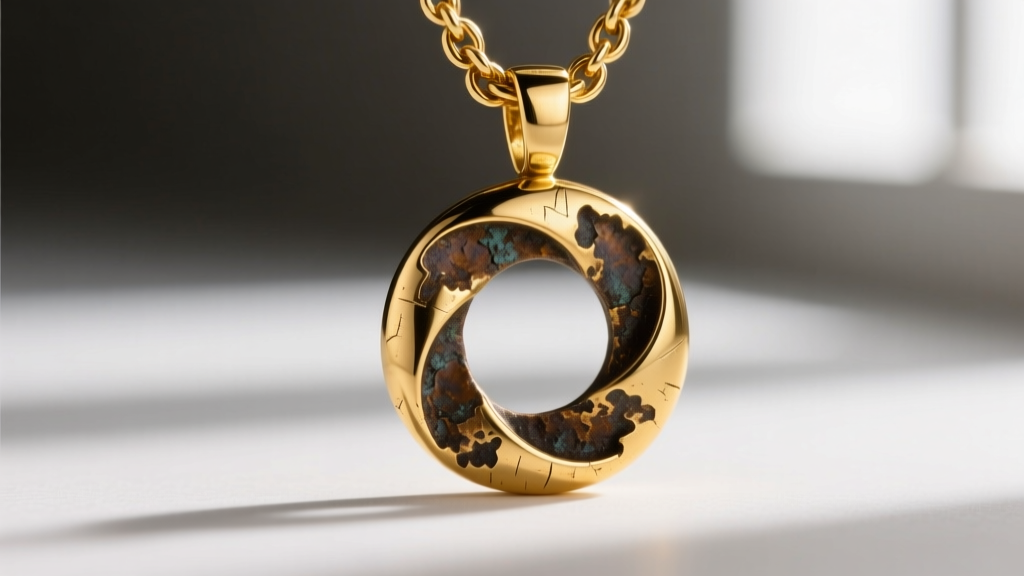
| Material | Base Vickers Hardness (Annealed) | Tarnish / Patina Rate | Avg. Artisan Price Range | Edge Retention |
|---|---|---|---|---|
| 925 Sterling Silver | 60 - 70 HV | Moderate (Sulfur reactive) | $180 - $450 | Good (Requires work-hardening) |
| Solid 14k Gold | 120 - 140 HV | Very Low | $900 - $2,800+ | Excellent (Crisp, durable edges) |
| Raw Brass (C260) | 50 - 60 HV | High (Rapid oxidation) | $60 - $150 | Poor (Edges dull quickly) |
| Silicon Bronze | 80 - 90 HV | Low-Moderate | $120 - $300 | Very Good |
Structural Failure Modes in Chiseled Textures
The very aesthetic that makes a chise necklace desirable—deep, rugged grooves—introduces specific structural vulnerabilities. In materials science, these deep V-cuts act as stress concentrators or stress risers. If the necklace chain or pendant is bent, kinked, or caught on heavy clothing, the physical force is not distributed evenly across the metal's cross-section; it focuses entirely on the deepest point of the chisel cut.
This is why reputable artisan makers must ensure the base gauge of the metal is sufficiently thick. A standard 14-gauge (1.6mm) wire might be perfectly sufficient for a smooth, drawn chain. However, a chiseled 14-gauge link effectively possesses the structural integrity of an 18-gauge wire at its deepest cut. When sourcing a heavy chise necklace, buyers should look for pieces that start with a robust 10-gauge (2.5mm) or 12-gauge (2.0mm) base material to compensate for the displaced metal.
'The longevity of a hand-chiseled piece is not determined by the sharpness of the tool, but by the thickness of the base metal left behind after the final strike.' — Master Silversmith Adage
Clasp and Hardware Considerations
A common failure point in heavy, textured necklaces is the clasp. Standard lobster clasps often fail when paired with a heavy chise pendant because the pendant's weight creates a pendulum effect, wearing down the tiny internal spring mechanism and causing the lever to stick open. A properly engineered chise necklace should utilize hardware that matches the ruggedness of the chain:
- Custom S-Clasps: Forged from the same heavy-gauge wire as the chain, offering seamless integration and high tensile strength.
- Heavy-Duty Toggle Clasps: Ideal for thick, chiseled rope or curb chains where the weight of the chain keeps the toggle securely seated.
- Box Clasps with Safety Wires: Essential for multi-strand chiseled necklaces, featuring a figure-8 safety wire to prevent total loss if the primary latch fails.
The Patina Factor and Surface Chemistry
Hand-chiseling exponentially increases the surface area of the metal. While a smooth, high-polish pendant might have a surface area of 10 square centimeters, the same pendant with deep chisel marks and hammered divots can easily exceed 30 square centimeters of exposed metal. This increased surface area accelerates chemical reactions with the environment.
According to the Gemological Institute of America (GIA), silver tarnish is primarily caused by hydrogen sulfide in the air. Because a chise necklace has more surface area and microscopic pockets where moisture and sulfur compounds can trap, it will tarnish significantly faster than a polished piece. Conversely, for metals like bronze and brass, this accelerated oxidation is often desired, creating a rich, dark patina in the recesses that highlights the artisan's tool work while the high points remain bright from friction against the skin.
Maintenance, Cleaning, and Ultrasonic Warnings
Cleaning a deeply textured necklace requires a departure from standard jewelry care protocols. Many commercial jewelers rely on ultrasonic cleaners, which use high-frequency sound waves to create cavitation bubbles that blast dirt from crevices. Never use an ultrasonic cleaner on a heavily chise necklace. If the piece has microscopic fractures from aggressive hammering or improper annealing, the intense localized pressure of cavitation can widen these invisible cracks, leading to sudden structural failure.
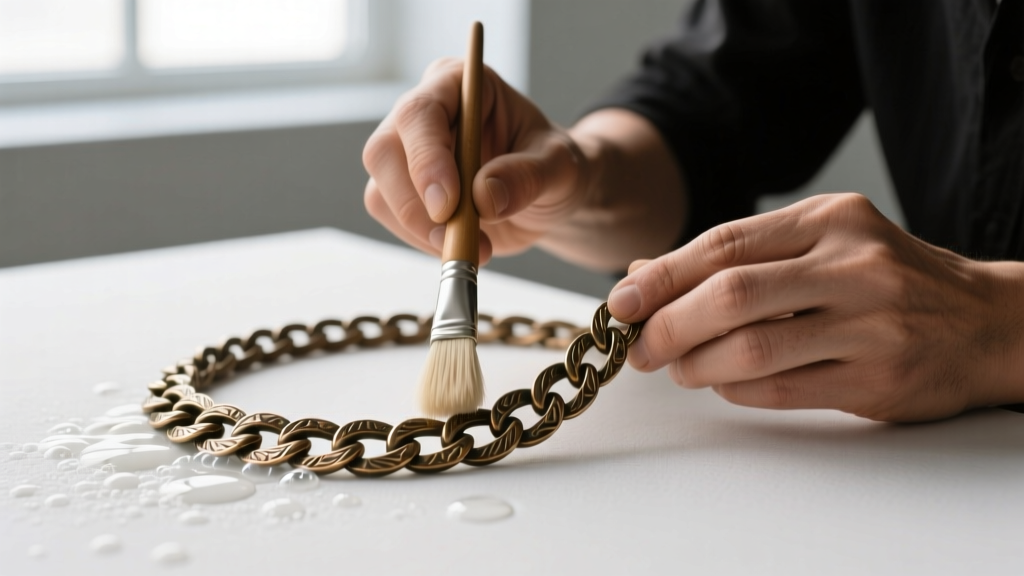
Instead, employ a manual, low-impact cleaning method:
- Create a warm bath of distilled water and a few drops of pH-neutral, fragrance-free dish soap.
- Submerge the chise necklace for 5 to 10 minutes to loosen sebum, lotion, and environmental dust.
- Agitate gently using a soft-bristled detailing brush (a baby toothbrush or specialized jewelry brush) to lift debris from the deep grooves without scratching the high points.
- Rinse thoroughly with distilled water and pat dry with a lint-free microfiber cloth. Avoid air-drying, as water spots will pool in the chisel marks.
Verifying Authenticity and Hallmarks
Because the surface of a chise necklace is intentionally irregular, traditional laser engraving or flat stamping is often impossible. Artisans must adapt their hallmarking techniques. When verifying the authenticity and material grade of a chise necklace, inspect the end caps, the bail (the loop connecting the pendant to the chain), or the inside curve of the clasp. The London Assay Office notes that for highly textured or irregular items, hallmarks may be applied via a specialized micro-stamp on a flat soldered tab attached to the main body. Always look for the '925' stamp for sterling silver or the '585' stamp for 14k gold, alongside the maker's registered trademark.
Final Verdict: Choosing Your Metal
Selecting the right material for your chise necklace ultimately depends on your lifestyle and aesthetic preferences. If you desire a piece that develops a deeply personal, darkened patina over time and requires minimal upfront investment, a silicon bronze or raw brass piece is ideal. For those seeking a brilliant, high-contrast texture that can be easily polished and maintained, 925 sterling silver remains the undisputed champion of artisan metalwork. However, if you require a generational heirloom with uncompromising edge retention and zero tarnish, investing in a solid 14k gold chise necklace is the definitive choice for the modern collector.


