Choker Pearl Necklace Materials: Akoya vs Freshwater vs Tahitian
Compare Akoya, Freshwater, and Tahitian pearls for your choker pearl necklace. Learn about luster, sizing, stringing materials, and pricing.

The Anatomy of a Classic Choker Pearl Necklace
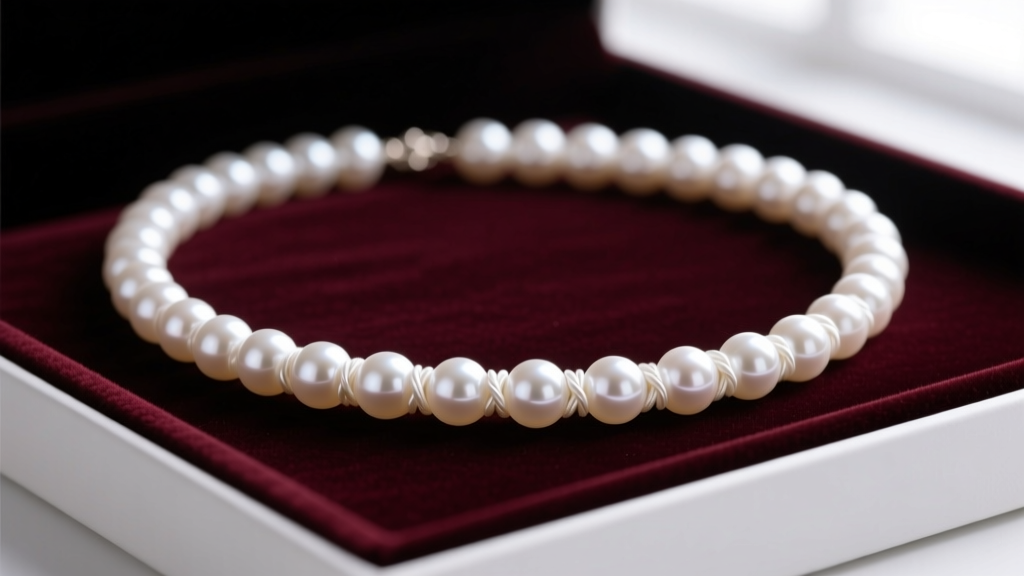
The choker pearl necklace remains a cornerstone of fine jewelry, sitting elegantly at the base of the neck (typically 14 to 16 inches in length). However, not all pearls are created equal. When investing in a choker, understanding the material properties, nacre thickness, and stringing mechanics is critical to ensuring longevity and aesthetic brilliance. In 2026, the market offers a wider variety of pearl types than ever before, making it essential to look beyond the surface and examine the gemological and structural details that dictate a necklace's true value.
A standard choker requires between 55 and 75 individual pearls, depending on the bead diameter and the wearer's neck circumference. Because the pearls sit flush against the skin, they are exposed to body oils, friction, and cosmetics. Therefore, the choice of pearl type, the stringing medium, and the clasp hardware must be carefully balanced. Below, we break down the material science and market realities of the three most prominent pearl types used in chokers: Akoya, Freshwater, and Tahitian.
Pearl Type Comparison: Akoya, Freshwater, and Tahitian
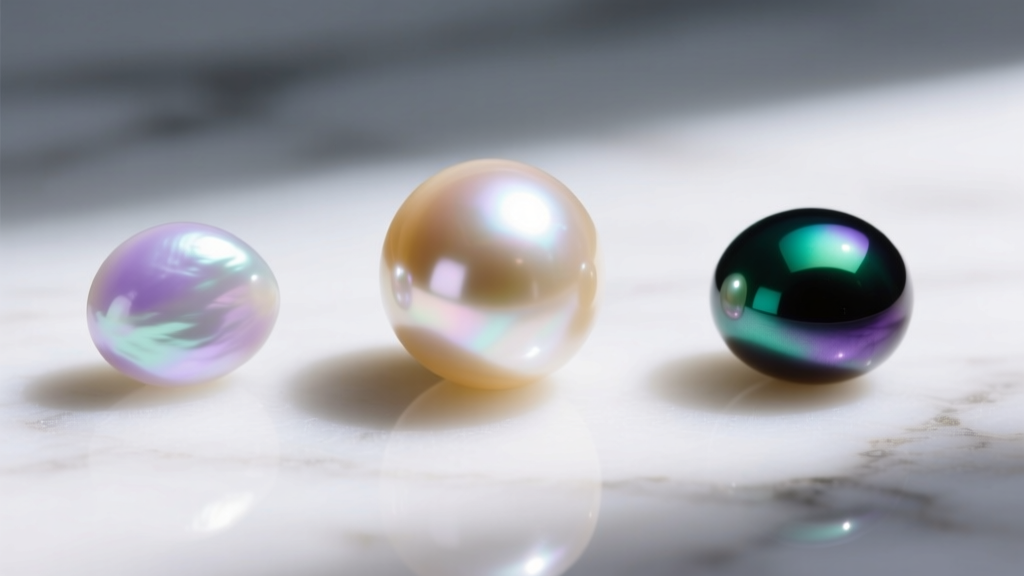
The foundation of any choker pearl necklace is the pearl itself. The biological origin and nucleation process drastically alter the luster, durability, and price point of the final piece.
Akoya: The High-Luster Standard
Harvested from the Pinctada fucata martensii oyster primarily in Japan and Vietnam, Akoya pearls are the traditional choice for high-end chokers. They are bead-nucleated, meaning a perfectly round mother-of-pearl bead is inserted into the oyster, resulting in exceptional spherical precision. The nacre thickness on a quality Akoya ranges from 0.3mm to 0.5mm. While this nacre is relatively thin compared to other varieties, its tightly packed aragonite platelets produce a sharp, mirror-like luster that is unmatched in the gemological world. For a choker, 6.5mm to 7.5mm is the sweet spot, offering a refined, proportional look. Expect to pay between $600 and $1,800 for a high-quality, hand-knotted Akoya choker.
Freshwater: The Solid-Nacre Workhorse
Produced by the Hyriopsis cumingii mussel in China, Freshwater pearls are tissue-nucleated. Because no hard bead is implanted, the resulting pearl is solid nacre all the way through. This makes them incredibly durable and resistant to chipping. However, the trade-off is luster; Freshwater pearls typically exhibit a softer, satin-like glow rather than the sharp reflection of an Akoya. Modern 'Edison' Freshwater pearls have closed this gap significantly, offering near-round shapes and metallic lusters at a fraction of the cost. A 7mm to 8mm Freshwater choker pearl necklace is highly budget-friendly, typically ranging from $120 to $350, making it an excellent choice for daily wear where the risk of damage is higher.
Tahitian: The Bold, Dark Statement
For those seeking a dramatic, avant-garde choker, Tahitian pearls from the Pinctada margaritifera oyster are the premier choice. Known for their natural dark body colors—ranging from peacock green to aubergine and charcoal—these pearls boast a thick nacre layer (minimum 0.8mm mandated by French Polynesian export laws). Because the oyster is larger, Tahitian pearls usually start at 8mm, resulting in a chunkier, more substantial choker that sits heavily on the collarbone. Due to the longer cultivation time (up to three years) and lower yield of perfectly round, blemish-free specimens, a Tahitian choker commands a luxury price tag, generally starting at $1,200 and exceeding $4,000 for top-tier peacock hues.
Material Matrix: Pearl Properties at a Glance
| Property | Akoya | Freshwater | Tahitian |
|---|---|---|---|
| Nucleation | Bead | Tissue | Bead |
| Nacre Thickness | 0.3mm - 0.5mm | Solid (100%) | 0.8mm - 1.5mm+ |
| Luster Type | Sharp, Mirror-like | Soft, Satin | Deep, Metallic |
| Ideal Choker Size | 6.5mm - 7.5mm | 7.0mm - 8.5mm | 8.5mm - 10.0mm |
| Approx. Price Range | $600 - $1,800 | $120 - $350 | $1,200 - $4,000+ |
Stringing Materials: Silk vs. Synthetic vs. Wire
The stringing material is the unseen skeleton of your choker pearl necklace. A failure in the stringing medium results in a catastrophic break, scattering dozens of pearls. According to the Gemological Institute of America (GIA), proper stringing is just as vital as the quality of the gems themselves.
Traditional Silk Thread
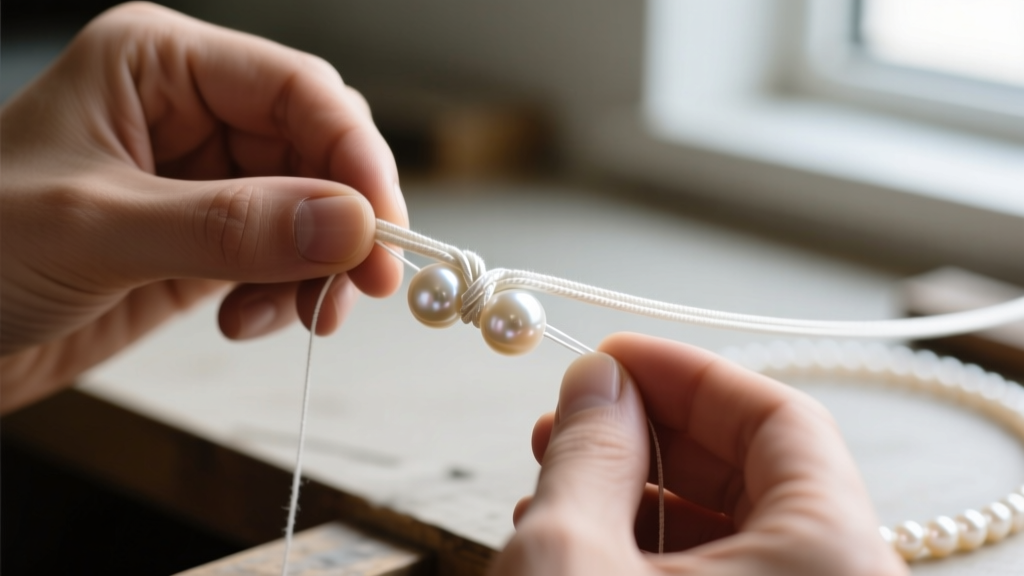
For centuries, 100% silk thread (such as the industry-standard Griffin brand) has been the gold standard. Silk is soft, flexible, and drapes beautifully, allowing the choker to conform to the neck. Crucially, silk allows for hand-knotting between each pearl. These knots serve two purposes: they prevent the pearls from rubbing against each other (which can dull the nacre over time), and they ensure that if the thread snaps, only one pearl is lost. The downside? Silk degrades. It absorbs sweat, cosmetics, and moisture, causing it to stretch and weaken. A silk-strung choker worn regularly must be professionally restrung every 12 to 18 months.
Nylon-Coated Stainless Steel Wire
Modern jewelers often use 49-strand micro-wire (typically 0.015 or 0.018 inches in diameter) coated in nylon. Wire is virtually impervious to moisture and will not stretch or snap under normal wear. However, wire is stiff. A wire-strung choker will not drape as fluidly as silk and tends to hold a circular shape rather than molding to the collarbone. Furthermore, you cannot tie knots in wire; instead, small silicone or gold spacer beads must be used, which alters the traditional aesthetic of the necklace.
Sizing and Fit: The 14 to 16-Inch Rule
A true choker is designed to sit snugly around the middle of the neck, just above the clavicle. Standard choker lengths are 14, 15, and 16 inches. To determine your ideal size, use a soft measuring tape to measure your neck circumference, then add exactly 1 to 1.5 inches. This allows for the 'two-finger rule'—you should be able to comfortably slide two fingers between the pearls and your skin. If the choker is too tight, the silk thread will endure excessive tension, accelerating structural failure. If it is too loose, it will drop below the collarbone, losing the defining silhouette of a choker.
Clasp Hardware: Ensuring Security and Aesthetics
The clasp is the primary stress point of any necklace. For a heavy choker pearl necklace, a standard spring-ring clasp is insufficient and prone to mechanical failure. Instead, opt for a lobster clasp or a box clasp with a safety figure-eight catch. Material-wise, the clasp should match the value of the pearls. Pairing a $1,500 Akoya choker with a sterling silver clasp is a common retail cost-cutting measure, but silver tarnishes quickly when exposed to skin acids. Insist on 14k or 18k solid gold, or at minimum, a high-quality gold vermeil (which requires a minimum of 2.5 microns of gold plating over sterling silver) to ensure the hardware outlasts the silk thread.
Care and Maintenance: Protecting Organic Gems
Pearls are organic gems with a Mohs hardness of just 2.5 to 3.0, making them highly susceptible to scratching and chemical erosion. The American Gem Society emphasizes that pearls should always be the last thing you put on and the first thing you take off. Hairsprays, perfumes, and acidic skin secretions can literally dissolve the calcium carbonate nacre over time, leading to a dull, chalky appearance known as 'crazing'. After wearing your choker, gently wipe it with a damp, lint-free microfiber cloth before storing it flat in a soft pouch. Never store pearls in airtight plastic bags or safety deposit boxes without a moisture source; pearls require ambient humidity to prevent the nacre from cracking and dehydrating.
Final Verdict: Which Material is Right for You?
Choosing the right choker pearl necklace depends entirely on your lifestyle and budget. If you desire the ultimate classic, high-luster piece for formal events and professional settings, the Akoya is unrivaled. If you want a durable, everyday necklace that can withstand the rigors of daily wear without breaking the bank, a solid-nacre Freshwater choker is the most pragmatic choice. Finally, for the bold collector looking to make a high-fashion statement with deep, exotic colors, the thick-nacred Tahitian choker is a masterpiece of organic jewelry. By understanding these material properties, you can invest in a piece that will maintain its structural integrity and brilliance for generations.


