How to Choose the Perfect Graduation Necklace: A Step-by-Step Guide
Learn how to choose the perfect graduation necklace with our step-by-step guide. Discover ideal metals, chain lengths, and meaningful pendant styles.


The Significance of a Graduation Necklace
A high school or college graduation marks a profound transition from structured academia to the uncharted territories of early adulthood. While caps and gowns are returned and diplomas are filed away, a graduation necklace serves as a permanent, wearable milestone. Unlike generic jewelry, a graduation piece carries the emotional weight of late-night study sessions, conquered exams, and newfound independence. As noted by Forbes Advisor, personalized and sentimental jewelry consistently ranks among the most cherished graduation gifts because it bridges the gap between a celebratory present and a lifelong heirloom.
However, selecting the right piece requires more than just picking a pretty design. A necklace intended for daily, lifelong wear must withstand the rigors of post-grad life—from the daily commute to the professional office environment. This comprehensive, step-by-step guide will walk you through the metallurgical, structural, and aesthetic considerations necessary to choose a graduation necklace that is as resilient as the graduate wearing it.
Step 1: Selecting the Right Metal Grade for Longevity
The foundation of any enduring necklace is its metal. Graduates are often entering professional environments where they will wear their jewelry daily, meaning the metal must resist tarnish, scratching, and skin irritation. Here is a breakdown of the most reliable metals for a graduation necklace, including their specific alloy compositions and current market pricing ranges for standard pendants.
- 14k Gold (58.5% Pure Gold): The undisputed champion of everyday wear. Alloyed with copper, silver, and zinc, 14k gold offers an excellent balance between a rich, warm color and high tensile strength. It resists scratching far better than higher karats and typically ranges from $200 to $600 for a standard pendant and chain set.
- 18k Gold (75% Pure Gold): Prized for its deep, luxurious yellow hue, 18k gold is softer and more prone to micro-scratches. It is best suited for graduates who work in office environments rather than hands-on fields. Expect to pay between $500 and $1,500+.
- Platinum (95% Pure Platinum): Naturally white, incredibly dense, and completely hypoallergenic. Platinum does not tarnish or fade; instead, it develops a desirable 'patina' over time. It is the most durable option but carries a premium price tag, usually starting at $800 and easily exceeding $2,500 for intricate designs.
- Sterling Silver (92.5% Pure Silver): A budget-friendly option ($50–$150), but it requires maintenance. Sterling silver will oxidize and tarnish when exposed to humidity and skin oils. If choosing silver, ensure it is plated with a thick layer of rhodium to delay tarnishing and provide a white-gold-like finish.
Pro Tip: Always check the clasp. A metal necklace is only as strong as its weakest link. Ensure the clasp is marked with the same purity stamp (e.g., '14k' or '925') as the chain to avoid galvanic corrosion where two different metals meet.
Step 2: Choosing a Meaningful Pendant Motif
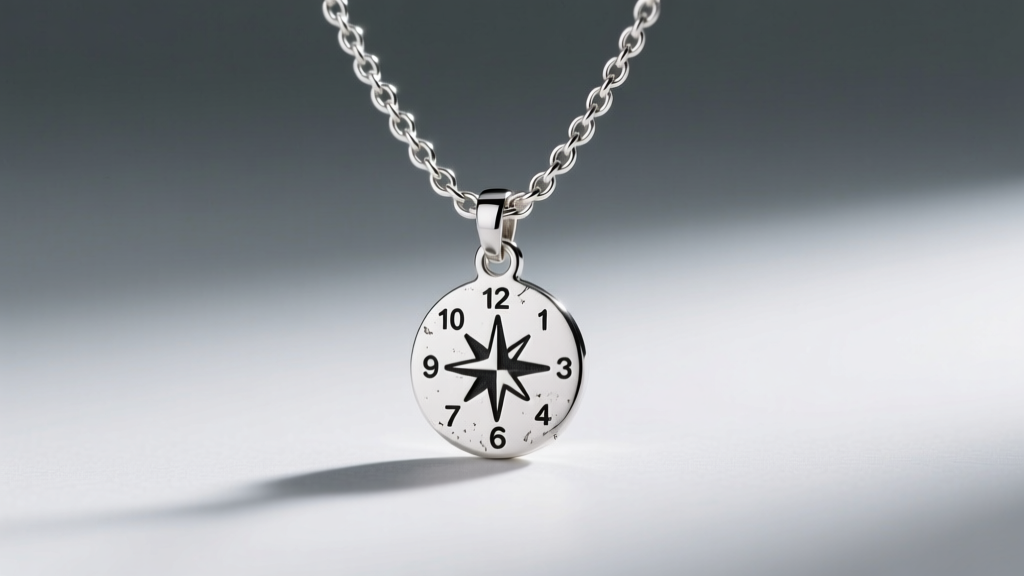
The pendant is the focal point of the graduation necklace, and moving beyond generic heart shapes will make the gift significantly more impactful. The best graduation motifs subtly nod to the journey of moving forward without looking like a novelty item that will be outgrown in a few years.
Top Motif Recommendations for 2026 and Beyond
- The Minimalist Compass: Symbolizing guidance, direction, and the courage to forge a new path. Look for compasses with mother-of-pearl inlays or micro-pavé diamond bezels for a sophisticated, professional look.
- Engraved Coordinates: A discreet bar or disc pendant engraved with the exact latitude and longitude of the graduate's university campus or childhood home. This offers deep sentimental value while remaining visually abstract and stylish.
- Morse Code Beads: A modern, highly personalized trend where onyx and seed beads are strung on a delicate cable chain to spell out words like 'Proud,' 'Dream,' or the graduate's new professional title in Morse code.
- The Open Circle (Enso): Representing the completion of one cycle (education) and the continuous, unbroken beginning of the next. An asymmetric, hammered gold circle pendant offers an organic, artistic aesthetic.
Step 3: Matching Chain Length and Link Style to the Wardrobe
A graduation necklace must integrate seamlessly into the graduate's new professional wardrobe. The chain length dictates where the pendant rests against the neckline, while the link style determines the necklace's durability and drape. Below is a structural guide to chain lengths and their ideal pairings.
| Chain Length | Style Name | Placement & Neckline Pairing | Best Chain Link Type |
|---|---|---|---|
| 16 Inches | Choker / Collar | Sits tightly on the collarbone. Best with V-necks, scoop necks, and off-the-shoulder tops. | Cable or Snake Chain |
| 18 Inches | Princess | The universal standard. Rests just below the collarbone. Perfect for button-down work blouses and crew necks. | Box or Rolo Chain |
| 20 Inches | Matinee | Falls on the upper chest. Ideal for layering over turtlenecks, blazers, and business-casual attire. | Wheat or Figaro Chain |
Durability Warning: Avoid 'Snake' chains for everyday wear. While they offer a sleek, tubular appearance, their tightly interlocking cups are notorious for trapping skin oils and snapping if bent at a sharp angle. For maximum tensile strength and resistance to kinking, the Box Chain (square links interlocked in a continuous row) and the Wheat Chain (woven oval links) are vastly superior choices for a pendant meant to be worn daily.
Step 4: Evaluating Gemstone Durability for Everyday Wear
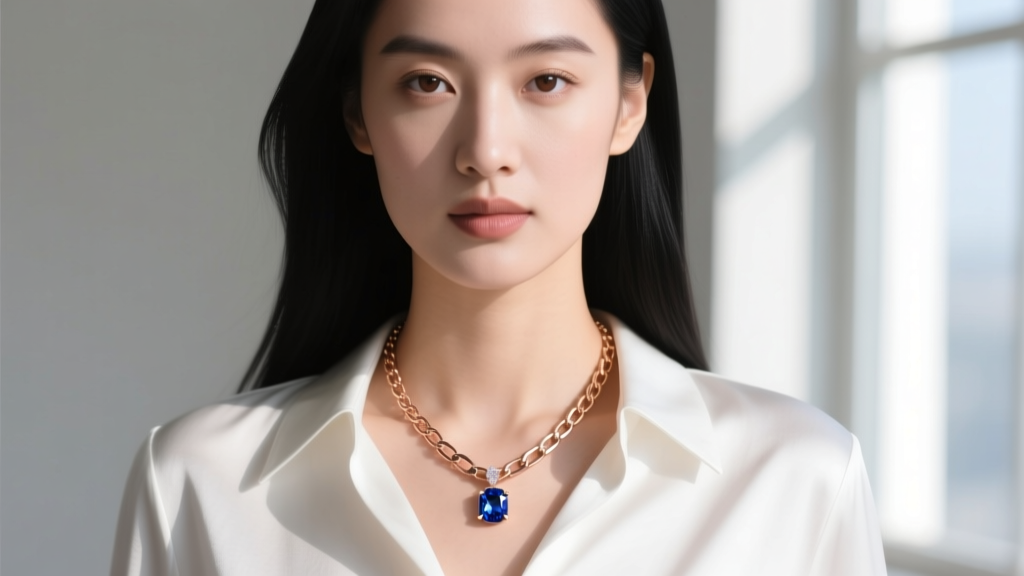
If the graduation necklace features a gemstone—perhaps a birthstone or a diamond accent—you must evaluate its hardness using the Mohs Scale of Mineral Hardness. According to the GIA Gem Encyclopedia, the Mohs scale is not linear; a diamond (10) is exponentially harder than a sapphire (9), which in turn is significantly harder than quartz (7). A necklace worn daily will encounter dust and debris containing microscopic quartz particles, which will scratch any stone with a hardness below 7.
Gemstone Durability Tiers
- Tier 1: The Indestructibles (Mohs 9-10)
Diamonds, rubies, and sapphires. These are the only gemstones recommended for a 'never take it off' graduation necklace. They will not scratch from daily environmental contact and can withstand ultrasonic cleaning. - Tier 2: The Cautious Choices (Mohs 7-8.5)
Topaz, morganite, and aquamarine. These stones are beautiful but require care. They should be removed during gym sessions, gardening, or manual labor to prevent chipping and surface abrasion. - Tier 3: The High-Maintenance Organics (Mohs 2.5-6.5)
Pearls, opals, and emeralds. Pearls are highly sensitive to the acids in human sweat and the chemicals in perfumes. Opals contain water and can crack in dry environments. Emeralds are heavily included and prone to shattering upon impact. Avoid these for a low-maintenance, everyday graduation gift.
Step 5: Budgeting and Sourcing Framework
Setting a realistic budget ensures you get the highest quality materials within your price bracket. Here is a practical framework for allocating your funds when shopping for a graduation necklace:
- Under $150: Focus on high-quality Sterling Silver (925) with a rhodium finish. Opt for meaningful motifs like engraved coordinates or Morse code rather than gemstones, which will be synthetic or low-grade at this price point. Brands like Mejuri or Catbird offer excellent entry-level options.
- $300 - $800: This is the sweet spot for solid 14k gold. You can afford a delicate but durable 14k box chain paired with a solid gold pendant or one featuring a small, ethically sourced diamond (0.05 to 0.10 carats). Look for independent jewelers on platforms like Etsy who provide certification for their recycled gold and conflict-free stones.
- $1,000+: Enter the realm of 18k gold and platinum. At this tier, prioritize the cut and clarity of the central diamond or sapphire. Ensure the piece comes with a GIA or AGS grading report if the center stone exceeds 0.25 carats. Brands like Brilliant Earth or local bespoke bench jewelers are ideal for this investment tier.
Conclusion: The Final Polish
Choosing a graduation necklace is an exercise in balancing sentimentality with structural engineering. By prioritizing resilient metals like 14k gold or platinum, selecting a kink-resistant chain link, and verifying the Mohs hardness of any included gemstones, you ensure the piece will survive the transition from campus life to the corporate world. A well-chosen graduation necklace is more than an accessory; it is a daily, tangible reminder of the graduate's hard-earned achievements and the bright future that lies ahead.


