How to Choose the Right Necklace Length for Your Neckline & Face Shape
Learn how to choose the right necklace length for your neckline, face shape, and body type. Master layering and pendant placement with our expert guide.


Finding the perfect necklace goes far beyond selecting the right metal or gemstone. The single most critical factor in how a piece flatters your frame, complements your wardrobe, and sits on your collarbone is its exact measurement. If you have ever wondered how to choose the right necklace length that avoids awkward placements or uncomfortable tightness, you are not alone. According to styling experts at Blue Nile's jewelry education center, a difference of just two inches can completely alter the visual weight and formality of a necklace.
This comprehensive, step-by-step guide will walk you through the precise metrics of necklace sizing, how to pair lengths with specific garment necklines, and the structural engineering of chain gauges to ensure your pendants hang perfectly.
The Anatomy of Necklace Lengths: A Standard Measurement Chart
Before diving into styling, it is essential to understand the industry-standard terminology for necklace lengths. While custom sizing is available, most fine jewelry is manufactured in specific increments. Here is the definitive breakdown of where each length falls on the average female torso (assuming a height of 5'4" to 5'6").
| Length (Inches / cm) | Industry Name | Fall Point | Best Use Case |
|---|---|---|---|
| 14" (35.5 cm) | Collar | Snug around the base of the neck | Formal wear, open-shoulder tops |
| 16" (40.6 cm) | Choker | Base of the neck / top of collarbone | Everyday wear, V-necks, pendants |
| 18" (45.7 cm) | Princess | Rests on the collarbone | Most versatile, standard pendant chains |
| 20" - 24" (50 - 61 cm) | Matinee | Top of the bust / décolletage | Business casual, layered looks |
| 28" - 36" (71 - 91 cm) | Opera | Below the bust / sternum | High necklines, evening wear, doubling |
Step 1: Match the Necklace Length to Your Neckline
The golden rule of jewelry styling is that your necklace should never compete with the hem of your garment. Instead, it should either mirror the shape of the neckline or provide a deliberate, contrasting focal point.
Crew and Scoop Necks
For crew necks, which sit high and tight around the collarbone, you have two optimal choices. A 14-inch collar sits entirely above the fabric line, creating a stacked, sophisticated look. Alternatively, a 20-inch matinee length drops below the fabric's edge, elongating the torso. Avoid 16-inch or 18-inch chains, as they will tangle with the garment's seam and create visual clutter.
V-Necks and Plunging Necklines
V-necks naturally draw the eye downward. To enhance this effect, select an 18-inch princess chain with a Y-drop or a teardrop pendant. The pendant should rest roughly one inch above the apex of the V-neck. If the neckline is particularly deep, a 20-inch chain ensures the metal does not get lost in the fabric folds.
Turtlenecks and High Collars
When wearing high-collared garments, delicate chains disappear entirely. Opt for 24-inch to 30-inch opera-length chains. According to gemological experts at the Gemological Institute of America (GIA), heavier metals and larger pendants (over 10 grams) are required here to physically rest on top of thick knitwear without being swallowed by the fabric's texture.
Step 2: Factor in Face Shape and Neck Proportions
Just as sunglasses are chosen to balance facial features, necklace lengths can visually alter the proportions of your face and neck.
- Round Faces: Avoid 14-inch and 16-inch chokers, which emphasize width and can make the neck appear shorter. Opt for 20-inch to 24-inch lengths with vertical pendants to create an elongating illusion.
- Long or Oval Faces: You can easily pull off 14-inch collars and 16-inch chokers. These horizontal lines break up the vertical length of the face and neck, providing excellent visual balance.
- Heart-Shaped Faces: A soft 18-inch princess chain with a rounded pendant (like a cabochon gemstone or a curved bar) helps soften a pointed chin.
- Petite Frames (Under 5'4"): Stick to 16-inch and 18-inch lengths. Anything longer than 22 inches can overwhelm a petite torso and visually cut your height in half.
- Tall or Plus-Size Frames: Standard 18-inch chains may sit higher on the chest than intended. Sizing up to a 20-inch or 22-inch matinee length ensures the necklace falls at the correct anatomical landmark.
Step 3: Consider Pendant Weight and Chain Gauge
Choosing the right length is only half the battle; the structural integrity of the chain must support the pendant. A common mistake is pairing a heavy 15-gram gemstone pendant with a delicate 18-inch 0.9mm cable chain. This not only causes the chain to snap but also creates an awkward, bottom-heavy drape where the pendant pulls the chain tightly against the back of the neck.
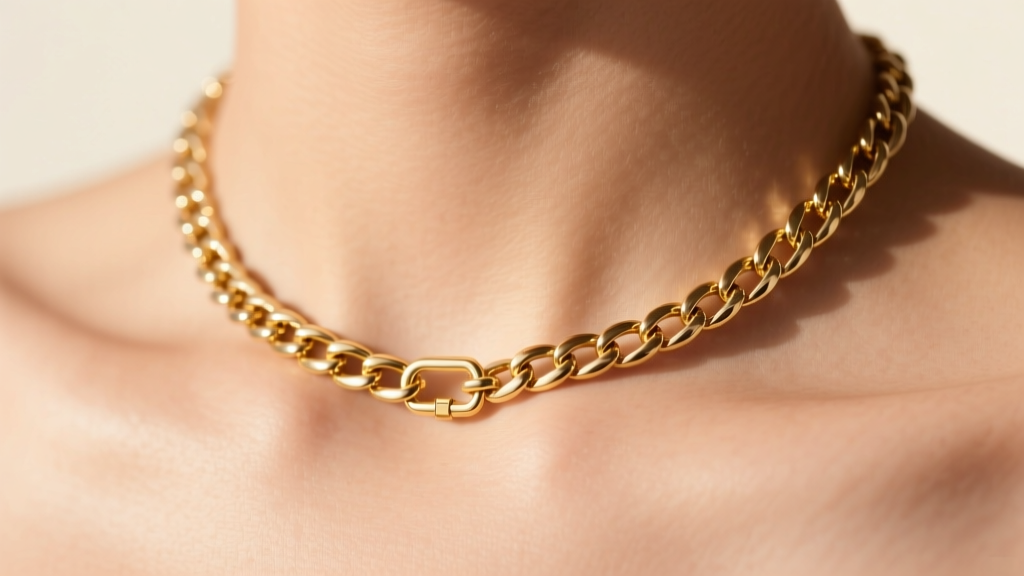
Use this gauge-to-weight ratio framework to ensure your necklace hangs correctly:
- 0.8mm to 1.0mm (Ultra-Fine): Best for lightweight charms and micro-pavé pendants weighing under 3 grams. Ideal for 16-inch and 18-inch lengths where the chain is meant to be barely visible.
- 1.2mm to 1.5mm (Standard Delicate): The workhorse of fine jewelry. Supports pendants between 3 and 8 grams. Box chains and rolo chains in this gauge offer excellent durability while maintaining a feminine drape.
- 2.0mm to 3.0mm (Medium Weight): Required for heavy gemstones, solid gold lockets, or oversized medallions weighing 8 to 15 grams. Cuban links and wheat chains in this thickness provide the necessary tensile strength.
- 4.0mm and above (Heavy/Statement): Generally worn as standalone pieces without pendants. If adding a pendant, ensure the bail (the loop connecting the pendant to the chain) is large enough to accommodate the thick links without causing friction wear.
Step 4: The Art of Layering Without Tangling
Layering is a dominant trend, but poorly spaced layers result in a tangled mess that damages delicate clasps and prongs. To master the layered look, you must adhere to the Two-Inch Rule.
Expert Styling Rule: When layering multiple necklaces, each subsequent chain must be at least two inches longer than the one above it. For example, pair a 14-inch collar, a 16-inch choker, and an 18-inch princess chain. This specific spacing prevents the pendants from colliding and allows each piece to catch the light independently.
Furthermore, vary the chain textures. Pairing a 16-inch snake chain with an 18-inch rope chain and a 20-inch figaro chain creates visual depth. If you use three identical cable chains, they will naturally twist and knot together due to identical link friction patterns.
Common Mistakes to Avoid When Sizing
Even seasoned collectors make errors when buying necklaces online. Avoid these three critical pitfalls:
- Ignoring the Extender: Always purchase chains with a 2-inch extender. This minor addition allows you to adjust a 16-inch chain to 18 inches on the fly, accommodating everything from summer tees to winter sweaters.
- Forgetting Metal Memory: Snake chains and herringbone chains have high 'metal memory' and tend to kink or retain the shape of how they are stored. If you want a fluid, liquid-like drape that conforms perfectly to your collarbone, opt for a rope, box, or wheat chain instead.
- Overlooking the Bail Size: An 18-inch chain might be the perfect length, but if the pendant's bail is too small for the chain's clasp to pass through, the piece is unwearable. Always check the bail's interior millimeter dimensions before purchasing.
Final Measurements: How to Measure at Home
If you are unsure where a specific length will fall on your unique frame, do not guess. Use the string method for precise visualization.
- Cut a piece of non-stretch string or use a soft fabric measuring tape.
- Measure out 16, 18, and 20 inches, marking each point with a piece of tape or a pen.
- Stand in front of a mirror wearing the specific neckline you intend to pair the necklace with.
- Hold the string at the base of your neck and let the marked points fall against your chest.
- Note where the 18-inch mark hits relative to your collarbone and the garment's hem. This physical test eliminates the guesswork of online shopping and ensures your investment sits exactly where you want it.
By understanding the interplay between exact measurements, chain gauges, and garment architecture, you can confidently build a versatile necklace wardrobe that enhances every outfit in your closet.


