The Beginner’s Guide to Choosing an Initial Medallion Necklace
Discover how to choose, style, and care for your first initial medallion necklace. Learn about metal grades, chain lengths, and layering tips.

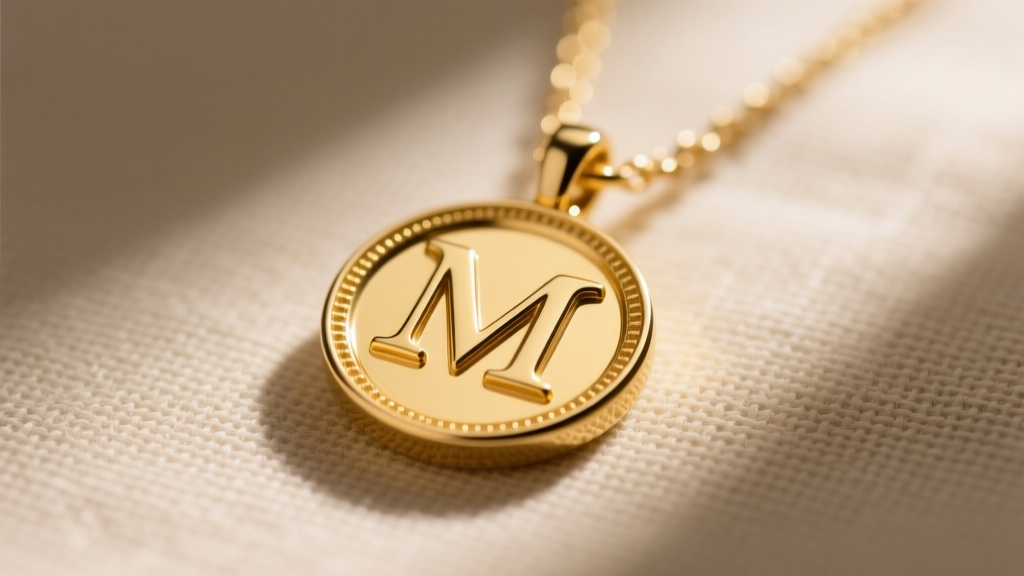
Why the Initial Medallion Necklace is a Timeless Staple
When building a foundational jewelry wardrobe, few pieces offer the versatility and personal significance of an initial medallion necklace. Unlike standard dog tags or three-dimensional charms, a true medallion features a flat, circular disc profile that sits flush against the collarbone. This streamlined silhouette makes it an ideal candidate for both solo wear and complex layering stacks. However, for beginners navigating the vast sea of jewelry options, the sheer volume of metal grades, chain gauges, and sizing metrics can be overwhelming. This guide breaks down the exact specifications you need to know to invest in a high-quality piece that will last for decades, rather than a trendy accessory that tarnishes in a month.
Decoding Metal Grades: What Should Your Medallion Be Made Of?
The longevity of your necklace is entirely dependent on its metallurgical composition. Many beginners mistakenly assume that any 'gold' necklace will last, but the terminology used in the jewelry industry is highly specific and often misleading.
Sterling Silver (925)
Sterling silver is an alloy containing 92.5% pure silver and 7.5% copper or zinc for structural integrity. It is an excellent entry-level choice for a solid metal medallion. However, because of the copper content, it will oxidize and tarnish when exposed to humidity and skin oils. Regular polishing with a microfiber cloth is mandatory to maintain its luster.
Gold Vermeil vs. Standard Gold Plated
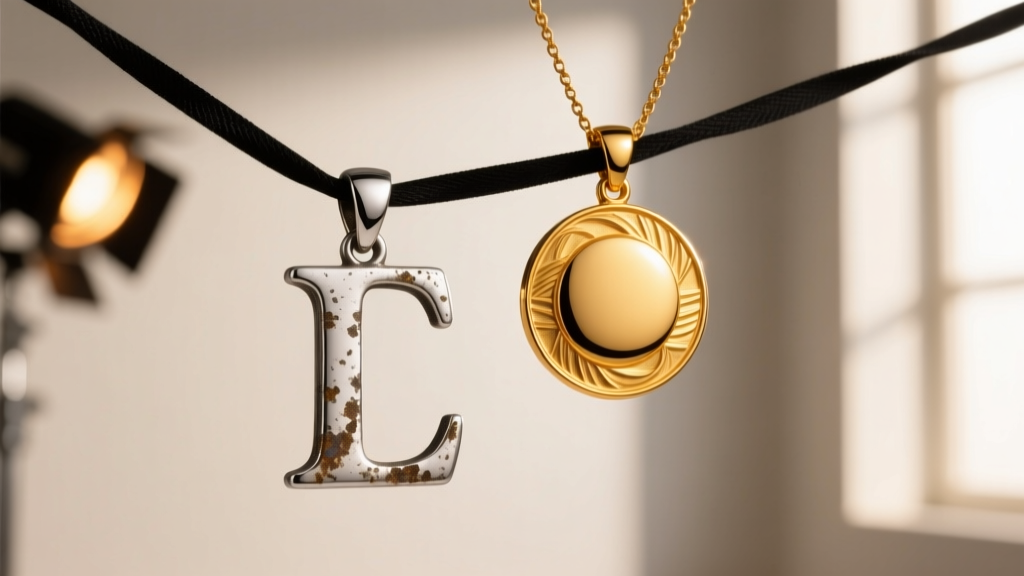
This is where most beginners lose money. Standard gold-plated jewelry uses a brass or copper base with a microscopic flash of gold (often less than 0.5 microns thick). It will inevitably wear off, leaving your skin green. Gold vermeil, on the other hand, is strictly regulated. According to industry standards outlined by the Gemological Institute of America (GIA), vermeil must have a sterling silver base and a gold plating of at least 2.5 microns thick. If you are on a budget but want the look and durability of gold, 14k or 18k gold vermeil is the minimum acceptable standard.
Solid 14k and 18k Gold
For an heirloom-quality initial medallion necklace that you never have to take off, solid gold is the ultimate investment. 14k gold (58.3% pure gold) offers the best balance of rich color and scratch resistance for everyday wear, while 18k gold (75% pure gold) provides a deeper yellow hue but is slightly softer and more prone to micro-scratches over time.
Sizing and Proportions: Finding the Right Medallion Diameter
The diameter of the medallion dictates the entire aesthetic of the necklace. A millimeter difference can shift the piece from 'delicate' to 'statement'. Use the framework below to select the right proportion for your body type and styling goals.
| Diameter | Visual Comparison | Best Use Case | Recommended Chain Gauge |
|---|---|---|---|
| 8mm - 10mm | Smaller than a dime | Dainty layering, subtle everyday wear, minimalist aesthetics | 0.9mm - 1.1mm |
| 12mm - 15mm | Nickel to Quarter size | The 'Sweet Spot' for solo wear and standard layering stacks | 1.2mm - 1.5mm |
| 18mm - 22mm | Silver Dollar size | Bold statement pieces, worn solo over crewneck sweaters | 1.8mm - 2.5mm |
For a beginner purchasing their very first piece, a 14mm or 15mm medallion is the safest and most versatile choice. It is large enough for the initial to be legible from a conversational distance, but small enough to tuck into a blouse or layer with longer chains.
Chain Selection: The Unsung Hero of Your Necklace
A medallion is only as good as the chain that holds it. The two most critical factors here are the chain style and the clasp mechanism.
- Cable Chains: The classic, uniform oval links. A 1.2mm cable chain is the industry standard for 15mm medallions, offering a traditional look that doesn't compete with the pendant.
- Box Chains: Made of square links that create a smooth, reflective surface. These are incredibly durable and resist kinking, making them ideal if you plan to sleep in your necklace.
- Rope Chains: Twisted links that mimic the look of a rope. These catch the light beautifully but can snag on fine hair or delicate fabrics.
The Clasp Rule: Always inspect the clasp. Avoid 'spring ring' clasps, which are fragile, difficult to operate with one hand, and prone to snapping under the weight of a solid metal medallion. Insist on a 'lobster clasp', which features a secure, spring-loaded lever that locks firmly into the end ring.
Font and Engraving Styles: Making It Personal
The typography of your initial drastically alters the mood of the jewelry. Serif fonts (like Times New Roman or Garamond) feature small decorative strokes at the ends of letters, lending a vintage, academic, or heritage feel to the piece. Sans-serif fonts (like Helvetica) are clean, modern, and highly legible, perfect for minimalist designs. Script fonts offer a romantic, personalized touch but can become illegible if the medallion is too small.
Beyond the font, pay attention to the engraving method. Laser engraving is precise, uniform, and cost-effective, resulting in a perfectly flat, darkened letter. Hand engraving, performed by a master artisan using a pneumatic graver, removes actual metal to create deep, angled cuts that catch the light and create a three-dimensional effect.
'While laser engraving is perfectly suitable for modern, mass-produced jewelry, hand-engraved initial medallions possess a bespoke heirloom quality that only deepens in character as the metal patinas over time.'
Layering 101: The 4-Inch Rule
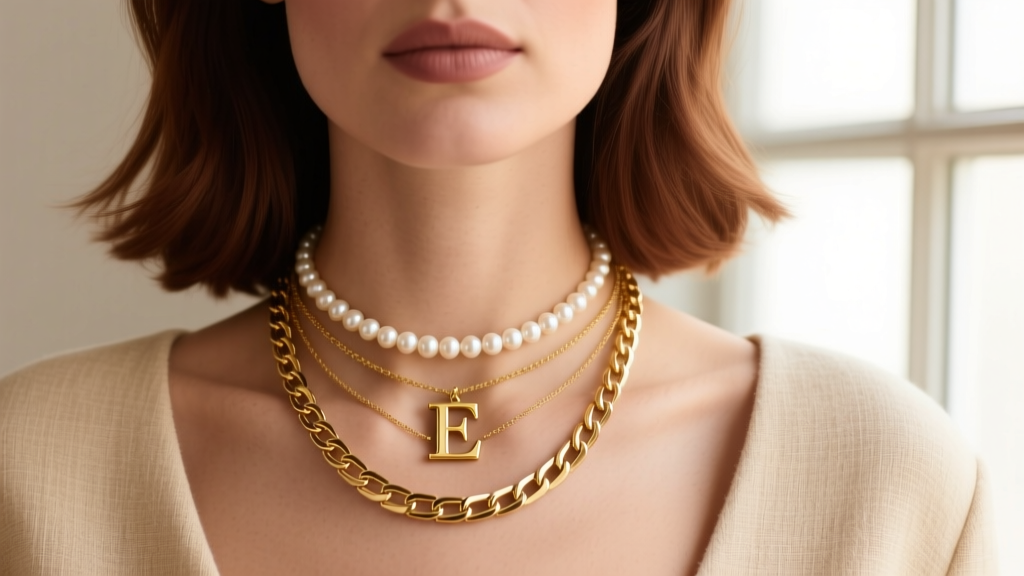
Once you have your initial medallion necklace, the next step is integrating it into a stack. The most common beginner mistake is wearing multiple necklaces of the exact same length, which results in a tangled, clustered mess. To achieve a professional, curated look, apply the '4-Inch Rule'.
Your medallion should act as the anchor of the stack, typically sitting at 18 inches (resting just below the collarbone). From there, add a shorter piece at 14 inches (a choker or pearl strand) and a longer piece at 22 inches (perhaps a simple gold rope chain or a larger gemstone pendant). This 4-inch spacing between each layer ensures that every piece remains visible, untangled, and proportionally balanced against your neckline.
Care and Maintenance for Longevity
Proper maintenance is non-negotiable for preserving the crisp edges and polished surfaces of your medallion. According to the care guidelines published by Jewelers of America, you should always remove your jewelry before swimming in chlorinated pools or using household cleaning chemicals, as bleach and chlorine can permanently pit and discolor precious metal alloys.
For routine cleaning, avoid ultrasonic cleaners if your medallion features any enamel inlay or delicate gemstone accents, as the high-frequency vibrations can shatter the enamel or loosen the stones. Instead, use a few drops of mild, phosphate-free dish soap in warm water. Gently agitate the necklace with a baby-soft toothbrush to remove trapped lotions and sebum from the chain links and the bail (the loop connecting the medallion to the chain). Rinse thoroughly, pat dry with a lint-free cloth, and store it flat in an anti-tarnish pouch.
Final Thoughts on Your First Purchase
Selecting your first initial medallion necklace is an exercise in balancing personal sentiment with material quality. By prioritizing solid metals or properly regulated vermeil, choosing a versatile 15mm diameter, and pairing it with a secure lobster-clasp chain, you are not just buying a trend. You are investing in a foundational wardrobe staple that will anchor your personal style for years to come.


