Troubleshooting Your Mac and Cheese Necklace: Resin & Enamel Fixes
Learn how to clean, repair, and upgrade your mac and cheese necklace. Expert troubleshooting for resin yellowing, enamel chips, and cheap chains.

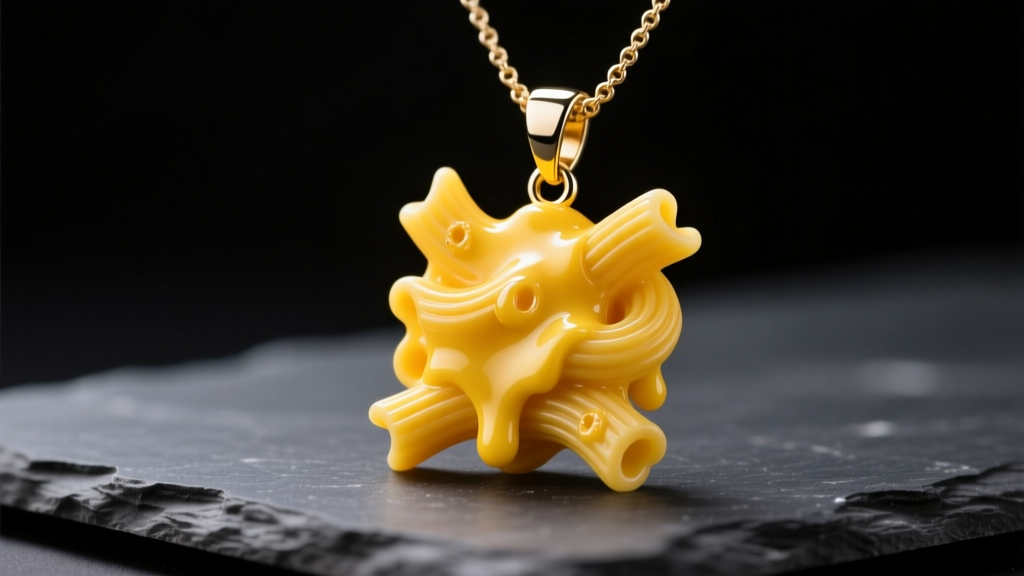
The viral appeal of novelty food jewelry has made the mac and cheese necklace a staple in quirky accessory collections. However, beneath the playful exterior of these miniature culinary pendants lies a host of material science challenges. Whether your piece is a 3D-printed and cast epoxy replica or a stamped brass pendant filled with cold enamel, daily wear exposes these items to UV degradation, galvanic corrosion, and cosmetic deterioration. As jewelry specialists, we approach novelty pendants with the same rigorous troubleshooting standards applied to fine gemstones. If your favorite comfort-food accessory is looking worse for wear, this comprehensive repair and maintenance guide will help you restore it to its former glory.
Identifying the Base Material: Resin vs. Enamel
Before attempting any repairs, you must accurately identify the manufacturing method of your mac and cheese necklace. The restoration technique for a polymer-based piece will destroy a metal-and-enamel piece, and vice versa.
- Epoxy or Polyurethane Resin: These pendants are typically cast in silicone molds. They have a slightly warm feel, are lightweight, and feature deep, three-dimensional textures mimicking individual macaroni noodles and pooled cheese. Over time, cheap resins lacking UV inhibitors will yellow and develop a cloudy, micro-cracked surface.
- Cold Enamel over Base Metal: These are stamped or cast metal pendants (usually zinc alloy or brass) with recessed areas painted with epoxy-based cold enamel. They feel cold and heavy. The primary failure points here are chipped enamel, oxidized metal borders, and fading pigments.
Troubleshooting Resin Yellowing and Cloudiness
If your resin mac and cheese necklace has taken on a brownish tint or lost its glossy finish, you are witnessing polymer degradation. Mass-produced novelty jewelry rarely incorporates high-grade UV stabilizers like HALS (Hindered Amine Light Stabilizers), meaning exposure to sunlight breaks down the chemical bonds in the epoxy.
Surface Cloudiness and Micro-Scratches
If the yellowing is accompanied by a dull, cloudy surface, the issue is likely superficial oxidation and micro-scratching from friction against clothing. Do not use standard jewelry polishing cloths, as they often contain mild abrasives designed for metals that will permanently scar soft resins.
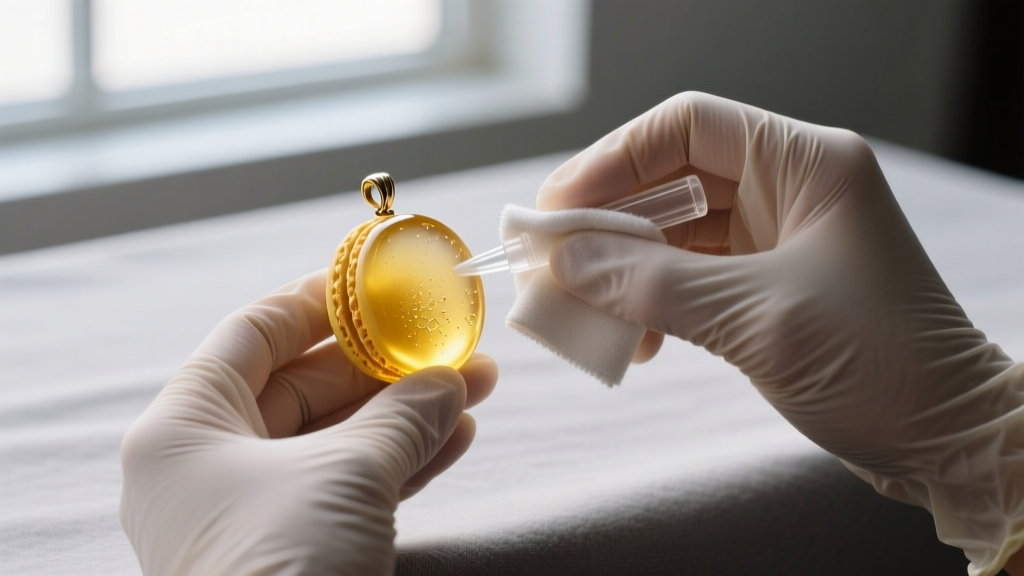
Instead, use a dedicated plastic polish such as Novus 2 (Fine Scratch Remover) or Meguiar's PlastX. Apply a dime-sized amount to a clean, lint-free microfiber cloth. Rub the pendant in tight, circular motions for three to five minutes. The mild cutting agents will level the microscopic scratches, restoring optical clarity to the 'cheese sauce' portions of the pendant.
Deep UV Yellowing
If the resin is deeply yellowed but structurally sound, surface polishing will not help. You can attempt a reverse-yellowing process using a 12% hydrogen peroxide cream (commonly used in hair bleaching) and a UV lamp. Coat the pendant evenly, wrap it tightly in clear cling film to prevent drying, and expose it to a UV-A lamp for 4 to 6 hours. According to material restoration experts at Fire Mountain Gems, this process can bleach out the chromophores responsible for the yellow tint, though it may slightly embrittle the epoxy over time.
Repairing Chipped Cold Enamel on Metal Pendants
For metal mac and cheese pendants, the most common issue is chipped cold enamel. Because cold enamel is essentially a pigmented epoxy resin applied by hand or syringe, it lacks the vitreous (glass-like) durability of kiln-fired enamel. A simple drop onto a hard floor can cause the 'macaroni' enamel to flake away from the metal recess.
The Touch-Up Protocol
To fix this, avoid standard nail polishes, which contain solvents like toluene and ethyl acetate that will dissolve the surrounding factory enamel. Instead, source a high-quality model enamel paint (such as Testors) or a specialized jeweler's cold enamel from a supplier like Rio Grande.
- Clean the chipped recess with a wooden toothpick dipped in isopropyl alcohol to remove skin oils and lotion.
- Using a 000-size detail brush, apply the yellow enamel in three ultra-thin layers, allowing 24 hours of curing time between each coat.
- Because cold enamel shrinks slightly as solvents evaporate, the final layer should sit just a fraction of a millimeter below the metal border.
- Once fully cured (72 hours), seal the repair with a microscopic layer of clear, UV-resistant jewelry resin to match the factory gloss.
Solving the Green Neck Problem: Upgrading the Chain
The most frequent complaint regarding novelty food necklaces is the chain turning the wearer's neck green or black. This is not an allergic reaction, but a galvanic corrosion event. The stock chains provided with these necklaces are almost universally made of zinc alloy or copper plated with a microscopically thin layer of gold or silver. When the plating wears off, the base metal reacts with the salts and acids in your sweat, creating copper chloride or zinc oxide salts, which stain the skin.
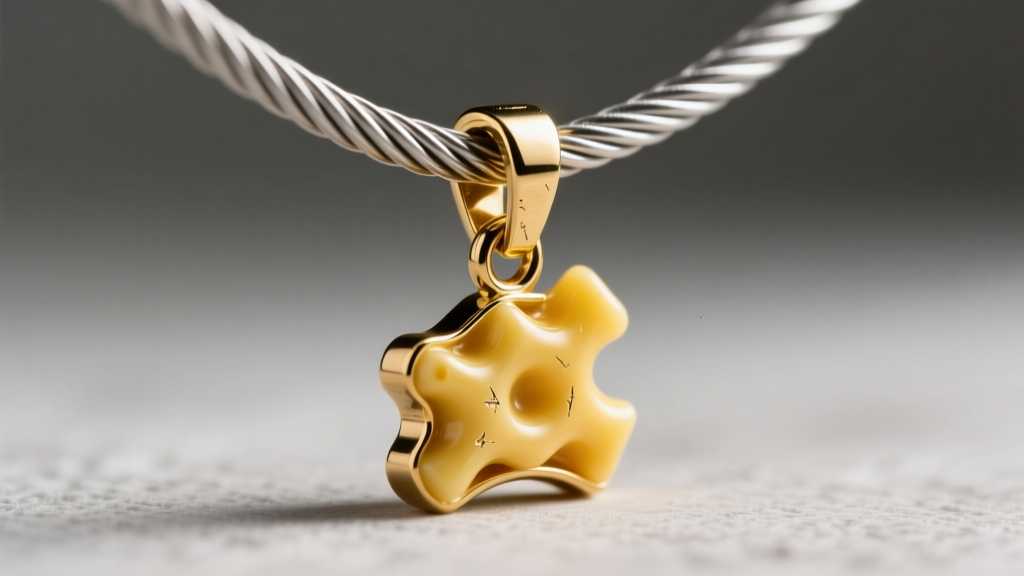
The permanent solution is to discard the stock chain and re-hang your mac and cheese pendant on a hypoallergenic, non-reactive metal. Use a pair of flush cutters and two 18-gauge jump rings to attach the pendant to a proper chain.
| Chain Material | Tarnish Risk | Skin Reaction | Estimated Upgrade Cost |
|---|---|---|---|
| Zinc Alloy (Stock) | Very High | Green/Black Staining | $0 (Included) |
| 316L Stainless Steel | Extremely Low | None (Hypoallergenic) | $8 - $15 |
| 925 Sterling Silver | Medium (Requires Polishing) | None | $25 - $45 |
| 14k Gold-Filled | Low | None | $35 - $60 |
Upgrading to a 316L stainless steel cable chain is the most cost-effective and durable choice for daily wear, ensuring your necklace remains a fun statement piece rather than a dermatological hazard.
Deep Cleaning Textured Crevices Without Damage
The intricate textures of a mac and cheese necklace—specifically the tiny grooves meant to simulate the ridges of elbow macaroni—are notorious traps for sebum, dead skin cells, and cosmetic lotions. Over time, this buildup creates a grayish, waxy film that dulls the entire piece.
What to Avoid
Never place a novelty food necklace in an ultrasonic cleaner. The high-frequency cavitation bubbles can easily shatter resin pendants, strip cold enamel from metal bases, and loosen any glued-in rhinestone accents. Furthermore, avoid harsh chemical dips or silver polishing baths, as the sulfur compounds will permanently stain porous resins and unsealed enamel.
The Safe Cleaning Method
According to the gemological care guidelines outlined by the Gemological Institute of America (GIA), the safest approach for mixed-material jewelry is a mild, non-detergent surfactant. Mix a few drops of gentle dish soap (like Dawn) into a bowl of lukewarm water. Submerge the pendant for five minutes to loosen the lipid buildup. Next, use an extra-soft baby toothbrush to gently agitate the crevices. Rinse thoroughly under a gentle stream of distilled water to prevent hard water spots, and pat dry with a microfiber cloth. Do not use a hairdryer, as concentrated heat can warp polyurethane resins or cause thermal shock to cold enamel.
Preventative Storage for Novelty Pendants
Proper storage is the final step in troubleshooting the longevity of your mac and cheese necklace. Resin and cold enamel are highly susceptible to plasticizer migration when stored in direct contact with certain plastics or synthetic fabrics. Always store your pendant in a breathable, acid-free tissue paper pouch or a dedicated jewelry box with an anti-tarnish strip. Keep it away from direct sunlight and extreme temperature fluctuations to ensure your miniature culinary masterpiece remains vibrant and intact for years to come.


