How to Choose a Sparkling Necklace for Everyday Wear
Learn how to choose the perfect sparkling necklace for daily wear. We cover diamond alternatives, chain types, prong settings, and pricing tiers.
The Science Behind the Sparkle
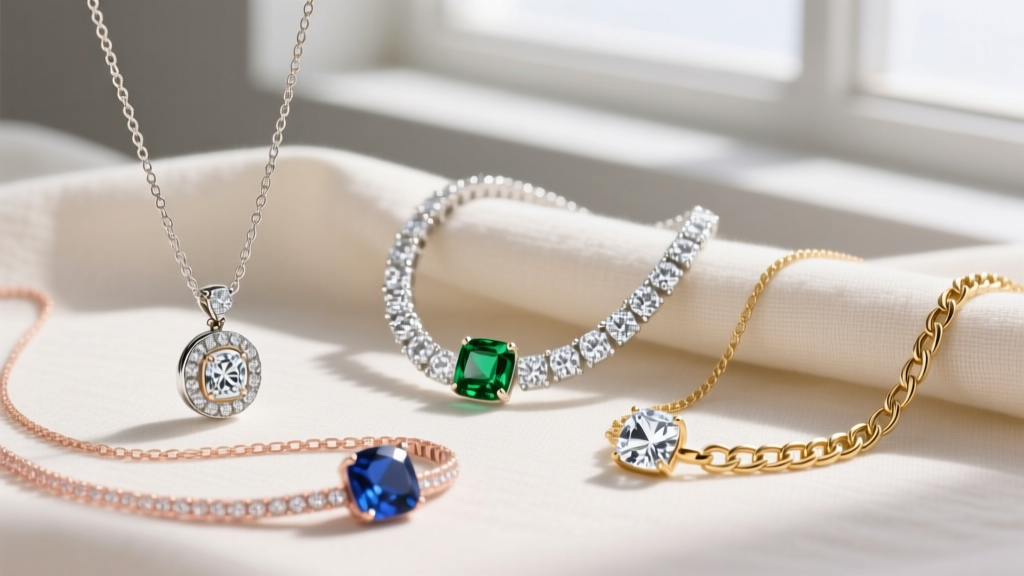
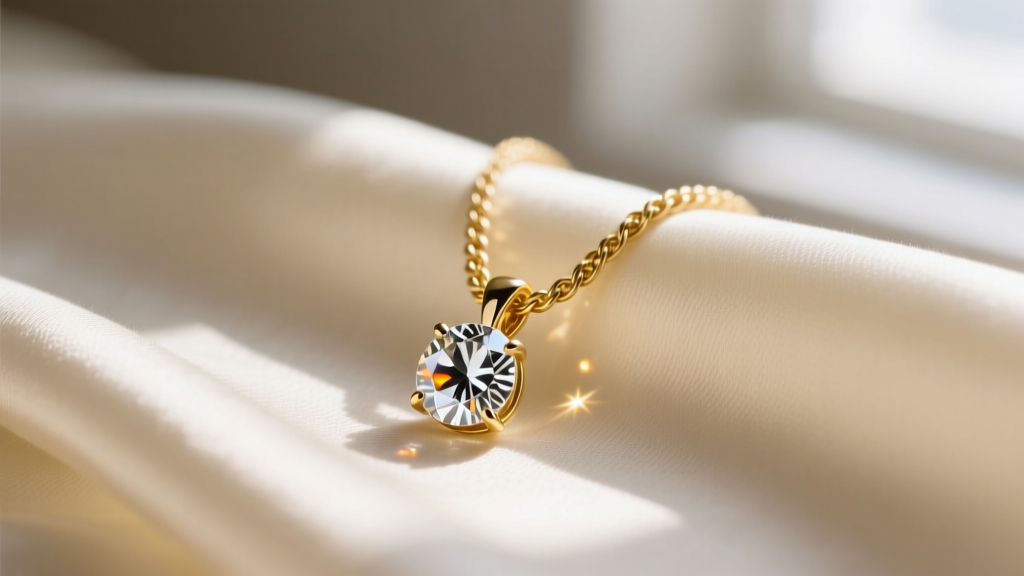
When you begin your search for the perfect sparkling necklace, it is easy to become overwhelmed by the sheer volume of options on the market. To make an informed decision, it helps to understand the optical physics that create that coveted glitter. Sparkle is not a single trait; it is a combination of brilliance (the return of white light), dispersion (the separation of light into spectral colors, or "fire"), and scintillation (the pattern of flashes when the stone moves). According to the Gemological Institute of America (GIA), a gemstone's cut quality dictates how effectively it bends and reflects light back to the viewer's eye. A poorly cut stone, regardless of its material, will look dull and lifeless, while an ideal-cut stone will maximize light return even in dim environments.
Choosing Your Centerpiece: Gemstone Grades
The centerpiece of your sparkling necklace will likely be a diamond or a diamond alternative. In the 2026 jewelry market, lab-grown diamonds and high-grade simulants have completely disrupted traditional pricing, giving beginners more accessible entry points into fine jewelry. Understanding the Mohs hardness scale and the Refractive Index (RI) is critical for predicting how your pendant will age over years of daily wear.
| Gemstone Material | Mohs Hardness | Refractive Index (RI) | Long-Term Wearability |
|---|---|---|---|
| Natural / Lab Diamond | 10 | 2.42 | Exceptional; resists all scratching. |
| Moissanite | 9.25 | 2.65 | Excellent; highly durable with intense fire. |
| White Sapphire | 9.0 | 1.77 | Good; requires frequent cleaning to maintain sparkle. |
| Cubic Zirconia (CZ) | 8.5 | 2.15 | Fair; prone to micro-scratches and oil clouding. |
For a necklace intended for everyday, never-take-off wear, diamonds and moissanite are the only recommended choices. Cubic Zirconia, while initially brilliant, has a lower hardness rating. Over time, environmental dust (which contains quartz, Mohs 7) will create micro-scratches on a CZ surface. These scratches trap skin oils and lotions, leading to the cloudy, milky appearance that plagues older fashion jewelry.
Chain Foundations: Gauges and Durability
A sparkling necklace is only as secure as the chain that holds it. Beginners often focus entirely on the pendant and neglect the chain's gauge (thickness) and structural integrity. The weight of your gemstone dictates the required chain thickness.
Matching Gauge to Pendant Weight
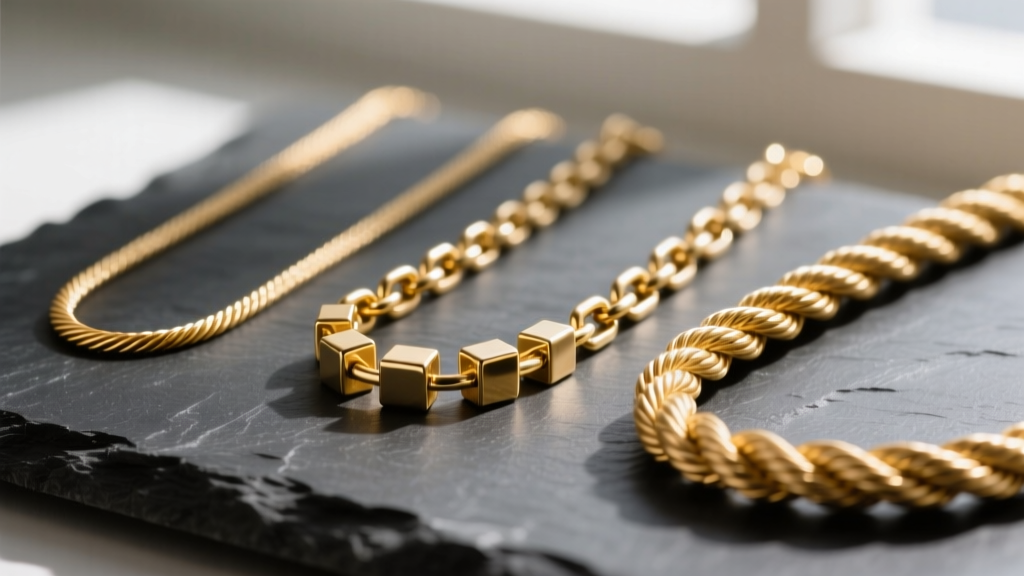
- 0.8mm - 1.0mm (Cable or Rolo Chain): Ideal for lightweight pendants (under 4 grams) featuring stones in the 0.25 to 0.75-carat range. These delicate chains sit invisibly on the collarbone, allowing the stone to appear as though it is floating.
- 1.2mm - 1.5mm (Box or Rope Chain): Necessary for medium to heavy pendants (4 to 10 grams), such as 1.00-carat solitaires or halo settings. Box chains are particularly recommended because their interlocking square links resist kinking and snapping better than standard cable chains.
Clasp Mechanics
The clasp is the most common failure point on any necklace. While spring-ring clasps are common on mass-market jewelry due to their low manufacturing cost, they are notoriously difficult to operate one-handed and feature a tiny internal spring that frequently fails. Always look for a lobster clasp (minimum 5mm in size) or a secure locking clasp mechanism, which the Federal Trade Commission (FTC) and industry watchdogs frequently recommend for securing valuable precious metals and gemstones.
Setting Styles That Maximize Light Return
The way your gemstone is held in place dramatically affects both its security and its visual impact. The setting acts as the architectural foundation of your sparkling necklace.
The Classic Prong Setting
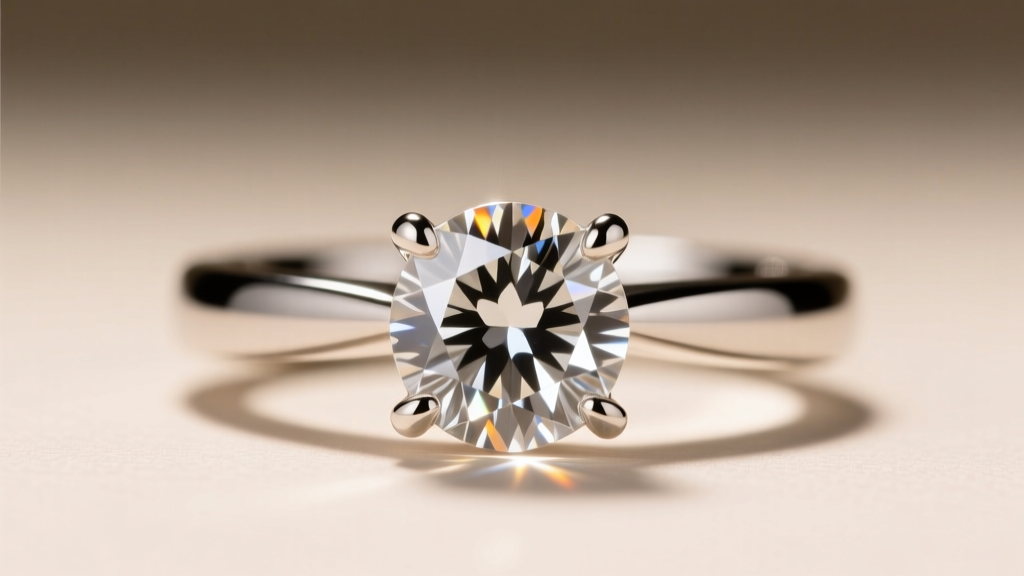
The four-prong "Tiffany" style setting is the undisputed champion of light return. By using minimal metal to secure the girdle of the stone, it allows light to enter from the sides and the pavilion (bottom), maximizing brilliance. However, prongs can catch on knitwear and lace. If you are buying a pendant with a stone larger than 1.0 carat, upgrade to a six-prong setting. The additional metal provides a crucial safety net; if one prong bends or breaks, the stone remains secured by the other five.
The Bezel Alternative
For highly active individuals, a bezel setting—where a thin rim of metal completely encircles the gemstone's edge—offers superior protection against impacts and snagging. The trade-off is a slight reduction in light entry, which can diminish the stone's perceived size and sparkle by roughly 10% to 15%. For beginners prioritizing durability over absolute maximum brilliance, a bezel is an incredibly smart, modern choice.
Length and Neckline Pairing
Where the necklace falls on your chest changes how it interacts with your wardrobe. Here is a practical framework for selecting the right length:
- 16 Inches (Choker/Collarbone): Best for V-necks, scoop necks, and off-the-shoulder tops. It sits high and draws the eye directly to the face.
- 18 Inches (Princess): The most versatile, universal length. It rests just below the collarbone and works beautifully over crew necks, button-down shirts, and lightweight sweaters.
- 20 to 24 Inches (Matinee): Ideal for layering over high necklines, turtlenecks, or business attire. A sparkling pendant on a longer chain acts as a vertical line that elongates the torso.
Maintenance and Preventing Clouding
Even the highest quality diamond will lose its sparkle if coated in a film of sebum, cosmetics, and environmental pollutants. Because diamonds are naturally lipophilic (oil-attracting), they require a strict cleaning regimen to maintain their optical performance.
For weekly maintenance, soak your necklace in a bowl of warm water mixed with a few drops of mild, ammonia-free dish soap for 15 minutes. Use a soft-bristled baby toothbrush to gently agitate the area beneath the stone, where the pavilion facets collect the most grime. Rinse thoroughly under lukewarm water and pat dry with a lint-free microfiber cloth.
A Critical Warning on Ultrasonic Cleaners: While ultrasonic machines are excellent for cleaning solid gold and diamonds, they can be disastrous for fracture-filled diamonds, treated stones, or any pendant with pave-set micro-stones. The high-frequency vibrations can easily shake loose the tiny glue beads or micro-prongs holding pave accents in place. When in doubt, stick to manual cleaning or consult a Jewelers of America certified professional for an annual steam cleaning and prong-tightening inspection.
Choosing your first fine sparkling necklace is an investment in both personal style and material longevity. By prioritizing optical physics, selecting the correct chain gauge, and committing to routine maintenance, your pendant will remain a brilliant focal point in your wardrobe for decades to come.


