Beginner Guide: Choosing the Right Necklace Tray for Jewelry Display
Discover how to choose the perfect necklace tray for display, storage, and photography. Compare velvet, leather, and acrylic options for your collection.

Why Every Jewelry Collector Needs a Dedicated Necklace Tray
If you have ever spent ten minutes untangling a delicate cable chain from a heavy figaro link, you already understand the primary frustration of necklace storage. While jewelry boxes with padded rolls work for short pendants, they fail miserably for longer chains, layered pieces, and statement lockets. A dedicated necklace tray solves this by providing a flat, high-friction surface that keeps chains separated, prevents kinking, and allows you to view your entire collection at a glance. Beyond mere storage, the right tray is an essential tool for visual merchandising, daily outfit planning, and even macro jewelry photography. In this guide, we break down the exact material grades, dimensional standards, and surface textures you need to consider to protect your precious metals and gemstones.
Material Breakdown: Velvet, Leather, Linen, and Acrylic
The surface material of your tray dictates not only the aesthetic of your display but also the chemical safety of your jewelry. Certain synthetic materials can actually accelerate tarnishing, a critical detail often overlooked by beginners.
1. Short-Pile Velvet (Cotton-Backed)
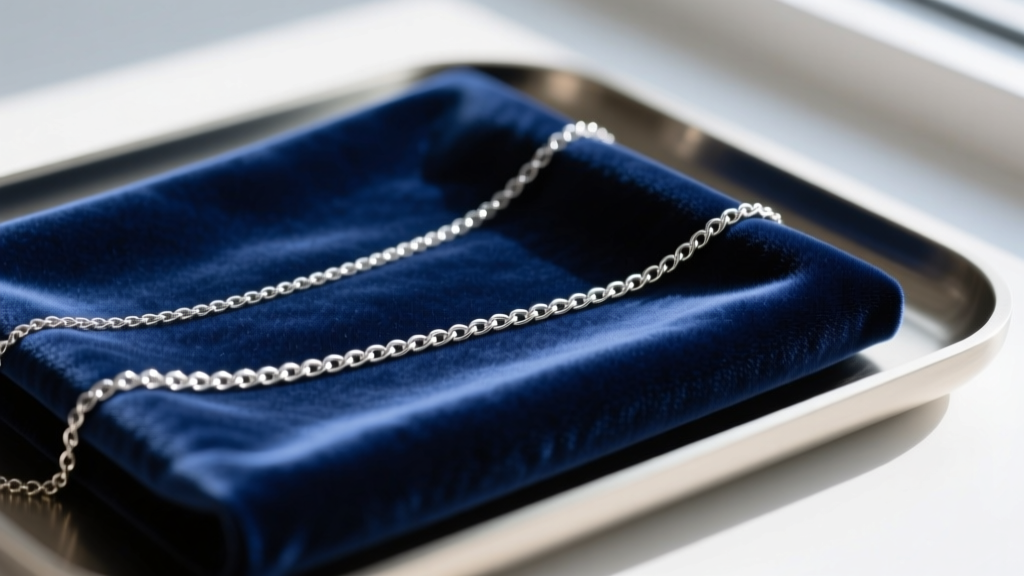
Velvet is the industry standard for high-end retail display. However, you must distinguish between synthetic panne velvet and cotton-backed short-pile velvet. Short-pile velvet provides enough micro-friction to keep lightweight snake chains and box chains from sliding off slanted displays, while its dense weave prevents prongs from catching. According to the Gemological Institute of America (GIA), keeping jewelry in soft, non-abrasive environments is crucial for preventing micro-scratches on high-polish gold and soft gemstones like pearls or opals. Avoid long-pile velvets, as they can trap dust and obscure the clasp mechanisms of delicate pendants.
2. Polyurethane (PU) Leather vs. Genuine Leather
Leather trays offer a sleek, modern, and wipeable surface. However, beginners must be wary of cheap PU (polyurethane) leathers. Low-grade synthetic leathers often off-gas sulfur compounds and plasticizers as they degrade, which reacts with the copper alloys in sterling silver to form silver sulfide (black tarnish). If you opt for a leather necklace tray, ensure it is lined with an acid-free, sulfur-free barrier, or invest in genuine, vegetable-tanned leather which is chemically stable.
3. Washed Linen
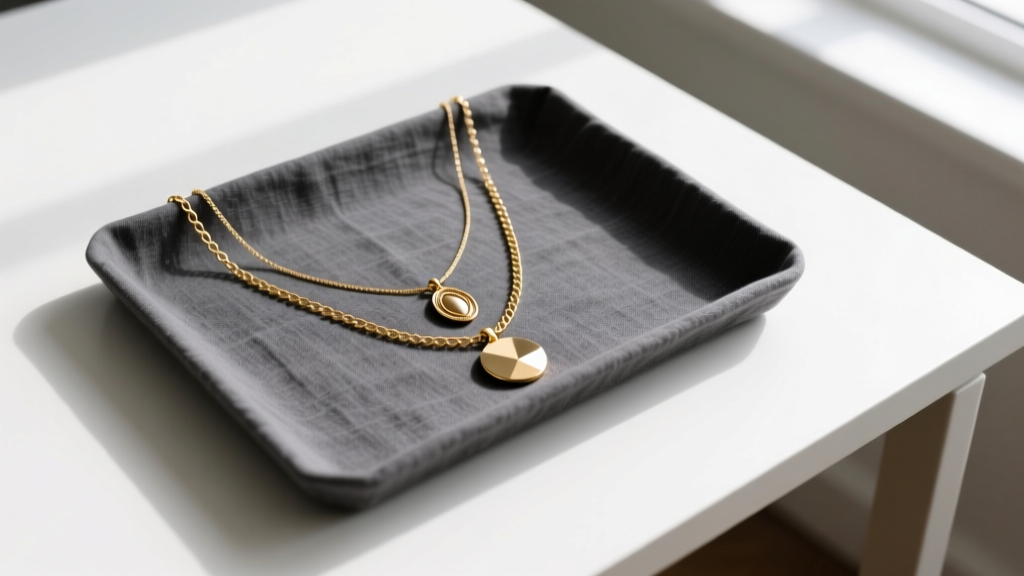
Linen provides a beautiful, organic texture that is highly popular for artisan and bohemian jewelry brands. The matte finish absorbs harsh light, making it excellent for photography. The drawback? Raw linen has a pronounced weave that can easily snag the links of intricate chain styles, such as herringbone or rope chains. If you choose linen, ensure the tray is tightly stretched and lined with a smooth cotton batting underneath to provide a forgiving cushion.
Comparing Tray Materials for Specific Use Cases
To help you make an informed decision, we have compiled a data table comparing the most common necklace tray materials based on friction, tarnish risk, and ideal application.
| Material | Surface Friction | Tarnish / Chemical Risk | Price Range (USD) | Ideal Use Case |
|---|---|---|---|---|
| Short-Pile Velvet | High | Very Low (if cotton-backed) | $15 - $45 | Retail displays, heavy pendants, layered chains |
| Genuine Leather | Medium | Low (Vegetable-tanned) | $40 - $90 | High-end personal collections, travel trays |
| PU (Synthetic) Leather | Medium-Low | High (Sulfur off-gassing) | $10 - $25 | Short-term visual merchandising (not long-term storage) |
| Washed Linen | Medium-High | Very Low | $20 - $50 | Artisan jewelry, flat-lay photography, pearls |
| Matte Acrylic | Low | Zero | $25 - $60 | Modern minimalist displays, macro photography |
Sizing and Slant: Matching the Tray to Your Space
Necklace trays are not one-size-fits-all. The dimensions and angles you choose should be dictated by whether you are storing personal collections in a drawer or displaying them on a countertop.
Standard Dimensions
- Personal / Drawer Insert (8.5 x 11 inches): Designed to fit perfectly inside standard dresser drawers or safes. Ideal for holding 4 to 6 necklaces laid horizontally.
- Retail / Showcase Standard (14 x 18 inches): The universal sizing for glass jewelry showcases. These trays often feature modular inserts that allow you to swap out necklace displays for ring rolls or watch pillows.
- Travel / Valet (5 x 7 inches): Compact, often featuring a snap closure or a leather strap to secure a single statement pendant or choker during transit.
The Physics of the Slant
If you are displaying necklaces on a dresser or boutique shelf, a flat tray forces the viewer to look straight down, which obscures the pendants. Slanted trays elevate the viewing angle. A 15-degree slant is optimal for desktop viewing and prevents heavy lockets from sliding down the surface. A 30-degree to 45-degree slant is necessary for standing retail displays or vanity tables, allowing the necklaces to catch ambient light and face the viewer directly. Always ensure slanted trays feature a raised bottom lip (at least 0.5 inches high) to catch the clasps and prevent the jewelry from pooling at the base.
The Photography Advantage: Using Trays for Content Creation
For resellers, bloggers, or enthusiasts sharing their collections online, a necklace tray doubles as a critical photography prop. The color and reflectivity of your tray will directly impact the color accuracy of your gold and silver pieces.
According to retail display experts featured in JCK Online, the background environment must enhance the jewelry without competing for attention. Here is how to pair tray colors with your metals:
- Yellow Gold: Pops beautifully against deep charcoal, navy blue, or slate grey velvet. Avoid bright white, which can cause the camera sensor to underexpose the gold, making it look brassy.
- Sterling Silver & White Gold: Best photographed on matte black or rich burgundy. The high contrast highlights the diamond-cut facets of silver chains.
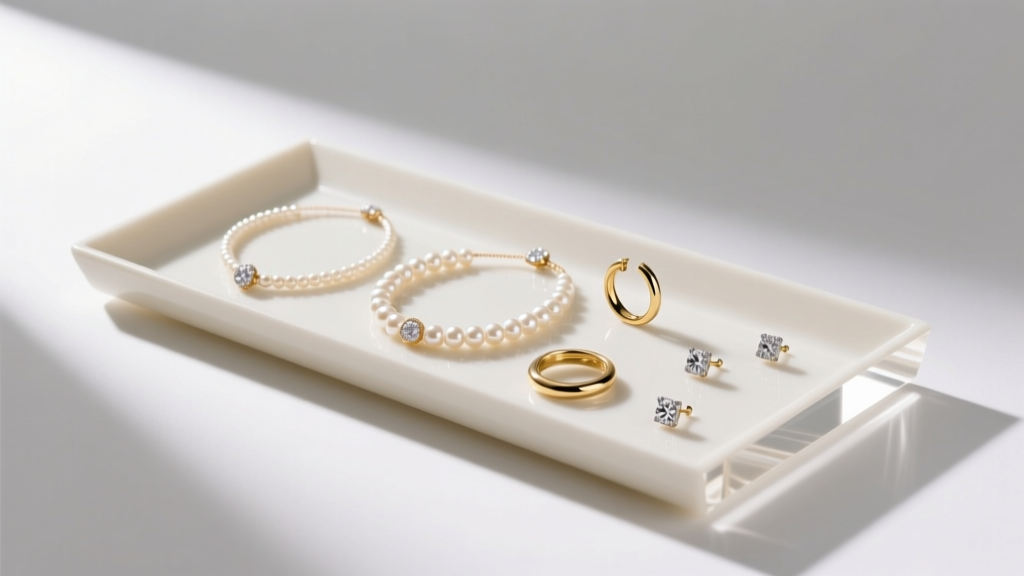
- Rose Gold & Pearls: Requires soft, neutral tones. Off-white linen, blush pink, or warm taupe acrylic prevents color-casting and maintains the delicate warmth of rose gold alloys.
Maintenance and Troubleshooting Common Issues
Even the most expensive necklace tray requires proper maintenance to ensure it continues to protect your jewelry. Here are expert troubleshooting tips for common tray issues:
Crushed Velvet Pile
Over time, heavy pendants will crush the velvet fibers, leaving permanent indentations. To revive the pile, lightly steam the surface using a garment steamer held at least six inches away. While the fibers are warm and damp, gently brush them in a single direction using a soft-bristled suede brush or a clean, dry makeup brush. Never press down; let the bristles lift the fibers naturally.
Acrylic Scratches and Glare
Acrylic trays are prone to micro-scratches from metal clasps. To buff out light surface scratches, use a specialized plastic polish (like Novus No. 2) and a microfiber cloth. When photographing acrylic, angle your light sources at 45 degrees to the tray to eliminate harsh specular highlights (glare) that can wash out the details of your pendants.
Tarnish Prevention in Storage
If you use your necklace tray inside a closed drawer, the tray itself is not enough to prevent oxidation. Always place 3M anti-tarnish strips or activated charcoal sachets in the corners of the drawer, beneath or beside the tray. This neutralizes airborne sulfur compounds before they can reach your silver chains, ensuring your jewelry remains brilliant and ready to wear.
Final Verdict: Building Your Display Setup
Choosing the right necklace tray is an investment in the longevity and presentation of your jewelry. For beginners building their first dedicated display setup, we recommend starting with an 8.5 x 11-inch short-pile velvet tray in a neutral charcoal or navy tone. It offers the safest chemical environment for your metals, provides the necessary friction to keep delicate chains untangled, and serves as a flawless, low-glare backdrop for photographing your favorite pendants. By understanding the nuances of material grades, slant angles, and proper maintenance, you elevate your collection from a tangled mess in a drawer to a curated, gallery-worthy display.


