How to Choose the Perfect Sentimental Granddaughter Necklace
Discover how to choose the perfect granddaughter necklace. Learn about durable metals, chain styles, birthstones, and engraving for a lasting keepsake.

The Anatomy of a Meaningful Granddaughter Necklace
Gifting a granddaughter necklace is a time-honored tradition that bridges generations. Whether you are celebrating a sweet sixteen, a high school graduation, or simply want to remind her of your enduring bond, the right piece of jewelry becomes a wearable heirloom. However, navigating the jewelry market can be overwhelming for beginners. Between deciphering metal hallmarks, understanding chain tensile strength, and selecting gemstones that can survive daily wear, there is a lot of technical ground to cover.
In this comprehensive guide, we break down the exact specifications you need to look for when purchasing a granddaughter necklace. We will move past generic marketing fluff and focus on actionable, expert-level insights regarding metal alloys, clasp mechanics, and gemstone durability to ensure your gift stands the test of time.
Decoding Metal Alloys: Durability vs. Purity
The most common mistake buyers make is assuming that higher gold purity automatically means a better necklace for everyday wear. According to the Federal Trade Commission Jewelry Guides, gold purity is measured in karats, but pure 24k gold is far too soft for a pendant chain that will be worn daily. It will stretch, warp, and lose its shape. Here is how the most common metals stack up for a granddaughter necklace:
| Metal Type | Purity / Composition | Durability Rating | Best Use Case |
|---|---|---|---|
| 14k Yellow Gold | 58.5% Gold, 41.5% Alloy (Copper/Zinc) | Excellent | Everyday wear, highly resistant to bending |
| 18k Yellow Gold | 75% Gold, 25% Alloy | Good | Special occasions, richer color but prone to scratching |
| Sterling Silver (925) | 92.5% Silver, 7.5% Copper | Fair | Budget-friendly, requires regular polishing to prevent tarnish |
| Platinum (950) | 95% Platinum, 5% Ruthenium/Iridium | Superior | Lifetime heirloom, hypoallergenic, develops a patina over time |
Expert Tip: If your granddaughter has sensitive skin or nickel allergies, avoid white gold unless it is specifically rhodium-plated and alloyed with palladium instead of nickel. Platinum and 14k yellow gold are generally the safest bets for reactive skin types.
Chain Mechanics: Selecting the Right Link and Thickness
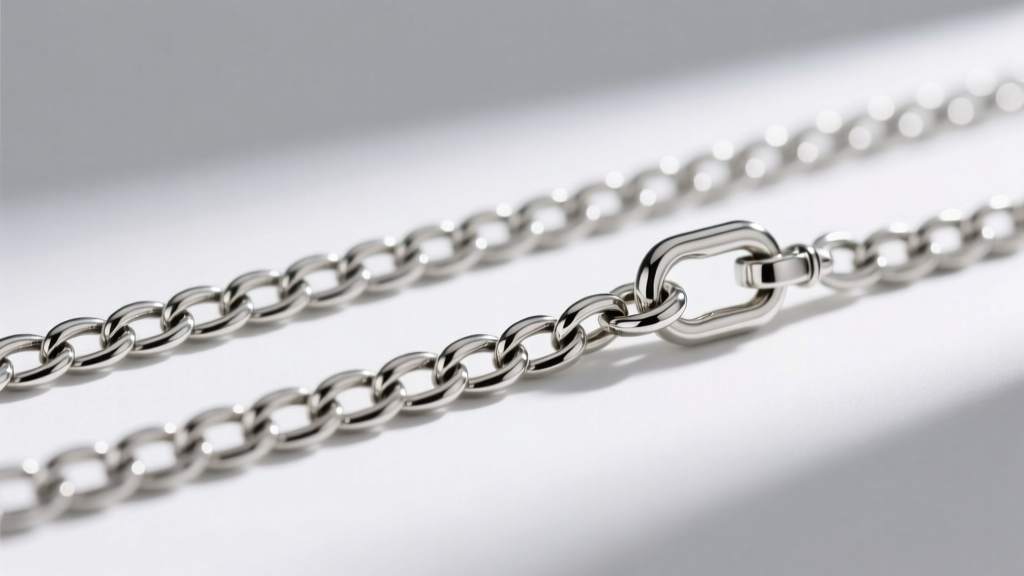
The chain is the structural backbone of any necklace. A beautiful pendant is useless if the chain snaps after a month of wear. When shopping, pay close attention to the millimeter (mm) thickness and the link structure.
Top Chain Styles for Pendants
- Box Chains (1.0mm - 1.5mm): Made of square links connected seamlessly, box chains offer incredible tensile strength. They rarely kink and allow pendants to slide smoothly. A 1.2mm box chain can easily support a 5-gram pendant without stretching.
- Rolo Chains (1.5mm - 2.0mm): Featuring uniform, round interlocking links, rolo chains are exceptionally sturdy and have a classic, vintage appeal. They are thicker and heavier, making them ideal for larger, statement lockets.
- Cable Chains (0.8mm - 1.2mm): The traditional oval-link chain. While delicate and feminine, cable chains under 1.0mm are prone to kinking and snapping if pulled. Reserve these for very lightweight, minimalist pendants.
The Clasp: Where Chains Fail
Never settle for a spring-ring clasp on a sentimental piece. The tiny internal spring mechanism frequently loses tension, causing the necklace to slip off unnoticed. Always opt for a lobster clasp. Lobster clasps feature a self-closing trigger mechanism that is far more secure and easier to manipulate. For granddaughters with dexterity issues, a high-quality magnetic neodymium clasp is an accessible alternative, though it should not be used on heavy pendants.
Pendant Styles and Gemstone Durability
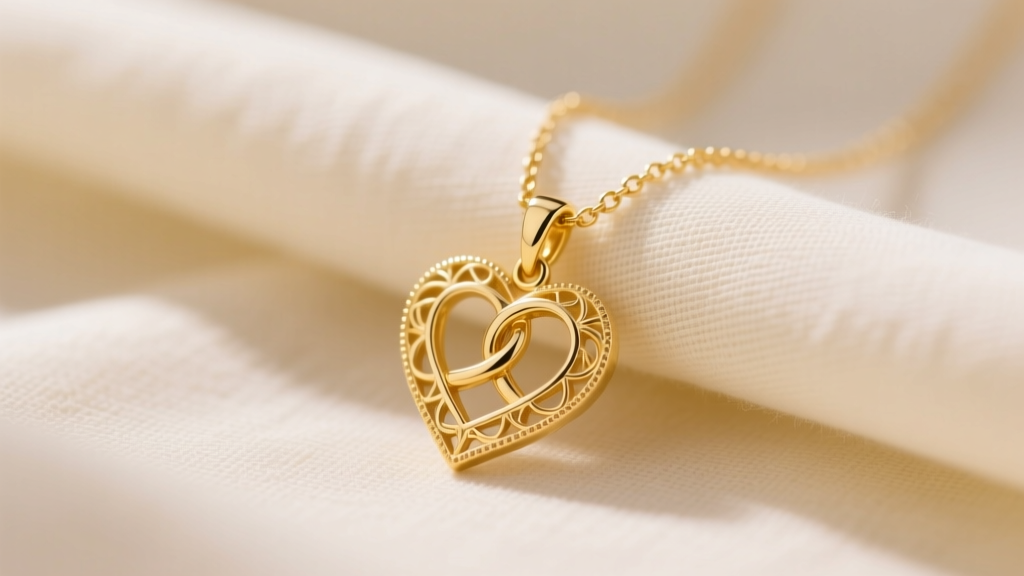
The pendant is the emotional core of the necklace. Popular motifs include interlocking hearts (symbolizing an unbreakable bond), infinity knots, and personalized birthstones. If you choose a birthstone necklace, you must consider the gemstone's hardness on the Mohs scale to ensure it survives daily wear.
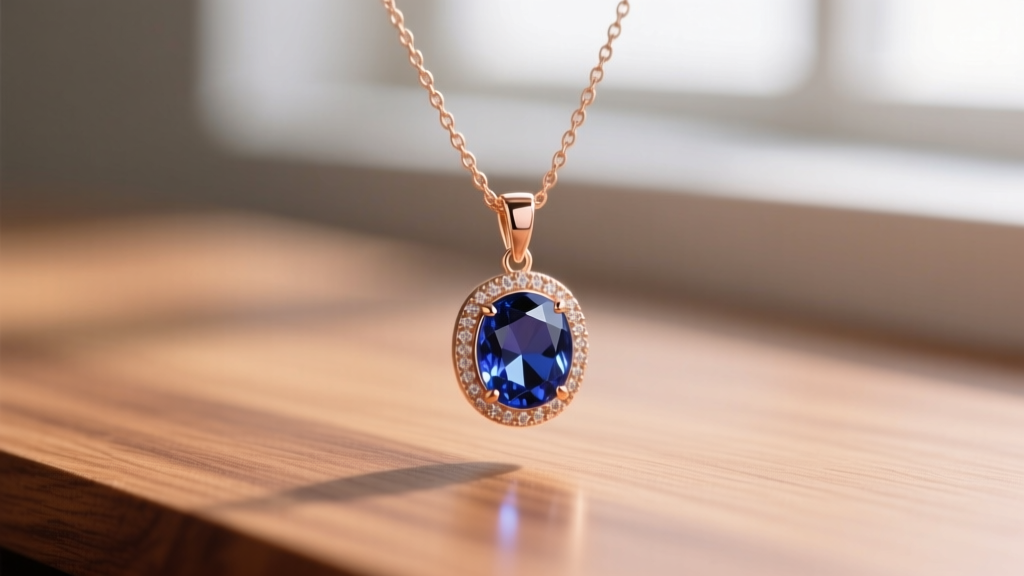
The Gemological Institute of America (GIA) emphasizes that stones with a Mohs hardness below 7 are highly susceptible to scratching from everyday dust (which contains quartz particles). Here is a quick durability guide for popular birthstones:
- Sapphire (September - Mohs 9): Exceptional for everyday wear. Highly scratch-resistant and tough.
- Ruby (July - Mohs 9): Equally durable as sapphire, perfect for active lifestyles.
- Amethyst (February - Mohs 7): Borderline for daily wear. Requires a protective bezel setting to prevent edge chipping.
- Opal (October - Mohs 5.5-6.5): Very fragile and sensitive to temperature changes. Best reserved for occasional wear or kept in a protective bezel with a hard backing.
Jeweler's Insight: Always choose a bezel setting (where a metal rim completely encircles the gemstone's girdle) over a prong setting for a granddaughter's everyday birthstone necklace. Prongs can catch on clothing and bend, exposing the stone to impacts that a bezel would easily absorb.
Sizing and Length: Getting the Fit Right
Necklace length drastically alters how the pendant sits on the chest and interacts with different necklines. While you can always add an extender chain later, starting with the correct base length ensures immediate comfort.
- 16 Inches (Choker Length): Sits snugly at the base of the neck. Best for younger teenagers or minimalist pendants worn with crew-neck tops.
- 18 Inches (Princess Length): The industry standard. Rests perfectly on the collarbone and works with almost every neckline, from V-necks to scoop necks. If you are unsure of her preference, 18 inches is the safest choice.
- 20 to 22 Inches (Matinee Length): Falls below the collarbone, resting on the upper chest. Ideal for layering over sweaters or pairing with larger, heavier lockets.
Advanced Personalization: Laser vs. Rotary Engraving
Engraving transforms a beautiful piece of jewelry into a one-of-a-kind heirloom. According to master jewelers at Jewelers of America, the method of engraving dictates what is physically possible on the metal's surface.
Rotary Engraving: This traditional method uses a spinning diamond-tipped bit to carve into the metal. It is limited to standard block or script fonts and requires a relatively flat, wide surface area. It is deep and highly durable but lacks fine detail.
Laser Engraving: Modern fiber lasers can achieve a line width as narrow as 0.1mm. This allows for incredible personalization, including:
- Replicating a grandparent's actual handwriting from a handwritten note.
- Etching a high-resolution fingerprint onto the back of a solid gold disc pendant.
- Creating intricate topographical maps or minimalist line-art portraits.
When opting for laser engraving, ensure the pendant is made of solid metal rather than gold-plated brass. Lasers will burn right through the microscopic plating layer, exposing the base metal underneath and leading to rapid oxidation and green skin discoloration.
Final Checklist Before You Buy
Before finalizing your purchase, run through this quick quality-assurance checklist to guarantee you are getting a piece worthy of becoming a family heirloom:
- Verify the metal hallmark (e.g., 14k, 585, 925, PT950) is stamped on the clasp or pendant bail.
- Ensure the chain thickness is at least 1.0mm for structural integrity.
- Confirm the clasp is a lobster style, not a spring ring.
- Check that any gemstones are set in protective bezels if the Mohs hardness is below 8.
- Request a 2-inch extender chain to provide styling versatility.
By focusing on these structural and material details, you will select a granddaughter necklace that is not only deeply sentimental but also engineered to survive the beautiful, chaotic reality of her everyday life.


