Chrome Cross Necklace Value Guide: Pricing & Materials
Discover the true value of a chrome cross necklace. We break down material grades, pricing tiers, and durability to help you avoid cheap plated fakes.


The "Chrome" Misconception: What Are You Actually Buying?
The resurgence of Y2K and grunge aesthetics has firmly planted the chrome cross necklace back into the mainstream jewelry market. However, from a metallurgical and value-assessment perspective, the term "chrome" is heavily misused by fast-fashion brands and dropshippers. True chromium plating—a hard, brittle finish achieved through electroplating—is rarely used for direct-to-skin jewelry today due to the high risk of allergic contact dermatitis caused by the necessary nickel underplates. According to the American Academy of Dermatology, nickel is the most common contact allergen, and vintage-style chrome plating often traps nickel salts that leach into the skin when exposed to sweat.
When you shop for a modern chrome cross necklace in 2026, you are almost certainly looking at one of three alternative materials designed to mimic that liquid-mirror aesthetic: Physical Vapor Deposition (PVD) coated stainless steel, highly polished 316L surgical steel, or rhodium-plated sterling silver. Understanding which of these materials you are actually purchasing is the single most critical factor in assessing the necklace's true value and lifespan.
Material Breakdown & Value Tiers
To accurately assess whether a chrome cross necklace is priced fairly, you must look past the marketing copy and identify the base metal and the finishing technique. The Federal Trade Commission (FTC) Jewelry Guides strictly regulate how metals and platings can be described, yet many overseas manufacturers bypass these rules. Below is a breakdown of the materials commonly sold under the "chrome" umbrella.
| Material Composition | Finish Type | Expected Lifespan | Hypoallergenic? | Fair Market Value |
|---|---|---|---|---|
| Zinc Alloy (Zamak) or Brass | Flash Chrome/Nickel Plating | 1 - 6 Months | No (High Allergy Risk) | $8 - $18 |
| 316L Surgical Stainless Steel | Mirror Polish or PVD Chrome | 5 - 10+ Years | Yes (Mostly) | $35 - $75 |
| 925 Sterling Silver | Rhodium Plating | Lifetime (with replating) | Yes | $85 - $160+ |
If a retailer is charging $60 for a pendant that is cast from zinc alloy and merely flash-plated with a chrome-colored finish, you are severely overpaying. Zinc alloy is porous and heavy; when the micro-thin plating inevitably wears off at the high-friction edges of the cross, the base metal will oxidize rapidly, leaving a green or black residue on your skin.
Assessing the Price: How Much Should You Pay?
Budgeting for a chrome cross necklace requires aligning your expectations with the manufacturing realities of the piece. Here is a practical pricing framework to help you spot inflated markups and genuine bargains.
The Fast-Fashion Trap ($10 - $25)
In this bracket, you are paying for the design, not the metallurgy. These necklaces feature a brass or Zamak base. The "chrome" finish is usually a microscopic layer of nickel and chromium. While they look stunning on day one, the galvanic corrosion caused by the acidity of human sweat will break down the plating within weeks of daily wear. Value Verdict: Poor. Only buy for temporary costume use or photography props.
The Sweet Spot: 316L Stainless Steel ($35 - $75)
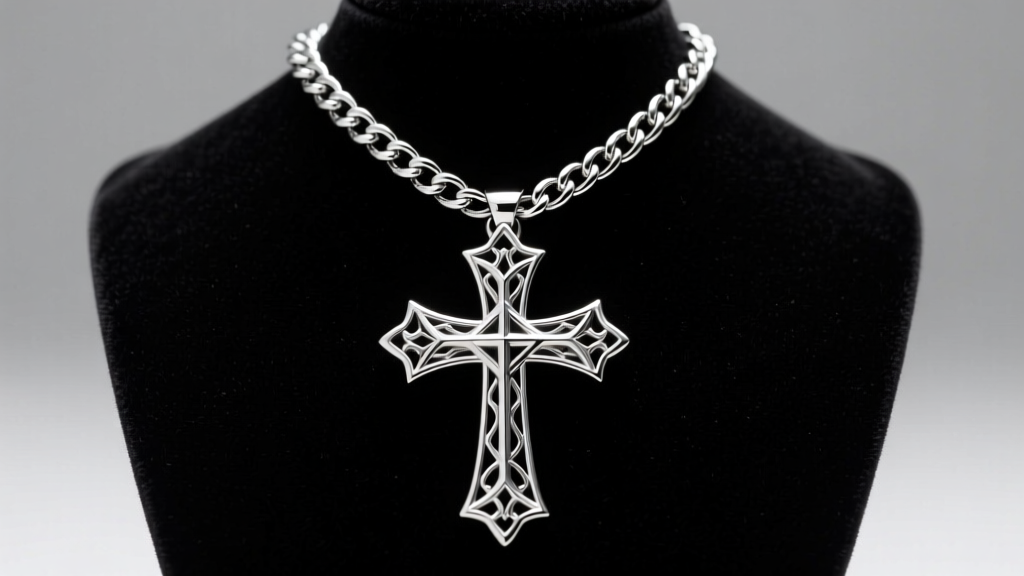
This is where the true value lies for the chrome aesthetic. 316L stainless steel contains molybdenum, which provides exceptional resistance to chloride corrosion (i.e., sweat and saltwater). When polished to a mirror finish or coated with a dark PVD chrome layer, it perfectly replicates the heavy, liquid-metal look without the allergy risks. A high-quality 316L cross pendant on a matching 3mm Cuban curb chain should cost around $55. Value Verdict: Excellent. This is the optimal intersection of durability, aesthetics, and price.
The Luxury Alternative: Rhodium-Plated Silver ($85 - $160)
Some high-end jewelers use solid 925 sterling silver and plate it with rhodium—a platinum-group metal that provides a blinding, scratch-resistant white-chrome finish. While beautiful, rhodium eventually wears thin on the high points of the cross, requiring professional replating every few years. Value Verdict: Moderate. You are paying for precious metal intrinsic value, but the maintenance costs are higher than PVD steel.

Durability & Failure Modes: When Budget Pieces Fail
When conducting a value assessment, it is crucial to understand exactly how cheaper alternatives fail. A genuine 316L stainless steel cross will survive a decade of daily wear, showering, and swimming without losing its structural integrity. Budget pieces, however, suffer from specific, predictable failure modes.
- Edge Wear and Peeling: The sharp, beveled edges of a cross pendant endure the most friction against clothing and skin. Flash-plated pieces will show brass or copper bleeding through these edges within 30 to 60 days of continuous wear.
- Clasp Degradation: The spring-ring or lobster clasp on cheap necklaces is often made of lower-grade alloys. The internal steel spring can rust when exposed to humidity, causing the clasp to seize or snap unexpectedly, leading to the loss of the pendant.
- PVD Delamination: If a stainless steel piece is PVD coated but not properly pre-cleaned in an ultrasonic bath during manufacturing, the chrome-colored coating will flake off in microscopic sheets, creating a patchy, diseased appearance on the metal's surface.
"The weight of the pendant is a reliable tell. A solid 316L stainless steel cross of standard proportions (approx. 30mm x 20mm) should feel distinctly heavy and cold to the touch. If it feels unusually light or warms to your skin instantly, it is likely hollow-cast zinc or aluminum disguised with a chrome finish."
Inspection Framework: Verifying Your Purchase
Whether you are shopping online or inspecting a piece in a brick-and-mortar boutique, use this three-step framework to verify the material and ensure you are getting fair value for your money.
- Check the Hallmarks: Look for a laser-engraved "316L", "STAINLESS", or "925" stamp on the back of the cross or the base of the clasp. Fast-fashion brands rarely stamp their zinc alloy pieces because the FTC prohibits stamping base metals with precious or surgical metal indicators.
- The Magnet Test (With Caveats): While austenitic 316L stainless steel is generally non-magnetic, the cold-working process used to bend the wire for the chain's jump rings can introduce a slight magnetic pull. However, if the pendant itself strongly attracts a neodymium magnet, it is likely a cheap carbon steel core plated in chrome, which will eventually rust from the inside out.
- Examine the Jump Ring: Inspect the loop connecting the pendant to the chain. High-value manufacturers use soldered jump rings or thick, tightly closed split rings. Budget manufacturers use loosely twisted wire that will easily pull apart under the weight of a heavy cross pendant.
The Final Verdict: Is It Worth Your Money?
The chrome cross necklace remains an iconic, versatile staple in modern jewelry layering. However, its value is entirely dependent on the metallurgy hiding beneath the mirror finish. If you are spending under $25, accept that you are buying a temporary fashion accessory that will degrade rapidly. If you are investing $40 to $75 in a solid 316L surgical steel piece with a mirror polish or high-quality PVD coating, you are acquiring a highly durable, hypoallergenic garment that will retain its striking aesthetic for years. Always prioritize material transparency over brand hype, and never pay premium prices for base-metal illusions.


