Material Guide: Choosing the Perfect Chunky Flower Necklace
Compare acrylic, enamel, and solid metals for your chunky flower necklace. Learn about weight, durability, and skin safety in our material guide.

The Weight Factor: Why Material Density Matters in Statement Florals
When navigating the market for a chunky flower necklace, aesthetic appeal is only half the equation. The sheer volume of a bold, oversized floral pendant—often spanning 40mm to 70mm in diameter—means that the base material's specific gravity will directly dictate the piece's wearability. A pendant that looks stunning on a display bust can quickly become a neck-straining burden if cast in a dense metal without structural considerations.
In jewelry design, we measure material density in grams per cubic centimeter (g/cm³). For context, acrylic polymers sit at roughly 1.18 g/cm³, while brass is around 8.4 g/cm³, and solid sterling silver is 10.49 g/cm³. If a designer creates a 50mm wide, 12mm thick daisy pendant in solid silver, the final piece can easily exceed 60 grams. This concentrated weight causes the chain to pull against the cervical spine, leading to fatigue and accelerated wear on the chain links. Understanding the metallurgical and chemical properties of your chosen material is essential for balancing visual impact with physical comfort.
Material Breakdown: Acrylic, Enamel, and Solid Metals
The modern chunky flower necklace is typically fabricated using one of three primary material categories. Each presents unique advantages, failure modes, and price points that cater to different lifestyles and budgets.
UV-Cured Resin and Acrylic Polymers (PMMA)
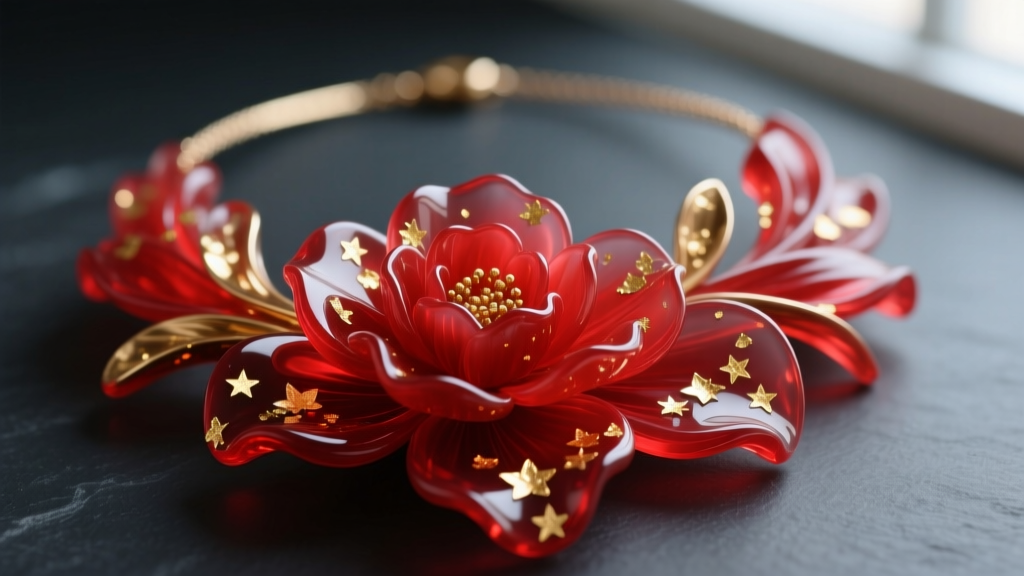
For maximum volume with minimal weight, jewelers turn to Polymethyl methacrylate (PMMA) or UV-cured epoxy resins. These materials allow for extreme 3D sculpting, enabling deep, organic petal textures that would be cost-prohibitive in solid gold. Acrylic is roughly one-eighth the weight of silver, making a massive 60mm resin orchid pendant weigh a mere 8 to 12 grams.
However, acrylics are soft, registering only a 3 on the Mohs hardness scale. They are highly susceptible to micro-scratching from daily friction against clothing. Furthermore, lower-grade resins are prone to photo-degradation; prolonged exposure to UV light can cause transparent or pale yellow floral pieces to yellow and become brittle over a 3-to-5-year period. Always look for pieces made with UV-stabilized optical-grade resins to mitigate this failure mode.
Vitreous Enamel over Brass or Copper Bases
Enamel offers the vibrant, opaque color blocking necessary for striking floral designs. True vitreous enamel is essentially fused glass, fired at temperatures exceeding 1,400°F (760°C). It boasts a Mohs hardness of 5 to 6, making it highly resistant to scratching. According to the Gemological Institute of America (GIA), vitreous enamel retains its color indefinitely and will not fade under sunlight.
The critical vulnerability lies in the base metal and the glass-to-metal bond. Because enamel is rigid and the brass base is slightly flexible, a hard impact (such as dropping the necklace on a tile floor) can cause the enamel to shatter or pop out of its cloisonné or champlevé settings. Additionally, if the brass base is not properly sealed with a rhodium or palladium barrier plating, the copper and zinc in the brass will react with skin acids, leaving a green residue on the wearer's chest.
Solid 925 Sterling Silver and 14k Gold
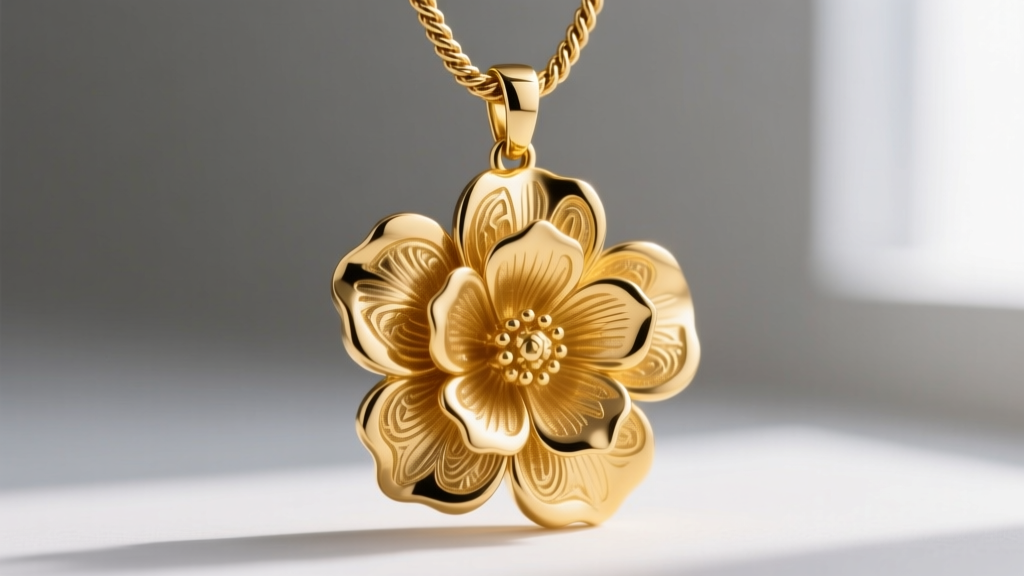
For heirloom-quality floral jewelry, solid metals are the standard. 925 Sterling Silver (92.5% silver, 7.5% copper) offers a brilliant luster but requires maintenance. The copper alloy is necessary to provide structural hardness, but it is also the catalyst for tarnish (silver sulfide formation) when exposed to atmospheric sulfur and humidity.
14k Gold (58.5% pure gold alloyed with metals like zinc, silver, and copper) provides superior tarnish resistance and structural integrity. When casting a chunky flower necklace in solid gold, jewelers must carefully manage the cooling process to prevent internal porosity—tiny air bubbles trapped inside thick metal sections that can weaken the pendant and cause surface pitting after polishing. While the initial investment is significantly higher, solid metals can be endlessly repolished and repaired, unlike resin or enamel.
Comparative Data: Density, Cost, and Allergen Profiles
The following table synthesizes the core material properties to help you make an informed purchasing decision based on your specific needs and sensitivities.
| Material | Approx. Density (g/cm³) | Mohs Hardness | Avg. Price Range (50mm Pendant) | Primary Failure Mode |
|---|---|---|---|---|
| UV-Cured Resin / Acrylic | 1.18 - 1.20 | 3.0 | $45 - $120 | Surface scratching, UV yellowing |
| Vitreous Enamel on Brass | 8.40 (Base Metal) | 5.0 - 6.0 (Enamel) | $150 - $350 | Shattering on impact, base metal oxidation |
| 925 Sterling Silver | 10.49 | 2.5 - 3.0 | $200 - $450 | Sulfide tarnishing, structural bending |
| Solid 14k Yellow Gold | 13.00 - 14.00 | 3.5 - 4.0 | $800 - $2,500+ | Prong/bail wear over decades |
Hardware and Chain Gauges: Supporting the Chunky Bloom
A common mistake when buying a heavy, oversized floral pendant is underestimating the hardware required to support it. The physical forces exerted by a 40-gram chunky pendant during normal movement (walking, bending) create dynamic loads that can snap inadequate chains and clasps.
Minimum Chain Thickness and Clasp Mechanics
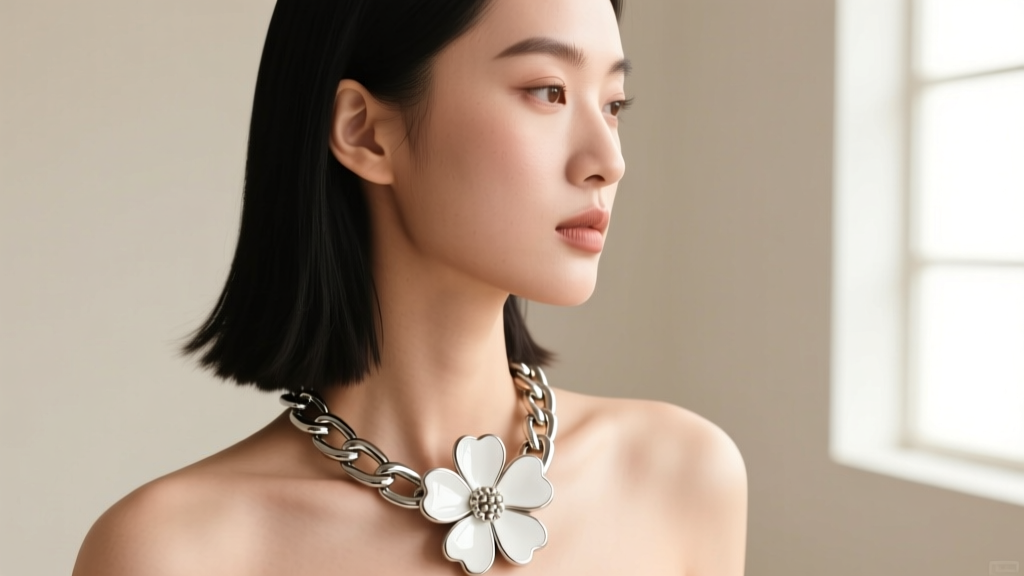
For any chunky flower necklace weighing over 25 grams, a standard 1.0mm or 1.5mm cable chain is structurally insufficient. The bail (the loop connecting the pendant to the chain) will act like a saw, gradually wearing through the soft links of a thin chain. You must opt for a chain with a minimum thickness of 2.5mm, ideally stepping up to 3.5mm or 4.0mm for solid silver or gold pieces. Cuban link, thick rope, or Figaro chains provide the necessary tensile strength and visual balance to match the scale of the floral pendant.
Similarly, spring-ring clasps are a critical point of failure for heavy jewelry. The internal spring mechanism in a standard 5mm spring ring will easily fatigue and fail under the constant tension of a heavy pendant. Always ensure your necklace is finished with a minimum 12mm lobster clasp or, preferably, a mechanical box clasp with a figure-eight safety catch. The Federal Trade Commission (FTC) Jewelry Guides mandate strict standards for metal stamping and quality, ensuring that when you buy a stamped 14k chain, it possesses the metallurgical integrity to support heavy loads without snapping.
Care and Degradation: Real-World Failure Modes
Maintaining a statement floral piece requires understanding how environmental factors interact with its specific material. According to Jewelers of America, improper cleaning is a leading cause of jewelry degradation.
- Acrylic/Resin: Never clean resin with alcohol-based solutions or commercial jewelry dips. The solvents will break down the polymer chains, causing the surface to cloud and craze. Use only mild dish soap and a microfiber cloth.
- Enamel: Avoid ultrasonic cleaners. The high-frequency vibrations can fracture the glass-to-metal bond, causing the colored enamel to detach from the brass base.
- Sterling Silver: Store in anti-tarnish cloth bags (impregnated with silver nitrate or zinc carbonate) to absorb atmospheric sulfur. Do not wear in chlorinated pools, as chlorine reacts with the copper alloy to cause irreversible pitting.
- Gold Vermeil vs. Plated: If your floral pendant is gold over silver (vermeil), ensure the gold layer is at least 2.5 microns thick. Thinner flash-plating will wear off the high-friction petal edges within months, exposing the silver beneath.
Final Verdict: Matching Material to Your Lifestyle
Selecting the right chunky flower necklace is an exercise in balancing scale, budget, and material science. If you prioritize lightweight comfort and vibrant, trend-driven colors for occasional wear, UV-stabilized acrylic or cold enamel pieces offer the best volumetric impact without the neck strain. For those seeking a daily-wear heirloom that can withstand the rigors of an active lifestyle, investing in a solid 14k gold or heavy 925 sterling silver piece—properly supported by a 3.5mm chain and a robust lobster clasp—ensures your statement floral jewelry remains structurally sound and visually stunning for decades.


