Anatomy of a Chunky Gold Charm Necklace: Expert Guide
Explore the metallurgy, chain gauges, and structural engineering behind a high-quality chunky gold charm necklace in this expert technical guide.

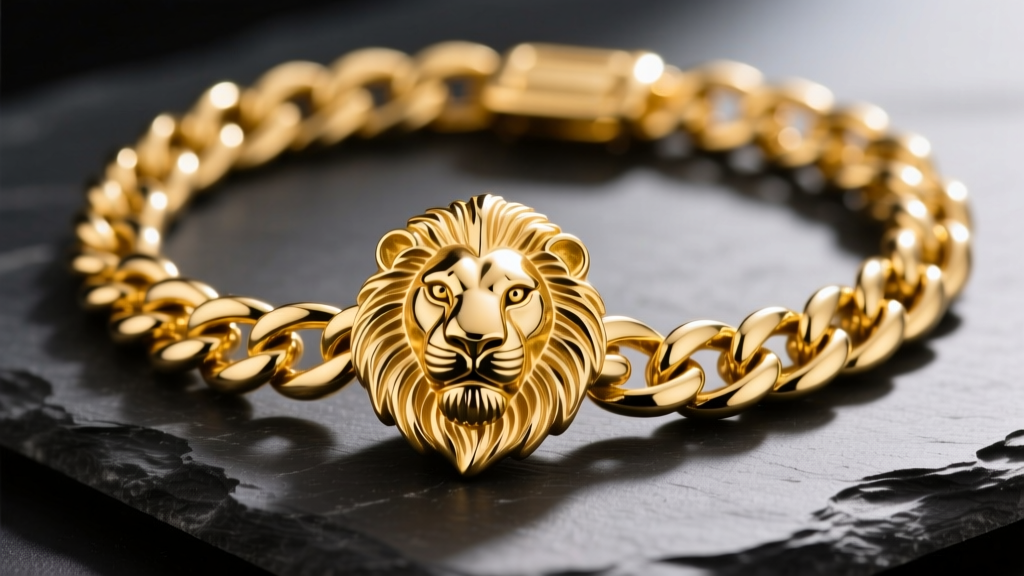
The Engineering Behind the Aesthetic
In the contemporary jewelry landscape of 2026, the chunky gold charm necklace has transcended fleeting trends to become a permanent fixture in fine jewelry wardrobes. However, beneath the high-polish finishes and intricate charm designs lies a complex matrix of metallurgical science and structural engineering. When a heavy gold charm is suspended from a thick chain, the resulting piece is not merely an accessory; it is a dynamic load-bearing system. Every time the wearer moves, the charm acts as a pendulum, generating centripetal force that places immense tensile stress on the chain links, the bail, and the clasp.
Mass-market jewelry often fails to account for these physics, resulting in stretched links, warped jump rings, and catastrophic clasp failures. As an expert in jewelry fabrication and structural integrity, I will deconstruct the anatomy of a high-quality chunky gold charm necklace, providing you with the technical specifications required to evaluate, purchase, and maintain a piece that will endure for generations.
Metallurgy: Vickers Hardness and Alloy Selection
The term "gold" is inherently imprecise. Pure 24k gold is far too malleable for structural jewelry, possessing a Vickers Hardness (HV) of merely 70. To create a durable chunky gold charm necklace, jewelers must alloy the gold with metals like copper, silver, and zinc. The karat weight you choose directly dictates the tensile strength of the chain and the charm's jump ring.
The 14k vs. 18k Structural Debate
While 18k gold (75% pure gold) is prized for its rich, buttery color and hypoallergenic properties, it sits at approximately 120-130 HV. This makes it susceptible to micro-stretching over time when subjected to the constant pull of a 30-gram charm. Conversely, 14k gold (58.5% pure gold) achieves a Vickers Hardness of 140-160 HV, depending on the specific copper-to-silver ratio used by the refiner. For the structural components of a heavy necklace—specifically the jump rings, the clasp, and the chain links—14k gold offers superior resistance to deformation.
"When engineering a heavy charm necklace, we often recommend a hybrid approach: casting the decorative charm in 18k for optimal color and detail resolution, while fabricating the structural chain and hardware in 14k to maximize tensile yield strength."
According to the Gemological Institute of America (GIA), the specific alloy mix also affects the gold's brittleness. High-copper 14k alloys (often seen in rose gold) can become brittle if not properly annealed during the drawing process of the chain wire. Always inquire if the chain wire was drawn and annealed correctly to prevent microscopic stress fractures.
Chain Architecture: Link Width vs. Wire Gauge
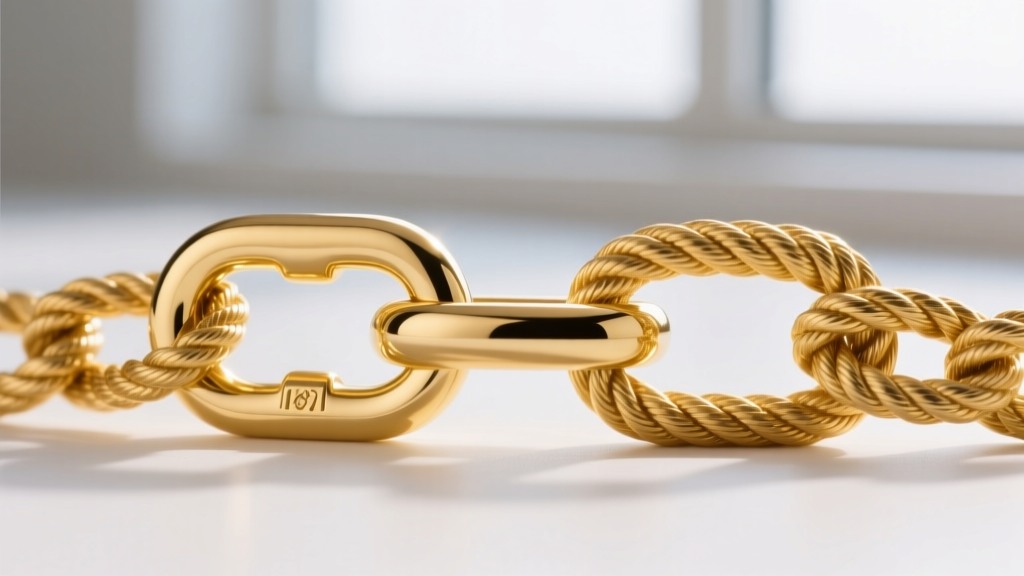
The most common trap consumers fall into when purchasing a chunky gold charm necklace is confusing link width with wire gauge. A chain can be 8mm wide but constructed from paper-thin 0.4mm wire if it is "hollow" or "semi-solid." When a heavy charm swings against a hollow Cuban link, the thin gold walls will easily dent, crush, and eventually snap.
For a true heirloom-quality piece, you must evaluate the chain based on its solid wire gauge. A robust chain for a heavy charm should have a minimum wire thickness of 1.2mm to 1.5mm, regardless of the overall visual width of the link.
Chain Link Styles and Weight-Bearing Capacities
Not all link patterns distribute weight equally. The geometry of the link dictates how it handles the multi-directional pull of a swinging charm.
| Chain Style | Structural Integrity | Max Recommended Charm Weight (Solid 4mm) | Failure Mode |
|---|---|---|---|
| Cuban Link | High (if solid/square-wire) | 35 - 45 grams | Link stretching at the apex |
| Rope Chain | Very High (multi-wire twist) | 50+ grams | Unraveling if a single wire snaps |
| Figaro | Moderate (uneven link sizing) | 20 - 25 grams | Stress concentration on small links |
| Curb Link | High (flat interlocking) | 30 - 40 grams | Flattening and twisting under torque |
As noted by industry standards from Jewelers of America, the Rope chain remains the gold standard for heavy pendants and charms due to its multi-wire twisted geometry, which distributes tensile stress across multiple axes rather than a single fulcrum point.
The Weakest Link: Clasp Engineering and Jump Ring Soldering
You can invest in a 100-gram solid gold chain and a masterfully cast charm, but if the clasp is inadequate, the necklace will be lost. Standard spring-ring clasps are engineered for lightweight chains and will fail catastrophically under the dynamic load of a chunky charm.
Clasp Mechanisms for High-Grammage Pieces
- Heavy-Duty Lobster Clasp: A solid 12mm x 7mm lobster clasp with a reinforced internal spring is the minimum requirement for necklaces weighing over 25 grams.
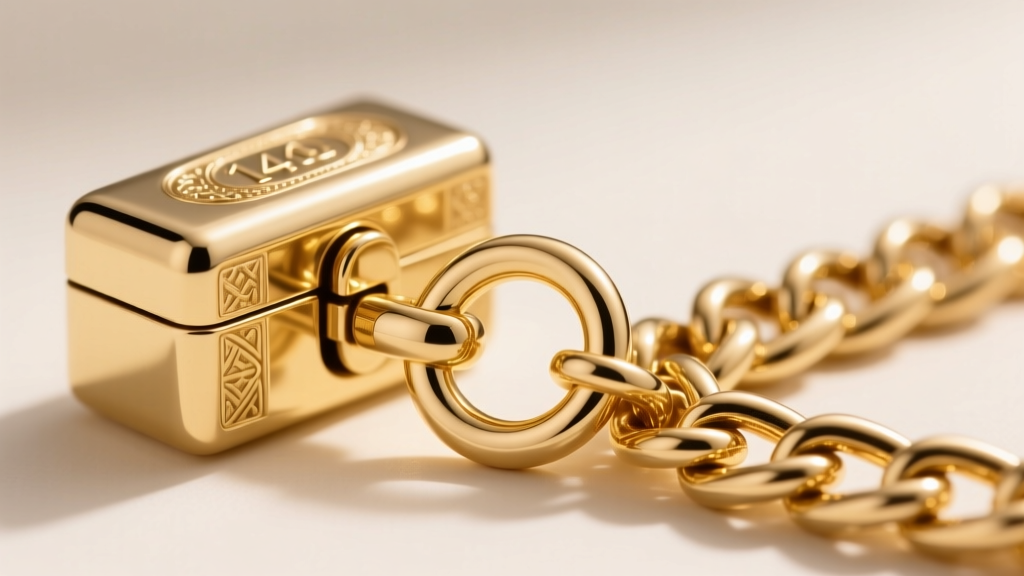
- Locking Box Clasp: The premier choice for ultra-chunky necklaces (50g+). It features a friction-fit tongue that slides into a boxed housing, secured by a secondary figure-8 safety wire. This mechanism completely bypasses spring tension, relying on mechanical locking.
- Magnetic Clasps: Generally discouraged for heavy charms. While neodymium magnets are strong, the lateral shearing force generated by a swinging charm can easily slide the magnets apart.
Jump Ring Soldering: Laser vs. Torch
The jump ring connecting the charm to the chain is the most vulnerable point of failure. An unsoldered jump ring will inevitably pull apart as the charm twists and turns. In modern 2026 jewelry fabrication, laser welding has largely superseded traditional torch soldering for jump rings. Laser welding allows the jeweler to fuse the exact seam of the jump ring with a microscopic beam of light, melting the gold without heating the surrounding chain links. This preserves the temper and hardness of the adjacent links, preventing the annealing (softening) that occurs with traditional torch soldering.
Weight Distribution and Bail Design
How the charm attaches to the chain is just as critical as the chain itself. The bail (the loop on top of the charm) must be proportionate to the chain's thickness. A common error is pairing a 5mm Cuban chain with a charm that has a narrow, 2mm bail. This creates severe friction, acting like a saw that will slowly grind through the bail or the chain link over time.
For a chunky chain, the charm must feature an oversized, reinforced bail, ideally lined with a hardened steel or platinum insert if the design permits, to prevent the softer gold of the chain from wearing away the gold of the bail. Furthermore, the charm's center of gravity should be calibrated so that it hangs perfectly perpendicular to the floor; an off-balance charm will constantly twist, accelerating wear on the jump ring.
The Expert's Purchasing Checklist
Before acquiring a chunky gold charm necklace, run the piece through this technical checklist to ensure you are investing in structural integrity rather than just visual mass:
- Verify Solid Construction: Tap the chain against a hard surface. Hollow chains produce a high-pitched, tinny ping, while solid chains emit a dull, heavy thud.
- Inspect the Jump Ring: Use a jeweler's loupe (10x magnification) to examine the seam of the charm's jump ring. Look for a clean, flush laser weld with no visible solder seams or gaps.
- Test the Clasp Action: The clasp should require deliberate, firm pressure to open. If it opens too easily, the internal spring tension is insufficient for the necklace's total weight.
- Check the Hallmarks: Ensure the chain, the clasp, and the charm all bear independent karat hallmarks (e.g., 14K, 585) and a maker's mark, verifying accountability in the manufacturing process.
By prioritizing metallurgical hardness, precise wire gauges, and advanced mechanical clasps, you elevate your jewelry from a mere fashion statement to a masterclass in wearable engineering. A properly constructed chunky gold charm necklace is an investment in both art and physics, designed to withstand the rigors of daily wear while maintaining its structural brilliance for decades.


