Silver Starfish Necklace Value: Pricing & Quality Guide
Discover the true value of a silver starfish necklace. We break down 925 sterling pricing tiers, manufacturing quality, and how to avoid overpaying.

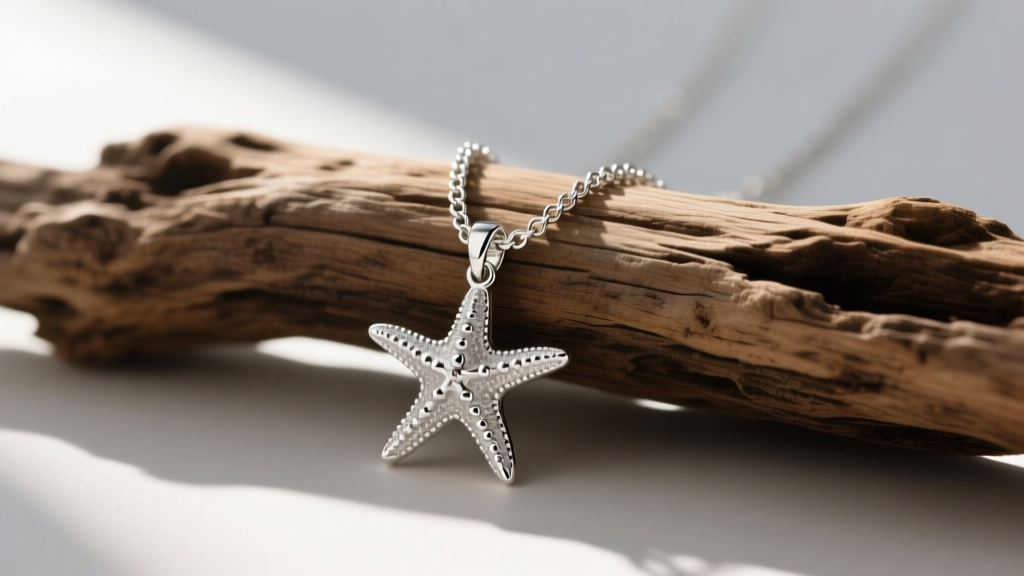
The True Cost of Coastal Jewelry: Decoding Silver Starfish Necklaces
The silver starfish necklace has cemented itself as a staple in coastal, bohemian, and everyday minimalist wardrobes. However, the market is flooded with options ranging from $12 to $250, leaving many buyers wondering what they are actually paying for. As of 2026, with silver spot prices experiencing notable volatility, understanding the intrinsic and structural value of your jewelry is more critical than ever. This guide strips away the marketing fluff to provide a rigorous budget and value assessment of silver starfish necklaces, helping you distinguish between genuine heirloom-quality pieces and overpriced fast fashion.
When evaluating a silver starfish necklace, the price tag is dictated by three primary factors: metallurgical purity, manufacturing methodology, and chain hardware quality. By analyzing these components, you can accurately assess whether a retailer's markup is justified or if you are simply paying for a brand name.
Material Grades: 925 Sterling vs. Plated vs. Fine Silver
The foundation of any silver jewelry's value lies in its alloy composition. Pure silver is too malleable for intricate jewelry, meaning it must be alloyed for durability. According to the Gemological Institute of America (GIA), the standard for fine jewelry is Sterling Silver, but the market is rife with misleading terminology.
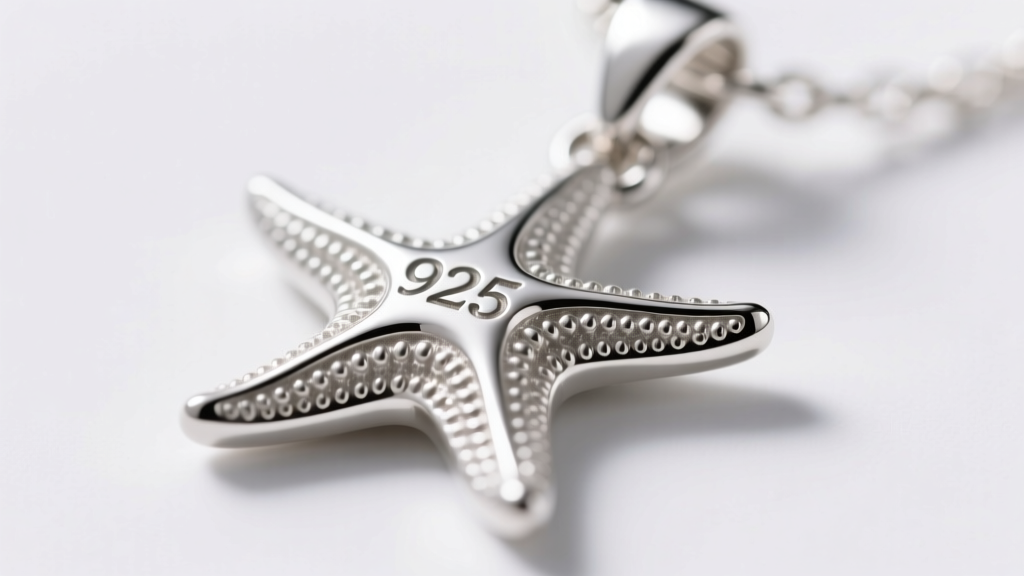
- 925 Sterling Silver: Composed of 92.5% pure silver and 7.5% alloy (usually copper). This is the gold standard for starfish pendants. The copper provides the necessary tensile strength to prevent the delicate arms of the starfish from bending or snapping. A genuine 925 piece holds intrinsic melt value and can be polished indefinitely.
- Fine Silver (999): While technically more 'pure', 999 silver is rarely used for detailed starfish pendants. It is too soft, meaning the intricate textures and delicate tips of the starfish arms would quickly deform with daily wear. If a vendor claims a highly detailed starfish is 999 fine silver, be highly skeptical.
- Silver-Plated & Silver-Filled: These pieces feature a base metal core (usually brass or copper) coated with a microscopic layer of silver. Plated items typically have less than 0.5 microns of silver. Once this layer wears off on the high-friction edges of the starfish, the piece is ruined. These hold zero intrinsic melt value.
Manufacturing Methods and Their Impact on Price
How the starfish is formed drastically affects both the retail price and the long-term durability of the necklace. The Silver Institute notes that different fabrication techniques alter the grain structure of the metal, which directly impacts how the jewelry withstands physical stress.
| Method | Process Overview | Durability & Quality | Expected Price Premium |
|---|---|---|---|
| Die-Struck | High-pressure machines stamp the starfish from a sheet of 925 silver. | Exceptional. Compresses the metal grain, making the delicate arms highly resistant to bending. | Low to Moderate (Best Value) |
| Cast (Lost-Wax) | Molten silver is poured into a mold created from a wax carving. | Good, but prone to porosity (tiny air pockets) if done cheaply, which weakens the starfish tips. | Moderate (Allows for 3D/puffy designs) |
| Hand-Fabricated | An artisan saws, files, and solders sheet silver and wire by hand. | Variable. Highly unique, but structural integrity depends entirely on the jeweler's soldering skill. | High (Labor-intensive) |
Pricing Tiers: What Should You Actually Pay?
To conduct a proper value assessment, we must look at the raw material costs. As of early 2026, with silver spot prices hovering near $32 per troy ounce, the raw material cost of a typical 5-gram solid 925 starfish pendant is roughly $5.50. Factoring in wholesale manufacturing, packaging, and standard retail markups, here is what you should expect to pay:
Tier 1: Fast Fashion & Plated ($12 - $28)
At this price point, you are almost certainly buying brass or copper with a flash silver plating. The chains are typically hollow and prone to snapping. Value Verdict: Poor. The cost-per-wear is high because the plating will inevitably wear off, turning your skin green and rendering the necklace unwearable within a few months.
Tier 2: Mass-Market Solid 925 Sterling ($35 - $75)
This is the sweet spot for value. You are paying for genuine 925 sterling silver, usually die-struck or well-cast, paired with a decent cable or rolo chain. Brands in this tier operate on volume, keeping markups reasonable. Value Verdict: Excellent. This tier offers the best balance of intrinsic material value, durability, and affordability.
Tier 3: Artisan & Designer 925 Sterling ($90 - $250+)
Here, you are paying for brand prestige, complex hand-fabrication, or secondary materials (like pave-set cubic zirconia or genuine sea glass inlays). Value Verdict: Subjective. You are paying for art and brand equity rather than raw silver value. Only justifiable if the design is proprietary and the craftsmanship is flawless.
Chain Quality: The Hidden Cost Multiplier
A common trap when buying a silver starfish necklace is focusing entirely on the pendant while ignoring the chain. The chain often accounts for 40% to 60% of the total silver weight in the ensemble.
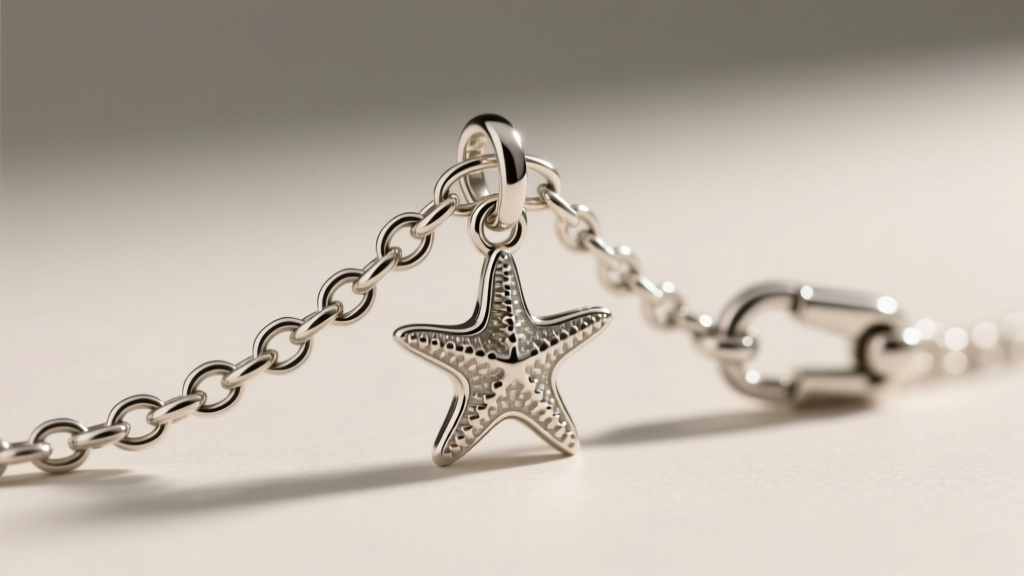
Cheap necklaces utilize hollow-cored cable chains that easily kink and snap under the weight of a solid starfish pendant. For optimal value, look for solid rolo chains or box chains in the 1.0mm to 1.5mm thickness range. These styles distribute tension evenly and resist kinking. Furthermore, inspect the clasp. A high-quality lobster clasp with a soldered jump ring (meaning the ring connecting the clasp to the chain has no gap) is a hallmark of a manufacturer that prioritizes longevity over cutting pennies.
Authentication and Online Shopping Red Flags
The Federal Trade Commission (FTC) strictly regulates the use of the word 'Sterling' in the United States, requiring a minimum purity of 925/1000. However, online marketplaces are rife with bad actors. When assessing the value of a silver starfish necklace online, immediately discard listings that feature these red flags:
Expert Tip: If a listing uses terms like 'Tibetan Silver', 'Alpaca', 'Nepalese Silver', or 'Silver Tone', the item contains little to no actual precious metal. These are base-metal alloys designed to mimic the look of silver without the cost. Always demand clear, macro-level photos of the '925', 'STG', or 'Sterling' hallmark stamped directly onto the pendant bail or chain clasp.
Cost-Per-Wear (CPW) Analysis: The Ultimate Value Metric
Budget-conscious buyers often gravitate toward the cheapest option, but true value is measured in Cost-Per-Wear (CPW). Let us compare a $15 plated starfish necklace against a $55 solid 925 sterling alternative.
The plated necklace will likely tarnish, chip, or cause skin irritation after roughly 15 wears. CPW = $1.00 per wear.
The solid 925 sterling necklace, with occasional polishing, will easily last for 300+ wears over several years. CPW = $0.18 per wear.
From a strict financial perspective, the higher upfront cost of the solid 925 silver starfish necklace yields a vastly superior return on investment. It also retains a baseline scrap value that plated jewelry completely lacks.
Final Verdict: Is It Worth the Investment?
A silver starfish necklace is an excellent jewelry investment, provided you navigate the market with a critical eye. By targeting the $35 to $75 price range, insisting on verified 925 sterling silver, and prioritizing durable chain hardware like solid rolo or box chains, you secure a versatile, enduring piece of coastal-inspired jewelry. Avoid the false economy of silver-plated alternatives, and always verify the hallmark to ensure your budget is translating into genuine, lasting value.


