Chunky White Bead Necklace: The Ultimate Buying Guide
Discover how to choose the perfect chunky white bead necklace. Compare materials, bead sizes, stringing durability, and pricing in our expert guide.


The chunky white bead necklace has transcended fleeting seasonal trends to become a permanent fixture in modern jewelry wardrobes. As we move through 2026, the demand for oversized, sculptural neckwear continues to dominate both high-fashion runways and everyday street style. However, not all bold necklaces are created equal. The difference between a luxurious, durable statement piece and a flimsy, easily broken accessory lies in the specific material grades, stringing mechanics, and proportion metrics used in its construction.
Whether you are hunting for a heavyweight glass statement piece, a bio-resin everyday staple, or a baroque freshwater pearl investment, this comprehensive buying guide will teach you exactly what to look for when purchasing a chunky white bead necklace.
Defining 'Chunky': Bead Size and Proportion Metrics
In the jewelry industry, 'chunky' is not just a subjective aesthetic; it is defined by specific millimeter (mm) measurements. A standard strand necklace typically features beads ranging from 6mm to 8mm. To qualify as a true chunky white bead necklace, the beads must start at a minimum of 12mm in diameter, with statement pieces pushing well beyond 20mm.
| Bead Diameter | Visual Weight | Best Use Case |
|---|---|---|
| 12mm - 14mm | Medium-Heavy | Everyday office wear, layered over silk blouses |
| 15mm - 19mm | Heavy / Bold | Statement evening wear, solid color block outfits |
| 20mm - 25mm+ | Avant-Garde / Sculptural | Editorial fashion, high-neckline architectural styling |
Pro-Tip: When buying online, always check the exact millimeter size rather than relying on product photos. A 15mm bead has nearly 3.5 times the volume of an 8mm bead, drastically changing the drape and weight of the necklace against your collarbone.
Material Breakdown: What Are Those White Beads Made Of?
The visual appeal of a white bead can be replicated across dozens of materials, but their physical properties—weight, temperature, and scratch resistance—vary wildly. Here is how to evaluate the most common materials used in 2026.
1. Freshwater Pearl (Baroque and Coin Shapes)
For a luxurious chunky white bead necklace, freshwater pearls are the gold standard. However, perfectly round white pearls in sizes above 12mm are exceptionally rare and command astronomical prices. Instead, look for baroque (irregular) or coin (flat, oval) shapes. According to the Gemological Institute of America (GIA), you should prioritize luster over perfect surface cleanliness. A high-luster baroque pearl with minor blemishes will always look more expensive than a dull, chalky 'perfect' pearl. Expect to pay a premium for thick nacre, which ensures the pearl won't peel over time.
2. Glass and Murano
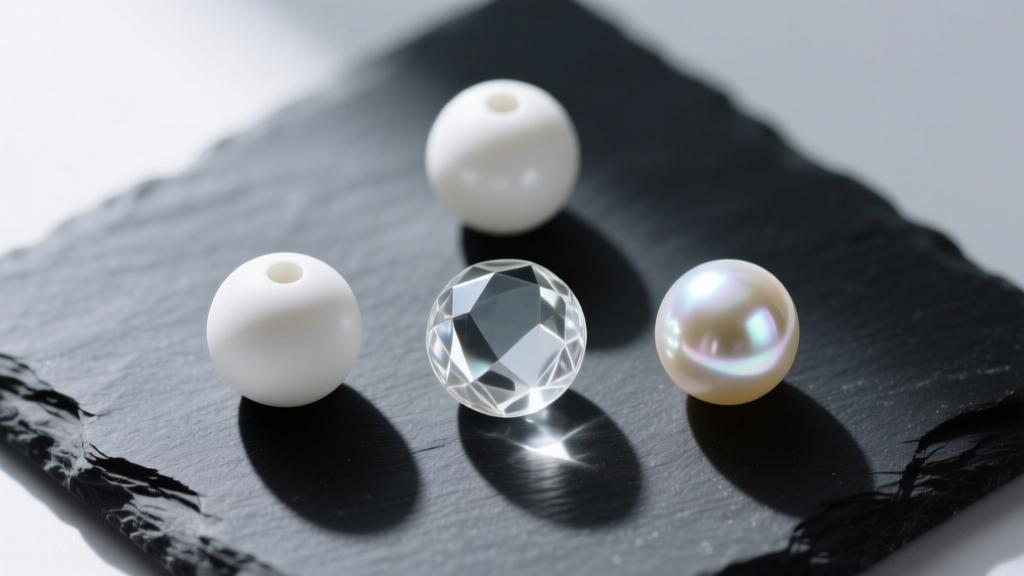
Glass beads offer a satisfying, heavy drape and a cold-to-the-touch feel that mimics fine gemstones. On the Mohs hardness scale, glass sits around 5.5 to 7, making it highly resistant to everyday scratching. Look for opaque, milk-glass finishes or hand-blown Murano glass with subtle internal bubbles for an artisanal touch. The primary drawback is weight; a 20mm glass bead necklace can weigh over 150 grams, which may cause neck fatigue after several hours.
3. High-Density Resin and Bio-Acrylics
If you want the massive 25mm+ sculptural look without the neck strain, resin is your best option. In 2026, bio-based acrylics and matte-finished resins that mimic carved marble or porcelain are highly sought after. Resin is incredibly lightweight and warm to the touch. However, it sits at a 2 to 3 on the Mohs scale, meaning it will scratch if tossed carelessly into a jewelry box. Always store resin necklaces in individual microfiber pouches.
4. Kiln-Fired Ceramic
Ceramic beads offer a beautiful, earthy matte finish and a mid-range weight. They are hypoallergenic and retain their color indefinitely. The critical failure point for ceramic is impact; dropping a chunky ceramic bead necklace on a tile floor will almost certainly result in shattered beads.
The Anatomy of a Durable Necklace: Stringing and Clasps
The most common reason a chunky white bead necklace ends up in the trash is not the beads themselves, but catastrophic stringing failure. Heavy beads exert immense kinetic force on the stringing material when the necklace swings or is pulled.
Stringing Materials: Wire vs. Silk vs. Elastic
- Nylon-Coated Stainless Steel Wire: The industry standard for glass, resin, and ceramic. Look for 49-strand wire with a diameter of 0.024 inches (often referred to as Heavyweight). According to Fire Mountain Gems, 49-strand wire offers superior drape and kink-resistance compared to 7-strand or 19-strand alternatives.
- Knotted Silk: Mandatory for freshwater pearls. Every single pearl must be separated by a hand-tied knot. This prevents the pearls from rubbing against each other (which destroys the nacre) and ensures that if the strand breaks, you only lose one bead, not the entire necklace.
- Elastic / Stretch Cord: Avoid at all costs. Even high-quality elastane degrades when exposed to skin oils, UV light, and the friction of heavy bead holes. A chunky bead necklace on elastic is a ticking time bomb.
Clasp Mechanics for Heavy Jewelry
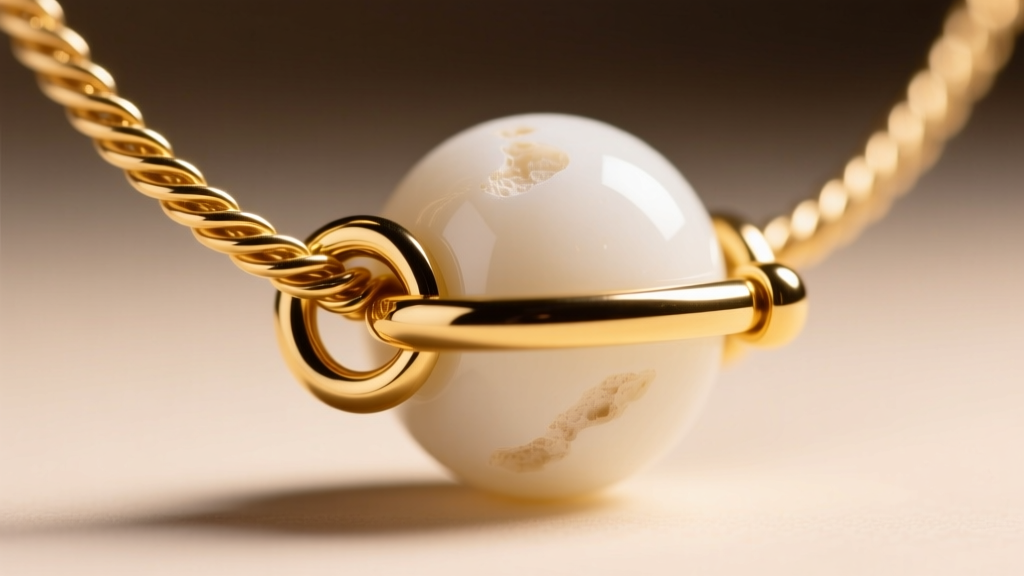
Standard 9mm lobster claws are insufficient for necklaces weighing over 80 grams; the tension will warp the clasp mechanism over time. For a chunky white bead necklace, insist on a heavy-duty toggle clasp or a neodymium magnetic clasp with a minimum 15lb pull force. Toggle clasps are particularly excellent for heavy bead strands because the downward weight of the beads naturally pulls the T-bar securely into the ring, making it nearly impossible to slip open accidentally.
Price vs. Value: What Should You Expect to Pay?
Understanding the fair market value prevents you from overpaying for synthetic materials disguised as premium gems. Below is a 2026 pricing framework for a standard 16-inch to 18-inch chunky necklace.
| Material | Expected Price Range | Longevity & Care |
|---|---|---|
| Bio-Resin / Acrylic | $25 - $85 | 5-10 years (Prone to surface scratching) |
| Opaque Glass | $60 - $180 | Lifetime (Highly scratch-resistant) |
| Artisan Ceramic | $90 - $250 | Lifetime (Fragile upon high impact) |
| Baroque Freshwater Pearl | $150 - $600+ | Generational (Requires moisture, avoid perfumes) |
Styling Frameworks: Necklines and Occasions
A chunky white bead necklace is a focal point, meaning your neckline must act as a complementary canvas rather than a competing element.
The Crew Neck Rule
When wearing a tight crew neck t-shirt or sweater, opt for a 16-inch choker length with 12mm to 15mm beads. This creates a built-in 'collar' effect that frames the face without overlapping the fabric's seam.
The Deep V-Neck and Wrap Dress
For deep V-necks, choose an 18-inch to 20-inch length with graduated beads (smaller at the back, peaking at 25mm in the center front). The beads should follow the line of the V-neck, elongating the torso and drawing the eye downward.
Off-the-Shoulder and Strapless
This is where 20mm+ sculptural beads shine. The bare skin of the décolletage provides the necessary negative space to let the visual weight of the necklace breathe. Pair a matte white ceramic or resin necklace with a dark, contrasting fabric (like navy or emerald) for maximum editorial impact.
Final Verdict: Investing in Your Statement Piece
Buying the perfect chunky white bead necklace requires looking past the initial aesthetic and scrutinizing the engineering. Verify the bead diameter, demand 49-strand wire or knotted silk, and ensure the clasp is rated for the physical weight of the piece. By prioritizing structural integrity and material authenticity, you will secure a bold, timeless accessory that commands attention for years to come.


