Material Guide: Choosing a Durable Class Ring Necklace
Compare metals for your class ring necklace. Learn about gold karats, ultrium, valadium, and chain pairings to prevent tarnish and skin irritation.

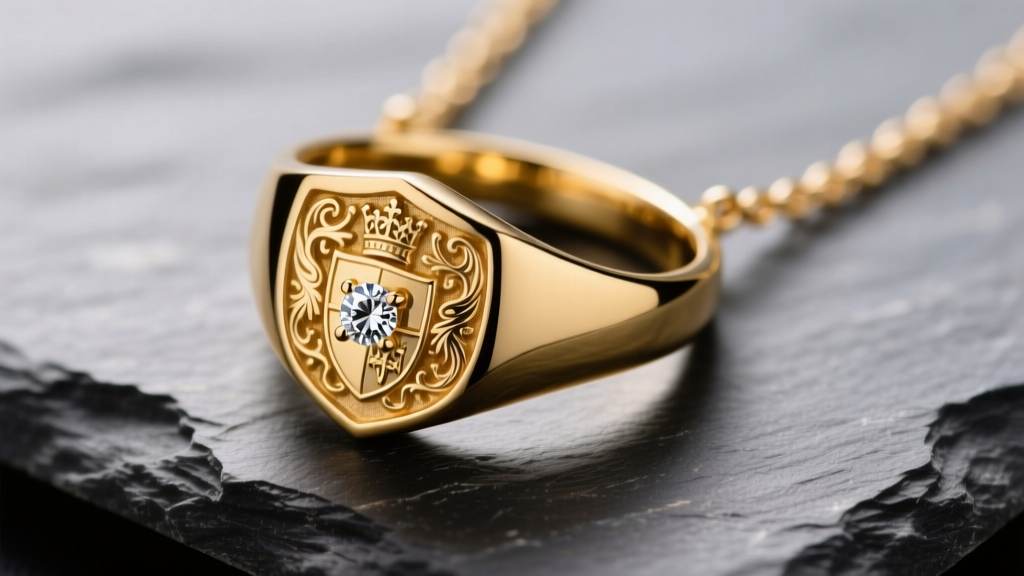
The Anatomy of a Class Ring Necklace
Transforming a traditional piece of alumni jewelry into a wearable pendant requires a deep understanding of metallurgy, weight distribution, and structural integrity. A class ring necklace is not merely a ring threaded onto a chain; it is a complex assembly of two distinct metal components that must endure daily kinetic stress, environmental exposure, and chemical interactions from human sweat. Traditional class rings are notably heavy, often weighing between 15 and 25 grams, which places immense tensile stress on the chain and the bail (the connector loop).
When selecting or converting a class ring necklace, you must evaluate the core ring material, the chain alloy, and the method of attachment. Failure to match these elements correctly leads to rapid chain degradation, galvanic corrosion, and skin irritation. This guide breaks down the exact material properties you need to consider to ensure your sentimental piece survives daily wear.
Core Ring Materials: Gold vs. Alternative Alloys
The base metal of the ring dictates its scratch resistance, weight, and long-term polish retention. While traditional fine jewelry favors high-karat gold, class rings require harder alloys to protect deep relief engravings and stone settings.
10K and 14K Solid Gold
According to the Gemological Institute of America (GIA), pure 24K gold is far too soft for heavy, swinging pendants. Class rings are typically cast in 10K (41.7% pure gold) or 14K (58.3% pure gold). 10K gold contains higher percentages of copper, zinc, and silver, giving it a higher Vickers hardness rating than 14K. This makes 10K gold exceptionally resistant to the micro-abrasions that occur when a heavy pendant constantly strikes the wearer's chest. However, the higher copper content in 10K yellow gold can cause it to oxidize and darken over time if exposed to chlorinated water or harsh cosmetics.
Valadium and Ultrium (Stainless Steel Variants)
Many modern alumni rings are crafted from proprietary stainless steel alloys. Jostens, a premier manufacturer of graduation jewelry, popularized materials like Valadium and Ultrium. Valadium is a jeweler-grade stainless steel that offers excellent tarnish resistance and a bright, white-metal luster similar to platinum. Ultrium is a newer, advanced alloy that incorporates additional hardening elements, making it highly resistant to scratching. However, both alloys contain nickel to achieve their corrosion resistance. For individuals with contact dermatitis, wearing a Valadium or Ultrium ring directly against the sternum can trigger allergic reactions, as documented by the American Academy of Dermatology.
Sterling Silver: The High-Maintenance Option
Sterling silver (92.5% pure silver, 7.5% copper) is rarely recommended for heavy class ring pendants. Silver has a low Mohs hardness of 2.5 to 3, meaning the deep crevices of the school crest will quickly accumulate tarnish, and the prongs holding the central gemstone are highly susceptible to bending if the heavy ring swings and catches on clothing.
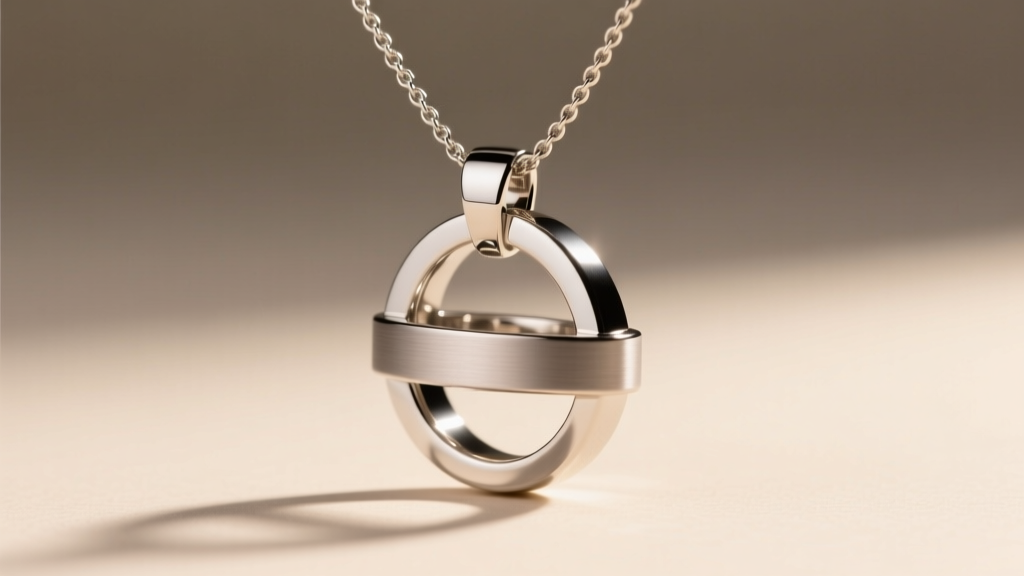
Chain Pairings: Avoiding Galvanic Corrosion
The most common failure mode in a class ring necklace is not the ring breaking, but the chain snapping due to galvanic corrosion. This electrochemical process occurs when two dissimilar metals are in contact in the presence of an electrolyte (human sweat).
If you pair a sterling silver class ring with a cheap, brass-based gold-plated chain, the sweat acts as a conductive bridge. The more reactive metal (the brass core of the chain) becomes the anode and corrodes rapidly, turning your neck green and causing the chain links to become brittle and snap. To prevent this, you must follow the rule of metal parity:
- Gold Rings: Pair only with solid 10K or 14K gold chains, or inert metals like Grade 23 titanium.
- Steel/Ultrium Rings: Pair with 316L surgical stainless steel or titanium chains.
- Silver Rings: Pair exclusively with solid sterling silver or rhodium-plated silver chains.
Material Comparison Chart
| Material | Hardness (Vickers) | Nickel-Free? | Avg. Price Range | Best Chain Pairing |
|---|---|---|---|---|
| 10K Solid Gold | ~135 HV | Yes | $400 - $800 | 10K/14K Gold, Titanium |
| 14K Solid Gold | ~115 HV | Yes | $700 - $1,500+ | 14K Gold |
| Valadium (Steel) | ~160 HV | No | $150 - $300 | 316L Steel, Titanium |
| Ultrium (Steel) | ~200+ HV | No | $200 - $400 | 316L Steel, Titanium |
| Sterling Silver | ~65 HV | Yes | $100 - $250 | Sterling Silver |
Conversion vs. Purpose-Built: Structural Integrity
Many graduates inherit a vintage class ring and attempt to convert it into a necklace. How you attach the ring to the chain is just as critical as the metal it is made from.
The Danger of the "Thread-Through" Method
Simply threading a chain through the finger hole (shank) of the ring is a catastrophic mistake. As you walk, the heavy ring swings like a pendulum. The inner edge of the shank acts as a friction saw against the chain links. Over a few months, this kinetic friction will wear through the metal of the chain, leading to an inevitable drop and potential loss of the ring down a storm drain.
Soldering a Bail to an Existing Ring
The correct method for converting a finger ring into a class ring necklace is to have a professional jeweler attach a dedicated pendant bail to the top of the shank. For gold rings, a jeweler will use a laser welder to fuse a 14K gold saddle bail to the ring. Laser welding is preferred over traditional torch soldering because it concentrates heat into a microscopic area, preventing thermal damage to the synthetic spinel or cubic zirconia stones typically set in class rings.
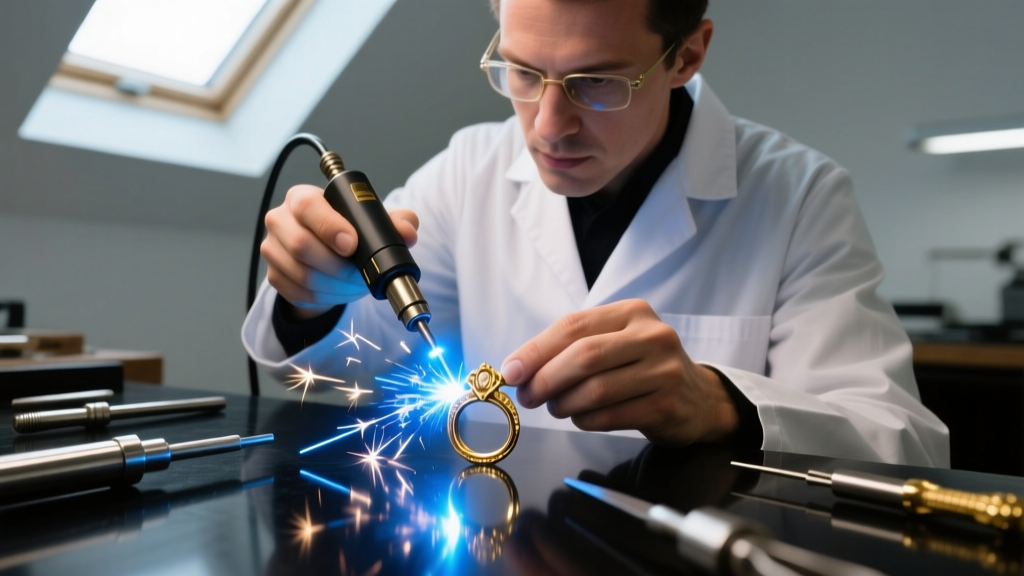
Expert Tip: If your class ring features a bezel-set stone, ensure the jeweler uses a heat-sink compound or laser welding. Traditional torch soldering can reach temperatures exceeding 1,400°F, which will shatter lab-created sapphires and melt the epoxy used in vintage stone settings.
Expert Maintenance & Failure Modes
Maintaining a class ring necklace requires specific protocols based on the material. Ultrium and Valadium rings are virtually indestructible and can be cleaned with warm water, dish soap, and a soft toothbrush. However, gold and silver rings require more care.
Avoid using ultrasonic jewelry cleaners on class rings. The high-frequency vibrations can loosen the adhesive used to secure the central gemstone, especially in older rings where the epoxy has dried out and become brittle over decades. Furthermore, if the ring features a painted or enameled school crest in the deep relief carvings, ultrasonic waves and harsh chemical dips will strip the paint, ruining the contrast of the design.
For daily maintenance, wipe the ring and the chain with a microfiber cloth after wearing it to remove sebum and sweat. If you have a 10K gold ring that has begun to show copper oxidation (a slight reddish or dark tint), a brief soak in a mild, ammonia-free jewelry cleaner will restore the bright yellow luster without damaging the alloy's structural integrity.
Final Verdict
Choosing the right class ring necklace is an exercise in balancing sentimentality with material science. If you prioritize heirloom value and skin safety, a 14K solid gold ring paired with a matching 3mm to 4mm rope chain is the undisputed champion. If you want a rugged, scratch-resistant piece for daily, active wear and do not have a nickel allergy, an Ultrium ring on a 316L stainless steel wheat chain offers unparalleled durability at a fraction of the cost. Never compromise on the attachment method; always invest in a professionally laser-welded bail to ensure your alma mater's crest stays securely around your neck for decades to come.


