How to Clean and Care for Your Abalone Butterfly Necklace
Learn expert cleaning and maintenance tips to protect your abalone butterfly necklace from tarnish, scratching, and shell degradation.

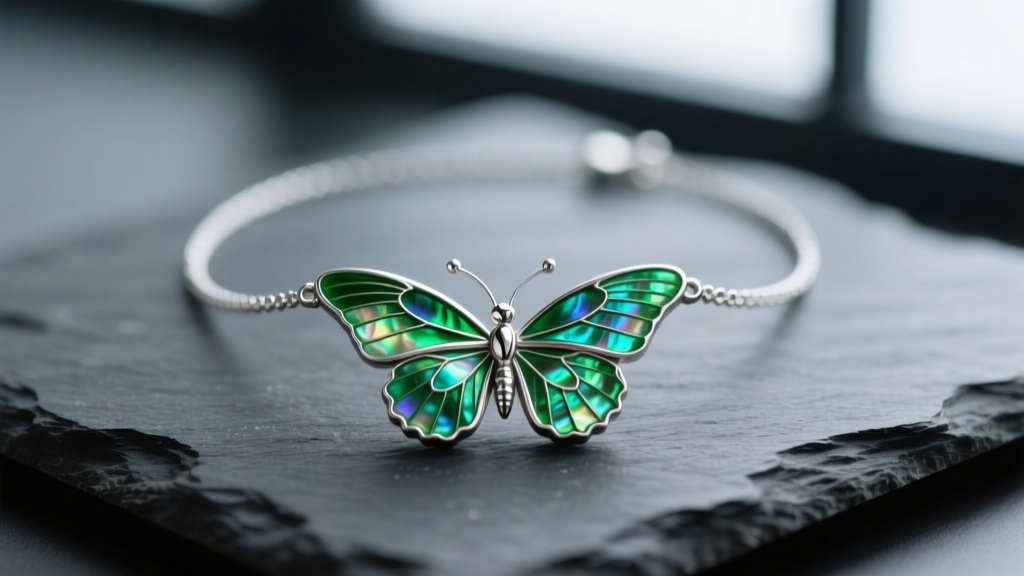
An abalone butterfly necklace is a stunning fusion of organic gemology and intricate metalwork. The iridescent flash of abalone shell, combined with the delicate symmetry of a butterfly silhouette, creates a statement piece that draws the eye. However, this beauty comes with distinct vulnerabilities. Abalone is an organic gemstone, meaning it requires a radically different care regimen compared to faceted crystals or hard stones like diamonds and sapphires. Improper cleaning can strip the shell of its natural luster, degrade the calcium carbonate structure, or loosen the delicate prongs holding the butterfly wings in place.
In this comprehensive guide, we break down the exact gemological properties of abalone, provide a safe step-by-step cleaning protocol, and outline the structural maintenance required to keep your pendant pristine for decades.
Understanding Abalone Shell Vulnerabilities
To properly care for your jewelry, you must first understand the material. Abalone shell is primarily composed of calcium carbonate (CaCO3) arranged in microscopic hexagonal platelets, which create its signature iridescence. According to the GIA Gem Encyclopedia, organic gems like abalone and pearl share similar physical vulnerabilities:
- Low Hardness: Abalone ranks between 2.5 and 3.5 on the Mohs hardness scale. This means it can be easily scratched by dust (which contains quartz, Mohs 7), other jewelry, and even harsh fabrics.
- Acid Sensitivity: Calcium carbonate reacts aggressively with acids. Human sweat, which contains lactic acid, can slowly etch the surface of the shell over time, leading to a dull, cloudy appearance.
- Thermal Shock: Sudden temperature changes can cause the microscopic layers of the shell to delaminate or crack, a phenomenon known as crazing.
The butterfly shape compounds these risks. The thin, tapered edges of the butterfly wings are the most fragile points of the pendant, making them highly susceptible to chipping if dropped or struck against a hard surface.
The 5-Step Safe Cleaning Protocol
Never use commercial jewelry dips, ultrasonic cleaners, or steamers on an abalone butterfly necklace. The cavitation bubbles in an ultrasonic cleaner will literally shatter the nacreous layers of the shell, while chemical dips will eat away the calcium carbonate. Instead, follow this manual, pH-neutral cleaning method:
- Prepare a Mild Solution: Mix a few drops of pH-neutral, phosphate-free dish soap (like original Dawn) into a bowl of lukewarm distilled water. Avoid tap water, as chlorine and heavy minerals can leave microscopic deposits on the shell.
- Dampen, Don't Soak: Never submerge the necklace. Prolonged water exposure can weaken the adhesive used in some shell inlays or cause the metal setting to trap moisture against the shell. Instead, dip a soft, lint-free microfiber cloth into the solution and wring it out until it is only slightly damp.
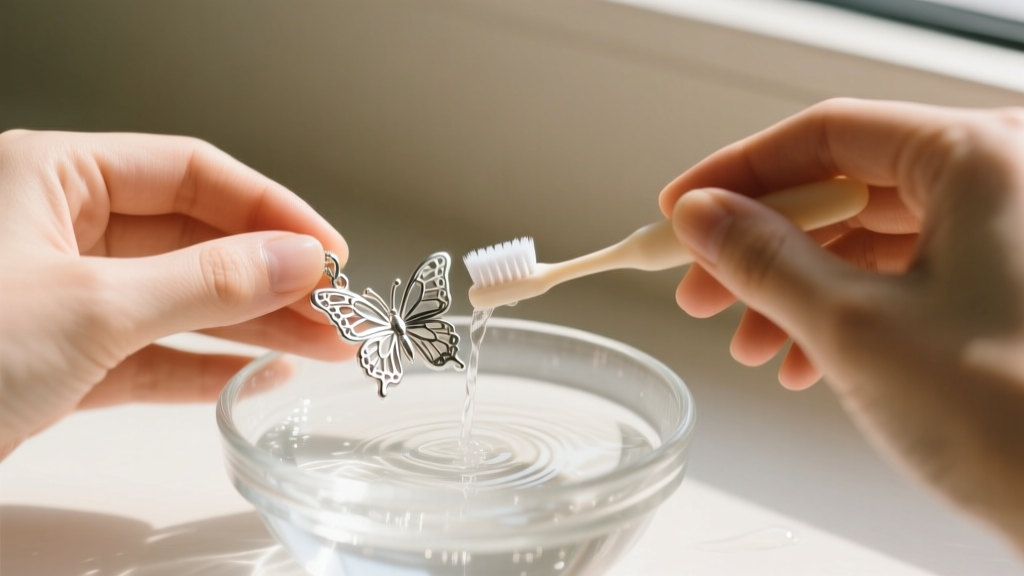
- Wipe the Shell Gently: Lightly wipe the abalone butterfly wings using circular motions. Do not apply pressure. If there is buildup in the crevices of the butterfly's thorax or antennae, use an extra-soft baby toothbrush to gently dislodge it.
- Rinse the Cloth: Rinse your microfiber cloth with clean distilled water, wring it out, and wipe the pendant again to remove any soapy residue.
- Dry Immediately: Pat the necklace completely dry with a separate, clean microfiber cloth. Allow it to air dry flat on a towel for 15 minutes before storing.
Metal Setting Maintenance: Silver vs. Vermeil
The metal framework of your abalone butterfly necklace requires its own maintenance routine. The two most common settings for this style are 925 Sterling Silver and Gold Vermeil. The FTC Jewelry Guides strictly define vermeil as a base of sterling silver plated with gold of at least 10k fineness and a minimum thickness of 2.5 microns. Caring for these metals without damaging the adjacent abalone shell requires precision.
| Metal Type | Tarnish / Wear Profile | Safe Polishing Method | What to Avoid |
|---|---|---|---|
| 925 Sterling Silver | Prone to silver sulfide tarnish (blackening) from humidity and airborne sulfur. | Use a treated jeweler's polishing cloth (e.g., Sunshine Cloth) strictly on the metal. Fold the cloth to avoid touching the shell. | Silver dip liquids, baking soda paste, and toothpaste (too abrasive). |
| Gold Vermeil | Does not tarnish easily, but the gold plating can wear off over time, exposing the silver beneath. | Buff gently with a dry, untreated microfiber cloth. Do not use treated polishing cloths, as they will strip the gold plating. | Any abrasive polishing compounds, ultrasonic cleaners, and wearing while swimming. |
Pro Tip: When polishing the metal setting near the shell's edge, use a wooden toothpick to gently push the polishing cloth into tight corners. This prevents the abrasive compounds in the cloth from smearing onto the delicate abalone wings.
Preventing Prong Snags and Shell Delamination
A butterfly pendant typically features four to six microscopic prongs securing the shell inlay or holding a carved shell piece within a metal bezel. Because abalone is brittle, a loose prong will not just allow the stone to fall out; the metal will actively chip the shell every time the necklace moves.
Perform a "snag test" once a month. Run the pendant lightly across a piece of tightly woven silk or nylon. If the prongs catch on the fabric, they are lifted and pose an immediate threat to both your clothing and the abalone shell. According to maintenance guidelines from Jewelers of America, you should never attempt to push prongs down yourself with household pliers, as the uneven pressure will instantly crack the calcium carbonate. Take the piece to a professional jeweler who can use a prong pusher and a microscope to secure the metal without stressing the organic gem.
Proper Storage to Prevent Micro-Scratches
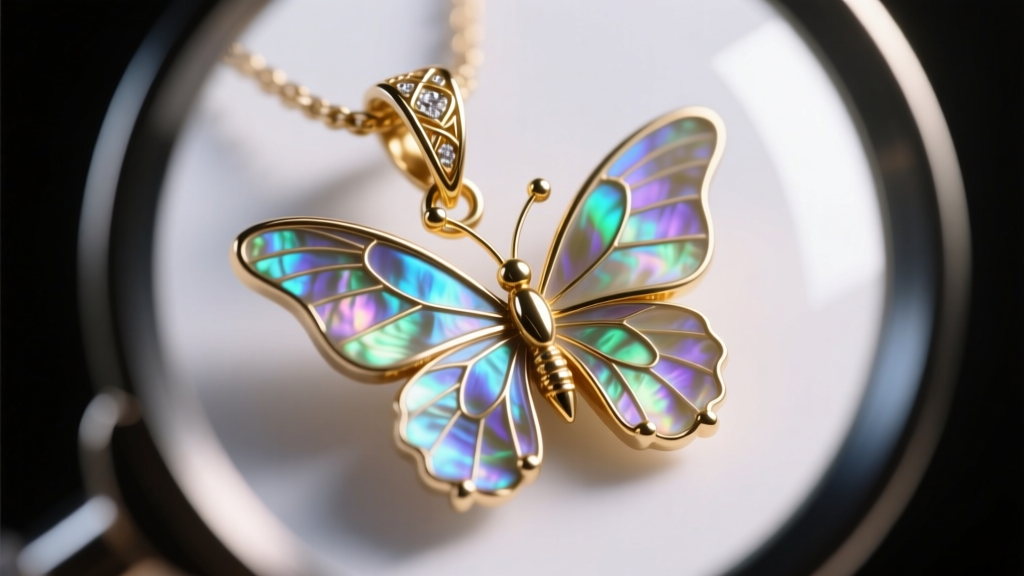
How you store your abalone butterfly necklace when it is not being worn is just as critical as how you clean it. The primary enemies of stored abalone are friction, humidity, and airborne pollutants.
- Isolate the Pendant: Never toss this necklace into a communal jewelry box. The metal chains and harder gemstones in other pieces will easily scratch the Mohs 2.5 abalone surface. Store it in its own individual soft pouch.
- Use Anti-Tarnish Strips: Place a 3M anti-tarnish strip inside the storage pouch or box. These strips absorb airborne sulfur and hydrogen sulfide, preventing the silver setting from tarnishing without the need for chemical polishing.
- Control Humidity: High humidity accelerates both metal tarnish and the degradation of organic gems. Include a small silica gel packet in your jewelry box to maintain a dry micro-environment, preventing the shell from absorbing excess moisture which can lead to delamination.
What to Avoid: The Abalone Killers
To maximize the lifespan of your necklace, adopt a strict "last on, first off" rule regarding cosmetics and chemicals. The following substances will cause irreversible damage to the iridescent layers of the shell:
"Organic gemstones are highly porous and chemically reactive. Perfumes, hairsprays, and lotions contain alcohols and synthetic solvents that will permanently dull the nacreous luster of shell and pearl jewelry. Always apply your beauty products at least ten minutes before putting on your necklace."
- Chlorine and Saltwater: Never wear your necklace swimming. Chlorine will pit the metal setting, while saltwater will accelerate the chemical breakdown of the calcium carbonate.
- Ammonia-Based Cleaners: Household glass cleaners contain ammonia, which will instantly strip the polished finish off the abalone shell.
- Direct Heat: Do not wear the necklace in saunas, hot tubs, or while blow-drying your hair. Thermal shock can cause the shell to fracture along its natural growth lines.
Troubleshooting Common Abalone Issues
Even with meticulous care, issues can arise. Here is how to handle the most common problems associated with abalone butterfly necklaces:
The Shell Looks Cloudy or Chalky
This is usually a sign of acid etching from prolonged contact with sweat or skin oils. While you cannot reverse severe etching at home, you can sometimes restore a mild haze by gently rubbing the shell with a tiny drop of mineral oil on a cotton swab. Wipe away all excess oil immediately. This temporarily rehydrates the surface layers and restores the optical flash of the iridescence.
The Metal is Tarnished Right Next to the Shell
If the silver setting has blackened in the tight crevices of the butterfly's wings where a polishing cloth cannot reach, do not use liquid silver dips. Instead, use a specialized silver polishing foam applied with a cotton swab. Carefully trace the metal edge, ensuring the foam does not bleed onto the abalone. Wipe clean with a damp swab and dry immediately.
By respecting the organic nature of the materials and adhering to these specific maintenance protocols, your abalone butterfly necklace will retain its vibrant, oceanic flash and structural integrity for a lifetime of wear.


