Maintenance Tips For All Chain Types Necklace Styles
Discover expert cleaning and maintenance tips for every chain types necklace. Learn how to safely wash, polish, and store your favorite jewelry.

The Anatomy of Chain Vulnerability
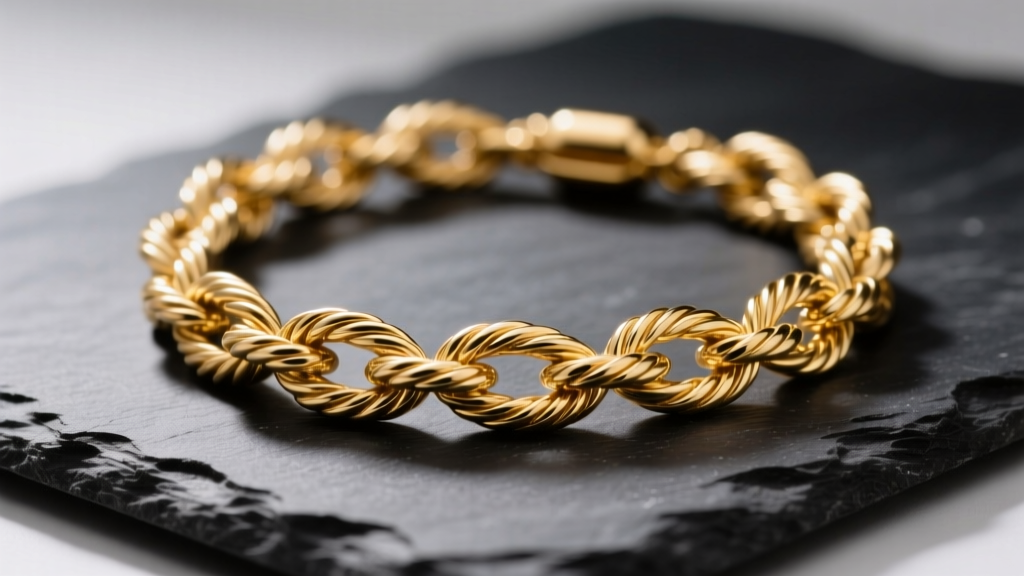
Properly caring for every chain types necklace in your vault requires understanding the unique geometry and metallurgy of the links. A necklace is not just a string of metal; it is a complex mechanical assembly of interlocking joints. When sebum, cosmetic lotions, and environmental sulfur combine, they create an abrasive paste that accelerates wear at the friction points of these joints. According to the Jewelers of America, the leading cause of chain failure is not snapping, but the gradual thinning of links due to trapped micro-debris acting like sandpaper over time.
Different link geometries present distinct vulnerabilities. Flat chains like the herringbone or omega are prone to plastic deformation (kinking) because their links lack the 360-degree rotational freedom of a cable chain. Conversely, highly textured chains like the rope or wheat feature deep crevices that trap dirt, requiring specialized agitation to clean effectively without scratching the metal's surface.
Step-by-Step Cleaning Protocols by Chain Family
A universal cleaning approach will inevitably damage certain delicate weaves. Here is how to tailor your maintenance routine based on the specific architecture of your jewelry.
Cable, Curb, and Figaro Chains
These classic, open-link designs are the most forgiving and easiest to maintain. Their simple geometry allows for full immersion and gentle mechanical agitation.
- The Solution: Mix 1 cup of distilled water with two drops of pH-neutral dish soap (such as original Dawn). Avoid tap water, as dissolved minerals can leave micro-spots on high-polish finishes.
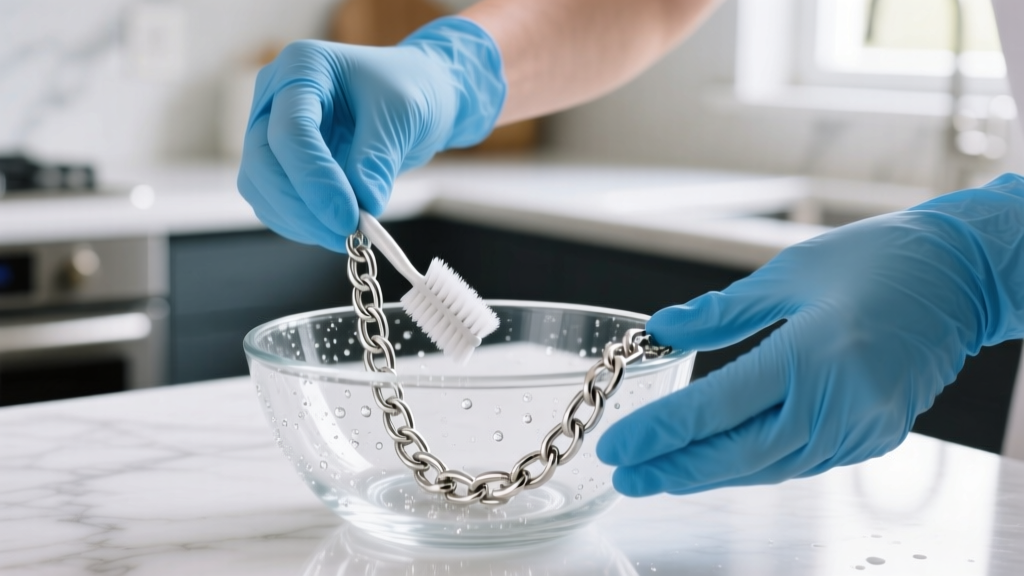
- The Technique: Submerge the chain for 10 minutes. Use an ultra-soft baby toothbrush (bristle diameter under 0.12mm) to gently sweep the interior of each link. Rinse with distilled water and pat dry with a lint-free microfiber cloth.
Rope, Wheat, and Box Chains
These chains feature tight, complex weaves or sharp 90-degree interior angles that act as magnets for dead skin cells and heavy cosmetic creams.
- The Solution: A slightly warmer water bath (around 95°F) helps melt lipid-based lotion buildup trapped inside box chain corners or rope spirals.
- The Technique: Instead of brushing, which can fray the spiraled links of a rope chain or snag on wheat weaves, use a swishing motion. Hold the chain by the clasp and vigorously swish it through the soapy solution. For box chains, a wooden toothpick can be gently used to dislodge compacted debris from the interior corners without risking the micro-scratches that metal tools would cause.
Herringbone, Snake, and Omega Chains
Flat, liquid-like chains require a completely different paradigm. Brushing these chains will result in permanent, visible micro-scratches across their continuous surface.
- The Technique: Never submerge an omega chain with a non-metal core, and never scrub a herringbone. Instead, lay the chain perfectly flat on a clean towel. Dampen a microfiber cloth with a 50/50 mixture of distilled water and isopropyl alcohol, and gently wipe down the surface in one direction. This removes oils without risking the structural integrity of the flat links.
The Ultrasonic Trap: What to Avoid
Many collectors assume that ultrasonic jewelry cleaners are a safe, catch-all solution. While high-frequency cavitation is excellent for dislodging dirt from diamond settings, it can be catastrophic for specific necklace styles. The Gemological Institute of America (GIA) warns that ultrasonic vibrations can easily fracture porous gemstones attached to pendants, but the risk to the chains themselves is equally severe.
Hollow-link chains (often used to create thick, lightweight gold Cuban links) are highly susceptible to ultrasonic damage. The microscopic shockwaves can cause the thin metal walls of hollow links to dent inward or rupture. Furthermore, if your chain features an oxidized or antiqued finish designed to highlight the weave's texture, ultrasonic cleaning will strip this deliberate patina in minutes, leaving the piece looking flat and overly bright.
Material-Specific Polishing and Tarnish Prevention
Understanding the exact material grade of your necklace dictates which polishing agents are safe. Using the wrong cloth can strip thousands of dollars of value from your piece.
| Material Grade | Safe Cleaning Agents | Strictly Avoid |
|---|---|---|
| Sterling Silver (925) | Impregnated silver polishing cloths, mild soap baths | Chlorine bleach, rubber band storage |
| 14k / 18k Solid Gold | Dish soap baths, soft microfiber buffing | Harsh chemical dips, abrasive pastes |
| Gold Vermeil | Only damp microfiber, mild soap if necessary | Silver polishing cloths, ultrasonic, toothbrushes |
| Platinum | Mild soap, professional steam cleaning | DIY chemical dips that leave residues |
Crucial Note on Vermeil: Gold vermeil consists of a sterling silver base plated with a minimum of 2.5 microns of gold. Using an abrasive silver polishing cloth on vermeil will strip the gold layer entirely, exposing the silver beneath and ruining the piece. Always verify your material grade before applying friction.
Storage and Anti-Tarnish Frameworks
How you store your necklaces is just as critical as how you clean them. The American Gem Society emphasizes that environmental control is the best defense against silver sulfide formation (tarnish).
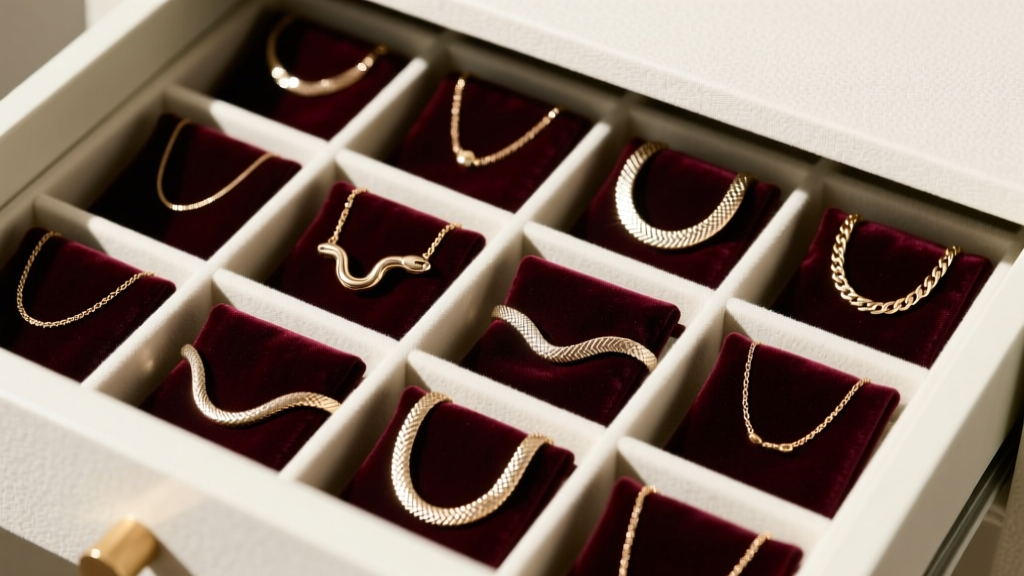
- Flat Storage for Flat Chains: Herringbone and snake chains must be stored completely flat. Hanging them or tossing them into a communal jewelry box guarantees kinking. Store them in individual, anti-tarnish flannel pouches laid flat in a drawer.
- Hanging for Link Chains: Cable, curb, and rope chains should be hung from padded hooks to prevent tangling. Tangles cause micro-stress fractures when pulled apart.
- Atmospheric Control: Incorporate 3M anti-tarnish strips or silica gel packets into your jewelry drawers to absorb ambient humidity and sulfur compounds. Replace these strips every six months for maximum efficacy.
Troubleshooting Common Chain Failures
Even with meticulous care, mechanical issues arise. Here is how to address them without causing further damage.
Fixing a Stiff Lobster Clasp
If your lobster clasp becomes stiff or fails to snap shut, it is usually due to a buildup of lotion or oxidation inside the tiny spring mechanism. Do not use WD-40 or standard oils, which attract dust and gum up the spring. Instead, use a sewing needle to gently clear visible debris from the clasp hinge, then apply a microscopic drop of synthetic watchmaker's oil or pure mineral oil using the tip of a toothpick. Pump the clasp lever a few times to distribute the lubricant, then wipe away any excess.
Flattening a Kinked Herringbone Chain
If a herringbone chain kinks, the metal has undergone plastic deformation. While severe kinks require a professional jeweler's rolling mill, minor bends can be coaxed out at home. Lay the chain flat on a hard, smooth surface like a glass table. Using a smooth, cylindrical object like a polished agate burnisher or a clean glass spice jar, apply gentle, even pressure and roll over the kinked area. This can realign the flat links without stretching or tearing the metal.


