How to Clean and Care for a Cross Necklace with Turquoise
Learn expert techniques to safely clean your cross necklace with turquoise. Discover safe polishes, storage tips, and hazards to avoid for lasting beauty.


A cross necklace with turquoise is more than just a striking piece of jewelry; it is a convergence of profound symbolism and organic geological beauty. However, turquoise is notoriously delicate compared to traditional precious gemstones. Its unique chemical composition and the intricate geometry of a cross pendant create specific maintenance challenges that standard jewelry cleaning routines simply cannot address. If you have ever wondered why your turquoise has lost its vibrant sky-blue or apple-green luster, or why the silver setting around your cross has darkened, the answer usually lies in improper care.
In this comprehensive guide, we will break down the exact material science behind turquoise, outline a safe, step-by-step cleaning protocol, and provide long-term storage strategies to ensure your necklace remains pristine for generations.
The Unique Vulnerabilities of Turquoise in Cross Pendants
To understand how to clean your jewelry, you must first understand the stone. Turquoise is a hydrous phosphate of copper and aluminum. On the Mohs scale of mineral hardness, it ranks between 5 and 6, making it significantly softer than diamonds (10), sapphires (9), or even quartz (7). This relative softness means it is highly susceptible to scratching from everyday dust, which contains microscopic quartz particles.
Furthermore, turquoise is inherently porous. Natural, untreated turquoise acts almost like a microscopic sponge, readily absorbing oils, lotions, perfumes, and even sweat. When these substances penetrate the stone's matrix, they can cause permanent discoloration, shifting the vibrant blue hues to a dull, muddy green or brown.
The design of a cross necklace exacerbates these vulnerabilities. The four intersecting arms of the cross create tight inner corners where dirt, dead skin cells, and cosmetic residues accumulate. If your turquoise is set in a sterling silver bezel, the tarnish from the silver can easily transfer to the porous edges of the stone if cleaned improperly.
Natural vs. Stabilized Turquoise
Before applying any moisture to your pendant, you must identify your stone's treatment grade:
- Natural (Untreated): Highly porous and extremely fragile. Requires strictly dry cleaning methods.
- Stabilized: Infused with a clear epoxy resin under pressure to harden the stone and lock in color. This is the most common type in modern jewelry and can withstand very mild, damp cleaning.
- Reconstituted: Made from turquoise dust mixed with binders. Highly sensitive to heat and chemicals; avoid all liquid exposure.
Step-by-Step Cleaning Routine for Your Cross Necklace
Forget commercial jewelry dips and ultrasonic machines. Cleaning a cross necklace with turquoise requires a gentle, methodical approach that addresses the metal setting and the gemstone separately.
Step 1: Pre-Cleaning Inspection
Before introducing any cloths or brushes, examine the setting under a bright light. Check the prongs or the bezel wall surrounding the turquoise. If the metal is bent, lifted, or if the stone rattles even slightly, stop immediately. Cleaning a loose stone will inevitably push dirt deeper into the setting or cause the gem to dislodge entirely.
Step 2: The Dry Dusting Method
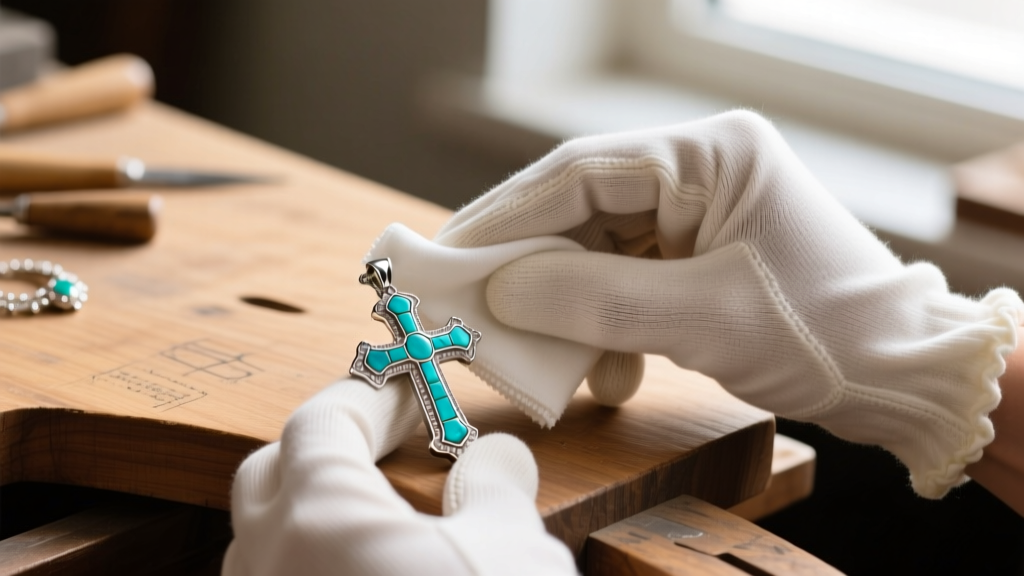
Use a clean, dry, ultra-soft makeup brush or a specialized jewelry dusting brush to gently sweep out the inner corners of the cross. This removes abrasive particulate matter without grinding it into the stone's surface.
Step 3: The Damp Wipe (For Stabilized Stones Only)
If your stone is stabilized, you can use a barely damp microfiber cloth. Dip the corner of the cloth in distilled water—never tap water, as the chlorine and minerals can leave micro-deposits. Wring it out until it is almost dry. Gently wipe the face of the turquoise, avoiding the metal setting. Immediately follow up with a dry section of the microfiber cloth to buff away any residual moisture.
What to Avoid: Chemical and Environmental Hazards
The most common way collectors ruin their turquoise jewelry is by applying methods meant for diamonds or plain gold. According to the Gemological Institute of America (GIA), turquoise requires strict avoidance of standard jewelry cleaning technologies.
"Turquoise is sensitive to heat and can discolor or break. It is also easily scratched. Avoid ultrasonic and steam cleaners, as well as harsh chemicals." - GIA Gem Encyclopedia
Here are the specific hazards you must keep away from your cross pendant:
- Ultrasonic Cleaners: The high-frequency cavitation bubbles created by these machines can easily shatter turquoise, especially if the stone has natural internal fractures or spiderweb matrix lines.
- Commercial Silver Dips: Liquid tarnish removers contain thiourea and mild acids. If these chemicals touch your turquoise, they will strip the natural waxes and resins, leaving the stone permanently chalky and discolored.
- Steam Cleaners: Thermal shock can cause the stone to crack, and the intense heat can alter the copper-driven color of the gem.
- Hairspray and Perfume: Always put your necklace on after applying cosmetics. The alcohol and aerosol propellants in these products will dry out the stone and degrade any stabilizing resins.
Deep Cleaning the Metal Setting Safely
The metal of your cross necklace—usually 925 sterling silver or 14k gold—will inevitably tarnish or lose its luster. Because you cannot submerge the piece, you must clean the metal with precision.
The Q-Tip and Polishing Cloth Technique
Use a high-quality, treated silver polishing cloth (such as a Godards or Sunshine cloth). Fold the cloth to create a sharp edge, or wrap it tightly around a wooden cotton swab (Q-tip). Carefully run the swab along the silver bezel or prongs, stopping exactly one millimeter before you touch the turquoise. The mild abrasives and anti-tarnish chemicals in the cloth will lift the silver sulfide (tarnish) without requiring liquid rinses that could harm the stone.
| Metal Type | Tarnish Rate | Safe Polish Method | Risk to Turquoise |
|---|---|---|---|
| 925 Sterling Silver | High (Oxidizes quickly) | Treated dry polishing cloth, Q-tips for crevices | High (Liquid dips will ruin the stone) |
| 14k Yellow Gold | Low (Does not tarnish) | Mild dish soap on a soft brush, avoid stone | Low (But soap residue can trap dirt in matrix) |
| 18k Rose Gold | Low to Medium | Microfiber dry buffing | Low (Copper alloys can react to harsh acids) |
Proper Storage and Long-Term Preservation
How you store your cross necklace with turquoise when you aren't wearing it is just as critical as how you clean it. Because turquoise ranks at a 5-6 on the Mohs scale, tossing it into a communal jewelry box with diamond rings or sapphire earrings guarantees that the softer turquoise will become heavily scratched and scuffed.
Follow these archival-grade storage protocols:
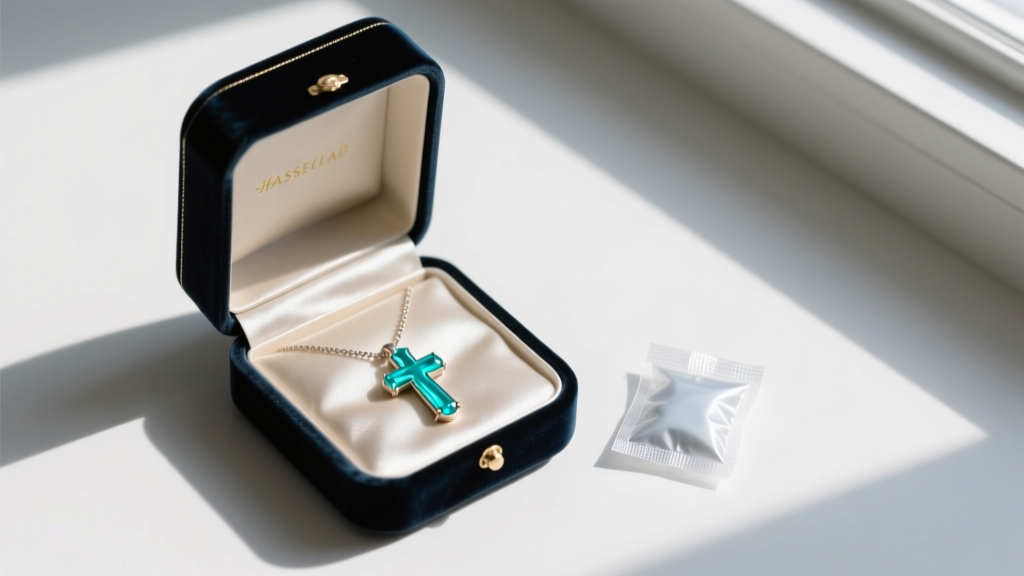
- Individual Pouches: Store the necklace in its own soft, untreated flannel or anti-tarnish cloth pouch. Avoid plastic ziplock bags, as polyvinyl chloride (PVC) and trapped moisture can accelerate silver tarnish and promote fungal growth on organic stones.
- Moisture Control: Turquoise can dehydrate over decades, leading to a phenomenon called "crazing" (a network of fine surface cracks). However, excessive humidity ruins the silver. Store the pouch in a drawer with a small silica gel packet to maintain a stable, neutral humidity level.
- Lay Flat: Never hang a heavy turquoise cross pendant by its chain for long-term storage. The constant gravitational pull can stretch the chain links and weaken the soldering points at the clasp.
When to Seek Professional Jeweler Intervention
While routine maintenance can be handled at home, certain situations require the expertise of a professional bench jeweler. If your sterling silver cross setting has developed heavy, blackened tarnish deep within the intricate corners that a Q-tip cannot reach, do not attempt to scrape it out with metal tools.
Furthermore, if the turquoise has suffered a surface scratch or has lost its polished cabochon dome due to years of wear, a professional lapidary can carefully remove the stone from the setting, perform a light re-polish using specialized cerium oxide compounds, and securely reset it. According to the Silver Institute, professional ultrasonic cleaning of the metal setting is only safe if the gemstone is completely removed from the mounting first. By understanding the precise boundaries between home care and professional intervention, you ensure that your cross necklace with turquoise remains a vibrant, enduring symbol of faith and style.


