How to Clean and Care for a Gold 4 Leaf Clover Necklace
Learn expert cleaning and maintenance tips for your gold 4 leaf clover necklace. Protect delicate inlays, prevent tarnish, and restore its original shine.

Understanding the Anatomy and Materials of Your Clover Necklace
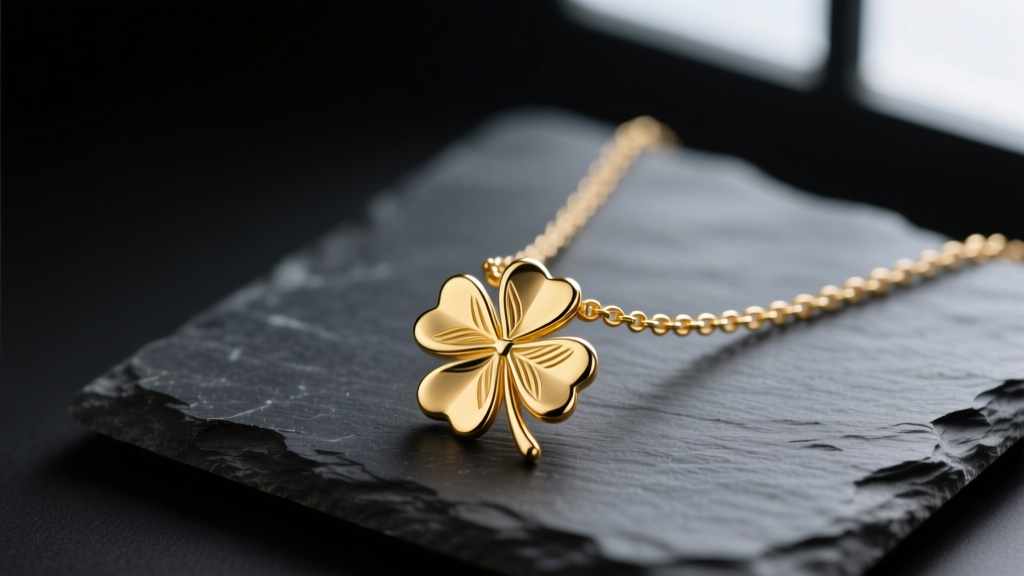
A gold 4 leaf clover necklace is more than just a symbol of luck; it is a masterpiece of jewelry design that often combines precious metals with delicate organic or semi-precious stone inlays. To properly care for this piece, you must first understand its metallurgical and gemological composition. The most common iterations feature 14k or 18k gold bezels housing mother-of-pearl, malachite, onyx, or carnelian clovers.
18k gold (75% pure gold) offers a rich, buttery yellow hue but is relatively soft, scoring a 2.5 on the Mohs hardness scale. This makes the gold bezel susceptible to micro-scratches and wear over time. 14k gold (58.3% pure gold) is alloyed with copper, silver, and zinc, making it harder and more durable for daily wear, though the copper content introduces a risk of oxidation and tarnishing if exposed to sulfur or high humidity.
The inlays present the most significant care challenges. Mother-of-pearl (MOP) is an organic gem composed of calcium carbonate and conchiolin. It is highly sensitive to acidic environments, including the natural pH of human sweat. Malachite, a copper carbonate mineral, is even more fragile. Scoring only 3.5 to 4 on the Mohs scale, malachite is porous and can be easily damaged by water, heat, and harsh chemicals. Understanding these material vulnerabilities is the first step in preserving the structural integrity and aesthetic brilliance of your necklace.
Common Failure Modes: How Daily Wear Degrades Your Jewelry
Before diving into the cleaning process, it is crucial to recognize how a gold 4 leaf clover necklace typically degrades during everyday wear. Identifying these failure modes allows you to adopt preventative habits.
- Cosmetic and Sebum Buildup: The intricate crevices where the gold bezel meets the stone inlay are magnets for lotions, perfumes, and natural skin oils (sebum). Over time, this buildup creates a dull, cloudy film that blocks light from entering the stone, severely diminishing its natural luster.
- Bezel Wear and Snagging: If your clover necklace features a prong or thin bezel setting, repeated friction against clothing can wear down the metal. This can lead to a loose inlay, which is a primary cause of stone loss in luxury clover designs.
- Chain Kinking and Clasp Fatigue: The delicate chains often paired with these pendants (such as cable or rope chains) are prone to kinking. Furthermore, the spring ring or lobster clasps can accumulate debris, causing the internal spring mechanism to fail.
- Chemical Etching: Exposure to chlorinated pool water or household bleach can cause a chemical reaction with the alloy metals in 14k gold, leading to irreversible pitting and a condition known as 'chemical etching' on the surface of the gold.
Step-by-Step Cleaning Guide for Gold Clovers
Proper cleaning requires a gentle, methodical approach. Avoid the temptation to use aggressive scrubbing or commercial jewelry dips, which can strip the polish from your gold and dissolve the adhesives securing your inlays.
What You Need
- Distilled or filtered lukewarm water (avoid hard tap water, which leaves mineral deposits)
- pH-neutral, dye-free dish soap (such as original Dawn)
- An ultra-soft baby toothbrush (bristles must be exceptionally soft to prevent scratching MOP or malachite)
- Lint-free microfiber polishing cloths
- A wooden toothpick (for precision crevice cleaning)
The Washing Technique
Begin by placing a few drops of the pH-neutral dish soap into a bowl of lukewarm distilled water. Submerge the pendant and chain for no more than three to five minutes. This brief soak helps to loosen surface oils without allowing water to penetrate the microscopic gaps between the gold bezel and porous stones like malachite.
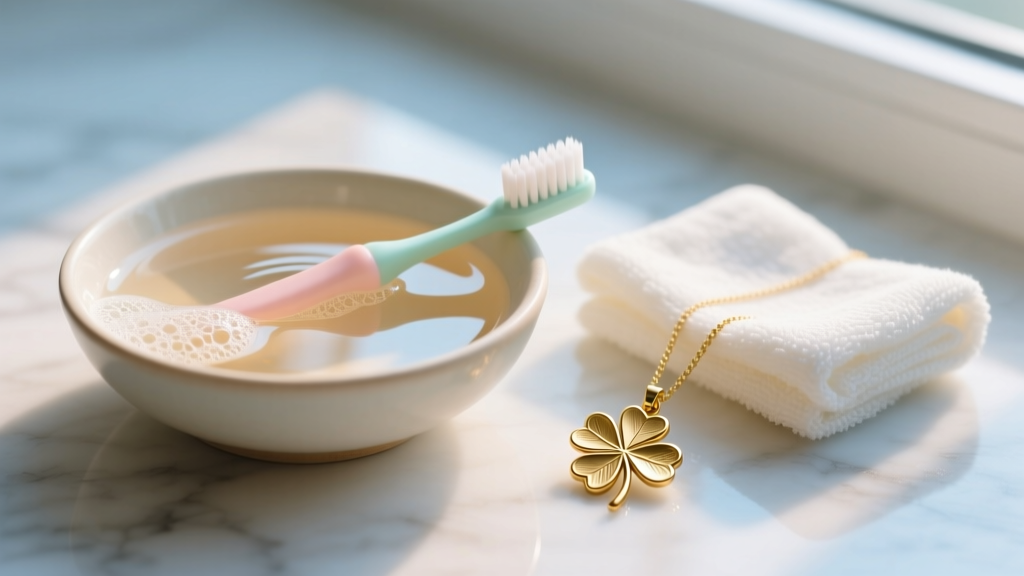
Using the baby toothbrush, gently sweep across the surface of the gold and the stone inlay. Do not apply downward pressure; let the bristles do the work. For the tight seams where the gold meets the clover inlay, use the wooden toothpick to carefully dislodge any compacted lotion or dirt. Never use metal tools like needles or safety pins, as they will scratch both the gold and the stone.
Rinse the necklace thoroughly under a gentle stream of lukewarm distilled water. Ensure the drain is securely plugged. Pat the piece dry with a microfiber cloth, paying special attention to the jump ring and clasp, where water tends to pool. Allow the necklace to air dry completely on a clean towel for an hour before storing it.
Crucial Warnings: What to Avoid at All Costs
Many well-intentioned jewelry owners ruin their pieces by using modern cleaning technology that is incompatible with delicate materials. According to the Gemological Institute of America (GIA), organic gems and porous stones require specialized care that strictly prohibits mechanical cleaning methods.
Never place a gold 4 leaf clover necklace with malachite, onyx, or mother-of-pearl inlays into an ultrasonic or steam cleaner. The high-frequency acoustic cavitation bubbles generated by ultrasonic waves will shatter fragile stones and dissolve the epoxy resins used to secure the inlays to the gold backing.
Additionally, avoid commercial silver or gold dip solutions. These liquid cleaners often contain thiourea and strong acids that will strip the natural iridescence from mother-of-pearl and cause malachite to turn a dull, muddy brown. For a comprehensive overview of gemstone vulnerabilities, refer to the GIA Malachite Care Guide.
Material-Specific Cleaning and Maintenance Matrix
Because a gold 4 leaf clover necklace can be crafted with various materials, use the table below to determine the safest maintenance protocol for your specific piece.
| Material / Inlay Type | Safe Cleaning Method | Ultrasonic Safe? | Steam Safe? | Specific Vulnerability |
|---|---|---|---|---|
| Solid 14k / 18k Gold (No Inlay) | Warm soapy water, soft brush | Yes | Yes | Prone to scratching; avoid abrasive pastes. |
| Mother-of-Pearl (MOP) | Damp microfiber cloth only | NO | NO | Dissolves in acid; sensitive to sweat and perfume. |
| Malachite | Dry, soft polishing cloth | NO | NO | Highly porous; water and heat cause discoloration. |
| Black Onyx | Warm soapy water, quick rinse | NO | NO | Dyed onyx can fade or bleed in harsh chemicals. |
| Gold Vermeil (Sterling Base) | Dry polishing cloth, mild soap | NO | NO | Gold layer can wear off; avoid heavy friction. |
Proper Storage to Prevent Scratches and Tarnish
How you store your gold 4 leaf clover necklace when it is not being worn is just as important as how you clean it. Gold, while a noble metal, can still suffer from surface degradation if stored improperly, and the inlays are highly susceptible to scratching.
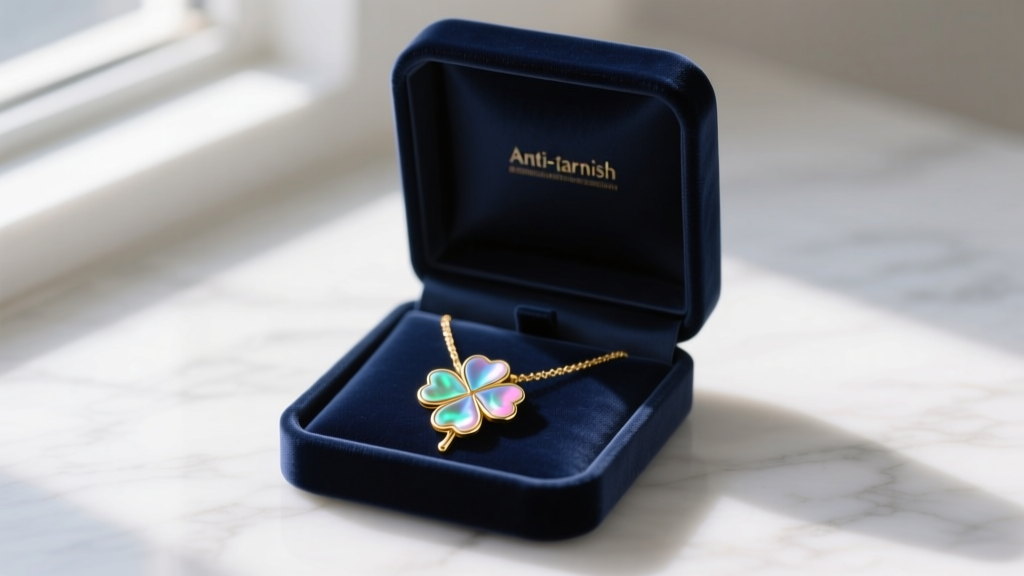
Always store your necklace in a climate-controlled environment. High humidity accelerates the oxidation of the alloy metals in 14k gold. Keep the necklace in an individual, airtight polyethylene ziplock bag to limit exposure to oxygen and sulfur in the air. For added protection, place a piece of 3M Anti-Tarnish paper or a Pacific Silvercloth strip inside the bag; these materials absorb airborne sulfur compounds before they can react with the gold.
Never toss your clover necklace into a communal jewelry box. The diamond or sapphire rings you might own will easily scratch the 18k gold bezel and the softer stone inlays of the clover pendant. Lay the chain flat or hang it from a velvet-lined hook to prevent the links from kinking or tangling, which can weaken the structural integrity of the chain over time.
When to Seek Professional Jewelry Maintenance
While routine home care will keep your necklace looking beautiful, certain maintenance tasks require the expertise of a professional bench jeweler. You should schedule an annual inspection with a certified jeweler to check for the following issues:
- Bezel Integrity: The jeweler will use a loupe to inspect the gold bezel holding the clover inlay. If the metal has thinned or lifted, they can carefully burnish it back into place to prevent the stone from falling out.
- Clasp Tension: Over time, the spring mechanism in lobster clasps can weaken. A jeweler can replace the clasp or adjust the tension to ensure your valuable pendant remains secure.
- Professional Polishing: If your 14k or 18k gold has accumulated deep micro-scratches, a jeweler can perform a light buffing using a rouge wheel. However, be aware that polishing removes a microscopic layer of gold, so it should only be done once every few years to preserve the crisp edges of the clover motif.
By adhering to these meticulous care, maintenance, and cleaning protocols, your gold 4 leaf clover necklace will retain its symbolic charm and radiant beauty for generations, serving as a flawless testament to both luck and exceptional jewelry stewardship.


