How to Clean a Gold Necklace Egyptian Revival Masterpiece
Learn expert care, cleaning, and storage tips for your gold necklace Egyptian revival piece. Protect inlays, gold, and enamel.

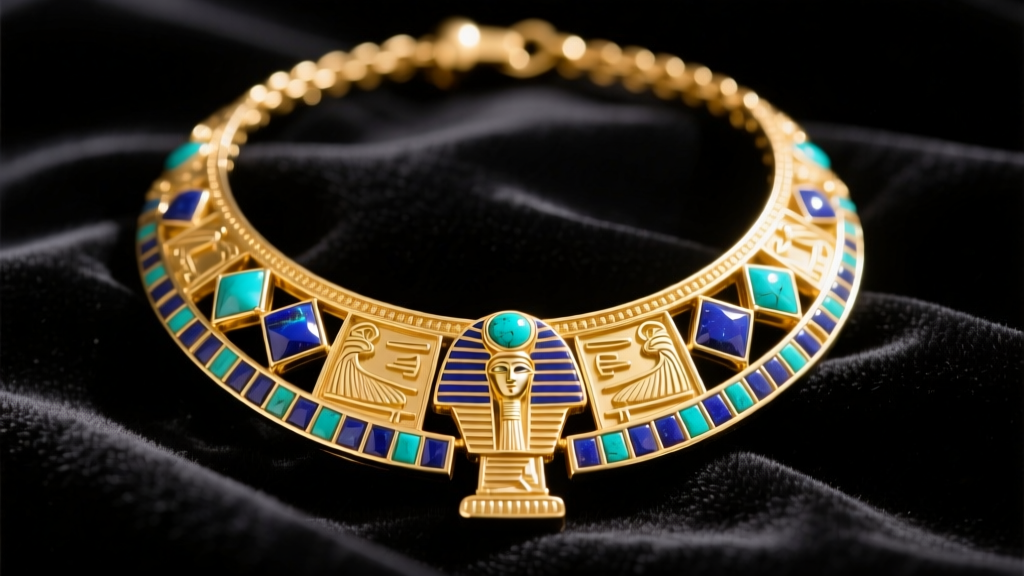
The Allure and Complexity of Egyptian Revival Jewelry
Egyptian revival jewelry has captivated collectors and fashion enthusiasts since the discovery of Tutankhamun's tomb in 1922, sparking a massive Art Deco design movement that continues to influence modern jewelers today. Whether you call it an antique artifact, a mid-century statement piece, or search for a gold necklace egyptian design, the care protocols remain uniquely complex. Unlike standard gold chains, Egyptian-style necklaces frequently combine precious metals with porous gemstones, intricate enameling, and delicate repoussé metalwork. Standard jewelry cleaning methods that work perfectly for a simple gold solitaire pendant can permanently destroy the inlays and adhesives found in Egyptian broad collars, scarab pendants, and Ankh chains.
To preserve the historical integrity and visual brilliance of these pieces, you must adopt a specialized maintenance routine. This guide provides deep, actionable insights into cleaning, polishing, and storing your Egyptian gold jewelry, ensuring it survives for generations without losing its vibrant colors or structural stability.
Understanding Your Materials: Gold Karats and Porous Inlays
Before applying any cleaning solution, you must identify the specific materials in your necklace. Egyptian jewelry is defined by its vibrant contrast between yellow gold and richly colored stones. The gold itself may range from 14k and 18k in modern commercial pieces to 22k or even 24k in high-end historical replicas. Higher karat gold is significantly softer and more prone to micro-scratches, meaning abrasive polishes must be strictly avoided.
The true challenge, however, lies in the inlays. Authentic and revival Egyptian pieces heavily feature lapis lazuli, turquoise, carnelian, malachite, and sometimes glass or champlevé enamel. According to the Gemological Institute of America (GIA), lapis lazuli is a porous, relatively soft stone (Mohs hardness of 5 to 6) that can be easily damaged by harsh chemicals, acids, and prolonged exposure to water. Similarly, turquoise is highly sensitive to heat, cosmetics, and chemical cleaners, which can alter its color and degrade its matrix.
Material Sensitivity and Cleaning Protocols
| Material | Mohs Hardness | Primary Cleaning Danger | Safe Maintenance Method |
|---|---|---|---|
| 18k/22k Yellow Gold | 2.5 - 3 (Alloy dependent) | Abrasive pastes, harsh brushing | Mild soap, microfiber cloth |
| Lapis Lazuli Inlay | 5 - 6 | Ultrasonic waves, ammonia, soaking | Damp cloth wipe, dry immediately |
| Turquoise Inlay | 5 - 6 | Heat, acids, commercial silver dips | Dry polishing only, avoid liquids |
| Carnelian (Agate) | 6.5 - 7 | Hard knocks, extreme temperature shifts | Mild soapy water, soft brush |
| Champlevé Enamel | 4.5 - 5.5 (Glass) | Thermal shock, ultrasonic vibration | Dry microfiber, soft camel-hair brush |
Step-by-Step Cleaning Routine for Solid Gold and Inlays
When your necklace requires a deeper clean to remove skin oils, lotions, and environmental dust, you must use a method that respects the most delicate material in the piece. Never submerge an Egyptian necklace in water. The inlays are typically held in place by bezels and adhesives (such as jeweler's epoxy or traditional shellac). Prolonged soaking can dissolve these adhesives, causing the stones to lift or fall out entirely.
- Prepare a Mild Solution: Mix a few drops of phosphate-free, gentle dish soap (like Dawn) into a bowl of lukewarm—not hot—water. Hot water can cause thermal shock, cracking glass enamel or porous stones.
- Spot Clean the Gold: Dip a soft, lint-free microfiber cloth into the solution, wring it out until it is only barely damp, and gently wipe the gold elements. Avoid dragging the cloth roughly across the stone bezels.
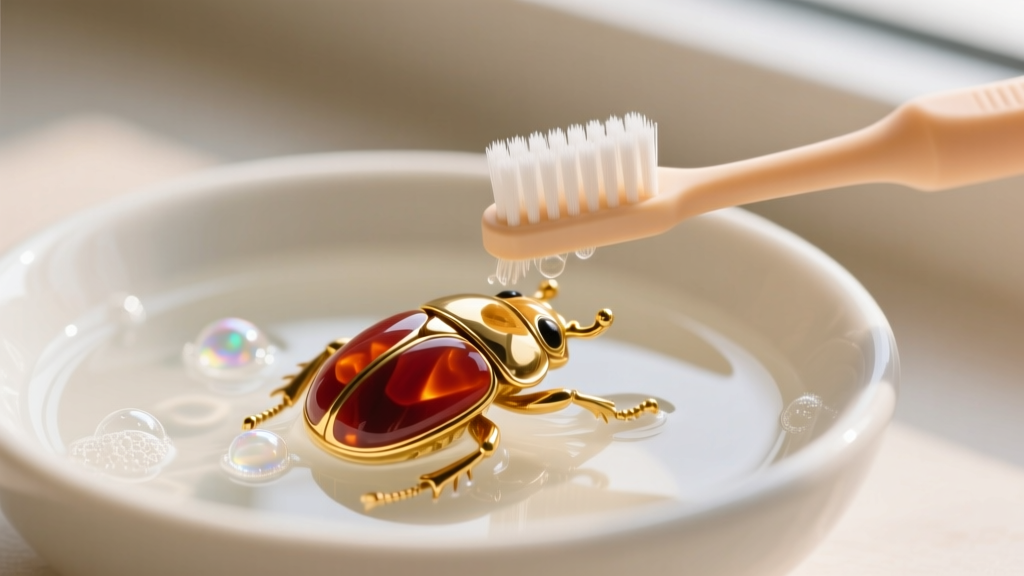
- Target Crevices: For intricate gold granulation or repoussé detailing around the Eye of Horus or scarab motifs, use a soft-bristled baby toothbrush. Dip the brush in the soapy water, tap off the excess moisture, and gently agitate the dirt. Do not scrub the stones directly.
- Rinse with Caution: Do not hold the necklace under a running faucet. Instead, use a clean, damp cloth to wipe away any soapy residue from the gold.
- Dry Immediately: Pat the piece dry with a soft towel, and use a hairdryer on the 'cool' setting to blow moisture out of the tiny gaps between the gold bezels and the gemstone inlays.
The Dangers of Commercial Dips and Ultrasonics
It is critical to understand why modern jewelry cleaning technology is the enemy of Egyptian revival pieces. Ultrasonic cleaners use high-frequency sound waves to create microscopic cavitation bubbles in a liquid solution. While excellent for diamond solitaires, these violent vibrations will shatter brittle lapis lazuli, crack turquoise, and shake loose the adhesive holding your inlays in place. Furthermore, commercial liquid tarnish removers (often containing thiourea and strong acids) will strip the polished finish off high-karat gold, permanently discolor porous stones, and instantly destroy any vitreous or champlevé enamel work.
Polishing and Restoring Intricate Details
Over time, the gold elements of your necklace will accumulate micro-scratches and lose their luster, especially if worn frequently against the skin. Because Egyptian designs often feature intentional texturing, matte finishes, or darkened antiquing in the crevices to highlight the hieroglyphic or geometric patterns, you must avoid aggressive polishing.
Use a high-quality jeweler's polishing cloth infused with microscopic rouge (such as a Sunshine Cloth). Gently buff only the raised, high-polish areas of the gold. Never rub the cloth into the recessed areas, as the mild abrasives in the cloth will strip away the intentional dark patina that gives the piece its three-dimensional depth. If your necklace features 22k or 24k gold, be exceptionally gentle; high-karat gold is so soft that even a coarse microfiber cloth can leave visible swirl marks if too much pressure is applied.
Proper Storage for Broad Collars and Chains
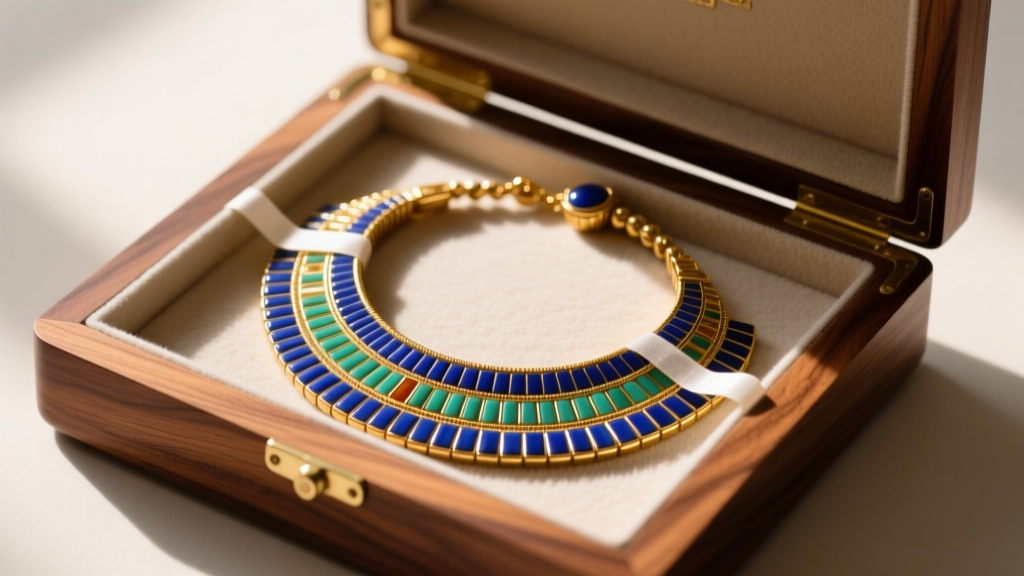
How you store your Egyptian necklace is just as important as how you clean it. Broad collar necklaces (inspired by the ancient wesekh) are highly structured and can easily become kinked, warped, or tangled if tossed into a standard jewelry box. The weight of the gold and stones can also cause the silk or nylon threading to stretch and snap over time if hung vertically on a hook.
- Lay Flat: Always store broad collars and heavy bib necklaces completely flat in a wide, shallow drawer or a dedicated cedar jewelry box.
- Use Anti-Tarnish Strips: Place 3M anti-tarnish strips in the storage compartment. These strips absorb airborne sulfur compounds that cause the copper alloys in 14k and 18k gold to oxidize and turn dull.
- Individual Pouches: If storing in a drawer with other items, place the necklace in a soft, unbleached cotton or flannel pouch to prevent the gold from scratching against harder gemstones like diamonds or sapphires in your collection.
- Climate Control: Keep the jewelry away from direct sunlight and high humidity. Prolonged UV exposure can fade certain dyed stones or degrade the structural integrity of vintage adhesives.
When to Seek Professional Conservation
While routine maintenance can be done at home, certain issues require the expertise of a master jeweler or an antiquities conservator. If you notice any of the following warning signs, stop wearing the necklace immediately and seek professional help:
- Loose Inlays: If a lapis lazuli or turquoise stone rattles or lifts when you gently tap it with a wooden toothpick, the adhesive has failed. A jeweler must carefully remove the stone, clean the bezel, and re-set it using a conservation-grade, reversible adhesive. Do not attempt to glue it yourself with cyanoacrylate (Super Glue), as it will seep into the porous stone and ruin it.
- Enamel Chipping: If the glass enamel on a lotus flower or scarab motif chips, it cannot be 'polished out.' It requires a specialist to perform low-temperature re-enameling or apply a conservation resin to stabilize the edges.
- Thread Fraying: For necklaces where the gold beads or stones are strung on silk or wire, have a professional inspect the stringing material every three to five years. Preventative restringing is significantly cheaper than recovering lost gold beads from a carpet.
By treating your Egyptian gold necklace not just as an accessory, but as a piece of wearable art with complex material interactions, you ensure its vibrant colors and intricate metalwork remain pristine. Gentle, informed care is the ultimate key to preserving the magic of the Nile for decades to come.


