How to Clean and Maintain Your Gold Soleil Necklace
Learn expert techniques to clean, maintain, and store your gold soleil necklace. Protect intricate sunburst textures and gemstones.

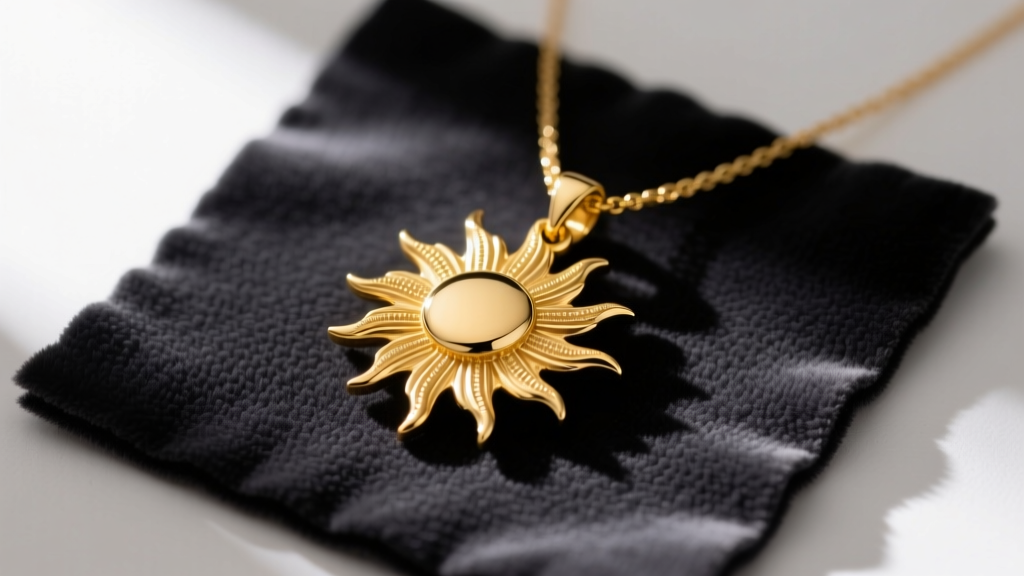
The Anatomy of a Soleil Pendant: Why Sunburst Textures Trap Debris
A soleil necklace, characterized by its radiant sunburst motif, is a masterclass in jewelry design. However, the very feature that makes it captivating—intricate, radiating gold rays—also makes it a magnet for environmental debris. The V-shaped grooves of diamond-cut or matte-finished sun rays easily trap sebum, cosmetic powders (like talc and mica), and microscopic lint. Over time, this buildup creates a dulling film that robs the gold of its reflective brilliance and can even accelerate tarnishing in non-solid gold pieces.
Unlike a simple, high-polish gold disc pendant, a textured soleil piece requires a targeted, multi-step maintenance protocol. Using the wrong tools, such as stiff nylon brushes or harsh chemical dips, can permanently scratch the gold (which sits at a mere 2.5 to 3 on the Mohs hardness scale) or strip delicate gold plating. Below is a comprehensive, expert-level guide to preserving the structural and aesthetic integrity of your soleil necklace.
Material Breakdown: Solid Gold vs. Vermeil vs. Plated
Before applying any cleaning solution, you must identify the metallurgical composition of your necklace. The Federal Trade Commission (FTC) Jewelry Guides strictly define gold classifications, which dictate your care boundaries:
- 14k or 18k Solid Gold: Highly durable and resistant to tarnish. Can withstand gentle soaking and soft-bristle brushing. 18k gold is slightly softer due to higher pure gold content (75%), requiring a lighter touch during polishing.
- Gold Vermeil (Sterling Silver Base): By FTC definition, vermeil must have a sterling silver base plated with at least 2.5 microns of gold. Vigorous scrubbing can wear through this layer, exposing the silver beneath, which is prone to sulfur-induced tarnishing.
- Gold-Plated Brass/Copper: Often features a much thinner gold layer (under 1 micron). Submerging these pieces in water for extended periods can cause the base metal to oxidize, leading to green skin discoloration and structural flaking.
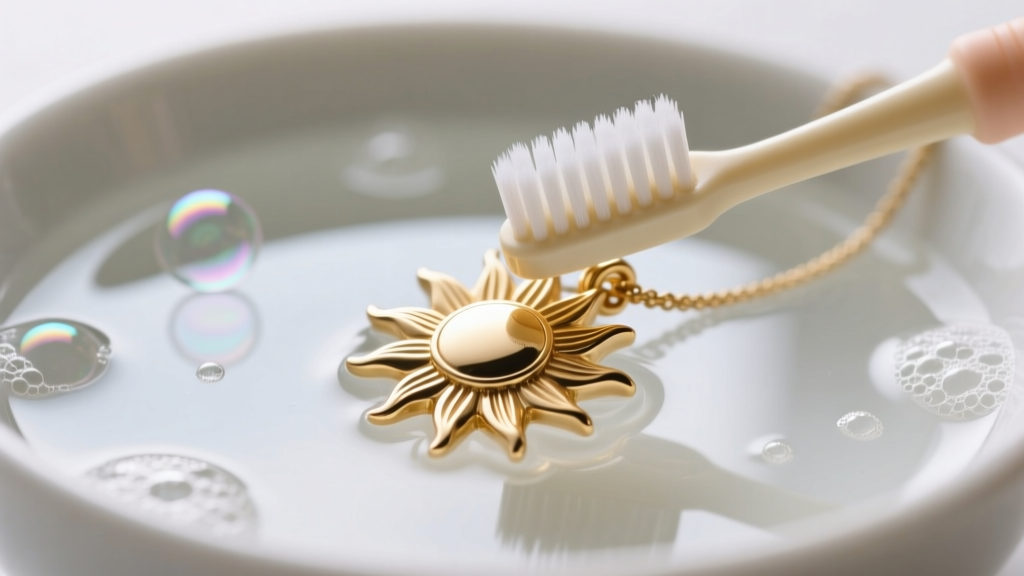
Step-by-Step Cleaning Protocol for Textured Rays
For solid gold and high-quality vermeil soleil necklaces, follow this precise cleaning methodology to safely extract debris from the deepest sunburst crevices without damaging the metal.
- Prepare a Neutral pH Solution: Mix three drops of pH-neutral, phosphate-free dish soap (such as original Dawn) into a bowl of lukewarm distilled water. Avoid tap water, as dissolved minerals and chlorine can leave microscopic water spots on high-polish gold elements.
- The 10-Minute Soak: Submerge the pendant for exactly 10 minutes. This softens hardened sebum and cosmetic binders without compromising the metal or any adhesive used in center gemstone settings.
- Agitate with an Ultra-Soft Brush: Use a baby toothbrush or a specialized jewelry brush with ultra-soft bristles. Brush in the direction of the sun rays (from the center outward) to push debris out of the grooves rather than packing it deeper.
- Target Deep Crevices: For stubborn grime lodged in the sharpest V-grooves, use a wooden orangewood stick (commonly used in nail care) or a soft silicone interdental brush. Wood and silicone are softer than gold and will not leave micro-scratches.
- Rinse and Dry: Rinse thoroughly under a gentle stream of distilled water. Pat dry with a lint-free microfiber cloth. Never use paper towels, as their wood-pulp fibers can cause microscopic abrasions on polished gold surfaces.
Gemstone Centerpieces: Porous vs. Non-Porous Care
Many soleil necklaces feature a center gemstone representing the "core" of the sun. The Gemological Institute of America (GIA) warns that gemstone porosity dictates cleaning safety.
Non-Porous Stones (Diamonds, Sapphires, Citrine)
These stones can safely endure the soaking and brushing protocol outlined above. However, if your soleil pendant features pave diamonds surrounding the sunburst rays, never use an ultrasonic cleaner. The standard 40kHz frequency can shatter fragile diamond girdles or vibrate the stones loose from their micro-prongs.
Porous and Organic Stones (Mother-of-Pearl, Turquoise, Opal, Malachite)
If your soleil centerpiece is an organic or porous material, skip the soak entirely. These materials absorb liquids, which can cause cracking, color leaching, or loss of iridescence. Instead, lightly dampen a microfiber cloth with distilled water and gently wipe the gold rays, carefully avoiding direct contact with the center stone.
Maintenance Matrix: Care and Cost Framework
Understanding the long-term maintenance costs and requirements of your specific soleil necklace material helps in making informed purchasing and care decisions.
| Material Grade | Cleaning Method | Ultrasonic Safe? | Estimated Re-plating Cost (25mm Pendant) |
|---|---|---|---|
| 14k/18k Solid Gold | Soak, brush, polish | Yes (if no porous gems) | N/A (Solid metal) |
| Gold Vermeil (2.5+ microns) | Gentle soak, soft brush | No (Strips plating) | $45 - $85 |
| Gold-Plated Brass | Dry wipe only | No (Causes flaking) | $25 - $40 (Poor adhesion) |
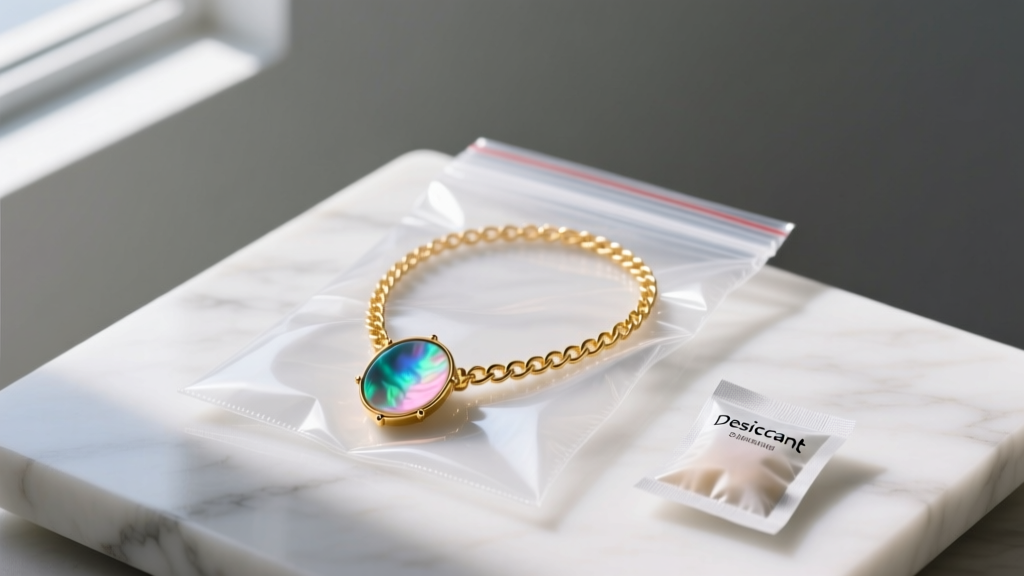
Storage Framework and Clasp Maintenance
Proper storage is just as critical as active cleaning. The intricate rays of a soleil pendant can easily become tangled in other chains, leading to bent rays or snapped links.
- Individual Polyethylene Storage: Store the necklace in an individual, zip-sealed polyethylene bag. Polyethylene is chemically inert and will not react with gold or silver.
- Humidity Control: Include a small silica gel packet in the storage bag to absorb ambient moisture, which is the primary catalyst for tarnishing the sterling silver base of vermeil pieces.
- Anti-Tarnish Strips: For vermeil or lower-karat gold (10k/14k), add a 3M anti-tarnish strip to the bag. These strips absorb sulfur compounds in the air before they can react with the metal alloys.
The Overlooked Clasp Mechanism
The spring-ring or lobster clasp on your chain is a mechanical failure point. Lint and skin oils frequently jam the tiny lever mechanism. If your clasp becomes sticky or fails to snap shut, do not force it. Take a piece of unwaxed dental floss, slide it into the crevice of the clasp lever, and pull it back and forth to extract the compacted debris. If the spring remains stiff, apply a microscopic drop of mineral oil to the hinge using a sewing pin, then wipe away the excess.
When to Seek Professional Jeweler Maintenance
While home maintenance keeps the gold bright, structural integrity requires professional oversight. If your soleil necklace features a gemstone held by prongs, have a jeweler inspect the prong tension every 12 to 18 months. The radiating rays of a soleil pendant can easily catch on knitwear, applying lateral torque to the center stone's setting. Furthermore, if you notice a pinkish or grey hue bleeding through the gold on a vermeil piece, the plating has worn through to the base metal. A professional jeweler can polish the piece and apply a fresh layer of hard gold plating, restoring the pendant to its original factory specifications.


