Lime Green Necklace Care: Cleaning Peridot, Enamel & Resin
Learn expert care and cleaning tips for your lime green necklace. Discover material-specific protocols for peridot, enamel, and anodized titanium.

The Material Matrix: What Makes Your Necklace Lime Green?
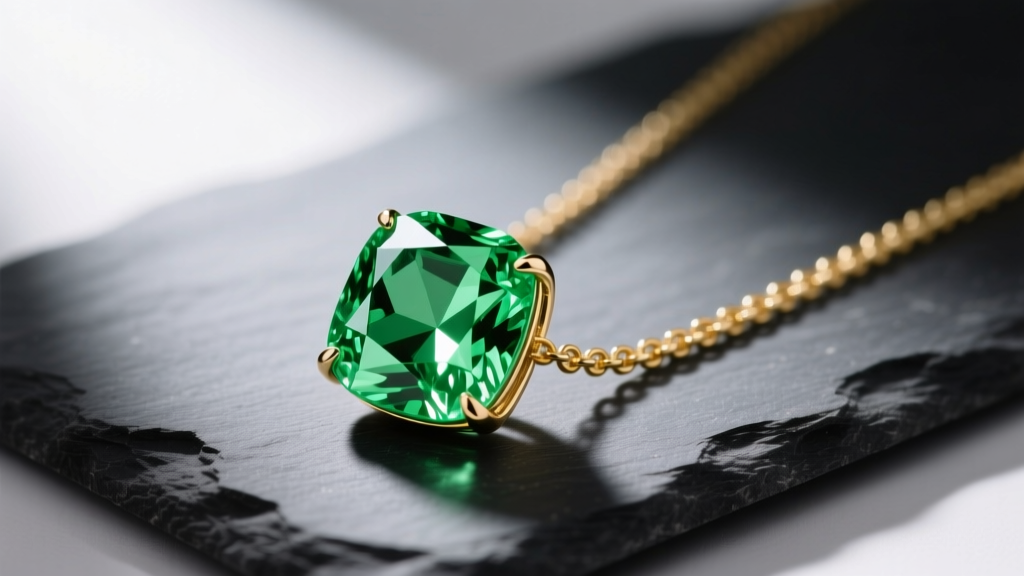
A lime green necklace is a bold, high-visibility statement piece, but achieving this specific neon-to-apple green hue requires vastly different material science depending on the jeweler's medium. In 2026, the market is dominated by four primary materials that yield this striking color: natural Peridot, natural Chrysoprase, cold/vitreous Enamel, and anodized Titanium. Because these materials possess entirely different chemical compositions, Mohs hardness ratings, and structural vulnerabilities, applying a universal 'jewelry cleaning' method will almost certainly result in irreversible damage. To maintain the optical brilliance and structural integrity of your lime green necklace, you must first identify the exact material and apply the corresponding care protocol.
Step-by-Step Cleaning Protocols by Material
1. Peridot (The Natural Iron-Magnesium Silicate)
Peridot naturally occurs in a vibrant lime to olive green spectrum due to its iron content. With a Mohs hardness of 6.5 to 7, it is relatively durable but possesses distinct cleavage planes, making it highly susceptible to fracturing under sudden temperature changes or high-frequency vibrations. Never place a peridot necklace in an ultrasonic or steam cleaner. The vibrations can exploit microscopic internal fissures, causing the gem to split. Furthermore, peridot is easily etched by acidic solutions. To clean, mix a few drops of pH-neutral dish soap (like Dawn) in lukewarm water. Use a soft, untreated baby toothbrush to gently agitate dirt from behind the pavilion facets, rinse under a gentle stream of room-temperature water, and pat dry with a microfiber cloth. For deeper insights on silicate gemstone care, consult the GIA Peridot Care Guide.
2. Chrysoprase (The Nickel-Bearing Chalcedony)
Chrysoprase achieves its opaque, electric lime green color through microscopic inclusions of nickel silicate (kerolite). Unlike peridot, chrysoprase is a cryptocrystalline quartz (Mohs 6.5-7) with no cleavage, meaning it is safe from vibration fracturing. However, it faces a unique environmental threat: dehydration and UV degradation. Prolonged exposure to direct sunlight or high heat can cause the nickel silicate inclusions to dehydrate, leading to a permanent fading of the lime green hue into a pale, washed-out grey. Clean chrysoprase necklaces by simply wiping them with a damp, lint-free cloth. Avoid prolonged soaking in water, as the porous nature of chalcedony can absorb chemicals or hard water minerals, dulling the polish over time. See the GIA Chalcedony Care Guide for more on quartz-family maintenance.
3. Cold Enamel vs. Vitreous Enamel (The Color-Coated Metals)
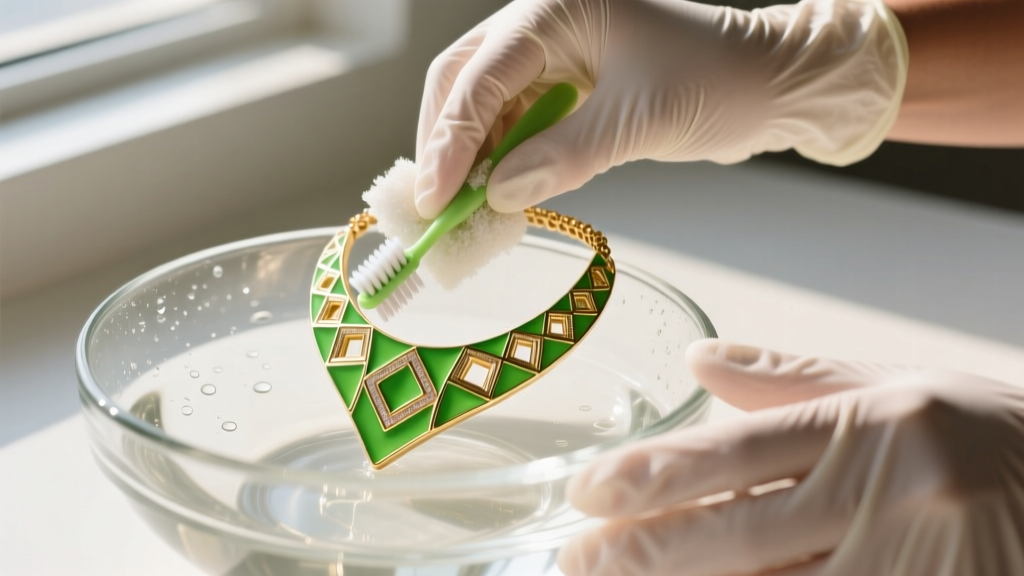
Many modern lime green necklaces utilize enamel over sterling silver or gold. It is critical to determine if your piece uses vitreous enamel (glass fused at 1400°F+) or cold enamel (an epoxy-based resin). Vitreous enamel is highly durable, scratch-resistant, and can be cleaned with mild soap and water, though it will shatter upon hard impact. Cold enamel, which is more common in affordable, neon-colored fashion jewelry, is highly sensitive to heat and solvents. Exposure to hot water, hand sanitizers (which contain alcohol), or acetone will soften, cloud, or entirely dissolve cold enamel. Clean cold enamel pieces only with a dry or slightly damp microfiber cloth, buffing gently to restore shine.
4. Anodized Titanium (The Voltage-Colored Alternative)
Anodized titanium necklaces achieve a brilliant lime green not through dyes, but through an electrochemical process that thickens the natural titanium dioxide layer on the metal's surface. A voltage of approximately 50 to 60 volts creates the specific light interference that results in a lime green/yellow hue. Because the color is an optical illusion created by a microscopic oxide layer, abrasive polishes, silver dip, and ultrasonic cleaners will literally polish the color off, leaving you with a dull grey titanium chain. Clean anodized titanium using only warm water, a drop of mild soap, and your bare fingers. Rinse and air dry.
Chemical Danger Zone: Compatibility Matrix
Using the wrong chemical agent is the fastest way to ruin a lime green necklace. Refer to this compatibility matrix before applying any commercial jewelry cleaner or household product.
| Chemical Agent | Peridot | Chrysoprase | Cold Enamel | Anodized Titanium |
|---|---|---|---|---|
| Ultrasonic Cleaner | FATAL (Fracture) | Safe | FATAL (Peeling) | Risky (Oxide stripping) |
| Steam Cleaner | FATAL (Thermal Shock) | Safe | FATAL (Melting) | Safe |
| Alcohol / Hand Sanitizer | Safe | Risky (Drying) | FATAL (Dissolving) | Safe |
| Commercial Silver Dip | FATAL (Acid Etching) | FATAL (Pore clogging) | FATAL (Discoloration) | FATAL (Oxide removal) |
| Mild Soap & Lukewarm Water | Safe | Safe (Briefly) | Wipe Only | Safe |
Storage & Environmental Threats to Neon Green Hues
Proper storage is just as critical as the cleaning process, particularly for preserving the saturation of lime green materials. Chrysoprase must be stored in a dark, climate-controlled environment; leaving it on a sunlit vanity will accelerate UV fading. If your chrysoprase has already begun to pale, some gemologists suggest soaking the stone in pure, distilled water for 24 hours to rehydrate the nickel silicate inclusions, though prevention is vastly superior to restoration.
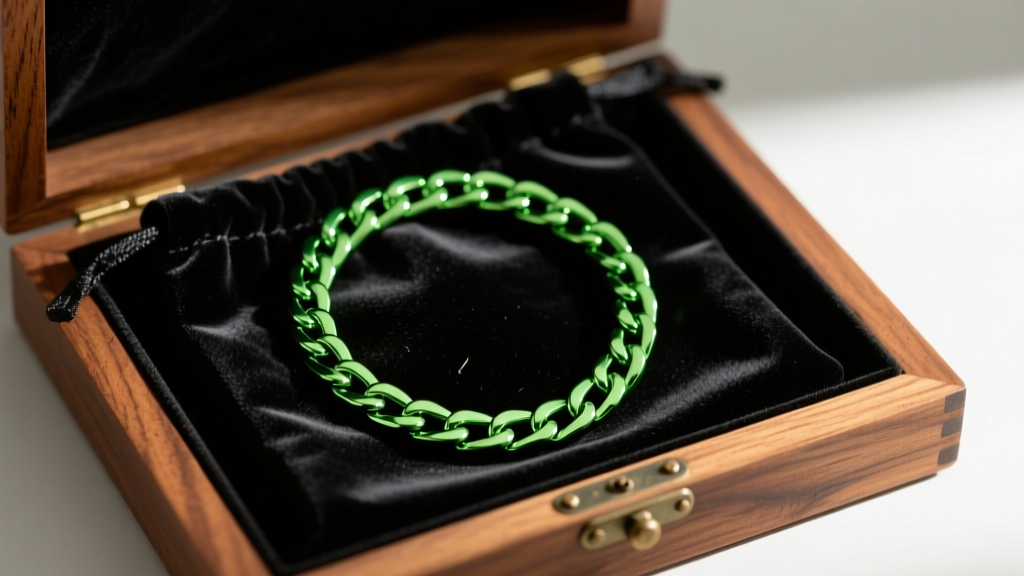
For enamel and resin-based lime green pendants, avoid storing them in PVC plastic bags or cheap polyethylene ziplocks, which can off-gas plasticizers that react with the epoxy surface, causing a permanent cloudy film. Instead, wrap enamel pieces in acid-free tissue paper or untreated cotton. Anodized titanium chains should be stored separately from harder metals (like stainless steel or tungsten) to prevent micro-scratches that will disrupt the light interference layer and create dull grey streaks across the green chain.
Routine Maintenance & Hardware Inspection
Beyond the gemstone or colored surface, the metal hardware of your necklace requires routine maintenance to prevent catastrophic failure. Lime green peridot pendants are frequently set in 14k or 18k yellow gold to enhance the warm undertones of the green. Gold prongs can wear thin over time, especially on a pendant that rests against the sternum and experiences friction from clothing. Every six months, use a 10x jeweler's loupe to inspect the prongs holding your peridot. If you see a flattened or hooked prong, cease wearing the necklace immediately and take it to a bench jeweler for re-tipping.
For chain necklaces, the clasp is the primary failure point. Spring-ring clasps on delicate lime green chains often accumulate skin oils, lotion, and soap scum inside the spring mechanism, causing the lever to stick open. To clear the mechanism, apply a single drop of isopropyl alcohol directly to the clasp hinge using a toothpick, work the lever back and forth, and blow it dry with compressed air. (Note: Do not do this if the clasp is adjacent to cold enamel or porous chrysoprase).
When to Seek Professional Jeweler Intervention
While routine home maintenance will handle 90% of your care needs, certain situations require a professional bench jeweler. If your vitreous enamel lime green necklace chips, a jeweler can carefully grind out the damaged glass and fire a new layer of enamel to match the neon hue. If your anodized titanium necklace has lost its green color due to accidental polishing or abrasion, the metal is not ruined; a jeweler with a titanium anodizing rectifier can simply clean the piece and re-apply the 50-60 volts of current to restore the exact lime green oxide layer in a matter of seconds. Never attempt to glue chipped enamel or paint over faded titanium, as these DIY fixes will permanently alter the surface tension and prevent professional restoration later.


