How to Clean and Care for a Multicolor Beaded Necklace
Learn expert techniques to clean, restring, and store your multicolor beaded necklace without damaging delicate gemstones or glass beads.

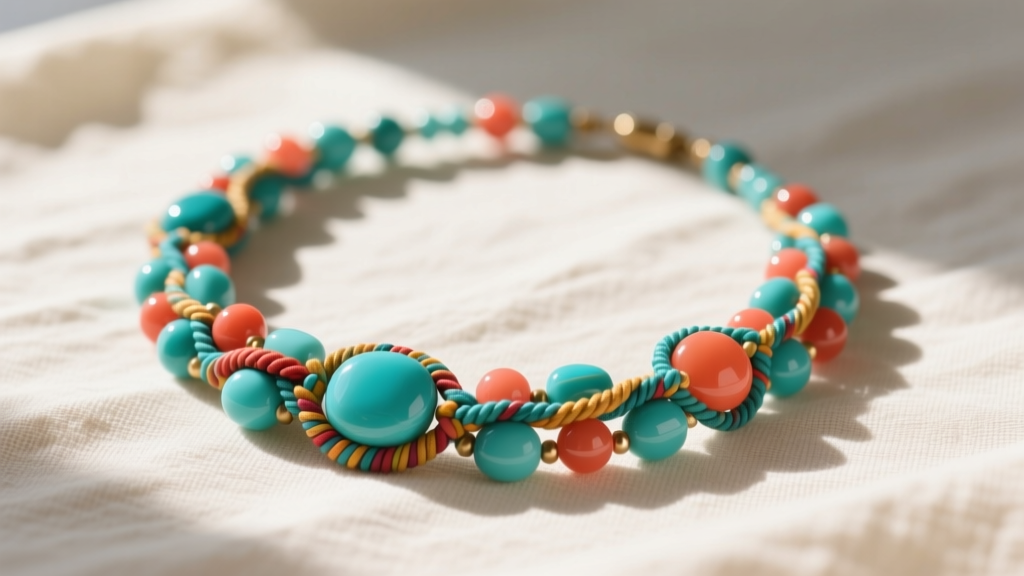
A multicolor beaded necklace is a vibrant, versatile staple in any jewelry collection, but its diverse material composition makes it uniquely challenging to maintain. Unlike a uniform gold chain or a single-gemstone pendant, a mixed-bead necklace requires a nuanced approach to care. The combination of porous organic gems, dyed minerals, and varying stringing materials means that a one-size-fits-all cleaning method can lead to irreversible damage, such as dye bleeding, silk degradation, or surface etching.
According to the International Gem Society (IGS), understanding the specific porosity and Mohs hardness of each bead type is the foundational step in jewelry maintenance. In this comprehensive guide, we will break down the exact protocols for cleaning, inspecting, and storing your multicolor beaded necklace to ensure its structural integrity and color vibrancy for years to come.
The Anatomy of a Multicolor Beaded Necklace: Understanding Your Materials
Before applying any moisture or cleaning agents, you must identify the materials in your necklace. Multicolor designs frequently mix non-porous stones (like quartz, agate, or glass) with highly porous or treated stones (like turquoise, lapis lazuli, coral, or dyed howlite).
Porous beads act like microscopic sponges. If submerged in water or exposed to harsh chemicals, they can absorb liquids, leading to internal fracturing, color alteration, or the dissolution of chemical stabilizers. For example, natural turquoise is often stabilized with epoxy resins to enhance its durability. Exposure to alcohol-based cleaners or ammonia can break down this resin, causing the stone to become brittle and lose its polish. Similarly, lapis lazuli contains calcite, which is highly reactive to acidic solutions. Therefore, identifying your weakest, most porous bead dictates the safest cleaning threshold for the entire piece.
Daily Wear and Tear: Preventative Maintenance
The most effective care strategy is preventative. The golden rule of jewelry wear is "Last On, First Off." Your multicolor beaded necklace should be the final item you put on after applying cosmetics, perfumes, hairsprays, and lotions. Many everyday beauty products contain volatile organic compounds (VOCs) and alcohols that can strip the polish from glass beads and degrade the dye in color-enhanced stones.
- Avoid Chlorine and Saltwater: Never wear your necklace in swimming pools or the ocean. Chlorine can pit metallic spacer beads and discolor porous stones, while saltwater can corrode the stringing material and clasp components.
- Minimize UV Exposure: Prolonged exposure to direct sunlight can cause UV-fading in dyed beads, particularly bright pinks, purples, and reds. Store your necklace away from sunlit windows when not in use.
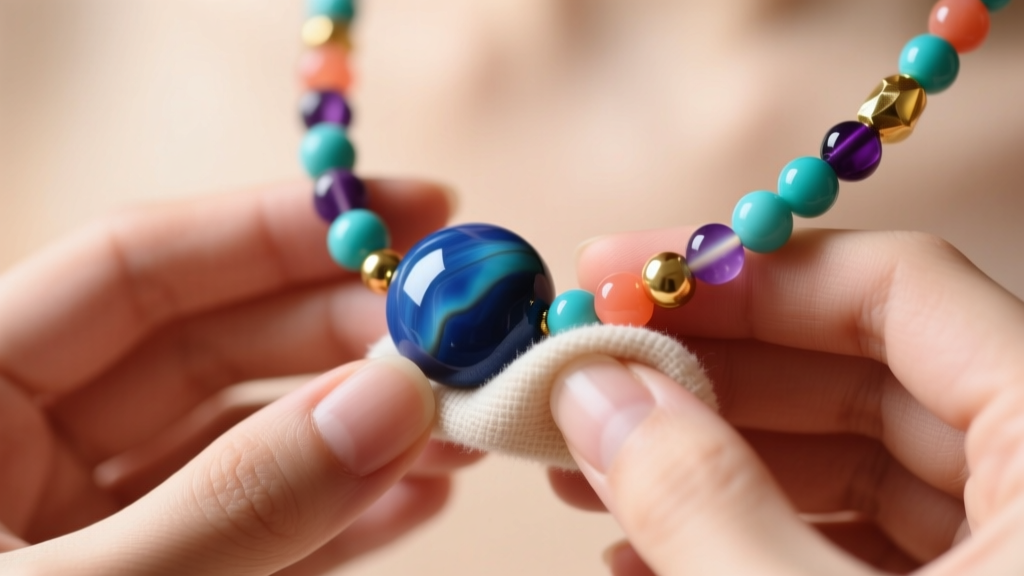
- Wipe Down After Wear: Keep a clean, dry microfiber cloth handy. Gently wiping the beads after each wear removes skin oils and sweat, which are mildly acidic and can slowly etch the surface of softer stones like coral or pearl over time.
Step-by-Step Cleaning Guide by Bead Material
When your necklace requires a deeper clean, avoid submerging the entire piece in water. Submersion compromises the stringing material and risks dye transfer between contrasting colors. Instead, use a targeted, localized cleaning approach.
The Damp Cloth Method (Safest for Mixed Materials)
- Mix a few drops of pH-neutral, fragrance-free dish soap (such as Dawn Free & Clear) into a bowl of distilled water. Tap water contains trace minerals and chlorine that can leave spots on glass and quartz.
- Dampen a soft, lint-free microfiber cloth in the solution and wring it out until it is only slightly moist.
- Gently wipe each bead individually. For heavily soiled glass or quartz beads, you can apply slightly more pressure.
- Use a dry cotton swab to clean the crevices around the drill holes and spacer beads.
- Immediately dry the beads with a separate, clean microfiber cloth to prevent moisture from seeping into the drill holes.
| Bead Material | Mohs Hardness | Porosity Level | Recommended Cleaner | Strictly Avoid |
|---|---|---|---|---|
| Glass / Crystal | 5.5 - 7.0 | Non-Porous | Mild soapy water, glass cleaner | Hydrofluoric acid, hard abrasives |
| Quartz / Agate | 7.0 | Non-Porous | Damp microfiber cloth | Ultrasonic cleaners (if dyed) |
| Turquoise | 5.0 - 6.0 | Highly Porous | Dry, soft brush only | Water, soap, chemicals, heat |
| Lapis Lazuli | 5.0 - 6.0 | Moderate | Very slightly damp cloth | Acids, ammonia, ultrasonic |
| Dyed Howlite | 3.5 | Highly Porous | Dry polishing cloth | All liquids, alcohol, perfumes |
| Coral / Pearl | 3.0 - 4.0 | Organic/Porous | Dry, soft cloth | Acids, vinegar, ultrasonic |
The Hidden Danger: Inspecting the Stringing Material
The structural failure of a beaded necklace rarely originates from the beads themselves; it almost always stems from the degradation of the stringing material. The Gemological Institute of America (GIA) emphasizes that regular inspection of the stringing medium is critical for preventing catastrophic breakage and bead loss.
Identifying Your Stringing Medium
- Natural Silk: Traditional and beautiful, but highly susceptible to moisture. Silk stretches when wet and weakens over time due to skin acidity. If your necklace is strung on silk with knotting between the beads, it must be professionally restrung every 1 to 2 years, depending on wear frequency.
- Woven Polyethylene (e.g., Beader's Secret, WildFire): A modern synthetic alternative that mimics the drape of silk but is entirely waterproof and resistant to stretching. This is the ideal medium for multicolor necklaces that include heavier glass or stone beads.
- Coated Stainless Steel Wire (e.g., SoftFlex): Excellent for sharp-edged crystals or heavy gemstones. However, wire is prone to kinking. If you notice a permanent bend or a "kink" in the wire near the clasp, the structural integrity is compromised, and the necklace must be restrung immediately to prevent snapping.
The Tension Test
Every six months, perform a gentle tension test. Hold the clasp and the bottom center of the necklace, and apply a very light pulling force. Look closely at the gaps between the beads. If you see more than 1-2 millimeters of exposed stringing material between the beads, the material has stretched, and restringing is overdue.
Proper Storage Techniques to Prevent Color Bleed and Scratches
How you store your multicolor beaded necklace is just as important as how you clean it. Improper storage can lead to cross-scratching (where harder beads scratch softer ones) and dye transfer.
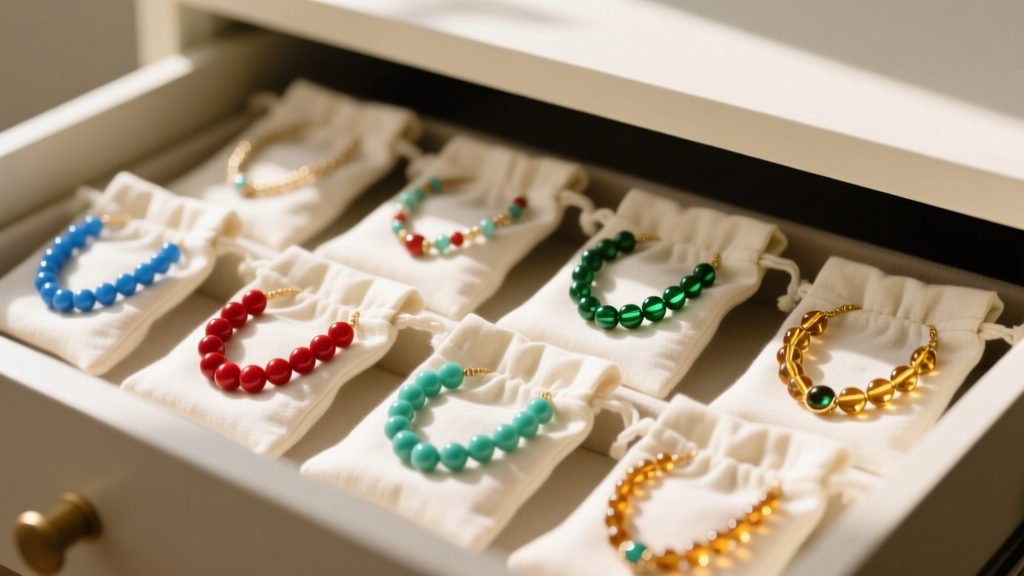
- Individual Pouches: Never toss multiple beaded necklaces into the same compartment. Store your piece in an individual, soft cotton or flannel pouch. Avoid plastic ziplock bags, as polyethylene can trap moisture and emit trace gases that may tarnish metallic spacer beads or degrade certain organic dyes.
- Lay Flat or Hang Properly: Heavy multicolor necklaces should be laid flat in a drawer to prevent gravity from stretching the stringing material over time. If you prefer to hang them, use a padded jewelry hanger with wide, rounded hooks to avoid pinching the string near the clasp.
- Climate Control: Store your jewelry in a climate-controlled environment. Extreme fluctuations in humidity can cause organic beads (like wood or bone) to expand and contract, potentially cracking the bead or fraying the stringing material inside the drill hole.
Expert Troubleshooting: Fixing Cloudy or Discolored Beads
Even with meticulous care, beads can occasionally lose their luster. Here is how to troubleshoot common issues without causing further damage:
Cloudy Glass or Quartz Beads
Cloudiness is usually caused by a buildup of skin oils, lotions, or hard water spots. To restore clarity, dampen a cotton swab with a tiny amount of rubbing alcohol (isopropyl alcohol 70%) and carefully swab the surface of the glass or quartz beads. Warning: Ensure the alcohol does not touch porous, dyed, or plastic beads, as it will strip their color and finish.
Dye Transfer or Bleeding
If you notice dye transferring onto your skin or onto lighter-colored beads in the same necklace, the dye was likely surface-applied and not properly sealed. Stop wearing the necklace immediately. You can attempt to set the dye by gently wiping the affected beads with a cloth barely dampened with white vinegar, followed by a dry cloth. However, the safest long-term solution is to have the necklace restrung, discarding the bleeding beads and replacing them with colorfast alternatives.
Tarnished Metallic Spacer Beads
Multicolor necklaces often feature small metallic spacer beads (silver, brass, or copper). If these tarnish, do not use liquid silver dips, as they will ruin adjacent porous stones. Instead, use a dry, treated jewelry polishing cloth (like a Town Talk or Connoisseurs cloth) to gently buff the metal spacers. Fold the cloth over the bead and rub it back and forth, being careful not to pull on the stringing material.
Expert Insight: Never use ultrasonic or steam cleaners on a multicolor beaded necklace. The high-frequency vibrations can shatter beads with internal fractures, while the heat from steam can melt the adhesive used in foil-backed glass beads or strip the dye from enhanced gemstones.
By understanding the unique material profile of your multicolor beaded necklace and adopting these targeted, conservative care techniques, you can preserve its intricate beauty and structural integrity for a lifetime. When in doubt, always opt for the gentlest cleaning method and consult a professional bench jeweler for restringing and complex repairs.


