Expert Cleaning and Care for a Necklace with Red Stone
Learn how to safely clean and maintain your necklace with red stone. Expert care tips for ruby, garnet, carnelian, and jasper to preserve brilliance.

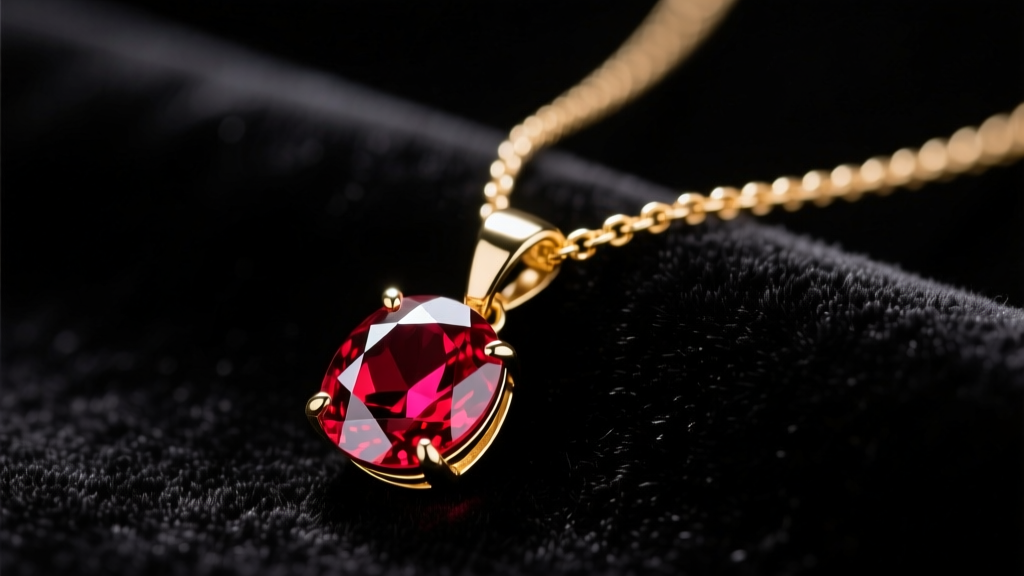
Owning a necklace with red stone is an investment in both timeless beauty and striking personal style. Whether your piece features a pigeon-blood ruby, a deep almandine garnet, or a vibrant carnelian, red gemstones capture light and attention like no other. However, the very properties that give these gems their fiery brilliance also dictate how they must be cleaned and maintained. In 2026, jewelry owners have access to advanced home cleaning tools, but using the wrong method on a specific mineral structure can lead to irreversible clouding, fracturing, or loss of polish.
This comprehensive guide moves beyond generic jewelry advice. We will break down the exact gemological properties of popular red stones, outline precise cleaning protocols, and detail the structural maintenance required to keep your necklace in pristine condition for generations.
Identifying Your Red Stone: Hardness and Porosity
The first rule of gemstone maintenance is understanding the Mohs scale of mineral hardness and the gem's inherent toughness. A necklace with red stone could feature a gem that is nearly scratch-proof, or one that is highly susceptible to chipping. Furthermore, porosity determines whether a stone can handle liquid submersion or chemical cleaners.
| Red Gemstone | Mohs Hardness | Toughness | Ultrasonic Safe? | Steam Safe? |
|---|---|---|---|---|
| Ruby (Corundum) | 9.0 | Excellent | Usually Yes* | Usually Yes* |
| Rubellite (Tourmaline) | 7.0 - 7.5 | Fair to Good | No | No |
| Garnet (Pyrope/Almandine) | 6.5 - 7.5 | Fair to Good | Risky | No |
| Carnelian (Quartz) | 6.5 - 7.0 | Good | Yes | Yes |
| Red Jasper | 6.5 - 7.0 | Good | Yes | No |
*Note: Untreated rubies are generally safe for ultrasonic and steam cleaners. However, fracture-filled or glass-treated rubies—a common market reality—will be destroyed by these methods.
Step-by-Step Cleaning Protocols by Gemstone Type
When cleaning your jewelry, always plug the sink drain or use a separate glass bowl to prevent accidental loss. Here is how to approach the specific mineral families.
Rubies and Rubellites (Corundum and Tourmaline)
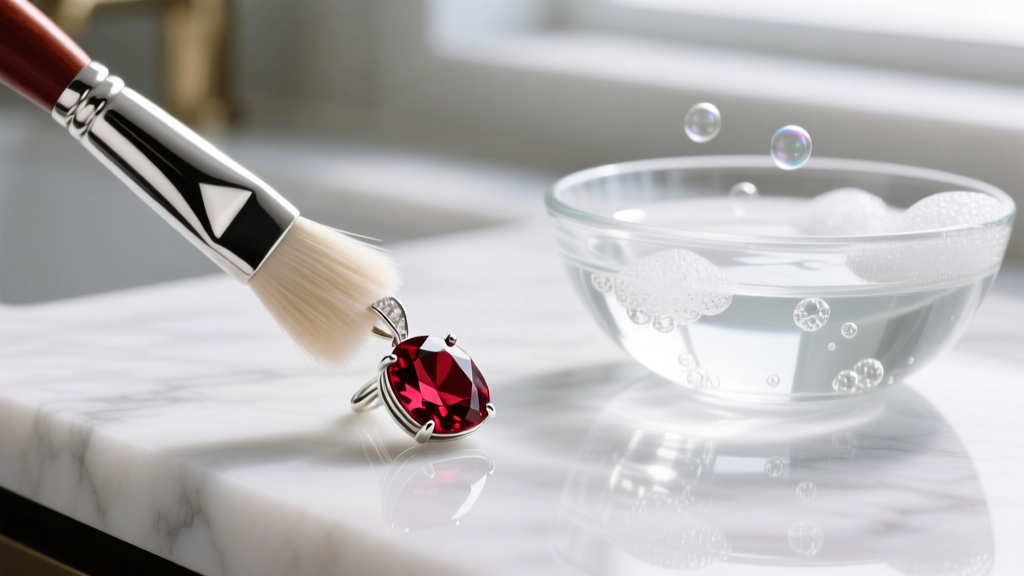
For an untreated ruby, the safest and most effective cleaning solution is a mixture of three drops of mild, phosphate-free dish soap (like Dawn) in one cup of lukewarm distilled water. Submerge the pendant for 10 to 15 minutes to loosen sebum and cosmetic buildup. Use a brand-new, ultra-soft baby toothbrush to gently sweep the back of the stone, where light-blocking grime accumulates.
Rubellite tourmaline, however, is highly sensitive to thermal shock and internal stress. Never use hot water or steam. Clean rubellite strictly with a damp microfiber cloth and a mild soap suds application, avoiding prolonged submersion which can degrade the epoxy used in some settings. For more details on tourmaline vulnerabilities, refer to the GIA Tourmaline Care and Cleaning guidelines.
Garnets and Carnelians (Silicates and Chalcedony)
Garnets are notorious for containing internal inclusions and stress fractures. High-frequency vibrations from ultrasonic cleaners can cause a seemingly flawless garnet to shatter along microscopic fault lines. Instead, rely on manual agitation. Dip a soft lint-free cloth into your soapy distilled water solution and gently wipe the surface of the garnet.
Carnelian, being a microcrystalline quartz, is slightly more forgiving but remains porous. Avoid any cleaners containing ammonia or bleach, as these chemicals can seep into the microscopic crystalline structure and permanently alter the stone's vibrant orange-red hue.
Red Jasper and Coral (Porous and Opaque Stones)
Red jasper and organic red coral require the gentlest touch. These materials act like microscopic sponges. Never submerge them in water. Instead, use a dry, untreated makeup brush to dust away loose particles, followed by a quick wipe with a barely damp cloth. Dry immediately with a soft towel to prevent water spots or mineral deposits from forming on the surface.
Chain and Setting Maintenance: Beyond the Gemstone
Focusing solely on the gemstone is a common oversight. The metal chain and the prongs securing your necklace with red stone require equal attention to prevent catastrophic loss of the pendant.
Prong Inspection and Tightening
Red stones like garnet and ruby are often set in prong settings to maximize light return. Gold alloys (especially 18k and 22k) are inherently soft. Over time, the friction of clothing and daily wear can pull prongs away from the gemstone's girdle. Every six months, perform the 'floss test': gently slide a piece of dental floss around the base of the setting. If the floss catches or snags on a prong, the metal has lifted and requires immediate professional burnishing.
Chain Integrity and Clasp Wear
Lobster clasps and spring rings contain tiny internal steel springs that can rust or fail if exposed to sweat and humidity. Once a month, use a wooden toothpick dipped in isopropyl alcohol to carefully clean the crevices of the clasp mechanism. If your chain is sterling silver, expect oxidation. Use a dedicated silver polishing cloth (impregnated with micro-abrasives) strictly on the metal chain, being incredibly careful not to rub the cloth over softer red stones like coral or heavily included garnets, as the abrasives will scratch them.
What to Avoid: Common Mistakes That Ruin Red Gems
Misinformation regarding jewelry care abounds. To protect your investment, strictly avoid the following practices:
- The 'Toothpaste Hack': Toothpaste contains silica and calcium carbonate abrasives designed to strip plaque. These same abrasives will leave a permanent, cloudy micro-scratch pattern on the polished surface of carnelian and jasper.
- Boiling Water: While boiling is sometimes used by jewelers to clean raw diamonds, applying boiling water to a necklace with red stone will cause rapid thermal expansion. This is especially lethal to garnets and treated rubies, resulting in internal fracturing known as 'crazing'.
- Hairspray and Perfume: Alcohol and aerosol propellants can dry out organic gems and degrade the optical clarity of fracture-filled stones. Always apply cosmetics and fragrances at least 15 minutes before putting on your necklace.
For authoritative guidance on avoiding chemical damage to precious corundum, consult the GIA Ruby Care and Cleaning resource page, which outlines the severe risks associated with household acids and glass-filled stones.
Proper Storage Techniques to Prevent Scratching
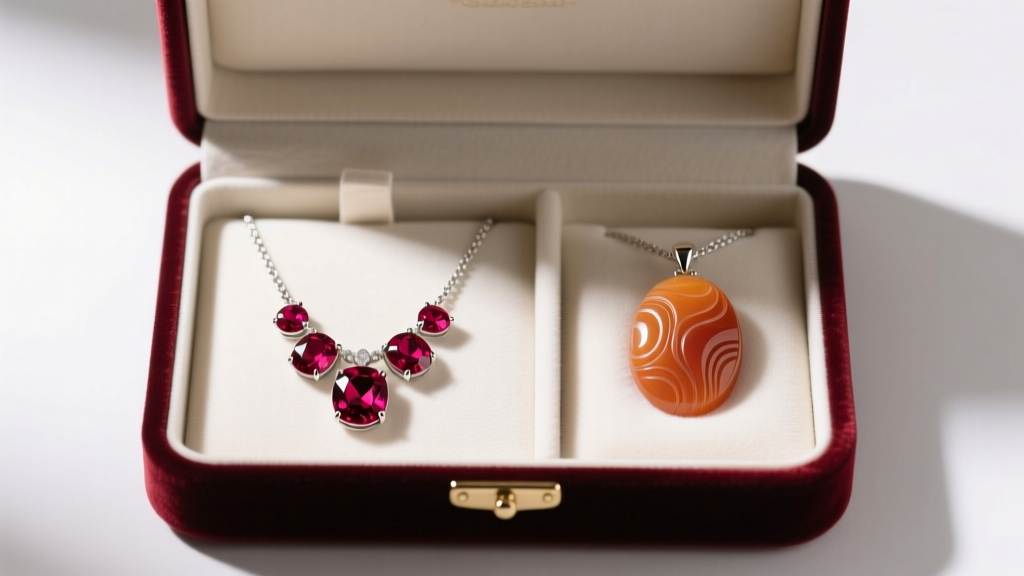
The final pillar of jewelry maintenance is proper storage. The Mohs scale dictates that any material with a higher hardness rating will permanently scratch a material with a lower rating. Because a ruby sits at a 9 on the Mohs scale, it is harder than almost all other gemstones and metals. If you toss a ruby necklace into a communal jewelry box alongside a sterling silver chain or a softer carnelian pendant, the ruby will act like sandpaper, gouging the surrounding pieces.
Invest in a multi-compartment jewelry box lined with non-tarnish flannel or untreated velvet. Each necklace with red stone should be stored in its own individual compartment or a dedicated anti-tarnish ziplock bag. For longer chains, hang them on a multi-tiered velvet necklace tree to prevent the chain links from kinking and the pendant from resting against other metal hardware. By combining precise, gem-specific cleaning protocols with rigorous storage habits, your red stone jewelry will maintain its fiery brilliance and structural integrity for a lifetime.


