How to Clean and Protect Your Purple Pendant Necklace
Learn expert cleaning and maintenance tips for your purple pendant necklace. Discover safe methods for amethyst, tanzanite, and sugilite gemstones.

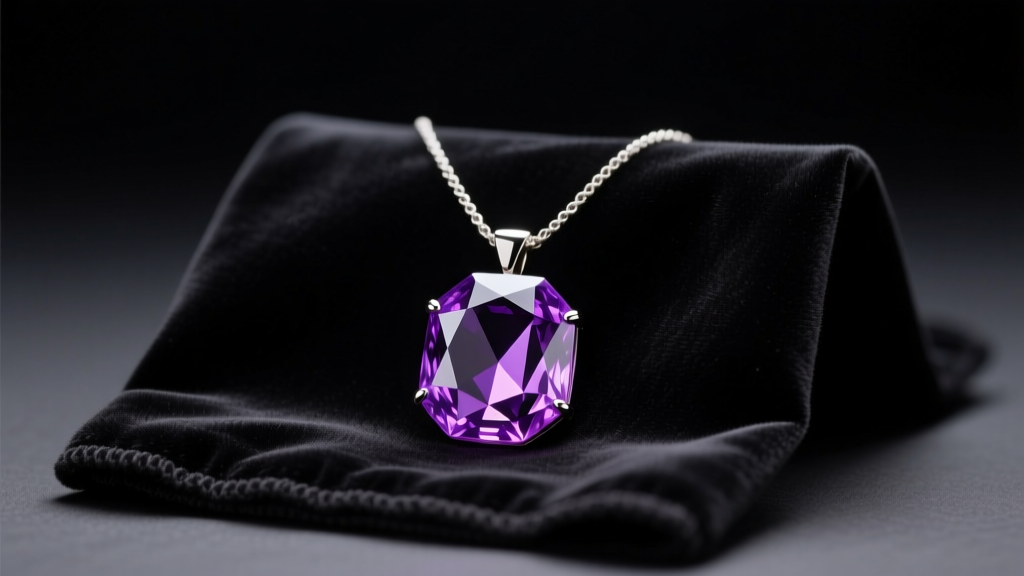
A purple pendant necklace is a striking centerpiece for any jewelry collection, offering a rich spectrum of hues from soft lavender to deep, royal violet. However, the term "purple" encompasses a wide variety of distinct minerals, each with unique gemological properties. Whether your necklace features a durable quartz-based amethyst, a rare and fragile tanzanite, a porous sugilite, or a swirling charoite, applying a one-size-fits-all cleaning approach can lead to catastrophic damage. Understanding the specific hardness, toughness, and chemical stability of your gemstone is the foundational step in preserving its brilliance and structural integrity.
Understanding Your Purple Gemstone's Vulnerabilities
Before applying any cleaning solution, you must identify the exact purple gemstone set in your pendant. The Mohs Hardness Scale measures a mineral's resistance to scratching, but it does not account for toughness (resistance to chipping and breaking) or stability (resistance to heat, light, and chemicals). For instance, while amethyst is relatively hard, tanzanite possesses perfect cleavage planes, meaning a single sharp blow or extreme temperature change can split the stone cleanly in half.
| Gemstone | Mohs Hardness | Toughness & Cleavage | Ultrasonic Safe? | Steam Safe? |
|---|---|---|---|---|
| Amethyst | 7 | Good; No cleavage | Usually Safe | No (Fades/Thermal Shock) |
| Tanzanite | 6.5 - 7 | Fair; Perfect cleavage | No (High Risk) | No (Thermal Shock) |
| Sugilite | 6 - 6.5 | Fair; Porous structure | No | No |
| Charoite | 5 - 6 | Poor; Acid sensitive | No | No |
| Purple Sapphire | 9 | Excellent; No cleavage | Yes | Yes (If untreated) |
According to the Gemological Institute of America (GIA), tanzanite requires extreme care due to its cleavage and sensitivity to thermal shock. Similarly, porous stones like sugilite can absorb harsh chemicals, leading to permanent discoloration. Always verify your stone type before proceeding with any maintenance routine.
The Safest Cleaning Method for Purple Pendants
For the vast majority of purple gemstones—including those that are fracture-filled, porous, or heat-sensitive—the manual "lukewarm soak" method is the only universally safe cleaning protocol. This technique removes sebum, cosmetic residue, and environmental dust without risking cavitation damage or thermal shock.
Step-by-Step Manual Cleaning Protocol
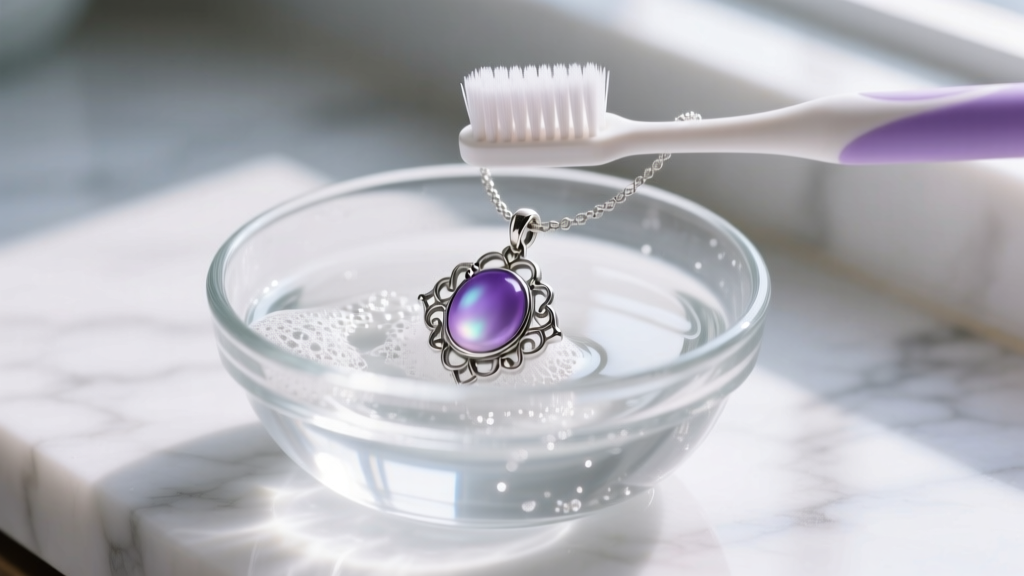
- Prepare the Solution: Fill a small glass bowl with distilled or filtered water. Tap water contains trace minerals and chlorine that can leave hard water spots on the metal setting. Add exactly one to two drops of a pH-neutral, phosphate-free dish soap (such as original Dawn).
- Soak the Necklace: Submerge your purple pendant necklace in the solution for 10 to 15 minutes. This allows the surfactants to break down the lipid bonds of body oils trapped beneath the gemstone's pavilion (the bottom facets).
- Agitate Gently: Using an extra-soft baby toothbrush (with bristles no thicker than 0.12mm in diameter), gently brush the back of the stone and the metal setting. Never scrub the face of softer stones like charoite or sugilite, as trapped microscopic silica in dust can cause micro-scratches.
- Rinse and Dry: Rinse the pendant under a gentle stream of lukewarm distilled water. Pat dry with a lint-free microfiber cloth. Allow the chain to air dry completely before storing to prevent moisture-induced tarnishing.
What to Avoid: Ultrasonic and Steam Cleaner Risks
While ultrasonic and steam cleaners are staples in professional jewelry workshops, they are notoriously dangerous for many purple gemstones. Ultrasonic cleaners use high-frequency sound waves to create microscopic bubbles in a solvent—a process known as cavitation. When these bubbles collapse against the surface of the jewelry, they generate localized shockwaves.
Expert Warning: If your tanzanite or amethyst pendant contains natural liquid inclusions, internal fractures, or has been treated with fracture-filling resins, the shockwaves from an ultrasonic cleaner can cause the stone to shatter from the inside out. Furthermore, the intense, localized heat of a steam cleaner can induce thermal shock, fracturing stones that have been exposed to cold air immediately prior to cleaning.
Additionally, avoid exposing your necklace to household chemicals. Bleach, ammonia, and chlorine are highly reactive. Chlorine, in particular, attacks the copper and zinc alloys present in 14k and 18k gold, as well as sterling silver. This chemical reaction causes stress corrosion cracking, which will eventually cause the prongs holding your purple pendant to snap, resulting in the loss of the gemstone. The GIA's general gem care guidelines strongly recommend removing all jewelry before swimming in chlorinated pools or using household cleaning agents.
Chain and Setting Maintenance
Caring for a purple pendant necklace extends beyond the gemstone itself; the metal chain and setting require equal attention. Sterling silver (925) chains are highly susceptible to tarnishing when exposed to hydrogen sulfide and high humidity in the air. To combat this, wipe the chain down with a specialized silver polishing cloth after every wear to remove acidic sweat and skin oils.

Pay close attention to the chain type. Rope chains and intricate box chains have deep crevices that trap dead skin cells and lotions. If the metal chain is solid gold or platinum and completely detached from the purple pendant, it can be safely cleaned in an ultrasonic machine. However, if the pendant is attached, stick to the manual soaking method described above.
Finally, inspect the setting regularly. Prongs endure constant friction against clothing. For a soft stone like charoite or sugilite, a bezel setting is highly recommended over prongs to protect the girdle (the outer edge) from chipping. If your necklace features a prong setting, use a 10x jeweler's loupe every six months to ensure the metal is still flush against the gemstone's crown.
Proper Storage Techniques to Prevent Scratches and Fading
How you store your purple pendant necklace is just as critical as how you clean it. The most common mistake jewelry owners make is tossing multiple pieces into a single communal box. Because gemstones have different hardness ratings, they will scratch one another. A diamond or sapphire necklace will easily gouge the surface of a tanzanite or sugilite pendant upon contact.
Store your purple pendant necklace individually in a soft, anti-tarnish flannel bag or a dedicated compartment lined with untreated felt. Furthermore, light stability is a major factor for purple stones. The GIA notes that prolonged exposure to intense, direct ultraviolet (UV) light can cause the rich purple color of amethyst and kunzite to fade permanently. Always store your necklace in a dark drawer or closed jewelry box, well away from direct sunlight or brightly lit display windows, ensuring its vibrant violet hues remain intact for generations.


