Step-by-Step Guide to Cleaning a PVD Protected Necklace
Learn how to properly clean and maintain a PVD or e-coated protected necklace. Follow our step-by-step guide to prevent coating failure.

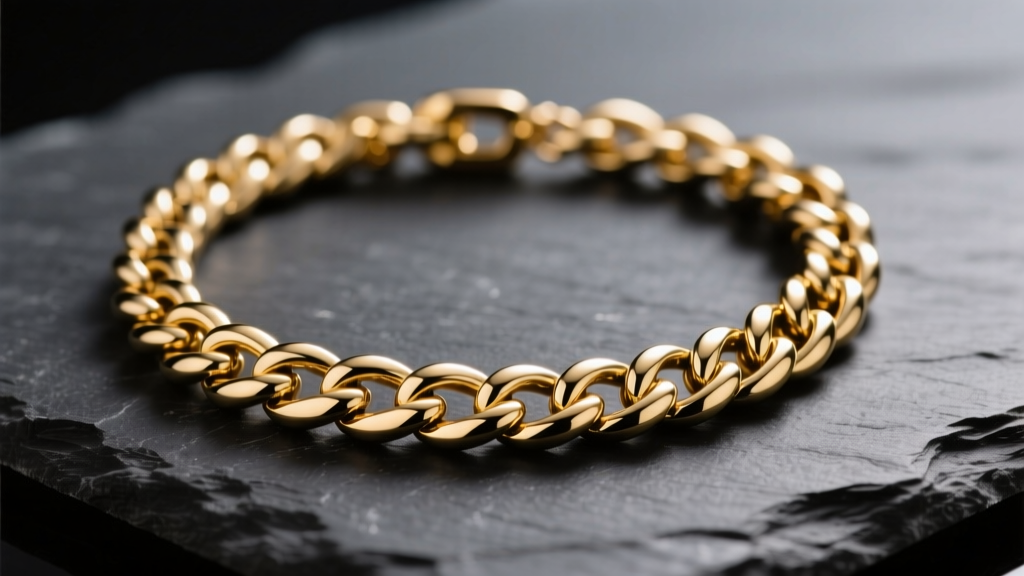
The Science Behind the Protected Necklace
When jewelers and manufacturers refer to a protected necklace, they are not talking about amulets or talismans. In modern metallurgy and jewelry design, a protected necklace is a piece that has been treated with advanced anti-tarnish and anti-corrosion barriers. As of 2026, the market is dominated by three primary protective technologies: Physical Vapor Deposition (PVD), electrophoretic e-coating, and heavy rhodium flash plating. Understanding the exact chemical and physical properties of these barriers is the first step in maintaining your jewelry.
PVD coating, frequently applied over 316L surgical stainless steel or brass substrates, involves vaporizing titanium nitride (TiN) or zirconium nitride (ZrN) in a vacuum chamber. The result is a microscopically thin layer (typically 0.5 to 2.0 microns) that boasts a Vickers hardness exceeding 2,000 HV. This makes PVD-protected necklaces highly resistant to scratching, but they remain vulnerable to specific chemical attacks. According to the Rio Grande Jewelry Supply plating guidelines, maintaining the integrity of these vacuum-deposited layers requires strict adherence to pH-neutral cleaning protocols.
Identifying Your Coating Type
Before applying any cleaning solution, you must accurately identify the protective barrier on your necklace. PVD coatings typically have a distinct, mirror-like reflectivity and feel cold to the touch, similar to solid metal. E-coatings, conversely, have a slightly warmer, almost imperceptible waxy texture and may exhibit a faint iridescent hue under direct LED lighting. Rhodium flash plating over silver is exceptionally bright and white, lacking the slight yellow undertone of unplated sterling silver. If you are unsure, perform a specific gravity test or consult the manufacturer's hallmark documentation, as applying an alcohol-based cleaner to an e-coated piece can cause immediate clouding.
Step-by-Step Cleaning Protocol for Coated Chains
Cleaning a protected necklace requires a departure from traditional jewelry care. The ultrasonic cleaners and harsh chemical dips used for raw sterling silver or solid gold will instantly compromise synthetic barriers. Follow this exact protocol to remove sebum, environmental dust, and cosmetic residue without degrading the protective layer.
Step 1: The pH-Balanced Pre-Soak
Fill a glass basin with distilled water heated to exactly 95°F (35°C). Tap water contains trace chloride and fluoride ions that can initiate galvanic corrosion if the protective layer has micro-fractures. Add three drops of a pH-neutral, phosphate-free surfactant (ideally a dedicated jewelry cleaner with a pH between 6.0 and 7.0). Submerge the protected necklace for exactly four minutes. This allows the surfactant to break down the lipid bonds of skin oils without requiring mechanical agitation.
Step 2: Microfiber Agitation
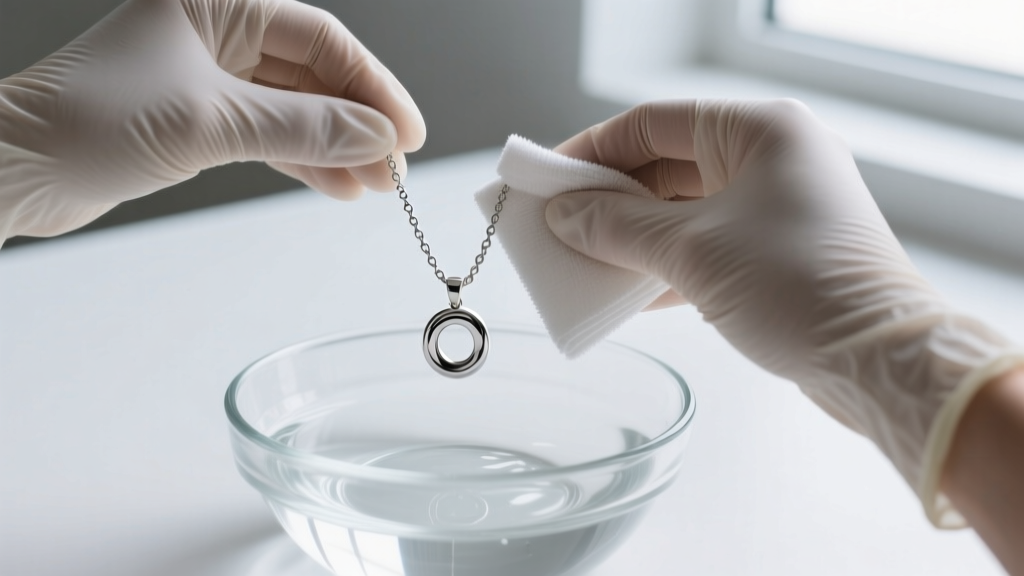
Remove the necklace from the solution. Using a lint-free, high-GSM microfiber cloth, gently glide the fabric along the length of the chain. Never use a soft-bristled toothbrush, even one labeled extra-soft. The nylon bristles can trap microscopic silica particles from your environment, which will act like sandpaper against e-coatings and rhodium layers. For intricate pendant settings, use a wooden toothpick or a rubber-tipped stylus to dislodge debris from the prongs.
Step 3: The Ionic Rinse and Thermal Dry
Rinse the piece under a slow stream of distilled water to remove any remaining surfactant. Immediately pat the necklace dry with a fresh microfiber towel. Do not allow the piece to air dry; water spotting occurs when dissolved minerals concentrate as the water evaporates, leaving alkaline deposits that can slowly etch into PVD surfaces over time.
Common Failure Modes: How You Ruin Protective Coatings
Even the most advanced protected necklace will fail prematurely if subjected to the wrong environmental stressors. The Gemological Institute of America (GIA) frequently notes that consumer error, rather than manufacturing defect, is the primary cause of coating delamination. Below is a breakdown of how different protective layers fail.
| Coating Type | Average Thickness | Hardness (HV) | Primary Vulnerability |
|---|---|---|---|
| PVD (TiN / ZrN) | 0.5 - 2.0 µm | 2000+ | Chloride ion exposure (pools, sweat) |
| E-Coating (Lacquer) | 5.0 - 15.0 µm | 15 - 25 | UV degradation and abrasive friction |
| Rhodium Flash | 0.1 - 0.5 µm | 800 | Acidic sweat and mechanical friction |
The Ultrasonic Cleaner Trap
Never place a protected necklace in an ultrasonic cleaner. These devices work via cavitation—creating microscopic vacuum bubbles that implode against the jewelry's surface. The localized temperature of these implosions can briefly exceed 5,000 Kelvin, and the shockwaves will easily delaminate PVD and e-coatings from their base metals. Furthermore, the high-frequency acoustic waves (typically 40 kHz) induce microscopic flexing in the chain links. Because PVD and e-coatings have a different elastic modulus than the brass or steel substrate, this repetitive flexing causes sheer stress at the molecular boundary layer, leading to invisible micro-cracking that eventually results in catastrophic peeling.
Restoring a Failing Protected Necklace
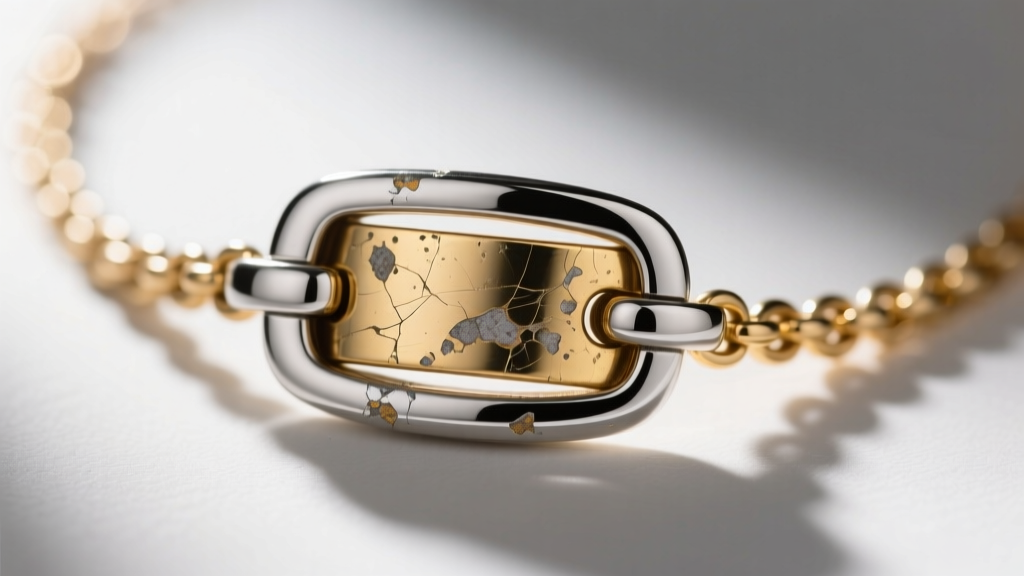
If your protected necklace begins to show signs of wear—such as the brassy undertone of the substrate bleeding through the gold PVD, or the e-coating peeling near the clasp—stop wearing it immediately. Continued friction will accelerate the degradation.
Restoration options depend on the original coating:
- PVD Re-coating: This requires industrial vacuum chambers. You must send the piece to a specialized plating facility. The old coating must be chemically stripped before re-application. Expect to pay between $65 and $120 depending on the chain's weight and complexity.
- E-Coat Re-application: Electrophoretic lacquers can be stripped at home using a mild acetone solution (if the base metal is solid silver or steel), followed by dipping in a fresh e-coat solution and curing in a kiln at 150°C for 45 minutes. Professional re-coating typically costs $25 to $45.
- Rhodium Re-plating: A standard jeweler can re-plate a sterling silver necklace with rhodium in under an hour. This electroplating process costs roughly $40 to $75, but remember that rhodium is a sacrificial layer and will require re-plating every 12 to 18 months with daily wear.
Storage Protocols for Maximum Coating Lifespan
How you store your protected necklace when it is not on your neck is just as critical as how you clean it. E-coatings are essentially advanced polymers, meaning they are susceptible to UV degradation and oxidative stress if left exposed to direct sunlight and high humidity.
Invest in airtight polyethylene zip-bags specifically manufactured without sulfur-releasing plasticizers. Standard PVC jewelry boxes can actually emit hydrogen chloride gas over time, which will aggressively attack PVD titanium nitride layers. Place a 3M anti-tarnish strip and a color-indicating silica gel packet inside each bag. When the silica beads transition from orange to green, it indicates the local RH has exceeded 60%, signaling that the desiccant must be recharged in an oven at 250°F for two hours. This level of meticulous environmental control is what separates jewelry that degrades in a season from heirloom-quality pieces that survive decades.